Trout-stamp costs depend on the state, and many states do not require a separate trout stamp at all. California is one of them: in 2026, anglers age 16 or older generally need a valid sport fishing license, but the California Department of Fish and Wildlife does not list a trout stamp among its licenses, validations, or report cards. Before fishing, check the rules for the state, water, species, and season you plan to fish.
Quick Answer
A trout stamp is not a nationwide requirement. In 2026, California has no separate trout stamp; anglers age 16 or older generally need a sport fishing license. States that do require a trout stamp or permit charge different amounts—for example, $6.50 in Illinois, $10 in Wisconsin, and $14.97 in Pennsylvania.
Key Takeaways
- California does not require a trout stamp. Most anglers age 16 or older need a sport fishing license instead.
- A separate trout stamp or permit is required in some states, including Illinois, Wisconsin, and Pennsylvania.
- The basic fishing license and the trout stamp are usually separate purchases unless a short-term or combination license includes both.
- Age exemptions, senior discounts, free-fishing days, digital-proof rules, and private-water exceptions differ by state.
- Always use the official wildlife-agency website because prices and regulations can change each license year.
At a Glance
| Time Required | About 5–10 minutes to verify the rule and buy the required license or permit online |
| Difficulty | Easy, but rules are state- and water-specific |
| Tools Needed | Official agency website or app, identification details, and a payment method |
| Cost | No separate trout-stamp fee in California; verified examples range from $6.50 to $14.97 in states that require one |
What Is a Trout Stamp and Who Needs One?
A trout stamp is a state-issued fishing privilege that may also be called a trout permit, trout validation, or inland trout stamp. Where required, it is usually purchased in addition to a basic fishing license.
There is no federal trout stamp for ordinary recreational trout fishing, and no single rule applies nationwide. A state may use one of several systems:
- Separate stamp or permit: Illinois, Wisconsin, and Pennsylvania are examples.
- Trout included in the basic license: Michigan and Oregon do not require an extra trout-specific privilege for ordinary trout fishing.
- Broader freshwater endorsement: Texas uses a freshwater endorsement rather than a trout-specific stamp.
- No trout stamp but other species cards or validations: California requires certain report cards and validations, but none is a trout stamp.
Whether you need an add-on can depend on your age, the waterbody, whether you are targeting or possessing trout, the season, and the type of license you already hold. Catch-and-release fishing does not always remove the requirement. For example, Illinois says anglers at its stocked trout sites need both a fishing license and inland trout stamp even when they plan to release their catch, unless an exemption applies.
Note: “Trout stamp” is often used as a general phrase, but the legal product name matters. Search the official agency site for “trout permit,” “inland trout stamp,” “validation,” and “endorsement” before assuming your basic license is enough.
Typical Trout Stamp Costs by State
The following examples use official 2026 agency information. They show why a national “trout stamp price” can be misleading.
| State | 2026 Trout Requirement | Separate Cost |
|---|---|---|
| California | No separate trout stamp. Anglers age 16 or older generally need a California sport fishing license. | $0 for a trout-specific stamp |
| Illinois | An inland trout stamp is generally required with a fishing license for stocked inland trout waters, subject to exemptions. | $6.50; $0.50 for qualifying resident anglers age 75 or older |
| Wisconsin | A general fishing license plus the applicable inland trout or Great Lakes salmon/trout stamp is required unless the license package includes it. | $10 for either stamp |
| Pennsylvania | A trout permit is required in specified situations, including fishing for trout in special-regulation waters and possessing trout. | $14.97 for the annual permit |
| Michigan | No separate trout stamp; the all-species fishing license covers trout, subject to season and waterbody rules. | $0 beyond the applicable fishing license |
| New York | No required trout stamp; a general freshwater fishing license covers trout. The separate $5 Habitat & Access Stamp is voluntary. | $0 for a required trout-specific stamp |
| Oregon | A basic fishing license is enough for ordinary trout fishing; no extra trout tag or endorsement is required. | $0 beyond the applicable fishing license |
| Texas | No trout-specific stamp. A freshwater package includes the fishing license and freshwater endorsement needed for public fresh waters. | $0 for a separate trout stamp |
These prices do not include every base-license fee, transaction fee, agent fee, or special-water privilege. A short-term license may include a trout stamp in one state but not another. Pennsylvania also sells multi-year trout permits, while Wisconsin offers two-day trout licenses that include the relevant stamp.
Warning: Do not rely on an old article, search-result snippet, or another angler’s receipt. License-year fees and water-specific rules can change, and the product name may differ from “trout stamp.”
How Trout Stamp Revenue Is Used
The use of trout-stamp money is set by each state, so it is not accurate to say that every dollar always goes to the same mix of habitat work, hatcheries, research, and enforcement.
Illinois provides a clear example of a dedicated program. The Illinois Department of Natural Resources says its Catchable Trout Program receives funding support from inland trout-stamp sales. The program stocks more than 80,000 rainbow trout for the spring season and another 80,000 for the fall season.
In other states, trout permits and broader fishing-license revenue may support fisheries management through a general fish fund. Depending on the agency and authorizing law, spending can include:
- hatchery operations and stocking;
- fish-population surveys and creel studies;
- stream, lake, and riparian habitat projects;
- water-access improvements;
- aquatic invasive-species prevention;
- regulation development, education, and enforcement.
A dedicated stamp can connect anglers who use a program with part of its cost, but the exact use of the money must be confirmed in that state’s law, budget, or agency report.
When and Where to Buy a Trout Stamp
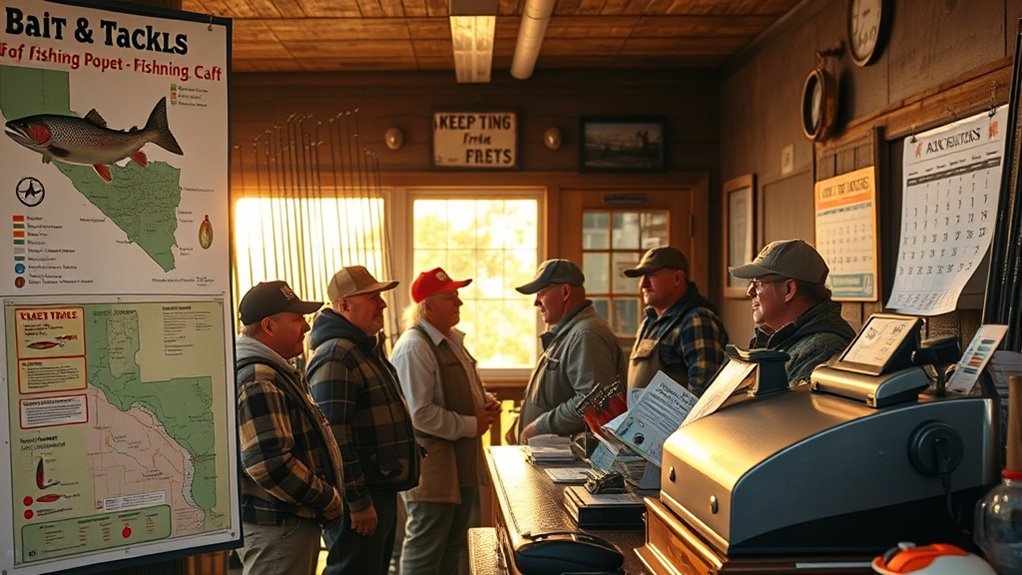
Buy the required fishing license and trout privilege before you begin fishing. The safest process is simple:
- Identify the exact waterbody. Requirements may differ between inland streams, stocked ponds, Great Lakes waters, special-regulation waters, and private ponds.
- Open the official state wildlife-agency website. Avoid third-party sellers unless the agency lists them as authorized agents.
- Check both the license and add-on rules. Look for a trout stamp, trout permit, freshwater endorsement, report card, or special-area validation.
- Confirm the effective dates. Some licenses run for 365 days, while others follow a calendar or fixed license year.
- Buy online, through the official app, or from an authorized agent. Save the valid proof in the form the state accepts.
- Read the current waterbody rules. A license does not override closed seasons, gear restrictions, bag limits, size limits, or access rules.
Pro Tip: Search by the lake or stream name before checkout. This catches special regulations that may not appear on a general license page.
California anglers can buy a sport fishing license through CDFW’s online system or a licensed agent and can display supported licenses through the official CDFW License App. Pennsylvania sells licenses and permits online through HuntFishPA and through issuing agents. Illinois and Wisconsin also offer online sales and authorized in-person locations.
Exceptions, Reduced Fees, and Free-Fishing Opportunities

Exemptions are not uniform. Some anglers may qualify for a free or reduced-fee fishing license, a discounted trout stamp, or a temporary free-fishing event. Eligibility can depend on age, residency, disability, military status, income, or the type of water.
Verified examples include:
- California: There is no trout stamp. CDFW offers certain free and reduced-fee sport fishing licenses, including programs for qualifying disabled veterans, recovering service members, low-income seniors, and people with specified disabilities.
- Illinois: The standard inland trout stamp is $6.50. A qualifying resident age 75 or older can buy the reduced $0.50 stamp. Illinois also lists exemptions for some anglers who do not need a fishing license.
- New York: Residents age 70 or older pay a reduced annual fishing-license fee, and other free or reduced-fee programs may apply.
- Wisconsin: Junior, senior, disabled, and certain military fishing-license rates are available, but anglers should still verify whether a trout stamp is included or separately required.
Free-fishing days usually remove the license requirement only for the named dates. Seasons, bag limits, size limits, gear rules, and closed areas still apply.
Trout Stamp Requirements for Youth and Seniors

Age rules vary, and a senior exemption should never be assumed.
In California, anglers under age 16 generally do not need a sport fishing license. California does not provide a blanket senior exemption from the regular license requirement, although qualifying low-income residents age 65 or older may obtain a reduced-fee license.
Illinois exempts anglers younger than 16 from the fishing-license and trout-stamp requirement at its catchable trout sites. Resident anglers age 75 or older can purchase the reduced-price trout stamp.
Michigan generally requires a fishing license beginning at age 17 and sells a reduced-price all-species license to qualifying resident seniors age 65 or older. Pennsylvania generally requires a license and trout permit beginning at age 16 when the permit rules apply.
Adults who cast, retrieve, or otherwise fish while helping a child may need their own license even when the child is exempt. Check the state’s definition of “fishing,” “taking,” or “assisting” before the trip.
Penalties for Fishing Without a Required Trout Stamp

There is no reliable nationwide fine range for fishing without a trout stamp. Penalties are set by state law and may depend on the missing privilege, the water, whether fish were kept, prior violations, and local court costs.
Possible Legal Consequences
Where a trout stamp or permit is required, fishing without it may lead to a warning or citation. Additional violations can apply if the angler also lacks a basic fishing license, fishes during a closed season, exceeds a limit, uses unlawful gear, or enters private property without permission.
Illinois specifically warns that anglers attempting to harvest trout from stocked sites before the legal season opens will be cited. Pennsylvania requires a trout permit in several defined situations, including fishing in special trout waters and possessing trout.
Why a Single Fine Amount Is Misleading
The total amount can include a statutory fine, court costs, restitution, or separate counts for each violation. Because those figures can change and may be set by a court, an unsourced claim such as “the fine is $100 to $500” should not be treated as a universal rule.
Can Fish or Equipment Be Seized?
Some wildlife laws allow officers or courts to seize unlawfully taken fish and, in more serious cases, equipment connected to an offense. That outcome is not automatic everywhere and should not be presented as the standard penalty for a missing trout stamp. The best protection is to carry accepted proof and follow the current rules for the specific water.
Warning: A valid license or stamp does not grant permission to trespass. Get the landowner’s permission and follow any public-access restrictions.
Tips for Keeping Track of Your Trout Stamp Purchase
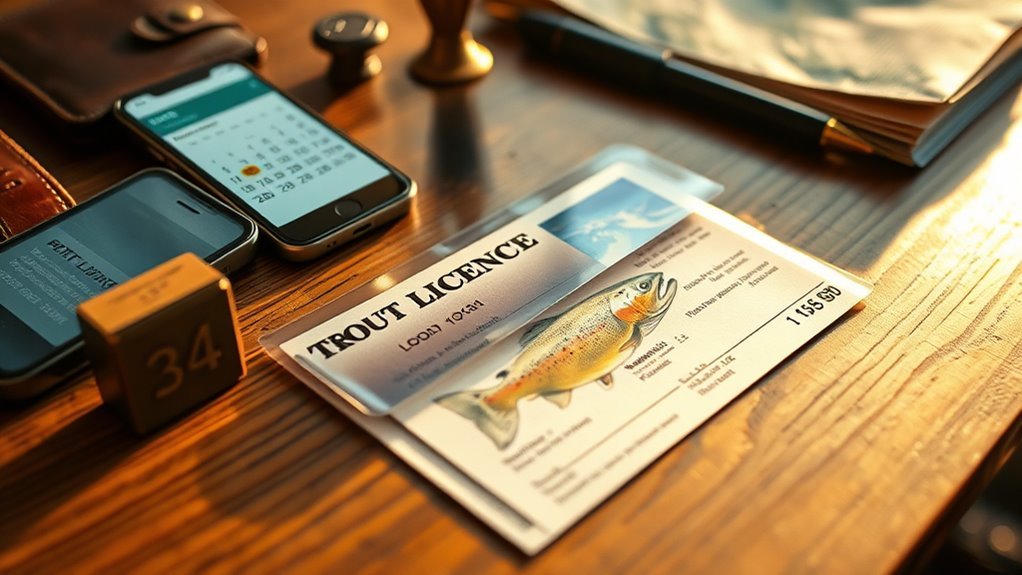
Keep proof in the form your state recognizes. A receipt or screenshot may show that you paid, but it is not always valid field proof.
- Use the official app when required. California allows supported licenses to be displayed in the CDFW License App, including offline after the app has been refreshed.
- Do not rely on a screenshot in California. CDFW states that a screenshot of a license is not valid; the license must be displayed through the app or carried physically.
- Carry physical cards when the rules require them. Some report cards and tags must remain in immediate possession even when the basic license can be shown electronically.
- Check the expiration date. A 365-day license, calendar-year permit, and fixed-season stamp can expire on different dates.
- Keep a backup. Bring a charged phone, portable battery, or physical copy when allowed.
- Save the transaction record. Store the order number and receipt in case you need a reprint or agency assistance.
Note: Refresh an official license app before leaving cell service. A dead phone or an app that has not downloaded the current license may leave you unable to show valid proof.
Frequently Asked Questions
Does California require a trout stamp?
No. CDFW’s 2026 licensing page lists sport fishing licenses, several validations, and species report cards, but no trout stamp. Anglers age 16 or older generally need a valid California sport fishing license and must follow the regulations for the water they fish.
Can I buy a trout stamp as a gift for someone else?
It depends on the state’s sales system. Some agencies sell gift vouchers rather than assigning a license or permit directly to another person. California offers gift vouchers for resident annual sport fishing licenses, while Pennsylvania also sells license and permit vouchers. Use the official agency process so the recipient’s identity and eligibility are recorded correctly.
Does fishing from private property remove the trout-stamp requirement?
Not automatically. Permission to stand on private land is separate from the state’s fishing-license rules. Some private ponds or licensed fishing preserves have exceptions, but many private-access waters remain subject to state licensing and fishing regulations.
Are digital trout stamps accepted everywhere?
No. Each state decides which licenses, stamps, and permits may be displayed electronically. Some require an official app, some accept a downloadable license, and some still require a physical card or report document. A screenshot is not valid proof in California.
Does a trout stamp cover ice fishing for trout?
A required trout stamp usually applies to trout fishing regardless of whether the angler fishes through ice, but the license does not by itself open a season or waterbody. Check ice-fishing methods, season dates, tip-up limits, bait rules, and species limits for the exact location.
Can nonresidents purchase multi-year trout stamps?
Some states allow it. Pennsylvania, for example, lists three-, five-, and ten-year trout permits. Other states offer only annual or short-term products. Verify nonresident eligibility, the underlying fishing-license requirement, and whether the permit remains valid if fees or regulations change.
Do I need a trout stamp for catch-and-release fishing?
Possibly. Some states define the requirement by fishing for or attempting to take trout, not only by keeping fish. Illinois requires the inland trout stamp at its stocked trout sites even for anglers who plan to release fish, unless an exemption applies.
Conclusion
There is no single trout-stamp price or nationwide rule. California does not require a separate trout stamp in 2026, while Illinois charges $6.50, Wisconsin charges $10, and Pennsylvania charges $14.97 for the applicable trout privilege. Other states include trout in a general fishing license or use a broader freshwater endorsement.
Check the official agency page for the state and waterbody before every trip. Confirm the basic license, any trout permit or stamp, effective dates, accepted proof, season, limits, and access rules. That quick review is more reliable than an old price list and helps you avoid buying the wrong product or fishing without a required privilege.
Sources
- California Department of Fish and Wildlife — Sport Fishing Licenses and Report Cards — 2026 license fees, age requirement, validations, report cards, and reduced-fee programs.
- California Department of Fish and Wildlife — CDFW License App — electronic display rules, offline access, and the prohibition on using screenshots as license proof.
- Illinois Department of Natural Resources — Catchable Trout Program — stamp requirement, exemptions, stocking totals, and program funding.
- Wisconsin Department of Natural Resources — Fishing Licenses — inland trout and Great Lakes salmon/trout stamp prices.
- Pennsylvania Fish and Boat Commission — Fishing License and Permit Pricing — 2026 trout-permit price and multi-year options.
- New York State Department of Environmental Conservation — Fishing Licenses — current license fees, age requirements, and exemptions.