
California residents age 16 or older generally need a sport fishing license before taking fish or other aquatic wildlife in the state. In 2026, the standard resident license costs $64.54 and remains valid for 365 days from purchase. Short-term, reduced-fee, free, and lifetime options are also available, but separate validations or physical report cards may be required for certain species, gear, and fishing areas.
Quick Answer
A California resident 365-day sport fishing license costs $64.54 in 2026. Residents age 16 or older generally need one, although qualifying public-pier fishing and Free Fishing Days are exceptions. Separate report cards or validations may still be required for sturgeon, steelhead, spiny lobster, salmon, crab traps, two-rod fishing, or some ocean areas.
Key Takeaways
- The 2026 California resident 365-day sport fishing license costs $64.54.
- One-day and two-day licenses cost $21.09 and $32.40 and are available to residents and nonresidents.
- Children under 16 usually do not need a license, but they still need required species report cards.
- A qualifying ocean or bay public pier is license-exempt, but beaches, shorelines, adjacent rocks, and ordinary jetties may not be.
- The CDFW License App can display licenses and validations, but it does not replace a required physical report card.
Note: Fees and fishing rules can change. The prices below are CDFW’s published 2026 fees. Check the current CDFW license page and the latest regulations before each trip.
Who Needs a Resident Sport Fishing License in California
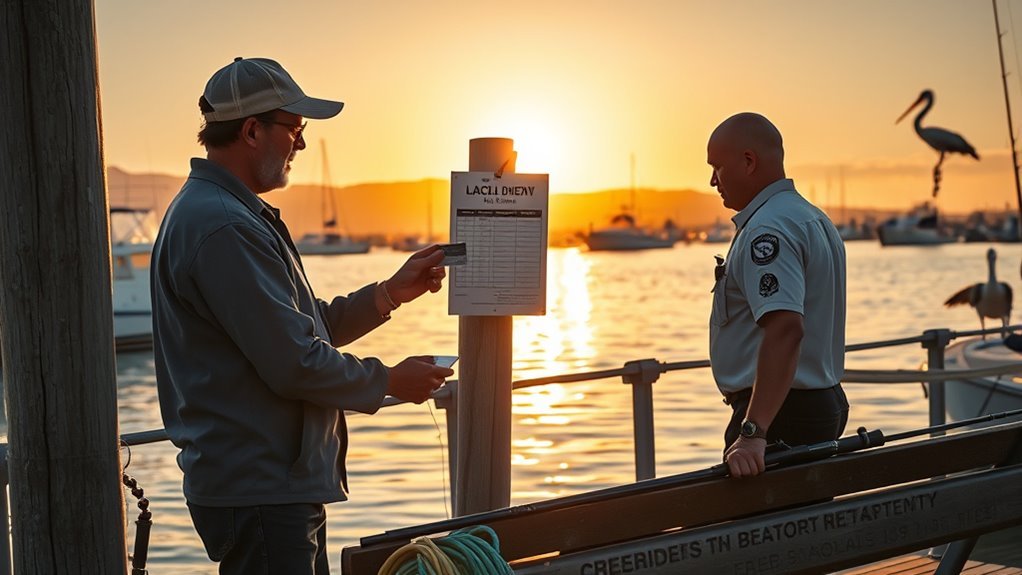
A sport fishing license is generally required for anyone age 16 or older who attempts to take fish, mollusks, crustaceans, aquatic invertebrates, amphibians, or reptiles in California’s inland or ocean waters.
For licensing purposes, California treats you as a resident if you have lived continuously in the state for at least six months immediately before applying. Active-duty members of the U.S. Armed Forces and qualifying Job Corps participants are also treated as residents.
Residents normally pay less than nonresidents. The license is personal and cannot be transferred to a friend or family member.
Who Can Fish Without a License?
- Children under 16: A sport fishing license is generally not required, but species-specific report cards may still be mandatory.
- Qualifying public-pier anglers: No license is required when fishing recreationally from a qualifying public pier in ocean or bay waters.
- Free Fishing Day anglers: California’s 2026 Free Fishing Days are July 4 and September 5.
A public pier has a narrow legal definition. It generally must be connected to shore, provide free and unrestricted public access, and be built or used primarily for fishing. A nearby beach, shoreline, rock wall, or nonqualifying jetty does not automatically receive the same exemption. CDFW maintains a list and map of qualifying public piers.
A license exemption does not cancel bag limits, size limits, seasons, gear rules, closures, or species report-card requirements.
On Free Fishing Days and qualifying public piers, anglers targeting steelhead, white sturgeon, California spiny lobster, or salmon in designated North Coast river systems must still possess the appropriate report card.
365-Day Resident Sport Fishing License Cost and Coverage

The standard California resident sport fishing license costs $64.54 in 2026. It is valid for 365 consecutive days beginning on the purchase date rather than expiring at the end of the calendar year.
| License | 2026 fee | Validity |
|---|---|---|
| Resident Sport Fishing License | $64.54 | 365 days from purchase |
| Nonresident Sport Fishing License | $174.14 | 365 days from purchase |
The standard license covers recreational freshwater and saltwater fishing where fishing is open and lawful. It does not automatically include report cards, a second-rod validation, an Ocean Enhancement Validation, or a Recreational Crab Trap Validation.
Report-card seasons do not change to match the purchase date of a 365-day license. For example, a spiny lobster or sturgeon card follows its own season and reporting deadline.
Pro Tip: The CDFW License App can display most active sport fishing licenses and validations. Carry a charged phone or a physical backup because you may be cited if neither can be displayed during an inspection.
Products Worth Considering

FISHING LICENSE HOLDER W/ZIP CLOSURE

【Material】Our License Plate Frame Is Made Of Stainless Steel, Strong And Durable.

【MATERIAL】: oFloral License plate frame is made from premium quality aluminum, which can provide long-lasting protection from corroding, rusting and aging, durability for long lasting usage.Personalized Car Frame Can Perfect to Put on Your Front of Car or for Decorative Purposes Around the House Like in Your Bedroom, Garage, Basement, Ect.
Short-Term Licenses: One-Day, Two-Day, and Ten-Day Options
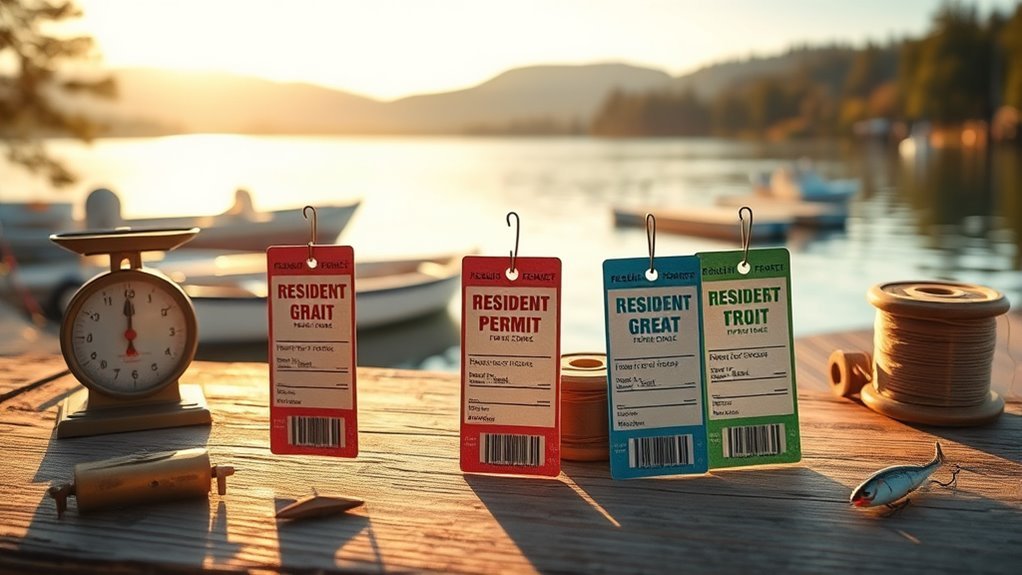
Short-term licenses work well for visitors, occasional anglers, and residents who are not ready to buy a full 365-day license.
| Duration | 2026 fee | Who can buy it? | Ocean Enhancement Validation |
|---|---|---|---|
| 1 specified day | $21.09 | Residents and nonresidents | Not required |
| 2 consecutive days | $32.40 | Residents and nonresidents | Not required |
| 10 consecutive days | $64.54 | Nonresidents only | Required where applicable |
The one-day license covers one specified calendar day. The two-day option covers two consecutive days, while the ten-day nonresident license covers ten consecutive days.
The one-day and two-day licenses are exempt from the Ocean Enhancement Validation requirement. They do not remove report-card requirements for sturgeon, steelhead, spiny lobster, or designated North Coast salmon fishing.
For a California resident, the two-day license costs about half as much as the annual license. Anyone planning more than a few fishing days should compare the short-term total with the $64.54 resident 365-day option.
Products Worth Considering

【MATERIAL】: oFloral License plate frame is made from premium quality aluminum, which can provide long-lasting protection from corroding, rusting and aging, durability for long lasting usage.Personalized Car Frame Can Perfect to Put on Your Front of Car or for Decorative Purposes Around the House Like in Your Bedroom, Garage, Basement, Ect.

Omni-Shade UPF 30 sun protection

【MATERIAL】: oFloral License plate frame is made from premium quality aluminum, which can provide long-lasting protection from corroding, rusting and aging, durability for long lasting usage.Personalized Car Frame Can Perfect to Put on Your Front of Car or for Decorative Purposes Around the House Like in Your Bedroom, Garage, Basement, Ect.
Reduced-Fee and Free License Programs for Eligible Anglers
CDFW offers reduced-fee licenses to qualifying disabled veterans, recovering service members, and low-income seniors. Free licenses are available under separate disability and low-income Native American programs.
These licenses do not automatically include report cards or validations. Any additional card or validation required for the trip normally must be purchased at its regular price.
Eligibility and Documentation
| Program | 2026 fee | Main eligibility and proof |
|---|---|---|
| Disabled Veteran | $10.04 at a CDFW office; $10.54 through a license agent | Honorably discharged veteran with a service-connected disability rating of at least 50%; VA Benefit Summary Letter required for initial approval. |
| Recovering Service Member | $10.04 at a CDFW office; $10.54 through a license agent | Qualifying service member receiving outpatient treatment, recuperation, or therapy for a serious service-related injury or illness; commanding-officer or military-doctor letter required. |
| Low-Income Senior | $10.04 | California resident age 65 or older who receives SSI or CAPI; annual benefit verification is required. |
| Blind | No fee | Qualifying visual impairment certified by an optometrist or ophthalmologist. |
| Mobility Impaired | No fee | California resident permanently unable to move from place to place without a qualifying mobility device; physician verification required. |
| Developmentally Disabled | No fee | Certification from a licensed physician or the director of a California regional center. |
| Low-Income Native American | No fee | California resident who is Native American and financially unable to pay; tribal enrollment or qualifying tribal identification is required. |
How to Apply
- Create or locate your CDFW customer record. Applicants generally need a GO ID, identification, and contact information.
- Collect the required verification. Use the exact VA, military, benefit, medical, vision, regional-center, or tribal document required for your program.
- Submit the proper application. Depending on the program, documents may be uploaded securely through the CDFW customer record, mailed, faxed, or submitted through the License and Revenue Branch.
- Allow processing time. CDFW advises allowing up to 15 business days for review and approval.
- Purchase or renew through an approved channel. Some programs allow later renewals online or through agents, while the low-income senior license must be renewed annually at a CDFW license sales office with current SSI or CAPI verification.
Warning: Do not send medical, military, or identity documents through ordinary email. Follow CDFW’s secure-upload, mail, office, or fax instructions for the specific program.
Validations and Report Cards Required for Specific Species

A California sport fishing license does not include every authorization an angler may need. The required extras depend on the species, location, and fishing method.
| Item | 2026 fee | When it is required |
|---|---|---|
| Ocean Enhancement Validation | $7.30 | Fishing in ocean waters south of Point Arguello where a license is required. Exempt with a one-day or two-day sport fishing license. |
| Second Rod Validation | $20.26 | Using two rods or lines in eligible inland waters. It does not override one-rod, artificial-lure, barbless-hook, or species-specific restrictions. |
| Recreational Crab Trap Validation | $2.98 | Taking crab with qualifying crab traps. It is not required for hoop nets or crab loop traps. Beginning January 1, 2026, it is not required for crab traps used from a qualifying commercial passenger fishing vessel. |
| Sturgeon Fishing Report Card | $8.13 for the 2026–27 card | Fishing for white sturgeon. White sturgeon fishing is catch-and-release only, and green sturgeon take is prohibited. The 2026–27 card becomes available August 15, 2026. |
| North Coast Salmon Report Card | $9.21 | Fishing for salmon in the Smith River System or Klamath-Trinity River System. |
| Steelhead Report Card | $10.29 | Fishing for steelhead in inland waters. |
| Spiny Lobster Report Card | $12.70 | Fishing for, taking, or actively assisting with the take of California spiny lobster. |
| Abalone Report Card | Not available | The recreational red abalone fishery is closed. |
Warning: The CDFW License App may show proof that you purchased a report card, but that screen is not the legal report card. You must carry the physical report card while fishing for the covered species, subject to the limited placement rule for lobster divers.
Report cards are required even when the angler is younger than 16, fishing from a qualifying public pier, or fishing on a Free Fishing Day. Make required entries in indelible ink at the time stated on the card instructions.
Lifetime Fishing Licenses: Pricing by Age Group
California residents can make a one-time lifetime-license purchase based on their age at the time of application. A lifetime license entitles the holder to receive a sport fishing license each year for the rest of the holder’s life.
Cost by Age
| Age at purchase | 2026 lifetime fee |
|---|---|
| 0–9 | $709.00 |
| 10–39 | $1,160.25 |
| 40–61 | $1,045.00 |
| 62 and older | $709.00 |
| Lifetime Fishing Privilege Package | $478.75 |
What’s Included
The base lifetime fishing license provides the right to renew a resident sport fishing license each year at no additional license cost. The annual license document still has to be renewed through CDFW, a license agent, or the online system.
The optional Lifetime Fishing Privilege Package provides these items each year:
- Second Rod Validation
- Ocean Enhancement Validation
- North Coast Salmon Report Card
- Steelhead Report Card
The package does not include every fishing entitlement. Sturgeon and spiny lobster report cards and the Recreational Crab Trap Validation are not listed as part of the package and must be obtained separately when required.
Purchase Eligibility
Lifetime fishing licenses are available to California residents. CDFW requires proof of age, such as a birth certificate, passport, or driver’s license, because the fee depends on the applicant’s age on the purchase date.
A first lifetime package may be purchased through a CDFW license sales office or ordered through the License and Revenue Branch by submitting the official application. Review the current instructions on the CDFW lifetime-license page before applying.
A lifetime purchase may save money for a person who expects to fish for many years, but the break-even point depends on age, future fee increases, and how often the person actually fishes.
Where and How to Purchase or Renew a License
California fishing licenses, validations, and most report cards are available through several official channels:
- Online: Use CDFW Online License Sales and Services.
- By phone: Call CDFW’s authorized telephone sales agent at (800) 565-1458.
- At a license agent: Sporting-goods stores, bait shops, and other authorized businesses can sell many license items.
- At a CDFW office: Select CDFW license sales offices process regular purchases and specialized applications.
Online buyers of a 365-day license can print a temporary document that is valid immediately for up to 30 days while the permanent document is mailed. Short-term licenses must be printed at the end of the online transaction unless they are available for display through the CDFW License App.
The CDFW License App can display most active sport fishing licenses and validations. Physical report cards remain required and cannot be replaced by the app.
Products Worth Considering

USA, License, plate, Vintage, tag, lot, set, plates, number, wall, decor, art, bar, restaurant, design, gift, cool, nice, american, america, hawaii, alaska, california, texas
CALIFORNIA STATE FLAG DESIGN: Features a textured, raised California flag design for an authentic, high-end look and feel.

CUSTOMIZE NOW – Add your personalized text. (Not embossed or stamped). Printed with a subtle shadow effect to create a dimensional look.
Automatic Renewal
CDFW offers auto-renewal for many annual sport fishing licenses, validations, and report cards. Eligible items are charged and mailed before expiration after the customer enrolls through the online account.
Items that require fresh proof of eligibility, including the low-income senior license, are not eligible for automatic renewal.
Payment Methods
CDFW’s License and Revenue Branch and regional license counters do not accept cash. They accept checks, money orders, and debit or credit cards displaying a Visa or Mastercard logo. Authorized local license agents may accept cash and other payment methods according to the retailer’s policy.
Replacement Licenses, Duplicate Copies, and Care Instructions
Lost or stolen licenses and validations can be replaced through CDFW’s online system, a license agent, or a CDFW license sales office, depending on the document.
| Replacement item | 2026 duplicate fee |
|---|---|
| Sport Fishing License | $14.30 |
| Second Rod or Ocean Enhancement Validation | $3.81 |
| Recreational Crab Trap Validation | $2.98 |
Duplicate report cards must be purchased from a CDFW license sales office rather than through the online service or an independent agent. Contact the office before returning to the water so you understand how prior entries must be reconstructed or documented.
Keep physical report cards dry, flat, and legible. Use indelible ink for required entries and do not alter, cover, or laminate a card in a way that prevents entries or inspection. A worn or discolored document should be replaced when its information or signature can no longer be read clearly.
Reporting Harvests and Important Deadlines

Report-card holders must submit the required information even when they did not fish or did not catch the covered species. Reporting can usually be completed through the CDFW online license system or by returning the physical card as directed.
| Report card | Reporting deadline | Important note |
|---|---|---|
| Spiny Lobster | April 30 after the season closes | All purchased cards must be reported. Failure to report by the deadline can trigger a $21.60 non-return fee on a following-season card. |
| North Coast Salmon | January 31 of the following year | Late online reporting may remain available for a limited period, but the regulatory deadline is January 31. |
| Steelhead | January 31 of the following year | Report even if you did not fish or catch a steelhead. |
| Season-Based Sturgeon Card | July 31 after the card expires June 30 | The 2025–26 card must be reported by July 31, 2026. Follow the date printed on later cards because sturgeon reporting recently changed. |
To report online, sign in to the CDFW license portal, choose Harvest Reporting, select the report card, and enter the requested fishing activity. Save the confirmation number or print the confirmation page.
Record dates, locations, gear codes, catch, releases, and other required information exactly as the card instructs. Do not wait until the end of the season to reconstruct entries from memory.
Pro Tip: Set a calendar reminder when you purchase a report card and save the online confirmation after reporting. For mailed cards, use a method that provides proof of the mailing date.
Frequently Asked Questions
Are fishing license fees tax-deductible for residents?
A license purchased for personal recreation is generally a nondeductible personal expense. A self-employed fishing guide or another qualifying business might deduct a license that is an ordinary and necessary business expense, subject to tax rules and recordkeeping. This is general information, not individualized tax advice.
Can nonresident family members use a resident’s fishing gear?
Yes. Fishing rods and ordinary gear can generally be shared. However, each person who fishes must have their own required license, validations, and report cards. A resident license or report card cannot be transferred to a nonresident family member.
Is a fishing license required for shore fishing at a private lake?
A private owner’s permission or access fee does not automatically replace California’s sport fishing license requirement. Anglers age 16 or older should assume a state license is required unless a specific legal exemption applies. The property may also require a separate local access permit.
Do boating permits replace the need for a fishing license?
No. Boat registration, launch permits, boater cards, marina permits, and fishing licenses serve different purposes. An angler must possess every license, report card, validation, or access permit that applies to the trip.
Are gift vouchers available for resident fishing licenses?
Yes. CDFW sells gift vouchers that can be redeemed for a resident 365-day sport fishing license. The voucher itself is not a fishing license. It must be redeemed by the recipient, and a voucher purchased under the current system is generally redeemable for 365 days from its purchase date.
Can I fish without a license from a California public pier?
You may fish without a sport fishing license from a structure that meets California’s legal definition of a public pier in ocean or bay waters. The exemption normally ends when you step onto a beach, shoreline, adjacent rock wall, or other nonqualifying area. All seasons, limits, gear rules, and report-card requirements still apply.
Can I show my California fishing license on my phone?
Yes. Most active sport fishing licenses and validations can be displayed through the official CDFW License App. The phone must be working and able to display the item during an inspection. Physical species report cards are still required.
Do children under 16 need fishing report cards?
Yes, when they fish for a species covered by a report-card requirement. The license exemption for children under 16 does not exempt them from steelhead, sturgeon, spiny lobster, or qualifying North Coast salmon report cards.
Sources
- California Department of Fish and Wildlife — Sport Fishing Licenses and Report Cards — 2026 license, validation, report-card, reduced-fee, duplicate, and reporting information.
- California Department of Fish and Wildlife — Lifetime Licenses — current lifetime prices, eligibility, renewals, and privilege-package contents.
- California Department of Fish and Wildlife — License App — digital license display rules and physical report-card limitations.
- California Department of Fish and Wildlife — Free Fishing Days — 2026 dates and continuing report-card requirements.
- California Department of Fish and Wildlife — Sturgeon Report Card — season-based cards, catch-and-release rules, and current reporting deadlines.
- Internal Revenue Service — Publication 334 — ordinary and necessary business-expense standard.
Conclusion
A California resident 365-day sport fishing license costs $64.54 in 2026, while one-day and two-day licenses cost $21.09 and $32.40. Before fishing, confirm whether the location, species, or gear requires an Ocean Enhancement Validation, Second Rod Validation, Recreational Crab Trap Validation, or physical report card.
Check the license expiration date separately from report-card seasons, carry valid proof of the license, and record and submit report-card information by the correct deadline. Because seasons and emergency regulations can change during the year, review CDFW’s current freshwater or ocean regulations before every trip.
