
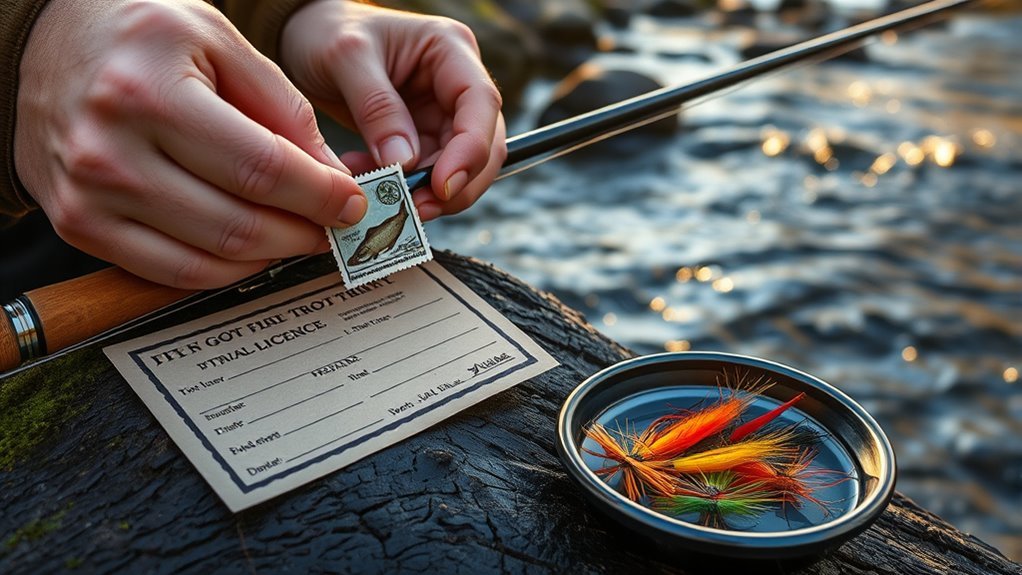
Michigan trout anglers do not buy a separate trout stamp in 2026. A current Michigan all-species fishing license covers trout and salmon, but anglers still must follow the season, tackle, size, and possession rules for the exact lake, river, or stream they plan to fish. License prices depend on residency, age, and license length.
Quick Answer
Michigan does not charge a separate trout stamp fee. In 2026, trout and salmon privileges are included with an all-species fishing license: $26 for residents, $76 for nonresidents, $11 for qualifying resident seniors or legally blind residents, or $10 for a 24-hour license.
Key Takeaways
- There is no separate Michigan trout stamp or “Trout Angler” add-on in 2026.
- The all-species license covers trout and salmon as well as other legal fish species.
- Anglers age 17 and older generally need a license to fish Michigan public waters.
- A license does not override water-specific trout seasons, tackle rules, size limits, or possession limits.
- Licenses are available online, through the Michigan DNR Hunt Fish app, and from authorized license agents.
At a Glance
| Time Required | Usually a few minutes online or in the app |
| Difficulty | Easy |
| Tools Needed | Accepted identification, payment method, and a phone, computer, or license agent |
| Cost | $10 daily; $26 resident annual; $76 nonresident annual; no separate trout stamp fee |
Does Michigan Require a Trout Stamp?

No. Michigan uses an all-species fishing license rather than a separate trout or salmon stamp. The license lets you legally target trout and salmon wherever fishing is open, subject to the rules for that waterbody.
The Michigan DNR fishing license page lists resident, nonresident, senior, youth, and daily all-species licenses. It does not list a required trout stamp or a separate “Trout Angler” option.
This distinction matters because a license answers whether you may fish, while the regulations answer where, when, and how you may fish. Michigan classifies many inland trout and salmon waters by regulation type, and some waters have special seasons, artificial-lure rules, or different size and possession limits.
For Michigan trout fishing, the extra stamp cost is $0; the required purchase is the appropriate all-species fishing license.
Who Needs a Michigan Fishing License for Trout?
Most residents and nonresidents age 17 or older need a valid fishing license to fish public waters in Michigan. The same all-species license covers trout, salmon, bass, walleye, panfish, and other species that may legally be taken.
- Age 17 or older: Buy an annual or daily all-species fishing license before targeting trout in public waters.
- Under age 17: A fishing license is not required, but every season, tackle, size, and possession rule still applies.
- Adult helping a child: An adult who is actively assisting a minor with fishing must have a fishing license.
- Free Fishing Weekend: Michigan waives fishing license fees for residents and nonresidents during two designated weekends each year, but all fishing regulations remain in force.
Warning: An all-species license does not make every trout stream open. Check the current Michigan Fishing Regulations and inland trout maps before you fish. Closed seasons and water-specific rules can apply even when your license is valid.
Products Worth Considering

Our license plate frame is made of premium Stainless steel, which ensures that the plate frame will never wear out. Corrosion resistant, Personalized Car Frame Can Perfect to Put on Your Front of Car,Decorate your car to make it look more beautiful and unique

Product Material: Our license plate frame is made of premium quality aluminum, which ensures that the plate frame will never wear out. Corrosion resistant, Personalized Car Frame Can Perfect to Put on Your Front of Car,Decorate your car to make it look more beautiful and unique.

【MATERIAL】: oFloral License plate frame is made from premium quality aluminum, which can provide long-lasting protection from corroding, rusting and aging, durability for long lasting usage.Personalized Car Frame Can Perfect to Put on Your Front of Car or for Decorative Purposes Around the House Like in Your Bedroom, Garage, Basement, Ect.
2026 Michigan Trout Fishing License Costs

The following prices are the Michigan DNR’s posted 2026 all-species fishing license fees. The annual resident, nonresident, and senior prices include the statutory $1 surcharge described in the state fishing regulations.
| License | 2026 Fee | Trout and Salmon Included? |
|---|---|---|
| Resident annual all-species | $26 | Yes |
| Nonresident annual all-species | $76 | Yes |
| Resident senior annual, age 65+, or qualifying legally blind resident | $11 | Yes |
| Daily all-species, resident or nonresident | $10 per 24 hours | Yes |
| Voluntary annual youth license, under age 17 | $2 | Yes |
| Separate Michigan trout stamp | Not required | Already covered by the all-species license |
Products Worth Considering

Express yourself with the front license plate design that fits your sense of humor, political views, or promotes your cause and beliefs.

UNIQUE DESIGN: Display your license plate with a frame as unique as you are. Designed to show off your one-of-a-kind style, our lightweight and durable frames are made to withstand all driving conditions.
Annual License Validity
A 2026 Michigan fishing license is valid through March 31, 2027. Regulations can change by license year and may also vary by waterbody, so save the current guide rather than relying on an older copy.
Daily License Option
The $10 daily all-species license is valid for 24 hours from the date and time selected by the purchaser. It is often the lowest-cost legal option for a resident or visitor who plans to fish only one day.
Payment and Checkout
You can buy through the state eLicense system, the official app, or an authorized license agent. Online checkout and retail payment options may differ, so review the purchase total and customer information before submitting the transaction.
Pro Tip: A nonresident fishing for one or two isolated days may spend less with daily licenses, while an annual license is usually simpler for several trips. Compare the number of fishing days before buying.
How License Funds Support Trout Conservation and Habitat
Michigan trout work is not funded by a dedicated trout stamp because no such stamp is required. Fisheries programs instead draw from broader state and federal funding sources, including fishing-license revenue and federal Sport Fish Restoration money.
The Michigan DNR explains that federal Dingell-Johnson Sport Fish Restoration revenue comes from taxes and duties tied to fishing equipment, boats, and motorboat fuel. A state’s share depends partly on its number of paid licensed anglers. Those funds may support sport-fish restoration, management, public access, and aquatic education.
Habitat Restoration Projects
Michigan’s Fisheries Habitat Grant Program supports work that benefits fisheries and aquatic resources. Eligible projects can include fish-habitat conservation, dam removal or repair, and resource assessments.
For trout streams, useful work may include restoring connected habitat, reducing erosion and sediment, improving passage around barriers, protecting cold groundwater inputs, and collecting data that guides future management. The exact funding source and project mix vary, so it is inaccurate to say that a fixed portion of a nonexistent trout-stamp fee goes directly to each project.
Stocking and Monitoring
The DNR raises and stocks both coolwater and coldwater species. Its coldwater program includes trout and salmon, while stocking decisions consider habitat, food, predators, competitors, natural reproduction, angling opportunity, and management goals.
| Activity | Purpose | Management Value |
|---|---|---|
| Fish stocking | Create or maintain fishing opportunities and help restore selected populations | Adds fish where stocking supports a defined management goal |
| Population surveys | Track abundance, age, growth, survival, and fish health | Helps set stocking levels and fishing regulations |
| Habitat work | Protect spawning, nursery, feeding, and refuge areas | Supports natural reproduction and long-term resilience |
| Temperature and water-quality monitoring | Measure conditions that affect coldwater fish | Guides habitat priorities and climate-response planning |
Note: Buying a license supports the broader fisheries system and also helps Michigan qualify for federal Sport Fish Restoration funding. It does not create a trout-only account tied to your individual purchase.
How to Buy and Carry a Michigan Fishing License
Michigan provides three practical purchase routes: the state eLicense website, the official Michigan DNR Hunt Fish app, and authorized retail license agents.
- Choose the license period. Select annual, daily, senior, or voluntary youth, based on eligibility and the number of days you plan to fish.
- Use an official sales channel. Buy through Michigan DNR eLicense, the Michigan DNR Hunt Fish app, or an authorized license agent.
- Enter the purchaser’s information carefully. The state system can use a driver’s license, state identification, DNR Sportcard, or DNR customer information, depending on the transaction.
- Save proof of the license. Keep the emailed PDF, printed copy, or stored digital license available. Carry the identification used to buy the license while fishing.
- Check the water before the trip. Use the current regulation guide and trout-and-salmon maps to confirm the season, water type, tackle restrictions, and harvest rules.
The official app can store and display licenses and permits. Saving an offline-accessible copy or screenshot can be useful in areas with weak cellular service, provided the displayed license is current and readable.
Pro Tip: Verify your name, birth date, residency, license type, and effective date before completing checkout. For sales or account help, contact the Michigan DNR license help desk at 517-284-6057.
Exemptions, Veterans, and Special Provisions
Michigan’s exemptions and reduced-fee provisions apply to the all-species fishing license; there is no separate trout authorization to waive.
- Youth: Residents and nonresidents under age 17 may fish without a license. A voluntary youth license is available for $2.
- Free Fishing Weekends: License fees are waived for residents and visitors on the announced winter and summer weekends. All other fishing rules still apply.
- Michigan resident veterans with qualifying disabilities: Fishing-license fees are waived for a resident veteran whom the U.S. Department of Veterans Affairs has determined to be permanently and totally disabled at the 100% rate for a service-connected disability other than blindness, or individually unemployable.
- Michigan resident active-duty military: Full-time active-duty members who maintain Michigan resident status may receive fishing-license fee waivers with the required military and residency documentation.
- Legally blind Michigan residents: A legally blind resident is eligible for the $11 senior annual fishing license; legal blindness is not a blanket license exemption.
- Developmental disabilities and licensed homes for the aged: The current regulation guide describes special mentored-license or group-permit pathways for qualifying individuals. Eligibility and supervision requirements are specific, so confirm them with the DNR before fishing.
Note: Carry documents that prove any free or reduced-fee eligibility. A person who qualifies for a waiver must still follow every trout season, gear, size, and possession rule.
Comparison With Other States and Conservation Donation Options
Trout licensing systems vary by state, which is one reason anglers encounter conflicting answers online. A fee that applies in Wisconsin or another state should not be copied into a Michigan license guide.
| State | Trout Fee Model | Practical Meaning |
|---|---|---|
| Michigan | No separate trout stamp | All-species fishing license covers trout and salmon |
| Wisconsin | $10 inland trout stamp and $10 Great Lakes salmon/trout stamp are listed separately | The appropriate stamp may be needed in addition to a fishing license |
| New York | General freshwater fishing license; optional $5 Habitat & Access Stamp | The habitat stamp is a voluntary donation and is not required to fish |
Anglers who want to direct extra support toward Michigan coldwater fisheries can donate to a credible watershed or trout-conservation organization, such as Michigan Trout Unlimited, or volunteer with a local stream-restoration group. A donation is optional and never substitutes for a required fishing license.
You can also review DNR habitat grants, stocking records, and fisheries survey reports to see how public programs are managing fish and aquatic habitat. This is more accurate than assuming every license dollar is earmarked for trout.
Frequently Asked Questions
Do I need a separate trout stamp in Michigan?
No. A Michigan annual or daily all-species fishing license includes trout and salmon privileges. You must still follow the rules for the specific water you fish.
Do children need a trout stamp or fishing license?
Anglers under age 17 do not need a Michigan fishing license, and there is no trout stamp. They must follow all fishing rules. An adult who actively assists a child must have a valid fishing license.
Can a nonresident buy only a daily license to fish for trout?
Yes. A nonresident may buy the $10 daily all-species license and use it for trout during its 24-hour validity period, as long as the chosen water is open and all local regulations are followed.
Does the license cover stocked urban fishing sites?
The all-species license generally covers legal fishing at public stocked sites; Michigan does not sell a separate urban-trout add-on. Check posted site rules and the current fishing guide because individual waters may have special restrictions.
Can I show my fishing license on my phone?
Yes. Michigan allows anglers to display a current fishing license on a smartphone or similar device. Keep the identification used for the purchase with you, and make sure the digital copy is readable.
Is a Michigan fishing license refundable?
The public fishing-license page does not state a general refund promise. Check all details before paying. If you bought the wrong item or entered incorrect information, contact the DNR license help desk at 517-284-6057 promptly for case-specific guidance.
Are group or bulk fishing-license discounts available?
Michigan’s standard fee schedule does not list a club, school, or bulk fishing-license discount. Youth under age 17 may fish without a license, and organized programs should contact the DNR about any event-specific permits or education options.
Conclusion
The Michigan trout stamp cost is $0 because the state does not require a separate trout stamp. For 2026, buy the all-species annual or daily fishing license that fits your residency, age, and trip length. Then check the current trout-and-salmon regulations for your exact water before casting. That final rules check is just as important as carrying the license.
Sources
- Michigan DNR — Fishing and hunting license information — current license types, fees, age rules, military provisions, and purchasing guidance.
- Michigan DNR — Fishing regulations — current regulation guide, inland trout maps, and water-specific rules.
- Michigan DNR — Funding — state and federal fisheries funding, including Dingell-Johnson Sport Fish Restoration.
- Michigan DNR — Fish stocking — coldwater species, stocking purposes, and stocking database access.
- Wisconsin DNR — Fishing licenses — Wisconsin’s separate inland trout and Great Lakes salmon/trout stamp fees.
- New York DEC — 2026 trout season and licensing — New York fishing-license information and the optional Habitat & Access Stamp.
