
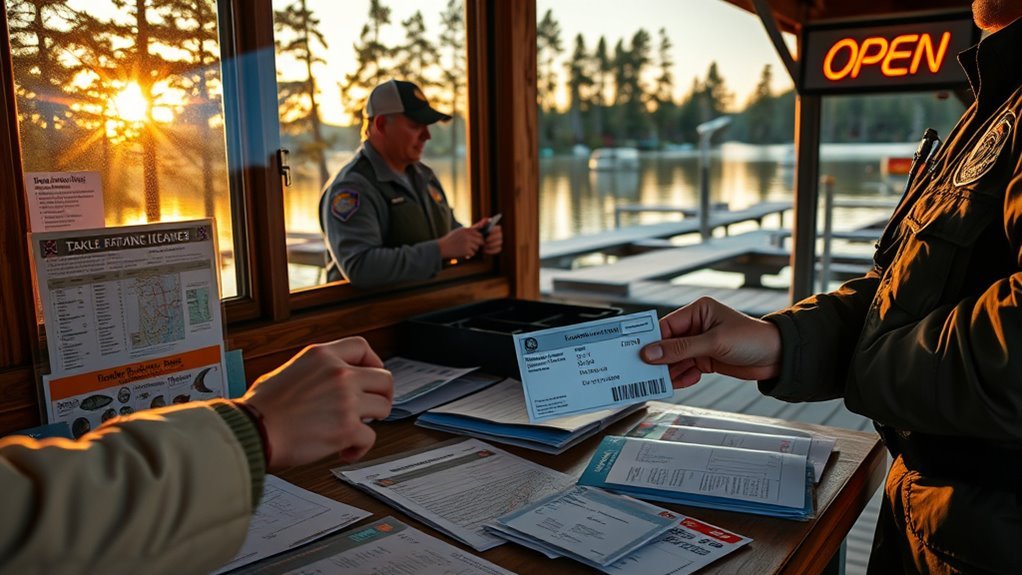
California gives visiting anglers several license choices, but the prices and rules depend on how long you plan to fish, where you will fish, and which species or gear you will use. As of July 28, 2026, the standard nonresident license lasts 365 days from purchase—not just through the end of the calendar year—and several older fee figures are no longer current.
Quick Answer
A nonresident age 16 or older pays $174.14 for a California 365-day sport fishing license in 2026. Short-term choices cost $21.09 for one day, $32.40 for two consecutive days, or $64.54 for ten consecutive days. Validations and report cards may cost extra, while qualifying public-pier fishing needs no license.
Key Takeaways
- California’s 2026 nonresident 365-day sport fishing license costs $174.14 and runs for 365 days from the purchase date.
- The one-day, two-day, and ten-day options cost $21.09, $32.40, and $64.54, respectively.
- No license is required on a legally defined public ocean or bay pier, but seasons, bag limits, gear rules, and report-card requirements still apply.
- People of any age may need a species report card, even when they are under 16, fishing on a public pier, or fishing on a Free Fishing Day.
- California lifetime fishing licenses are available only to California residents, not visiting nonresidents.
2026 Costs at a Glance
| 365-Day Nonresident Sport Fishing License | $174.14 |
| One-Day Sport Fishing License | $21.09 |
| Two-Day Sport Fishing License | $32.40 |
| Ten-Day Nonresident Sport Fishing License | $64.54 |
| Ocean Enhancement Validation | $7.30 |
| Second Rod Validation | $20.26 |
| Recreational Crab Trap Validation | $2.98 |
Note: California adjusts many license fees annually. Confirm the price and current regulations on the CDFW Sport Fishing Licenses and Report Cards page before purchasing.
Who Needs a Sport Fishing License in California?
Anyone age 16 or older generally needs a valid California sport fishing license when attempting to take fish, shellfish, crustaceans, mollusks, amphibians, reptiles, or other covered aquatic animals in California inland or ocean waters. The requirement applies to residents and nonresidents.
Children under 16 generally do not need a sport fishing license. However, age does not remove every requirement. CDFW requires the appropriate report card from every person fishing for certain species, including children and people fishing under another license exemption.
A license exemption does not automatically create a report-card, season, bag-limit, or gear exemption.
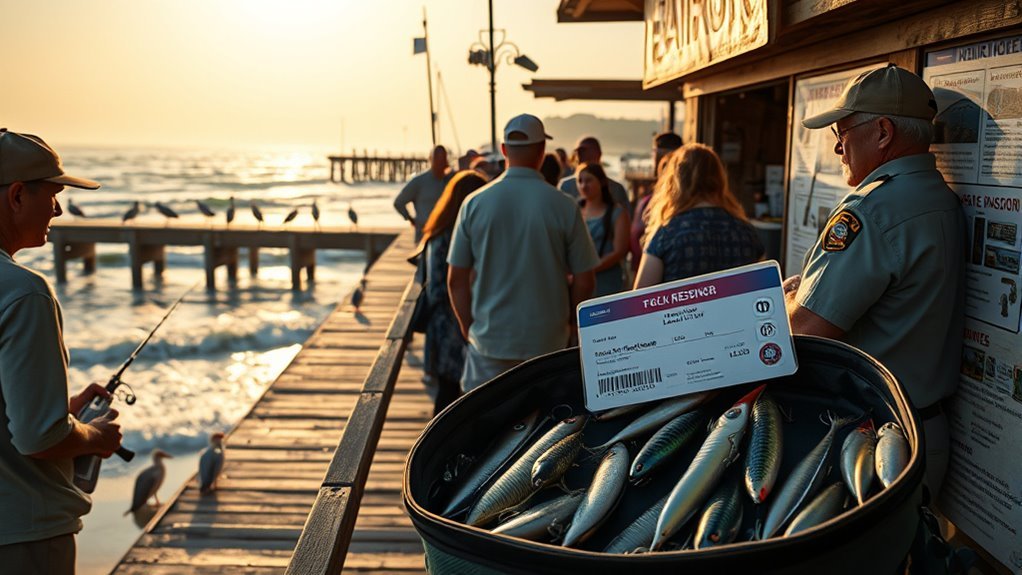
A sport fishing license is not required when recreationally fishing by angling from a qualifying public pier in California ocean or bay waters. To qualify, the structure must meet California’s legal definition of a public pier, including free and unrestricted public access and a primary purpose of providing fishing access.
Warning: The exemption does not cover every dock, jetty, rock wall, beach, marina, or privately controlled pier. If you leave a qualifying pier and step onto an adjacent beach or nonqualifying structure to continue landing or taking a fish, a license may be required. Check the CDFW public-pier list and map.

This daily devotional helps parents pray purposefully for their children through a full year of Scripture readings, reflections, and guided prayer prompts. Written to encourage faithful family discipleship, it offers practical, biblically grounded support for parents who want to shape their prayers around God's Word. A foreword by Sinclair B. Ferguson adds trusted theological insight and encouragement.

This heartfelt memoir blends laugh-out-loud honesty with tender reflections on love, loneliness, and the unexpected healing power of rescue dogs. Isabel Klee shares her journey fostering pups in the city while navigating dating and self-discovery, offering an intimate, relatable story for readers who enjoy emotional, character-driven narratives. It is a warm, engaging read about opening your heart and finding connection in surprising places.

This renter-friendly curtain rod bracket lets you hang curtains over outside-mounted vertical blinds without drilling, screws, or wall damage. It clips directly onto rectangular headrails for a fast, secure installation and fits curtain rods up to 1 inch in diameter. Ideal for apartments, condos, sliding glass doors, and rental homes, it offers a clean, damage-free way to add privacy and style in minutes.
Annual Nonresident Sport Fishing License Fee Breakdown
The 2026 California Nonresident Sport Fishing License costs $174.14. It is available to nonresidents age 16 or older and remains valid for 365 days from the date of purchase.
For example, a license bought on July 28, 2026, normally remains valid through July 27, 2027. It does not expire automatically on December 31 simply because the calendar year changes.
CDFW states that most listed fees already include a 5% license-agent handling fee and a 3% nonrefundable application fee. The purchased license, validations, and report cards are generally nonrefundable.
The annual license can save money when you expect several separate fishing trips. At 2026 prices, it costs less than buying nine one-day licenses, six two-day licenses, or three ten-day licenses.
Pro Tip: Compare the full trip cost, not just the number of fishing days. The annual license may be a better value when you expect to return to California within the next 365 days.
Short-Term License Options for Visitor Anglers
Visitors who will fish for only a few days can choose one of three short-term licenses:
- One-day license — $21.09: Valid for one specified day for a resident or nonresident.
- Two-day license — $32.40: Valid for two consecutive days for a resident or nonresident.
- Ten-day nonresident license — $64.54: Valid for ten consecutive days and available only as a nonresident short-term product.
The one-day and two-day licenses are exempt from the Ocean Enhancement Validation requirement. The ten-day nonresident license does not receive that automatic exemption, so an Ocean Enhancement Validation may be needed when fishing in ocean waters south of Point Arguello.
Short-term licenses do not change seasons, minimum sizes, bag limits, marine protected areas, gear restrictions, or report-card requirements. They also do not cancel the public-pier exemption: no sport fishing license is required when all fishing activity stays on a legally qualifying public pier.
During an online purchase, you select the date on which the short-term license begins. Check those dates before completing the transaction because fishing licenses are generally nonrefundable.
Required Validations and Add-On Report Cards
A basic sport fishing license does not cover every location, gear choice, or target species. You may also need a validation or report card before fishing.
| Item | 2026 Fee | When It Is Needed |
| Ocean Enhancement Validation | $7.30 | When a license is required for fishing in ocean waters south of Point Arguello. Not required with one-day or two-day licenses or when fishing from a qualifying public pier. |
| Second Rod Validation | $20.26 | Allows two rods or lines in many inland waters. It does not override water-specific, species-specific, artificial-lure, or barbless-hook restrictions. |
| Recreational Crab Trap Validation | $2.98 | Required when taking crab with a regulated crab trap. It is not required for hoop nets or crab loop traps. Beginning January 1, 2026, it is not required when using crab traps from a Commercial Passenger Fishing Vessel. |
| North Coast Salmon Report Card | $9.21 | Required when fishing for salmon in the Smith River System or Klamath-Trinity River System. |
| Steelhead Report Card | $10.29 | Required for anyone fishing for steelhead in inland waters. |
| Spiny Lobster Report Card | $12.70 | Required for every person taking spiny lobster, including people fishing from public piers. |
| Sturgeon Fishing Report Card | $8.13 listed 2026 fee | Required when fishing for sturgeon. Current white-sturgeon fishing is catch-and-release only. |
Warning: As of July 28, 2026, CDFW states that the 2026–2027 Sturgeon Fishing Report Card will become available on August 15, 2026. Sturgeon rules have changed recently, so check the current CDFW license and report-card page before fishing.
Report cards are required regardless of whether the person otherwise needs a sport fishing license. This includes children under 16, public-pier anglers, and people fishing on a Free Fishing Day.
The CDFW License App can display many licenses and validations, but anglers must still carry physical report cards when participating in activities authorized by those cards, subject to any narrow regulation-specific exception.
Reduced-Price and Free License Programs for Eligible Visitors
Some visitors may qualify for a reduced-fee license, but not every California assistance program is open to nonresidents.
- Disabled veterans: An honorably discharged resident or nonresident veteran with a service-connected disability rating of at least 50% may prequalify. The 2026 price is $10.04 at a CDFW office or $10.54 from license agents.
- Recovering service members: Eligible resident or nonresident recovering service members may prequalify for the same reduced prices.
- Blind or developmentally disabled anglers: CDFW offers free-license categories with required medical or agency certification.
- Mobility-impaired applicants: The statutory free-license category described by CDFW includes a California-residency requirement and specific mobility criteria.
- Low-income Native Americans: The free license is limited to qualifying California residents who meet the financial and documentation requirements.
- Low-income seniors: This reduced-fee program is limited to qualifying California residents age 65 or older who receive SSI or CAPI benefits.
Disabled veterans and recovering service members must prequalify before purchasing at the reduced rate. Applicants generally submit identification, a GO ID, and official documentation proving eligibility. CDFW advises applicants not to email sensitive documents and provides secure upload, mail, and fax options.
Free licenses do not automatically include paid validations or report cards. Those items may still have to be purchased at the regular fee.
Where and How to Purchase a License
California sport fishing licenses, validations, and report cards are available through several authorized sales channels:
- CDFW Online License Sales and Services
- CDFW’s authorized telephone sales agent at (800) 565-1458
- Independent authorized license agents, including many sporting-goods, discount, and bait-and-tackle stores
- Select CDFW License Sales Offices
Online Purchases and Renewal
To purchase online, retrieve or create your CDFW customer record, choose the correct resident status and license term, add any required validations or report cards, and complete payment.
CDFW’s online-sales FAQ says a buyer of a 365-day license can print a temporary license that is valid immediately for up to 30 days while the permanent document is mailed. Short-term licenses are printed at the end of the transaction and begin on the selected date. A working printer may therefore be needed for immediate temporary or short-term documents.
The CDFW License App can display eligible sport fishing licenses and validations electronically. It also provides access to regulations and CDFW services. Physical report cards must still be carried when required.
Auto-Renewal is available for 365-day sport fishing licenses. CDFW sends advance notices before processing the renewal. A renewed license begins after the current 365-day entitlement expires.
In-Person Agent Locations
Authorized agents can issue annual and short-term licenses and sell many validations and report cards. Availability, store hours, and accepted payment methods vary by location, so confirm before traveling.
Use CDFW’s official license-agent search rather than assuming every bait shop, sporting-goods store, or grocery store sells every license product. Select CDFW offices also provide licensing services, but office hours and transactions vary.
Review the license before leaving the counter. Confirm your name, GO ID, residency status, product type, validity dates, and every required validation or report card.
Lifetime and Multi-Year License Alternatives
California does not offer a lifetime fishing license to nonresidents. Lifetime fishing licenses are available only to people who qualify as California residents when applying.
The 2026 resident lifetime fishing-license prices are:
- Ages 0–9: $709.00
- Ages 10–39: $1,160.25
- Ages 40–61: $1,045.00
- Ages 62 and older: $709.00
These prices are included for comparison only. A visiting nonresident must choose the $174.14 365-day license or an eligible short-term license. California does not list a separate multi-year nonresident sport fishing license.
If you later establish California residency, review the current residency definition, lifetime-license prices, and application process before considering a lifetime purchase.

See You Later, Alligator is a charming children's picture book that blends playful rhyme with colorful animal storytelling. Written by Sally Hopgood and illustrated by Emma Levey, it makes read-aloud time fun and engaging while helping young readers enjoy rhythm, repetition, and early language development.

Keep papers neatly sorted with this Oxford 8-pocket paper folder designed for classroom, office, and home organization. Eight color-coded pockets help separate subjects or projects, while the comb-bound design opens flat for easy access and page turning. It also includes an inside business card holder and a high-capacity layout that makes managing letter-size documents simple and efficient.

Die With Zero offers a fresh perspective on personal finance by encouraging readers to use money intentionally to create memorable life experiences instead of simply accumulating wealth. Written by Bill Perkins, this book combines practical guidance with a motivating philosophy to help readers align spending, saving, and life goals for a more fulfilling future.
Reporting Harvests and Deadlines for Nonresidents
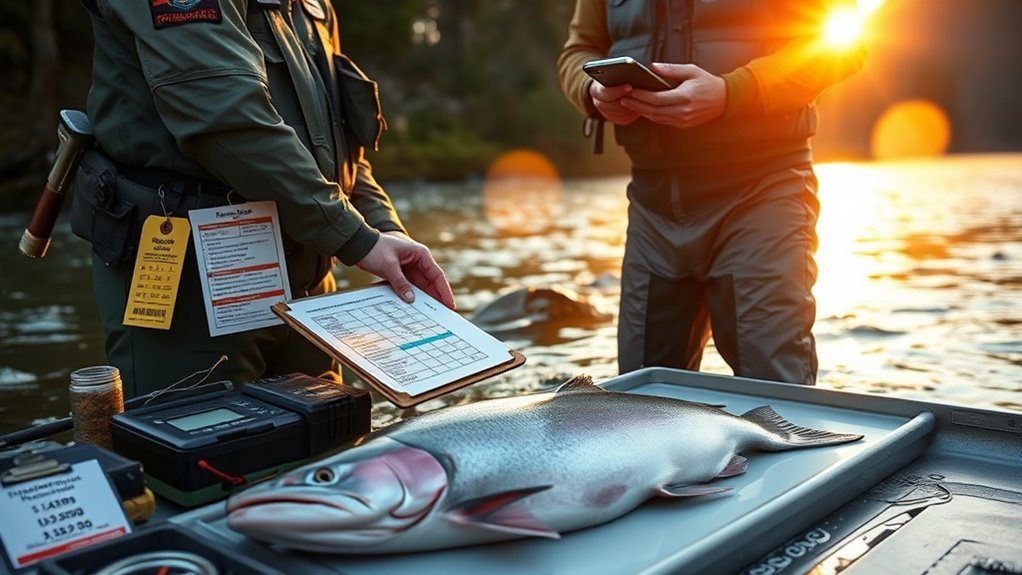
Buying a report card is only the first step. You must complete it as required while fishing and submit the final report by the applicable deadline, including when you caught nothing.
Harvest Reporting Deadlines
| Report Card | Regular Online Reporting Window | Late Online Reporting Window |
| Spiny Lobster | March 19–April 30 | May 1–July 1 |
| North Coast Salmon | January 1–January 31 | February 1–April 1 |
| Steelhead | January 1–January 31 | February 1–April 1 |
| Sturgeon | January 1–January 31 | February 1–April 1 |
Reporting dates are tied to the report-card season, not to the expiration date of your 365-day license. A fishing license and a report card may therefore have different validity periods.
How to Report
You can report eligible harvest information through CDFW Online License Sales and Services. After signing in, choose the harvest-reporting option and follow the instructions for the correct species.
You may also return the physical report card using the mailing instructions printed on it. Keep a copy, photograph, mailing receipt, or online confirmation for your records.
If the online reporting window has closed, CDFW instructs anglers to mail the report card to the address printed on it immediately.
Late Fees and Penalties
A spiny-lobster report-card holder who does not submit the report by April 30 may be charged a $21.60 non-return fee when purchasing a report card for the following season.
Other missed reporting deadlines can also create compliance problems. Do not assume that a zero-catch season removes the duty to report. Enter and submit the required information by the printed or published deadline.
False, altered, or incomplete records may lead to enforcement under the applicable regulations. Record each required fishing location, date, catch, or effort entry accurately at the time specified by the report-card instructions.
Rules, Exemptions, and Public Pier Fishing

The main license exemptions do not remove California’s fishing regulations.
- Children under 16: No sport fishing license is generally required, but species report cards may still be mandatory.
- Public ocean or bay piers: No sport fishing license is required when the structure meets California’s public-pier definition and the angler remains on it. Report cards and all other rules still apply.
- Free Fishing Days: California’s 2026 Free Fishing Days are July 4 and September 5. No sport fishing license is required on those dates, but report cards, seasons, closures, size limits, bag limits, fishing hours, and gear rules remain in force.
A public-pier exemption also does not guarantee that a pier is open. A city, port, landowner, or public agency may close a structure for storms, repairs, safety concerns, or maintenance.
Before fishing, review the latest CDFW fishing regulations, regional maps, marine protected areas, emergency closures, and in-season notices. Ocean salmon, groundfish, crab, sturgeon, and other fisheries can change during the year.
Note: A fishing license does not include parking, launch fees, campground fees, private access, boat rentals, charter fares, or permission to cross private property.
Replacing, Renewing, and Managing Your License
You must have a valid license in your immediate possession whenever a license is required. Do not continue fishing after losing access to your required proof unless you can display an eligible electronic license or obtain a replacement.
CDFW lists the following 2026 duplicate fees:
- Duplicate Sport Fishing License: $14.30
- Duplicate Second Rod or Ocean Enhancement Validation: $3.81
- Duplicate Recreational Crab Trap Validation: $2.98
Duplicate licenses can generally be purchased online, from an authorized license agent, or at a CDFW sales office. A lost Sturgeon Fishing Report Card has a separate procedure: the replacement is available only from a CDFW license sales office and requires an affidavit and duplicate fee.
A 365-day license can be renewed through an authorized sales channel or through Auto-Renewal when enrolled. Confirm that your contact information and mailing address are current before renewal.
The CDFW License App can display eligible licenses and validations, but it does not eliminate the physical-possession requirement for report cards. Charge your phone before leaving, save your login information securely, and carry paper documents when required.
Frequently Asked Questions
Can I fish in federal waters with a California nonresident license?
Usually, but the state license is not the only rule to check. Federal species, season, area, vessel, and permit requirements may apply beyond state waters. California rules may also apply to fish taken offshore and landed in California. Review both NOAA recreational fishing guidance and current CDFW regulations before departure.
Are there state license discounts for groups or charter trips?
CDFW does not list a general group or charter-passenger discount for ordinary sport fishing licenses. Each angler age 16 or older normally needs an individual license and any required validations or report cards. A charter operator may offer package pricing or help passengers obtain licenses, but the charter fare does not automatically replace each passenger’s licensing duties.
Does the license cover spearfishing or commercial fishing?
A valid sport fishing license can cover lawful recreational spearfishing, but species, location, season, depth, marine protected area, diving, and gear restrictions still apply. It does not authorize commercial fishing or the sale of catch. Commercial activity requires the appropriate commercial licenses and privileges.
Can I transfer my nonresident license to another person?
No. A sport fishing license and its report cards are issued to a specific person and cannot be transferred or shared. Another angler must obtain a license in their own name. A purchaser may instead buy an eligible gift voucher when CDFW offers one for the desired license type.
Is shore-access parking included with the fishing license?
No. A California fishing license does not include parking, pier access charges, marina fees, boat-launch fees, campground charges, private-property access, or charter costs. Check the rules and payment instructions for the specific beach, lake, harbor, park, or access lot.
Do children need species report cards?
Yes, when fishing for a species covered by a report-card requirement. A child under 16 may fish without a general sport fishing license, but must still have the appropriate report card when fishing for steelhead, sturgeon, spiny lobster, or covered North Coast salmon.
Can I show my fishing license on my phone?
Eligible sport fishing licenses and validations can be displayed through the official CDFW License App. However, physical species report cards must normally remain in your immediate possession while you fish. Download the app and confirm your items appear before leaving cellular coverage.
Conclusion
A California nonresident sport fishing license costs $174.14 in 2026 and remains valid for 365 days from purchase. Visitors can also choose one-day, two-day, or ten-day licenses, while qualifying public-pier fishing remains license-free. Before fishing, check whether you need an Ocean Enhancement, Second Rod, or Recreational Crab Trap Validation and whether your target species requires a physical report card.
Use CDFW’s current fee page and regulation maps before every trip. Prices can change annually, and seasons, closures, depth limits, marine protected areas, and species rules may change during the year.
Sources
- California Department of Fish and Wildlife — Sport Fishing Licenses and Report Cards — 2026 license fees, validations, report cards, eligibility, duplicate fees, and reporting windows.
- California Department of Fish and Wildlife — California Beach Fishing — public-pier definition, pier list, and license-exemption rules.
- California Department of Fish and Wildlife — Free Fishing Days — 2026 dates and regulations that remain in effect.
- California Department of Fish and Wildlife — Fishing Regulations — current freshwater, ocean, emergency, and regional regulations.
- California Department of Fish and Wildlife — CDFW License App — electronic display of eligible licenses and physical report-card requirements.
- NOAA Fisheries — Recreational Fishing in Federal Waters — federal-water rules, registrations, and permit guidance.

The COOK'S CHOICE XL Better Breader Bowl makes coating chicken, fish, vegetables, and more fast, tidy, and consistent. Its extra-long tray helps prevent overcrowding, while the integrated sifter promotes even coverage with less waste. Designed for easy cleanup and convenient storage, it is a practical choice for home cooking, air frying, frying, and outdoor meal prep.

These colorful answer buzzers turn lessons, review games, and family activities into lively game-show style challenges that boost participation and make learning more interactive. Each buzzer has a distinct sound to clearly identify who buzzed in first, while the durable, palm-sized design makes them easy for kids and adults to use in classrooms, homeschools, and group settings.

Stay organized with a durable 1-subject notebook set designed for school, note-taking, and digital study support. The college ruled pages resist ink bleed, tear out cleanly, and work with the Five Star Study App to create flashcards and sync notes to Google Drive. Tough pockets, a water-resistant cover, and Spiral Lock wire help protect your work throughout the year.
