

You’ll usually pay $34 for a Tennessee resident annual fishing license, while a standard nonresident annual fishing license is listed at $50 in this article. Juniors, seniors, lifetime license holders, and some disability-related license categories may qualify for lower or different fees. Trout fishing and certain special areas can add extra permit costs, so the final price depends on where you fish, your residency status, your age, and whether you plan to target trout.
Quick Answer
A Tennessee annual fishing license costs $34 for most residents and $50 for nonresidents, based on the fee details in this guide. Extra permits may apply for trout, Gatlinburg, Tellico-Citico, Agency Lake, or South Holston Reservoir access.
Key Takeaways
- Most Tennessee residents pay $34 for an annual fishing license, while several lower-cost resident options exist for juniors, seniors, and county-only fishing.
- Nonresidents can choose annual, 3-day, or 10-day licenses depending on trip length and whether they plan to fish for trout.
- Trout fishing usually requires an extra trout permit or all-species license option.
- Some waters, including Gatlinburg Trout waters and Tellico-Citico Trout waters, may require special daily permits.
- Buy or renew through TWRA online, licensed retailers, or regional offices to keep proof of your license available while fishing.
At a Glance
| Resident Annual License | $34 for most Tennessee residents |
| Nonresident Annual License | $50 for standard annual access |
| Trout Add-On | Resident annual trout supplement is listed at $21; nonresident annual trout permit is listed at $99 |
| Best Purchase Method | Online through TWRA, licensed retailers, or TWRA regional offices |
Who Needs a Tennessee Fishing License and Who’s Exempt
If you plan to fish in Tennessee public waters and you’re 13 or older, you must carry a valid Tennessee fishing license unless you meet a specific exemption.
You’ll follow clear fishing age requirements: anyone 13+ needs a license; children under 13 are exempt. If an adult is actively helping, baiting hooks, casting, reeling, or otherwise assisting, that adult should make sure they hold the proper license.
Anyone 13 and older generally needs a Tennessee fishing license unless a specific exemption applies.
Fishing license exemptions may include residents born before March 1, 1926, individuals who are legally blind, and certain people with developmental disabilities. Military personnel on leave may also qualify for an exemption while fishing in Tennessee.
Both residents and nonresidents must comply with these rules, though residents usually access lower fee structures and more reduced-fee license options.
You should verify eligibility before fishing to avoid citations. Exemptions are specific, documented, and enforced by state authorities.
For planning and budgeting, treat these exemptions as formal policy exceptions rather than informal waivers.
Note: License rules can change. Before you fish, confirm the current Tennessee Wildlife Resources Agency fee chart and exemption rules, especially if you are relying on age, military, disability, or special-status eligibility.
Resident Annual Fishing License Options and Prices
You’ll find several resident license types with clear price points and eligibility rules. The standard resident annual license is $34, junior residents ages 13–15 may have a $10 option, county-only fishing may be available for $10, and some senior residents may qualify for a $5 annual fishing license.
If you plan to fish for trout, you’ll usually need a $21 annual trout supplemental in addition to your base resident license.
Below are the main resident options and how the fees apply.
Products Worth Considering


TENNESSEE STATE FLAG DESIGN: Features a textured, raised Tennessee flag design for an authentic, high-end look and feel.
Features University of Tennessee Volunteers-inspired design, designed as a novelty decorative display piece
Resident License Types
When you buy a resident annual fishing license in Tennessee, you’re paying $34 for one year of statewide fishing privileges from the purchase date. Lower-cost alternatives include a $10 County of Residence Fishing License, which limits you to county waters, and a $10 Junior Hunt, Fish, and Trap license for residents ages 13–15.
You should choose a license type based on where you plan to fish. The $34 license gives broader statewide freshwater access. The $10 county license may make sense if you only fish close to home and do not need statewide access.
If you’re 13–15, the $10 junior license can cover fishing activities at a lower cost. If you’re 65 or older, compare the senior annual option, permanent senior options, and sportsman packages before buying.
For extensive coverage, the $165 Annual Sportsman License consolidates hunting, trapping, and fishing into one permit, which may be useful if you do more than fish.
Price Breakdowns
One clear option is the standard resident annual fishing license at $34, which gives you statewide freshwater access for 12 months from purchase. Lower-cost resident alternatives include a $10 County of Residence license, a $10 Junior Hunt, Fish, and Trap license for ages 13–15, and a $5 discounted annual fishing license for residents 65 and older.
You’ll compare costs against nonresident rates and supplemental permits to understand your real total. For example, a resident who only fishes local county waters may pay less than a resident who fishes statewide trout waters.
- Compare per-angler cost across resident tiers before buying.
- Choose statewide access if you fish in more than one county.
- Factor trout-permit add-ons into your seasonal budget.
- Use lower-cost youth, senior, or county options only when you meet the eligibility rules.
Eligibility Requirements
After comparing the fees, make sure you qualify for the license type you choose. Standard resident license eligibility requires Tennessee residency and the proper annual purchase, giving you public-water access based on the license terms.
If you’re 65 or older, a senior annual license may reduce your cost and make fishing more affordable. Junior Hunt/Fish licenses cover ages 13–15 at $10, helping younger anglers stay compliant at a lower fee.
The County of Residence option limits access to county waters, so it is not the right choice if you plan to fish across Tennessee. Age exemptions may also apply to residents born before March 1, 1926, if they can prove age.
Plan to verify residency and age before purchase. Bring the right documentation if you buy in person, and use accurate personal details when buying online.
Nonresident Annual Fishing License Rates and Trout Permits
For nonresidents, the standard annual fishing license is listed at $50 and is valid for one year from purchase, giving visiting anglers broad access to Tennessee state waters.
If you plan to fish for trout, you’ll need an additional annual trout permit priced at $99, though 3-day and 10-day options are available for shorter trips.
Some areas, such as Gatlinburg and Agency Lake, may require extra fees or special permits beyond standard nonresident rates.
Products Worth Considering


Product Material: Our license plate frame is made of premium quality aluminum, which ensures that the plate frame will never wear out. Corrosion resistant, Personalized Car Frame Can Perfect to Put on Your Front of Car,Decorate your car to make it look more beautiful and unique.
Express yourself with the front license plate design that fits your sense of humor, political views, or promotes your cause and beliefs.
Nonresident Annual Rates
While visiting Tennessee, you’ll find nonresident annual fishing licenses priced at $50 and an annual trout permit at $99, both valid for one year from purchase. Shorter options include 3-day licenses and 10-day licenses, with different prices depending on whether trout or all-species access is included.
You’ll see these rates used to support clear fishing regulations, visitor access, enforcement, and fishery management.
- Annual standard: $50 — useful for long stays or repeat fishing trips.
- Annual trout permit: $99 — needed for designated trout fishing access.
- Short-term licenses: 3-day and 10-day tiers — useful for tourists and weekend visitors.
- Validity: annual nonresident licenses are active for one year from purchase, simplifying planning for repeat trips.
Trout Permit Options
Trout fishing in Tennessee adds a separate compliance layer. A nonresident may pay $99 for an annual trout permit in addition to the $50 general nonresident fishing license, while shorter all-species options may include or require added trout access depending on the license type.
The permit process is usually simple: purchase the general or short-term license, then add the trout permit or choose the all-species option that fits your trip. Budget accordingly and confirm designated trout waters before you fish.
| Item | Cost |
|---|---|
| Annual nonresident license | $50 |
| Annual trout permit | $99 |
| 3-Day license | $40 |
| 10-Day license | $61 |
Pro Tip: If you are visiting for only a few days, compare the short-term all-species license price with the annual license plus trout permit before buying. The cheaper choice depends on trip length and whether trout fishing is part of your plan.
Lifetime, Senior, and Disability Reduced-Fee License Details
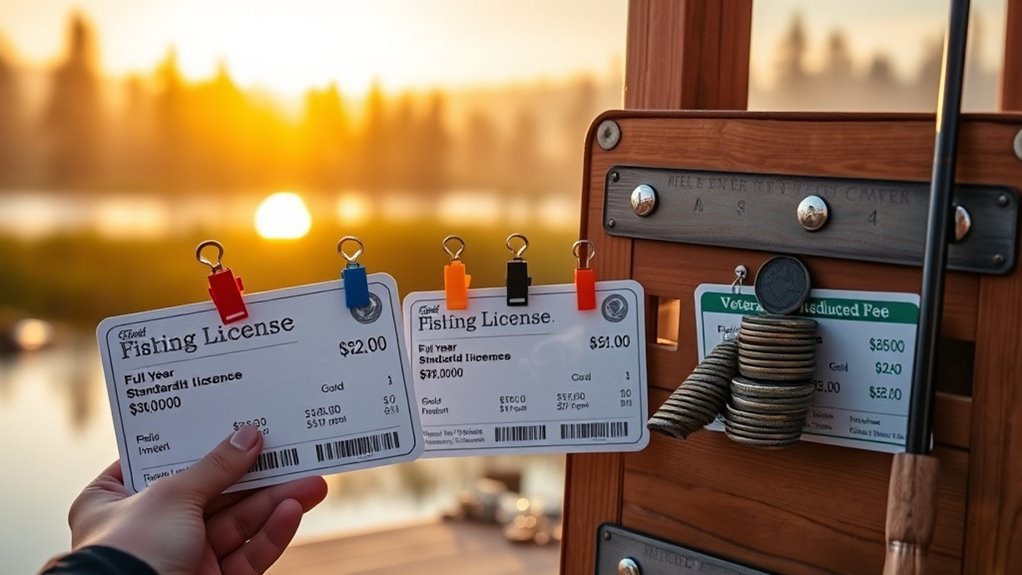
You can access several reduced-fee and lifetime fishing options designed to lower long-term costs and support specific groups.
These options can reduce yearly renewal hassle and may offer strong value for residents who fish often.
Lifetime Sportsman License rates scale by age. In this article, infants and adopted children under 13 are listed at $320, while adult lifetime fees reach $1,976.
Senior residents 65+ can choose from senior license options, including a $329 Senior Sportsman License or a $49 Permanent Senior Citizen Hunt/Fish/Trap license after their 65th birthday.
Qualified residents with disabilities may obtain a Wheelchair Hunt/Fish Resident License or Sport Fishing Certified Blind License for $10 each.
- Lifetime Sportsman by age: $320–$1,976 — a one-time investment for long-term access.
- Adopted Child Lifetime: $320 — a youth-focused long-term option.
- Senior Sportsman: $329; Permanent Senior: $49 — targeted senior fishing discounts.
- Resident Disability Licenses: $10 each — reduced-fee access for qualifying residents.
These policies balance long-term participation, affordability, and recurring license administration.
Required Permits and Special Area Fishing Fees

Because certain waters carry extra management costs or special regulations, you’ll need additional permits beyond the $34 annual resident fishing license to legally fish specific areas.
Tennessee’s fishing regulations designate site-specific fees and permit applications to fund stocking, habitat work, and enforcement. For example, Gatlinburg Trout requires a $3 daily permit, while Tellico-Citico Trout waters require a $6 daily permit.
Agency Lake uses a tiered fee structure: $6 daily or $48 annual. If you fish the Virginia portion of South Holston Reservoir, you must buy the $20 Supplemental permit.
These charges are additive to the base license and nontransferable. You must hold both the required base license and any required special-area permits while fishing regulated waters.
When planning trips, review current permit rules, effective dates, area maps, and species rules. Compliance avoids penalties and supports targeted management funded directly by these fees.
Warning: A standard annual fishing license does not automatically cover every special water, trout area, boat access fee, or local permit requirement. Check the specific water before you cast.
Where and How to Buy, Renew, and Replace Your License

Where’s the quickest place to get or renew your Tennessee annual fishing license? Use the TWRA website for first-time purchases, renewals, replacement copies, and account management. Have your name, address, and date of birth ready.
- Online through TWRA: purchase, renew, print a free copy, update address details, and manage account information.
- Bait and tackle shops: convenient in-person purchase; call ahead to verify they sell TWRA licenses.
- TWRA regional offices: useful for full-service transactions, eligibility questions, and hard-copy replacement needs.
- Phone or customer assistance: helpful for account issues, purchase errors, or policy clarifications when the website cannot resolve the problem.
You can usually print replacements free from your online account. A physical replacement through a TWRA office may carry an $8 fee.
Use the online renewal process to minimize errors and maintain continuous compliance, especially before busy fishing weekends or travel days.
Products Worth Considering

Tennessee Volunteers Fans! A Fan Favorite 12" x 6" Car/Truck Frame - This auto accessory is perfect for the casual and everyday fan. The antique pewter finish gives it an old-fashioned feel. Whether it is game day at the stadium or a home game with friends, this license plate frame will be the highlight of the drive.

PERSONALIZED WITH YOUR CUSTOM TEXT: Create a one of a kind license plate magnet with your name, nickname, favorite phrase, or special message. Add a personal touch to your refrigerator, locker, office, or workspace with a unique keepsake.

What to Check Before You Buy
Before purchasing a Tennessee fishing license, make sure the license matches your real fishing plan. A cheaper license is not always the best choice if it limits where you can fish or excludes trout access.
- Residency: Confirm whether you qualify as a Tennessee resident or must buy a nonresident license.
- Age: Check whether you fall into junior, senior, or exemption categories.
- Trip length: Visitors should compare annual, 10-day, and 3-day options.
- Species: Add trout access if you plan to fish designated trout waters.
- Location: Check for special permits in places such as Gatlinburg, Tellico-Citico, Agency Lake, or South Holston Reservoir.
- Proof: Keep a digital or printed copy of your license available while fishing.
Frequently Asked Questions
Do fishing licenses transfer between states or count for reciprocity?
No, fishing licenses generally don’t transfer between states. Some border waters or specific agreements may have special rules, so check the regulations for the exact water before fishing across state lines.
Can I fish commercially with a regular annual license?
No. A regular annual fishing license is for recreational fishing. Commercial fishing usually requires separate permits, reporting rules, gear rules, and harvest limits.
Are boats or private property access included with the license?
No. A fishing license covers fishing privileges, not boat registration, ramp fees, marina fees, parking, or permission to enter private property. Always get landowner permission before fishing from private land.
Are catch-and-release-only areas covered by a standard license?
Usually, a standard license covers fishing activity, but catch-and-release areas may have special gear, bait, season, or species rules. Review posted regulations before fishing those waters.
Does the license cover offshore saltwater or only inland waters?
Tennessee fishing licenses mainly apply to Tennessee waters. If you fish saltwater in another state or coastal jurisdiction, you may need that state’s saltwater license, registration, or species-specific permit.
How long is a Tennessee annual fishing license valid?
In this guide, annual licenses are described as valid for 12 months from the purchase date. Check your license record or receipt for the exact expiration date.
Do children need a Tennessee fishing license?
Children under 13 are generally exempt. Anglers 13 and older usually need a license unless they qualify for a specific exemption or reduced-fee category.
Conclusion
You’ll save time and money by matching the right Tennessee fishing license to your status: resident, nonresident, junior, senior, lifetime, or disability-qualified. The base fee is only part of the total cost because required permits, trout access, and special-area fees can change what you actually pay. Buy through official vendors or online, keep proof of your license with you, and confirm current rules before fishing. Compliance is the price of admission that helps keep Tennessee fisheries healthy, stocked, and accessible for everyone.
