Young anglers can fish in Pennsylvania without paying for a standard license until they turn 16, but special youth events have their own permit rules. This guide explains the 2026 Pennsylvania junior fishing license costs, the difference between the free and paid youth options, what happens at age 16, and how to obtain the correct documents.
Quick Answer
Children under 16 do not need a standard Pennsylvania fishing license for ordinary fishing. To join special youth opportunities, including Mentored Youth Trout Day, they need either a free Mentored Youth Fishing Permit or a $2.97 Voluntary Youth Fishing License. Beginning at age 16, a regular fishing license is required.
Key Takeaways
- Pennsylvania anglers under 16 may fish without a standard fishing license during ordinary fishing trips.
- Special youth opportunities require either the free Mentored Youth Fishing Permit or the $2.97 Voluntary Youth Fishing License.
- The voluntary license supports youth fishing and education programs; the free permit does not generate the same program funding.
- At age 16, an angler needs a standard fishing license and may also need a Trout Permit or Lake Erie Permit.
- Fishing and hunting licenses are separate. A junior hunting license does not authorize anyone to fish.
At a Glance
| Time Required | About 5–10 minutes online when the youth’s account information is ready |
| Difficulty | Easy |
| Information Needed | Youth’s date of birth, Social Security number, street address, ZIP code, and an email address |
| Cost | $0 for a Mentored Youth Permit or $2.97 for a Voluntary Youth Fishing License |
Pennsylvania Junior Fishing License Prices and Eligibility
The Pennsylvania Fish and Boat Commission requires a standard fishing license beginning at age 16. A child who is 15 or younger may fish during an ordinary Pennsylvania fishing trip without buying a standard license.
The free and low-cost youth documents are mainly used for special youth opportunities. They are not replacements for the regular license required once an angler turns 16.
| 2026 Product | Age | Price | When It Is Used |
| Mentored Youth Fishing Permit | Under 16 | Free | Qualifies the youth for special mentored-youth fishing opportunities |
| Voluntary Youth Fishing License | Under 16 | $2.97 | Qualifies the youth for special opportunities and helps fund youth programs |
| Resident Annual Fishing License | 16–64 | $27.97 | Required for most Pennsylvania residents beginning at age 16 |
| Nonresident Annual Fishing License | 16 and older | $60.97 | Required for most nonresident anglers beginning at age 16 |
| Trout Permit | 16 and older | $14.97 | Required when fishing for trout under the circumstances listed by PFBC |
| Lake Erie Permit | 16 and older | $9.97 | Required for covered Lake Erie waters and tributaries |
Note: A Pennsylvania junior hunting license is a separate product issued for hunting privileges. It does not serve as a fishing license and is not required for a child to fish.
Free Permit or Voluntary Youth License: Which Should You Choose?
Either youth document qualifies a child under 16 for Mentored Youth Trout Day and other designated youth opportunities. The main difference is how the fee supports the program.
- Choose the free permit when you only need the required document and do not want to pay a fee.
- Choose the $2.97 voluntary license when you want the same youth-event eligibility while also supporting Pennsylvania youth fishing and education programs.
PFBC reports that each $2.97 Voluntary Youth Fishing License also helps the agency qualify for approximately $5 in federal reimbursement dedicated to youth outreach and education.
How to Apply and Where to Buy
The quickest option is the official HuntFishPA licensing portal. Youth anglers must have their own account, even when a parent or guardian completes the transaction for them.
Information Needed for a New Youth Account
Have the following information ready:
- The youth’s full name and date of birth
- The youth’s Social Security number
- Street address and ZIP code
- An email address that can be linked to the youth’s account
- Information needed to confirm Pennsylvania residency, when applicable
Online Purchase Steps
- Open HuntFishPA and sign in to the youth’s account or create a new account.
- Choose Buy Licenses/Permits from the account homepage.
- Open the Fish tab.
- Search for either Voluntary Youth Annual Fishing License or Mentored Youth Fishing Permit Annual.
- Add the selected product to the cart.
- Complete checkout, even when the permit total is $0.
- Download the receipt and license documents after the order is processed.
- Keep the youth’s permit or license available as a printed document or digital image when attending a special youth event.
Pro Tip: Download the full receipt package. PFBC notes that the actual youth license or permit appears on page two of the receipt documents, not only on the order-confirmation page.
Buying the Document in Person
You may also visit a Pennsylvania fishing-license issuing agent, a county treasurer’s office, or a Fish and Boat Commission office. Use the PFBC’s license and issuing-agent page to find an authorized location.
An in-person visit can be helpful when you need assistance recovering a youth’s previous account, confirming residency, or choosing between the free permit and voluntary license.
What the Youth Documents Cover and How Long They Last
A child under 16 does not need either youth document for every ordinary fishing trip. The Mentored Youth Fishing Permit and Voluntary Youth Fishing License are most important when the child wants to participate in a special youth opportunity that requires one of them.
Mentored Youth Fishing Permit
The free permit satisfies the document requirement for Mentored Youth Trout Day and other designated youth opportunities. It does not create a general requirement for children to obtain a license before every Pennsylvania fishing trip.
Voluntary Youth Fishing License
The $2.97 voluntary license provides the same eligibility for special youth opportunities while supporting youth fishing programs. It is called “voluntary” because a child under 16 generally does not need it for ordinary fishing.
2026 Validity Period
Pennsylvania’s 2026 annual fishing licenses and permits became valid on December 1, 2025, and remain valid through December 31, 2026. They do not follow the July 1–June 30 Pennsylvania hunting-license year.
What Changes at Age 16?
Beginning at age 16, the angler must obtain a standard Pennsylvania fishing license unless a specific legal exemption applies. A 16-year-old who fishes for trout may also need a current Trout Permit. An angler fishing Pennsylvania waters of Lake Erie, Presque Isle Bay, or covered tributaries may need a Lake Erie Permit or a Combination Trout/Lake Erie Permit.
For 2026, a resident annual fishing license plus a Trout Permit costs $42.94. A nonresident annual license plus a Trout Permit costs $75.94. Short-term and multi-year options are also available.
Pennsylvania Exemptions, Fish-for-Free Days, and Boundary Rules

Being under 16 is the exemption most relevant to young anglers, but Pennsylvania recognizes several other limited situations. Always read the current Pennsylvania fishing regulations before relying on an exemption.
Common Situations That Affect License Requirements
- Children under 16: No standard fishing license is required for ordinary fishing.
- Adult helping a child: An unlicensed adult may perform tasks such as baiting hooks, removing fish, netting fish, preparing the rod, and untangling line. The adult may also assist with casting or retrieving when the child remains within arm’s reach and is actively involved.
- Resident landowners: A landowner and qualifying family members who live on the property throughout the year may fish on that land without a license. Ownership in a private club or homeowners association does not automatically create the same exemption.
- Qualifying active-duty military personnel: A narrow exemption may apply to Pennsylvania residents on active duty who are stationed outside the state and are home on authorized leave.
- Fish-for-Free Days: Pennsylvania designates annual days when residents and nonresidents may fish without a license or Trout/Lake Erie permit. All other fishing rules still apply.
Pennsylvania’s 2026 Fish-for-Free Days were May 24 and July 4. Check the current regulation page for future dates because the calendar changes each year.
Warning: Do not assume a Pennsylvania license, youth document, or exemption is valid in Maryland, New Jersey, New York, Ohio, West Virginia, or another state. Boundary-water and reciprocal arrangements are water-specific. Check both states’ rules before fishing across a state line or from the opposite bank.
What About Saltwater or the Delaware Estuary?
A Pennsylvania youth document is not a universal saltwater license. Fishing in another state’s marine waters may require that state’s license or saltwater registration. Anglers fishing the Delaware Estuary should also review the current Pennsylvania Saltwater Angler Registry requirements and the rules of any neighboring state whose waters they enter.
Tips for Young Anglers and Mentored Programs
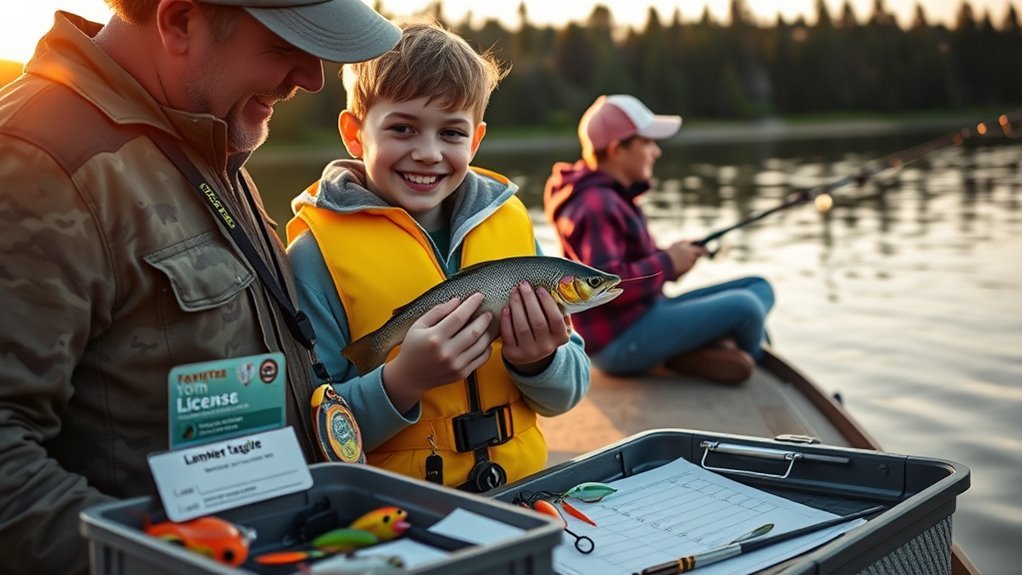
Pennsylvania’s Mentored Youth Trout Day gives children under 16 an opportunity to fish stocked trout waters before the statewide opening day. The 2026 event took place on March 28 from 8:00 a.m. to 7:30 p.m. Future dates and hours should be confirmed on the official Mentored Youth Trout Day page.
Requirements for the Youth
- Be younger than 16.
- Have a current Voluntary Youth Fishing License or Mentored Youth Fishing Permit.
- Be accompanied by an eligible licensed adult mentor.
- Be able to take an active role in fishing, with limited help as needed.
Requirements for the Adult Mentor
- Be age 16 or older.
- Hold a valid Pennsylvania fishing license.
- Hold a current Trout Permit.
- Remain within arm’s reach or about six feet of the actively fishing youth.
- Supervise the youth’s equipment, conduct, fish handling, and safety.
An adult may mentor more than one child, but no actively fishing youth may have more than one licensed adult acting as that youth’s mentor. The program is not designed for large youth groups receiving minimal adult supervision.
Mentored Youth Trout Day Harvest Rule
During the 2026 event, an eligible youth could possess a combined total of two trout measuring at least seven inches. Adult mentors were allowed to fish while helping the child but could not possess trout.
This two-trout rule applies to the special mentored-youth event. It should not be treated as the year-round limit for every youth fishing trip. Check the current seasons, sizes, creel limits, and special-water rules before keeping fish.
Note: Not every stocked water is necessarily stocked before Mentored Youth Trout Day. Review the current PFBC trout stocking information shortly before the trip and check for schedule changes caused by weather or hatchery conditions.
Simple Ways to Make the Trip Safer
- Use barbless hooks or pinch down the barb while a child learns to handle tackle.
- Keep hooks secured until the child is ready to cast.
- Wear eye protection when practicing casting in a crowded area.
- Choose a stable shoreline with room behind the angler.
- Carry pliers, a small first-aid kit, drinking water, and weather-appropriate clothing.
- Use a properly fitted life jacket near deep, swift, or cold water.
Under Pennsylvania boating rules, children age 12 and younger must wear a U.S. Coast Guard-approved life jacket while underway on boats 20 feet or shorter and on canoes, kayaks, and paddleboards. From November 1 through April 30, broader cold-weather life-jacket requirements apply to people aboard boats under 16 feet and anyone using a canoe, kayak, or paddleboard. Review the PFBC’s life-jacket guidance before launching.
Frequently Asked Questions
Do parents need to be present when a youth gets a permit or license?
A parent is not listed as having to stand beside the youth during an online transaction. However, a parent or guardian will usually need to help create and manage the child’s HuntFishPA account because the process requires personal information, including the youth’s date of birth, Social Security number, address, ZIP code, and an email address.
Does a child need a Pennsylvania fishing license for an ordinary trip?
No standard fishing license is required for a child under 16 during an ordinary Pennsylvania fishing trip. The free permit or $2.97 voluntary youth license is required when the child participates in designated special youth opportunities.
Are discounts available for low-income families?
PFBC does not list a general income-based youth discount because children under 16 already may fish without a standard license. Families may choose the free Mentored Youth Permit instead of the $2.97 voluntary license. Pennsylvania’s Fish-for-Free Days also allow people of any age to fish without buying a license, although all other regulations remain in effect.
Can a Pennsylvania youth license be used for saltwater fishing?
Not as a universal saltwater license. The Pennsylvania document applies to qualifying Pennsylvania fishing activities. Another state may require its own marine license or registry, and anglers in the Delaware Estuary should check current Pennsylvania Saltwater Angler Registry and neighboring-state requirements.
Is a separate Trout Permit required for junior anglers?
A child under 16 does not need the standard Trout Permit. For Mentored Youth Trout Day, the child instead needs a Voluntary Youth Fishing License or Mentored Youth Fishing Permit. The adult mentor must have both a Pennsylvania fishing license and a current Trout Permit. Beginning at age 16, the young angler may also need the Trout Permit when fishing for trout.
What identification or information is needed for a youth account?
PFBC’s online instructions list the youth’s date of birth, Social Security number, street address, ZIP code, and an email address. Additional information may be requested to confirm Pennsylvania residency. An issuing agent can explain what documentation is needed when account information cannot be verified electronically.
What happens when the young angler turns 16?
At age 16, the angler generally must purchase a standard Pennsylvania fishing license. A Trout Permit, Lake Erie Permit, or combination permit may also be required based on the species and water being fished. The voluntary youth license and mentored-youth permit are only for anglers younger than 16.
Conclusion
Most Pennsylvania anglers under 16 can fish during ordinary trips without buying a standard license. The key decision is whether the child will attend a special youth opportunity. For those events, choose either the free Mentored Youth Fishing Permit or the $2.97 Voluntary Youth Fishing License.
Create the youth’s HuntFishPA account before the event, save a complete copy of the permit or license, and confirm the current water, season, size, and creel rules. Once the angler turns 16, purchase the appropriate standard fishing license and any required trout or Lake Erie permit before fishing.
Sources
- Pennsylvania Fish and Boat Commission — Fishing Licenses and Permits — 2026 fees, age requirements, and add-on permits
- Pennsylvania Mentored Youth License or Permit — youth eligibility, account requirements, application steps, and event rules
- Pennsylvania Mentored Youth Program — mentor requirements, harvest limits, and program guidance
- PFBC Fishing License and Regulation FAQs — under-16 rules, adult assistance, exemptions, and proof requirements
- Pennsylvania Fishing Regulations — seasons, Fish-for-Free Days, permits, and current statewide rules
- PFBC Life-Jacket Requirements — child and cold-weather boating-safety rules