Most people age 16 or older need a valid South Carolina fishing license before fishing in the state’s public freshwaters or saltwaters. The correct license depends on where you fish, your residency, and how long you need the privilege. The fees below were checked against current South Carolina Department of Natural Resources information on July 28, 2026.
Quick Answer
Anglers age 16 or older generally need a South Carolina freshwater or saltwater fishing license. Resident licenses start at $5 for 14 days, while nonresident options start at $10 for a one-day saltwater license. Youth, private-pond anglers, and customers of certain licensed charters or public piers may be exempt.
Key Takeaways
- People age 16 or older generally need the license that covers the water in which they fish.
- Children under 16 are generally exempt whether they are residents or nonresidents, but special rules apply to commercial fishing and nongame fishing devices.
- Everyone age 16 or older aboard a private fishing boat should carry the required license.
- The charter exemption applies only when fishing from a properly licensed saltwater charter vessel operating under hire.
- Carry your license and identification in digital or physical form whenever you fish.
Note: This article summarizes licensing information and is not legal advice. South Carolina law, current SCDNR regulations, and the terms printed on your license control if they differ from this guide.
Who Needs a Fishing License in South Carolina
Under current SCDNR licensing guidance, people age 16 or older generally need a valid fishing license to fish in South Carolina’s public waters. This requirement applies to residents and nonresidents.
The exact rule depends on whether you are fishing from a boat, shore, dock, pier, or licensed charter:
- Private fishing boat: Everyone aboard who is age 16 or older should possess the required fishing license.
- Beach, bank, dock, or while wading: A person age 16 or older who is actively fishing needs the appropriate license.
- Licensed saltwater charter under hire: Customers are covered by the vessel’s charter license and generally do not need an individual saltwater fishing license for that trip.
- Licensed public saltwater fishing pier: Anglers may be covered by the pier’s SCDNR license.
- Ordinary or free public pier: An individual license is normally required unless the pier holds the applicable SCDNR public-pier license.
Warning: Do not assume a boat or pier covers your fishing license. Ask the operator whether the vessel or pier has a current SCDNR license and whether your planned activity is covered.
Freshwater Versus Saltwater License
You need a freshwater license when fishing in regulated freshwaters and a saltwater license when fishing in regulated saltwaters. If your fishing activities take place in both, you generally need both privileges.
Along South Carolina’s coast, the freshwater and saltwater dividing line is usually U.S. Highway 17, but there are ten exceptions on specific rivers and waterways. Check the official SCDNR freshwater and saltwater dividing-line map before fishing near a boundary.
Types of Fishing Licenses and Costs
South Carolina offers temporary, annual, three-year, lifetime, and special fishing privileges. The standard recreational prices below come from the current resident and nonresident SCDNR price lists.
| Water | Duration | Resident | Nonresident |
|---|---|---|---|
| Freshwater | 14 days | $5 | $11 |
| Freshwater | Annual | $10 | $35 |
| Freshwater | Three years | $30 | $105 |
| Saltwater | One day | Not listed | $10 |
| Saltwater | Seven days | Not listed | $35 |
| Saltwater | 14 days | $10 | Not listed |
| Saltwater | Annual | $15 | $75 |
| Saltwater | Three years | $45 | Not listed |
Most one-year and three-year recreational fishing licenses expire on the anniversary of the purchase date. Temporary licenses expire after the stated number of consecutive days. Seasonal tags, nongame fish tags, shrimp licenses, and certain special permits may instead expire on June 30 or at the end of their applicable season.
Combination, Sportsman, and Lifetime Options
South Carolina residents who also hunt can consider an annual Combination License for $25 or a three-year Combination License for $75. These include statewide hunting, big-game privileges, and freshwater fishing, but they do not automatically include saltwater fishing.
The resident Sportsman License costs $50 annually or $150 for three years and includes statewide hunting, big game, Wildlife Management Area access, and freshwater fishing. It also does not include a standard saltwater fishing privilege.
Residents age 64 or older who meet the residency requirement may obtain a $9 senior fishing or senior combination lifetime license. Residents born before July 1, 1940, may qualify for a no-cost gratis license.
Choose the license by water type first. A hunting-and-fishing package that includes freshwater fishing may still leave you without the saltwater privilege needed for beaches, coastal rivers, and offshore fishing.
How to Buy and Carry Your License
Where to Purchase
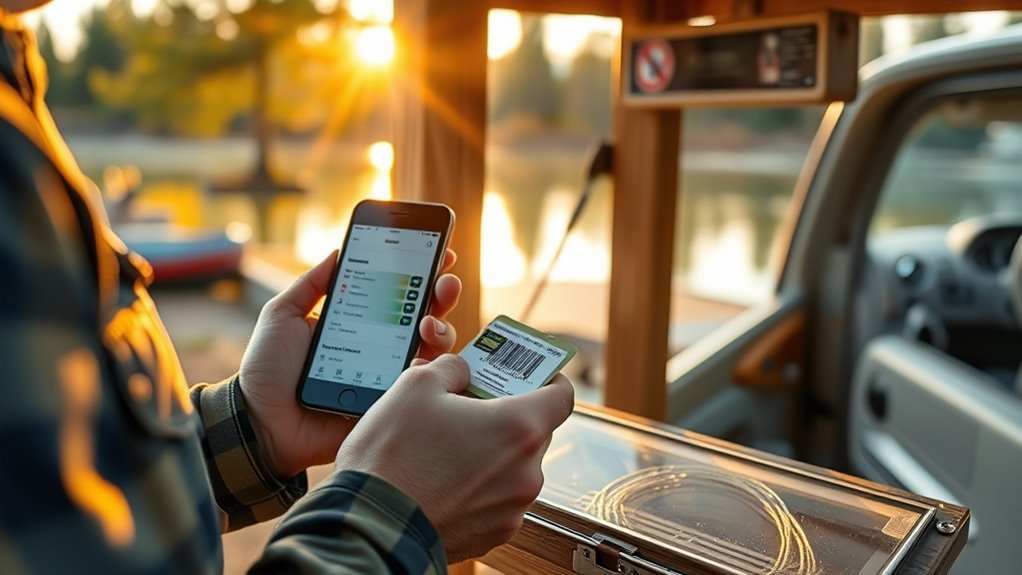
You can purchase a license through the official Go Outdoors South Carolina licensing portal, the Go Outdoors SC mobile app, an authorized license vendor, or an SCDNR regional office. SCDNR also provides mail-in applications for certain license types.
Avoid unofficial websites that add unnecessary fees or collect sensitive information. Begin from the SCDNR purchase page or verify that the licensing address belongs to Go Outdoors South Carolina.
Information Needed to Buy a License
- Valid identification: A driver’s license or other government-issued photo ID.
- Resident purchase: A valid South Carolina driver’s license or South Carolina state-issued ID is normally used to prove resident status.
- First purchase: Your full Social Security number is generally required to create a customer account.
- Returning customer: You can use your SCDNR customer identification number or another accepted account identifier.
- International customer: A passport or other international government identification may be accepted. Nonresident fees apply, and SCDNR states that an international customer can purchase without a Social Security number.
A person generally must have lived in South Carolina for at least 30 consecutive days to qualify for a resident recreational license. Lifetime licenses normally require 180 days of residency, while disability and commercial licenses have longer requirements.
How to Carry It
Keep the applicable license and identification in your possession while fishing. The Go Outdoors SC app can store licenses on a phone or tablet, and a printed or emailed copy can serve as a useful backup.
| Method | Availability | What to Carry |
|---|---|---|
| Go Outdoors SC app | After purchase and account sync | Stored digital license and photo ID |
| Online purchase | Normally immediate | Emailed or printed license, or order number with photo ID while awaiting the copy |
| Vendor or SCDNR office | Issued during the transaction | Paper license and photo ID |
| Mail application | After processing and delivery | Issued physical document and photo ID |
Pro Tip: Open and sync your license in the Go Outdoors SC app before leaving home. Save a screenshot or printed copy as a backup in case your phone loses service or power.
Physical tags for nongame fishing devices, shrimp baiting, or other tagged activities must be received and attached or carried as required before you use the related privilege. An order confirmation alone does not replace a required physical tag.
Exemptions for Youth, Seniors, and Military
South Carolina provides several fishing-license exemptions and reduced-cost privileges. Each has limits, so confirm that the exemption covers your exact activity.
Youth Under 16
Resident and nonresident children under age 16 generally do not need a recreational hunting or fishing license. The exemption does not cover commercial fishing, and additional requirements apply when a child uses nongame fishing devices such as traps, trotlines, gill nets, hoop nets, set hooks, or jugs.
Private Ponds and Pay-to-Fish Lakes
A recreational freshwater fishing license is not required when fishing in a genuinely private pond that is not being operated for commercial purposes. Customers of a commercial fishing lake or pay-to-fish business may also be exempt when the business holds the required SCDNR aquaculture permit or registration.
Senior and Disability Licenses
A South Carolina resident age 64 or older who has met the 180-day lifetime-license residency requirement may apply for a $9 senior lifetime fishing license. Qualified residents receiving disability benefits may be eligible for a no-cost three-year disability fishing license covering freshwater and saltwater fishing.
Military Personnel
Military personnel and their dependents stationed in South Carolina for at least 30 days, or domiciled in the state, may qualify for resident license privileges with valid military identification.
A South Carolina resident serving on active duty outside the state who is home on leave may fish without buying a freshwater or saltwater license after presenting an earnings and leave statement that identifies South Carolina as the person’s home state. Special permits or tags are still required for activities such as using nongame fish devices or shrimp baiting.
Free Freshwater Fishing Days
South Carolina residents may fish recreationally in state freshwaters without a freshwater license on Memorial Day and July 4. Size limits, possession limits, seasons, and other fishing regulations still apply. The exemption does not cover commercial fishing or activities requiring a commercial license for nongame devices.
Fishing From Charter Boats and Special Situations
A customer fishing from a properly licensed saltwater charter vessel generally does not need an individual saltwater fishing license while the vessel is operating under hire. The operator’s charter-vessel license covers the customers for that charter trip.
The exemption does not automatically apply merely because a boat is sometimes used for charters. When the vessel is being used for a private trip and is not under hire, everyone aboard who is age 16 or older should carry the required individual license.
| Situation | Individual License | What to Confirm |
|---|---|---|
| Paying customer on a licensed saltwater charter under hire | Generally not required | Current SCDNR charter-vessel license |
| Private boat fishing trip | Required for everyone aboard age 16+ | Correct freshwater or saltwater privilege |
| Boat normally used for charters but not currently under hire | Required for everyone aboard age 16+ | Do not rely on the commercial charter license |
| Licensed saltwater public fishing pier | Generally not required | Verify that the pier holds an SCDNR public-pier license |
| Beach, free pier, private dock, or wading | Required for active anglers age 16+ | Saltwater license and current local access rules |
Georgia–South Carolina Reciprocal Waters
South Carolina and Georgia recognize valid freshwater sport-fishing licenses from either state on specified portions of the Savannah, Tugaloo, and Chattooga rivers and on listed boundary reservoirs, including Thurmond, Russell, Hartwell, Yonah, Tugaloo, Stevens Creek, and the New Savannah Bluff Lock and Dam. The agreement does not cover tributary streams, so check the exact boundary before relying on reciprocity.
Permit and Tag Requirements for Related Activities
A basic rod-and-reel license does not cover every fishing method. Additional permits or physical tags may be required for nongame devices, shrimp baiting, or specialized fisheries.
- Jugs and set hooks: A freshwater fishing license and the applicable permit are required.
- Trotlines, traps, eel pots, gill nets, and hoop nets: Device-specific limits, locations, tags, and reporting rules may apply.
- Shrimp baiting: A separate shrimp-baiting license and pole tags are required during the designated season.
- Shad and herring gear: Special gear licenses or permits may be required depending on the water, species, and fishing method.
- Saltwater shellfish and crabbing: A saltwater license is generally required, although limited exemptions exist for three or fewer drop nets, fold-up traps, or hookless hand lines with one bait each.
The youth exemption from an ordinary fishing license does not eliminate applicable nongame-device or species-specific tag requirements.
Note: Deer, bear, turkey, migratory-bird, and waterfowl tags are hunting requirements. They do not replace a fishing license and are relevant only when you also participate in those hunting activities.
Before using anything other than an ordinary rod and reel, review the current South Carolina fishing regulations for the device, waterbody, species, season, and reporting requirements.
Hunter Education and License Eligibility
You do not need to complete a hunter education course to purchase an ordinary freshwater or saltwater fishing license.
Hunter education is a separate hunting-license requirement. A person born after June 30, 1979, generally must complete an approved hunter education course before purchasing a standard South Carolina hunting license. Apprentice hunting options and certain senior fishing-only privileges may be available for people who do not have hunter education certification.
This distinction matters when purchasing a Combination, Sportsman, senior combination, or disability combination license that includes hunting privileges. A fishing-only license does not carry the hunter education prerequisite.
Frequently Asked Questions
Can I fish in a private pond without a South Carolina license?
Yes. You generally do not need a recreational freshwater fishing license in a genuinely private pond that is not used commercially. Customers at a pay-to-fish lake may also be exempt when the business has the required SCDNR aquaculture permit or registration.
Do different South Carolina counties require separate fishing licenses?
No separate county recreational fishing license is normally required. South Carolina uses a statewide SCDNR licensing system. However, individual lakes, rivers, parks, and managed properties may have separate access hours, gear rules, fees, or harvest restrictions.
Are night-fishing license rules different?
The basic license requirement does not change at night. However, a particular lake, park, pier, or managed property may close after sunset or restrict nighttime access. Check the rules for the exact location before fishing after dark.
Does everyone on a fishing boat need a license?
SCDNR instructs everyone age 16 or older aboard a private fishing boat to possess the required license. Paying customers on a properly licensed saltwater charter vessel operating under hire are generally covered by the vessel’s license.
Do I need a saltwater license to fish from a South Carolina beach?
Yes. An angler age 16 or older generally needs a saltwater fishing license when fishing from a beach, bank, private dock, free public pier, boat, or while wading, unless a specific exemption applies.
Does a Georgia license work in South Carolina?
A valid Georgia freshwater sport-fishing license is recognized on specified reciprocal boundary waters, including listed portions of the Savannah River system and certain reservoirs. It does not provide general fishing privileges throughout South Carolina or in tributary streams outside the agreement.
Do fishing-license fees support conservation?
Yes. South Carolina law directs freshwater license revenue to funds supporting freshwater fisheries, wildlife management, enforcement, and related programs. Saltwater license revenue supports marine fisheries management, habitat, research, fishing facilities, and other marine-resource programs.
What is the penalty for fishing without a license?
Under South Carolina Code Section 50-9-10, fishing without the required license, permit, tag, or stamp is a misdemeanor. A conviction can carry a fine of $50 to $500 or imprisonment for up to 30 days. Other violations may carry different penalties.
Conclusion
Before fishing in South Carolina, identify whether the location is freshwater or saltwater, check whether an exemption applies, and purchase the shortest license that covers your trip. Keep the license and your identification accessible while fishing, and obtain any extra tags required for nongame devices or specialized activities.
Do not rely on assumptions about a boat, pier, private pond, or out-of-state license. A quick check with SCDNR before the trip can prevent an unnecessary purchase or a licensing violation.
Sources
- SCDNR Resident License Pricing — resident freshwater, saltwater, combination, Sportsman, disability, and lifetime prices.
- SCDNR Nonresident License Pricing — nonresident freshwater and saltwater license options and fees.
- SCDNR Recreational License Requirements — identification, residency, military, international-customer, and possession requirements.
- SCDNR License Frequently Asked Questions — boat requirements, purchasing information, expiration, and temporary proof.
- SCDNR Freshwater and Saltwater Dividing Line — official coastal licensing boundary and listed exceptions.
- South Carolina Code, Title 50, Chapter 9 — license law, exemptions, free-fishing days, revenue use, and penalties.