As of July 29, 2026, recreational saltwater fishing in Georgia usually requires two items: a paid Georgia fishing license and a free Saltwater Information Program (SIP) permit. Georgia does not sell a separate recreational “saltwater fishing license.” The basic fishing license covers both fresh and salt water, while the SIP identifies anglers who fish along Georgia’s Atlantic coast.
Quick Answer
Georgia does not sell a separate recreational saltwater license. Most anglers age 16 or older need a Georgia fishing license plus the free Saltwater Information Program (SIP) permit. Resident fishing licenses cost $5 for one day or $15 annually; nonresident licenses cost $10 for one day or $50 annually, before transaction fees.
Key Takeaways
- The paid license is Georgia’s basic fishing license, which covers both freshwater and saltwater fishing.
- The SIP permit is free, applies to most saltwater anglers age 16 and older, and expires 365 days after issuance.
- Resident licenses are $5 for one day, plus $1 for each added consecutive day, or $15 annually.
- Nonresident licenses are $10 for one day, plus $3.50 for each added consecutive day, or $50 annually.
- Charter customers and anglers on certain commercially licensed private piers may be covered by the operator’s license, so confirm before buying.
At a Glance
| Time Required | About 5–10 minutes online |
| Difficulty | Easy |
| Tools Needed | Go Outdoors Georgia account details, identification information, and payment method for a paid license |
| Cost | SIP: free; fishing license: $5–$15 for residents or $10–$50 for nonresidents, before transaction fees |
Who Needs a Saltwater Fishing Permit in Georgia?
Most people age 16 or older who fish recreationally in Georgia’s salt waters need a current Georgia fishing license and a free SIP permit. The Georgia Department of Natural Resources license guide explains that basic fishing privileges cover both fresh and salt water, while saltwater fishing adds the SIP requirement.
- Georgia residents ages 16–64: Generally need a paid resident fishing license and the free SIP permit.
- Georgia residents age 65 or older: Can use discounted senior or lifetime license options, but still need a free SIP permit when fishing saltwater.
- Nonresidents age 16 or older: Generally need a nonresident fishing license and the free SIP permit.
- Anglers age 15 or younger: Do not need the basic fishing license or SIP permit. Georgia offers an optional resident youth fishing license that remains valid until the youth’s 17th birthday.
- License-exempt adults: The SIP may still be required. Georgia DNR states that anglers age 16 or older need the SIP even when they hold a full-privilege license or are otherwise exempt from the basic fishing-license requirement.
Note: A narrow exception applies when a saltwater guide has an optional customer license covering everyone on board, or when a commercially licensed private pier covers its anglers. Confirm coverage with the guide or pier before assuming you are exempt.
The SIP costs $0, but most Georgia saltwater anglers age 16 and older must renew it every 365 days.
Resident vs. Nonresident Fishing License Fees and Duration Options
The amounts below are the state license prices listed by Georgia DNR. Transaction or agent fees may apply to paid purchases. The SIP permit itself is free, and Georgia DNR says there is no transaction charge when a free SIP is obtained by itself.
| License option | Resident | Nonresident |
| One-day fishing license | $5 | $10 |
| Each additional consecutive day | $1 | $3.50 |
| Annual fishing license | $15 | $50 |
| Saltwater Information Program permit | Free | Free |
Resident vs. Nonresident Costs
A resident annual fishing license costs $15, compared with $50 for a nonresident. These are basic fishing licenses, not saltwater-only products. Each includes basic freshwater and saltwater fishing privileges, but saltwater anglers must add the free SIP permit unless a specific exception applies.
Georgia generally treats a person as a resident for recreational licensing after at least three consecutive months of Georgia domicile, supported by a Georgia driver’s license or official state identification. Active-duty military personnel stationed in Georgia, their dependents, and certain full-time college students living in Georgia may qualify to buy resident recreational licenses.
Short-Term Duration Options
Short-term licenses begin on the selected date. Georgia allows up to 10 additional consecutive days after the first day, for as many as 11 consecutive days total.
- Resident three-day trip: $5 plus two $1 added days = $7, before transaction fees.
- Nonresident three-day trip: $10 plus two $3.50 added days = $17, before transaction fees.
- Resident 11-day trip: $15, the same base price as an annual resident license.
- Nonresident 11-day trip: $45, which is $5 less than an annual nonresident license.
An annual license is often the better choice for separate trips spread across the year. A short-term license can be cheaper for one continuous visit.
Permit Renewal Requirements
Annual fishing licenses are valid for 365 days after purchase. The SIP also lasts 365 days, but it has its own expiration date and must be renewed separately. Georgia allows anglers to renew the SIP up to 60 days before it expires without losing the remaining time.
Warning: Do not assume a lifetime, senior, disability, veteran, or multiyear fishing license includes a permanent SIP. The free SIP still expires after 365 days and must be renewed if you plan to keep fishing in Georgia’s salt waters.
How the Free Saltwater Information Program (SIP) Works
The Saltwater Information Program helps Georgia DNR identify recreational saltwater anglers for surveys and fishery-management work. Because Georgia’s basic fishing license covers both freshwater and saltwater, the license alone does not show who actually fishes on the coast.
- The SIP is free.
- It is generally required for recreational saltwater anglers age 16 and older.
- It expires 365 days after issuance.
- It can be renewed online, by phone, through a license agent, or in the Go Outdoors Georgia app.
- A valid Georgia fishing license with SIP also keeps covered Georgia anglers exempt from separate enrollment in the federal National Saltwater Angler Registry.
The SIP applies to Georgia’s Atlantic salt waters, including inshore creeks, sounds, beaches, piers, and offshore trips. Georgia has no Gulf of Mexico coastline.
Additional Licenses and Permits for Georgia Atlantic Saltwater Fishing
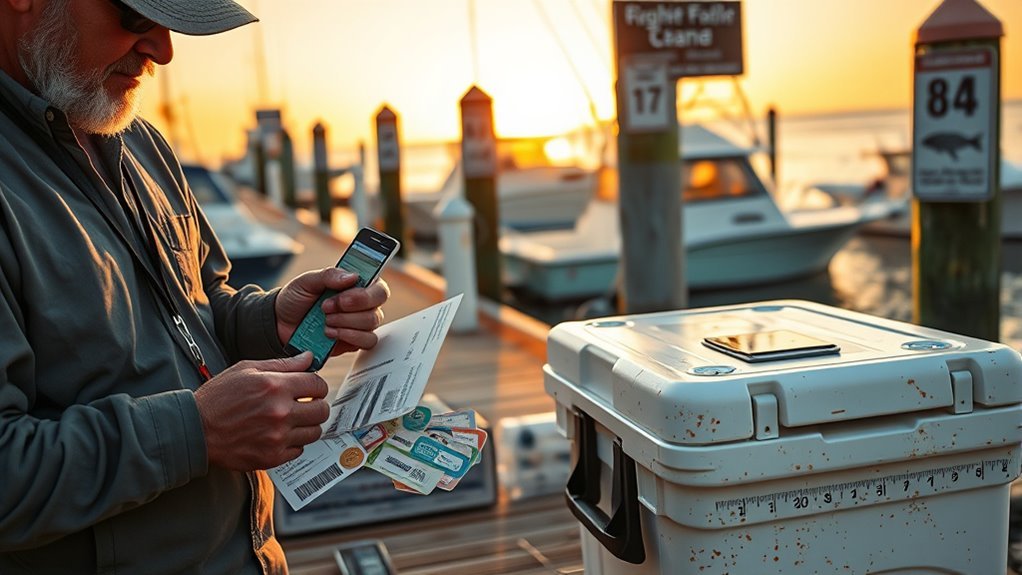
The basic fishing license and SIP cover ordinary recreational saltwater fishing, but your fishing method, location, target species, or business activity can trigger other rules.
Recreational Seafood, Bait, Crabs, and Shellfish
Georgia DNR states that a fishing license and SIP are required to recreationally harvest seafood, including bait, shrimp, crabs, oysters, and clams. Gear, season, size, and possession rules vary. Check the current shrimp, crab, shellfish, and bait regulations before harvesting.
Seafood or bait taken under a recreational license cannot be sold. Commercial harvest requires the applicable commercial licenses, endorsements, reporting, and vessel authorization.
Charter and Guide Trips
A saltwater guide may buy an optional customer license that covers paying customers. When the guide’s customer license covers everyone aboard, those customers do not need their own fishing license or SIP. If the guide does not carry that coverage, each customer age 16 or older generally needs a valid fishing license and SIP.
Pro Tip: Ask the captain in writing, “Does your Georgia customer license cover my fishing license and SIP?” Do this before buying a short-term license or arriving at the dock.
Federal Offshore Permits and Rules
Georgia’s state license and SIP do not replace every federal requirement. A vessel that recreationally targets or retains Atlantic tunas, sharks, swordfish, or billfish generally needs the appropriate NOAA Atlantic Highly Migratory Species permit. Federal seasons, reporting rules, gear rules, and possession limits may also apply beyond state waters.
For other offshore species, review current state and South Atlantic federal regulations before departure. Rules can change during the year when seasons close or quotas are reached.
Commercial Fishing and Boat Licenses
If you fish for sale or use commercial gear, a recreational license is not enough. Georgia requires the relevant commercial fishing license and species endorsement. A commercial vessel license may also be required when a boat is used.
Georgia’s commercial saltwater licensing page lists current licenses, endorsements, charter-guide requirements, vessel categories, fees, and applications. Commercial licenses generally run on an April 1–March 31 license year, unlike recreational annual licenses that last 365 days from purchase.
Where and How to Buy Your Fishing License and SIP

You can buy the paid fishing license and add the free SIP through the same Georgia DNR licensing system.
- Go to Go Outdoors Georgia.
- Sign in with your DNR customer information or create an account.
- Select the resident or nonresident fishing license that matches your trip.
- Add the free Saltwater Information Program permit.
- Complete checkout, then save or print your license record.
You can also purchase or renew by calling 800-366-2661 or by visiting an authorized Georgia license agent. The Go Outdoors Georgia app can store current licenses and permits on a phone.
Review the selected start date, residency status, and expiration dates before completing payment. Free SIP permits can be obtained without a fee, but paid licenses may include a transaction or agent charge.
Tips to Save on Georgia Saltwater Fishing Costs
- Match the license to the trip. Use a short-term license for one continuous visit; choose annual for repeated trips.
- Add consecutive days instead of buying repeated one-day licenses. Added days cost $1 for residents and $3.50 for nonresidents.
- Check senior options. Georgia residents age 65 or older can buy a $4 annual senior fishing license. Qualifying seniors also have discounted or free lifetime options.
- Use disability benefits when eligible. Georgia offers reduced-cost annual and three-year disability fishing or sportsman’s licenses for qualified residents.
- Check the one-time veteran license. Eligible Georgia resident veterans honorably discharged on or after July 1, 2005, after at least 90 days of active federal duty may qualify for one free one-year license.
- Compare the $65 resident Sportsman’s License. It can save money for residents who also hunt and need several paid privileges, but the free SIP must still be renewed annually.
- Use Georgia Free Fishing Days. In 2026, resident license requirements were waived on June 6, June 13, and September 26. Adults fishing saltwater should still obtain the free SIP because it applies even when a basic fishing license is not required.
- Confirm charter or licensed-pier coverage. Do not buy a license twice if the operator’s customer or pier license legally covers you.
- Skip optional extras you do not need. A durable hard card is optional; digital or printed proof is usually sufficient.
For long-term planning, Georgia residents can also compare lifetime licenses and license stacking. The Georgia DNR savings guide explains available multiyear, lifetime, and bundled options.
Frequently Asked Questions
Do juveniles need a saltwater fishing license in Georgia?
Anglers age 15 or younger do not need Georgia’s basic fishing license or SIP permit. A resident youth may buy an optional multiyear fishing license that remains valid until the 17th birthday.
Are there military or veteran discounts for Georgia saltwater fishing?
Active-duty military personnel stationed in Georgia and their dependents may qualify to buy resident recreational licenses. Certain Georgia resident veterans may qualify for a free one-time, one-year hunting and fishing license. The free SIP must still be obtained for saltwater fishing.
Does a Georgia fishing license cover inshore and offshore charter fishing?
The basic Georgia fishing license covers recreational fishing in fresh and salt water, but a charter operator may have a customer license that covers passengers. Ask the captain. Federal permits and rules can still apply offshore, especially for Atlantic highly migratory species.
Is a license required for collecting bait, shrimp, crabs, oysters, or clams?
Yes, recreational harvest generally requires a Georgia fishing license and SIP for anglers age 16 or older. Separate gear, area, season, size, and possession rules apply. Recreationally harvested seafood or bait cannot be sold.
Do pier anglers need a different Georgia saltwater permit?
There is no separate individual recreational pier permit for ordinary public-pier fishing. Most adult anglers still need the basic fishing license and SIP. A commercially licensed private pier, such as a participating hotel pier, may cover its customers; confirm with the property.
Does Georgia sell a separate recreational saltwater fishing license?
No. Georgia’s basic fishing license covers both freshwater and saltwater fishing. Saltwater anglers add the free SIP permit.
Can I carry my Georgia fishing license on my phone?
Yes. The Go Outdoors Georgia app can store a copy of current licenses and permits. You may also save or print the license record after purchase.
Conclusion
For most Georgia saltwater trips, the rule is simple: buy the basic Georgia fishing license that fits your residency and trip length, then add the free SIP permit. Verify charter or licensed-pier coverage before paying, check state and federal rules for your target species, and keep digital or printed proof with you. Renew the SIP every 365 days.
Sources
- Georgia DNR — What License Do I Need? — current recreational license types, prices, age rules, duration, and SIP requirements.
- Georgia DNR Coastal Resources Division — Saltwater Information Program Permit — SIP purpose, validity, renewal, purchase methods, and exceptions.
- Georgia DNR — Shrimp, Crab, Shellfish & Bait Minnow Regulations — recreational seafood and bait licensing rules.
- Georgia DNR — Recreational Finfish Seasons, Limits, and Sizes — current Georgia saltwater fishing requirements and species regulations.
- Georgia DNR — Commercial Fishing Licenses & Regulations — commercial, vessel, pier, charter-guide, customer-license, and endorsement rules.
- NOAA Fisheries — Atlantic Highly Migratory Species Permits — federal permit requirements for tunas, billfish, swordfish, and sharks.