
A Texas lifetime fishing license can be a strong long-term buy for a resident who expects to fish for decades. The license costs $1,000 and covers both freshwater and saltwater fishing endorsements for the holder’s life. It does not remove seasonal rules, size and bag limits, tagging duties, access restrictions, or commercial-license requirements.
Quick Answer
Texas charges $1,000 for a resident lifetime fishing license. It includes freshwater and saltwater fishing endorsements for life, but all fishing regulations still apply. Compared with the $40 resident all-water package, the simple break-even point is about 25 years, before transaction fees, investment returns, or future price changes.
Key Takeaways
- The Texas Resident Lifetime Fishing License costs $1,000 and is available only to qualifying Texas residents.
- It includes the resident fishing license plus freshwater and saltwater endorsements; commercial fishing privileges are not included.
- Initial lifetime purchases are made by application, not through the normal online store or an ordinary license retailer.
- Current-year lifetime tags are free and can be obtained beginning August 15 when a tag is needed.
- The regular lifetime license is nonrefundable and nontransferable; a drawing prize has separate rules.
At a Glance
| Time Required | About 10–15 minutes to complete the form; processing time varies by submission method. |
| Difficulty | Easy, provided your Texas residency and identification documents are current. |
| Tools Needed | TPWD Form PWD 552, qualifying Texas ID, payment, and any current physical license that must be surrendered. |
| Cost | $1,000 for lifetime fishing; $800 to upgrade an existing lifetime fishing license to the lifetime combination package. A card-payment fee may apply. |
What a Texas Lifetime Fishing License Covers
The Texas Parks and Wildlife Department lifetime license page lists the Resident Lifetime Fishing License as item 982 at $1,000. The license is valid for the life of the holder.
The current TPWD lifetime-license application says the fishing license includes:
- A resident fishing license
- A freshwater fishing endorsement
- A saltwater fishing endorsement
- The standard saltwater tags issued with the applicable endorsement and current-year tag set
This lets the holder fish recreationally in Texas public fresh water and salt water without buying another annual resident fishing package. However, it is not an “unlimited fishing” pass. You must still follow current seasons, legal methods, protected-species rules, waterbody-specific exceptions, and size and bag limits.
Warning: A lifetime license does not authorize commercial fishing, paid guiding, trespassing, or harvest outside current regulations. Separate commercial or guide licenses are required when an activity falls into those categories.
TPWD states that lifetime licenses include state endorsements other than the Reptile and Amphibian endorsement. For a fishing-only holder, the key included endorsements are freshwater and saltwater. A bonus red drum tag or another special permit may still carry a separate fee when applicable.
The federal Duck Stamp is not a fishing requirement. It becomes relevant only if you upgrade to the lifetime combination package and hunt migratory waterfowl.
Products Worth Considering

FISHING LICENSE HOLDER W/ZIP CLOSURE

TEXAS STATE FLAG DESIGN: Features a textured, raised Texas lone star flag design for an authentic, high-end look and feel.
Cost Breakdown and Break-Even Comparison
The closest annual comparison is the resident all-water package because both options cover freshwater and saltwater fishing. TPWD currently lists resident annual packages at $30 for freshwater, $35 for saltwater, and $40 for all-water fishing.
| Annual Option | Current Fee | Simple $1,000 Break-Even |
|---|---|---|
| Resident Freshwater Package | $30 | About 33.3 years |
| Resident Saltwater Package | $35 | About 28.6 years |
| Resident All-Water Package | $40 | 25 years |
| Senior Resident All-Water Package | $22 | About 45.5 years |
At today’s $40 resident all-water price, $1,000 equals 25 annual packages. That is a simple cash comparison, not a guaranteed investment return.
The lifetime option becomes more attractive when you expect to fish every year for several decades, value not having to repurchase the base package, or want protection against possible future fee increases. Annual licenses may be the better value if you fish only occasionally, qualify for reduced senior pricing, or might stop fishing before the break-even point.
The calculation above does not account for inflation, future fee changes, card or online transaction fees, or the return you could earn by keeping the $1,000 invested. Those factors can move the true financial break-even date.
Pro Tip: Compare the lifetime license with the annual package you would actually buy. Using the $30 freshwater price understates the value of a license that also includes saltwater privileges, while using the $40 all-water price gives the fairest like-for-like comparison.
Products Worth Considering

【MATERIAL】: oFloral License plate frame is made from premium quality aluminum, which can provide long-lasting protection from corroding, rusting and aging, durability for long lasting usage.Personalized Car Frame Can Perfect to Put on Your Front of Car or for Decorative Purposes Around the House Like in Your Bedroom, Garage, Basement, Ect.

【Material】Our License Plate Frame Is Made Of Stainless Steel, Strong And Durable.

【MATERIAL】: oFloral License plate frame is made from premium quality aluminum, which can provide long-lasting protection from corroding, rusting and aging, durability for long lasting usage.Personalized Car Frame Can Perfect to Put on Your Front of Car or for Decorative Purposes Around the House Like in Your Bedroom, Garage, Basement, Ect.
How to Apply for or Upgrade a Lifetime License
Initial lifetime-license purchases are handled by application. TPWD says these applications are processed through TPWD law-enforcement sales offices or Austin headquarters. The application form also provides instructions for mailing a completed packet to TPWD headquarters.
Products Worth Considering

【Durable materials】Our license plate frame is made of high-quality aluminum, wear-resistant, rust-resistant, anti-aging, long-lasting use; Even if it gets dirty in the rainy season, it is easy to clean, can be used for a long time, can withstand all kinds of bad weather, and is not easy to fade.

【MATERIAL】: oFloral License plate frame is made from premium quality aluminum, which can provide long-lasting protection from corroding, rusting and aging, durability for long lasting usage.Personalized Car Frame Can Perfect to Put on Your Front of Car or for Decorative Purposes Around the House Like in Your Bedroom, Garage, Basement, Ect.
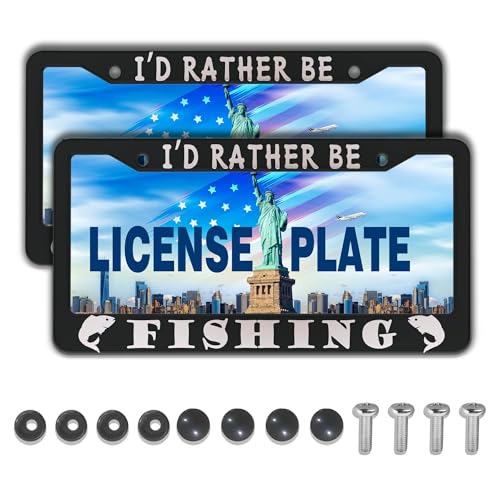
ALUMINUM FRAME: This License Plate Frame is crafted from high-quality aluminum that is resistant to corrosion, rust, and harsh weather conditions. Its rugged reliability design ensures a long lifespan, making it capable of withstanding car washes and extreme weather, providing you with a reliable and stylish solution for your vehicle.
Eligibility and Residency
Only Texas residents may buy a Texas lifetime fishing license. The current application requires the applicant to have lived continuously in Texas for more than six months immediately before applying. Applicants age 17 or older must provide an unexpired Texas driver’s license or Texas identification card issued at least six months before the application.
Starting August 3, 2026, TPWD’s updated ID-validation rules apply to lifetime license purchases. Applicants age 17 or older must provide acceptable identification, and anyone completing an in-person transaction must be physically present.
Texas residents under age 17 generally do not need a fishing license to fish. TPWD lists Texas residency, rather than a minimum purchase age, as the lifetime-license eligibility rule. When considering a lifetime license for a child, judge the financial value mainly against the annual-license years that begin at age 17.
Application Steps
- Download Form PWD 552. Use the current application linked by TPWD rather than an old saved copy.
- Select the correct item. Choose item 982 for the $1,000 Resident Lifetime Fishing License. Existing lifetime fishing holders may choose item 984 for the $800 combination upgrade.
- Gather identification. Applicants age 17 or older need the required Texas driver’s license or ID documentation.
- Include the current license when required. The form says a holder of a current physical license for the same privilege must surrender the original; TPWD verifies tag use for digital-license holders.
- Choose the submission method. Submit the completed application at TPWD Austin headquarters, a TPWD law-enforcement sales office, or by mail as directed on the current form.
- Pay the listed fee. The fishing license is $1,000 and the lifetime fishing-to-combination upgrade is $800. Follow the payment instructions on the current form; a credit-card fee may apply.
Note: The initial purchase is not issued as a digital lifetime license. After the lifetime record is established, current-year digital lifetime tags can be requested online at no additional charge.
The $800 upgrade converts an existing lifetime fishing license into the Resident Lifetime Combination Hunting and All-Water Fishing License. The upgrade adds hunting privileges and the applicable hunting endorsements. A person must qualify as a Texas resident at the time of the upgrade.
Annual Tags, Endorsements, and Digital Options

A lifetime license itself does not expire each August. However, TPWD issues current-year tags beginning August 15 for lifetime holders who need tags for regulated harvest activities. The tags are free.
Existing lifetime holders may obtain current-year tags in three ways:
- At a Texas license agent
- By submitting TPWD’s Request for Lifetime License Tags form to Austin headquarters
- Online for either printed or digital lifetime tags
Digital lifetime tags can be obtained only online. They appear in the Texas Hunt & Fish app, and the holder should connect and verify the license before going afield. Printed tags can be obtained online, through a license agent, or through the paper request process.
| Action | Method | Cost and Timing |
|---|---|---|
| Request digital lifetime tags | Online; view through Texas Hunt & Fish | Free; available beginning August 15 |
| Request printed lifetime tags online | Online license system | Free; allow time for delivery |
| Obtain printed tags in person | License agent | Free; issued at the location |
| Request printed tags by form | Send the TPWD request form to Austin headquarters | Free; mailing and processing time apply |
Freshwater and saltwater endorsements are included. Current-year red drum and spotted seatrout tags are issued as applicable with the saltwater privilege. A bonus red drum tag is separate and currently costs $3. Always check the current Outdoor Annual before fishing because tag rules and species limits can change.
Lifetime Drawing, Transfers, Moving, and Refund Rules
The Drawing Entry Is $5, Not $440
Item 440 is the product code for a Lifetime Super Combo License Drawing entry. The entry fee is $5. For 2026, TPWD says entries are scheduled to become available August 15, 2026. A drawing entry does not guarantee a license, and separate online or phone transaction fees may apply.
The drawing prize is a Lifetime Super Combo License, not merely a lifetime fishing license. The 2025 official rules allowed a winner to transfer—but not sell—the prize to a friend or family member by signed and notarized form within 30 days of notification. Because annual drawing rules can change, use the rules posted for the year you enter.
Regular Lifetime Licenses Cannot Be Transferred
A directly purchased lifetime license is issued to one person. TPWD’s general license policy states that license fees are nonrefundable, nonexchangeable, and nontransferable. Do not confuse that rule with the limited prize-transfer provision in the drawing rules.
Moving Out of Texas
You must qualify as a Texas resident when you purchase or upgrade the lifetime license. TPWD’s published lifetime-license information states that the license remains valid if the holder later moves to another state and returns to Texas to fish. Moving does not create a refund right.
Lost or Damaged Credentials
General TPWD replacement fees for lost or destroyed printed licenses range from $3 to $10, depending on the item. Digital licenses do not require a physical replacement. For a permanent lifetime card or a record problem, contact TPWD at (800) 792-1112 or follow the current replacement instructions.
Frequently Asked Questions
Is the lifetime license refundable if I move out of Texas?
No. Texas recreational license fees are generally nonrefundable. TPWD’s lifetime-license information also states that a lifetime license remains valid when a former resident returns to Texas to fish, so moving out does not cancel the privilege or trigger a refund.
Can nonresident children be listed on a resident’s lifetime license?
No. A lifetime license belongs to one named holder; it is not a household or family license. Only a qualifying Texas resident may receive a Texas lifetime license. Nonresidents under age 17 may fish under the separate youth exemption, but they cannot be added to another person’s lifetime credential.
Does the license let me fish from private property without permission?
No. A fishing license does not create a right to enter private property. You need the landowner’s permission unless you are using a lawful public access point. TPWD states that a fishing license is not required on water completely enclosed within private property, but trespass and access rules still apply.
Are sales tax or processing fees added to the $1,000 price?
TPWD lists the Resident Lifetime Fishing License fee as $1,000. The current application warns that a credit-card fee may be added. Initial lifetime purchases do not use the normal online shopping process, so the standard online transaction fee should not be treated as an automatic part of every lifetime purchase.
How is a lost or stolen lifetime license replaced?
Contact TPWD or visit a license sales location for the current replacement process. Printed-license replacement fees generally range from $3 to $10. A digital license does not need a replacement document, but you should restore access to the Texas Hunt & Fish app and verify your license record.
Do I need to renew a Texas lifetime fishing license every year?
No. The lifetime license itself remains valid for the holder’s life. You may still need to obtain free current-year tags beginning August 15 when you plan to take a species or use a privilege that requires a tag.
Can I buy the initial lifetime fishing license online?
No. The initial lifetime license is purchased by application and processed through TPWD headquarters or a TPWD law-enforcement sales office; the current form also includes a mail-submission option. After the lifetime record exists, current-year tags may be requested online.
Conclusion
A Texas lifetime fishing license is most compelling for a resident who expects to buy an all-water license for at least 25 years and values long-term convenience. The $1,000 fee covers freshwater and saltwater endorsements for life, but it does not replace fishing regulations, access permission, commercial licenses, or applicable current-year tags.
Use the official application rather than the normal online storefront, confirm your residency and ID documents, and compare the $1,000 price with the annual package you would truly purchase. The license can remain valid after you move away, but it is generally nonrefundable and nontransferable.
Sources
- Texas Parks and Wildlife Department: Lifetime Licenses — current prices, eligibility, upgrades, endorsements, tags, and drawing entry fee.
- TPWD Form PWD 552: Application for Texas Resident Lifetime License — included privileges, documentation, submission, and payment instructions.
- TPWD Fishing Licenses and Packages — current annual resident package fees and fishing-license exemptions.
- TPWD Purchase Requirements — residency, identification, refund, transfer, display, and replacement rules.
- TPWD Digital Licenses and Tagging — online digital-tag availability and Texas Hunt & Fish app requirements.
- TPWD Lifetime License Drawing — current drawing availability and prize information.
