
California non-resident fishing licenses cost $174.14 for a 365-day license in 2026. Visitors can instead buy a $21.09 one-day, $32.40 two-day, or $64.54 ten-day nonresident sport fishing license. Anglers age 16 or older generally need a license to fish California inland or ocean waters unless an exemption applies, such as qualifying public-pier fishing. Additional validations or species report cards may still be required.
Last updated: September 7, 2026. Fees, purchase methods, validations, report-card requirements, public-pier rules, and 2026 Free Fishing Days were rechecked against current California Department of Fish and Wildlife (CDFW) information.
Quick Answer: 2026 California Non-Resident Fees
CDFW’s current 2026 fee schedule lists the following visitor options. Most published fees include the applicable license-agent handling fee and nonrefundable application fee, so do not automatically add another percentage to the prices shown below. Confirm the final checkout total before paying.
| License Type | 2026 Non-Resident Fee | Validity Period | Best For |
|---|---|---|---|
| 1-Day Sport Fishing | $21.09 | 1 specified day | Single-day guided trips or quick shore outings |
| 2-Day Sport Fishing | $32.40 | 2 consecutive days | Weekend trips and two-day charters |
| 10-Day Non-Resident | $64.54 | 10 consecutive days | Visitors fishing several days during one trip |
| 365-Day Non-Resident | $174.14 | 365 days from purchase | Visitors making frequent or widely separated trips |
These prices are published on the official CDFW Sport Fishing Licenses and Report Cards page.

This daily devotional helps parents pray purposefully for their children through a full year of Scripture readings, reflections, and guided prayer prompts. Written to encourage faithful family discipleship, it offers practical, biblically grounded support for parents who want to shape their prayers around God's Word. A foreword by Sinclair B. Ferguson adds trusted theological insight and encouragement.

First Saturday Lime is a natural outdoor pest deterrent designed to help protect gardens, yards, homes, and animal areas from unwanted insects. It can be applied around plants, building bases, lawns, and coops to help discourage pests while also reducing odors and moisture in barn and chicken coop environments.

The Eastpak Tranverz S is a compact wheeled suitcase designed to keep short trips and weekend travel organized with two main compartments and a convenient front pocket. Its dual-wheel system and telescopic handle make rolling smooth and stable, while the TSA-approved lock and compression straps help keep your belongings secure and in place. Built from a durable, water-resistant fabric blend, it offers dependable protection for travel on the go.
Who Needs a Non-Resident Fishing License in California
A nonresident age 16 or older generally needs a California sport fishing license when attempting to take fish, mollusks, crustaceans, invertebrates, amphibians, or reptiles in inland or ocean waters. Anglers under 16 generally do not need the base sport fishing license, but season rules, bag limits, gear restrictions, and applicable species report-card requirements still apply.
For licensing purposes, CDFW generally defines a California resident as someone who has lived continuously in California for at least six months immediately before applying. Certain active-duty U.S. Armed Forces members and Job Corps participants also fall within CDFW’s resident definition. Visitors who do not meet the resident criteria should use the nonresident license options.
Public Pier Exemption (FGC § 7153): A sport fishing license is not required for recreational fishing from a qualifying public pier in California ocean waters. CDFW defines a public pier as a publicly owned structure with free, unrestricted access that is connected to the shoreline or qualifying island and built or functioning primarily for angling. A publicly owned jetty or breakwater qualifies only when it meets CDFW’s definition, including forming the most seaward protective boundary of an ocean harbor. Other fishing regulations and applicable report-card requirements still apply.
Check the CDFW public-pier guidance before relying on the exemption. Fishing from a beach, private dock, seawall, or a structure that does not meet the public-pier definition can still require a license.
California’s two 2026 Free Fishing Days were Saturday, July 4, and Saturday, September 5. On those dates, anglers could fish without a sport fishing license, but bag limits, size limits, closures, gear restrictions, fishing hours, and applicable report-card requirements remained in force. Check the CDFW Free Fishing Days page for future dates.
Non-Resident License Types and Short-Term Options
California’s standard annual-style sport fishing license is a 365-day license. It normally remains valid for 365 days from the purchase date rather than expiring on December 31. CDFW also allows an eligible renewal entitlement to begin after the current license expires.
There is no universal “8-day” breakeven between short-term and 365-day licenses. The cheapest choice depends on whether your fishing days are consecutive or spread across separate trips.
| Example Fishing Pattern | Lower-Cost Base-License Choice | Base Cost |
|---|---|---|
| 1 fishing day | 1-Day License | $21.09 |
| 2 consecutive days | 2-Day License | $32.40 |
| 4 to 10 consecutive days | 10-Day Nonresident License | $64.54 |
| Three separate 2-day weekends | Three 2-Day Licenses | $97.20 |
| Nine separate 1-day outings | 365-Day Nonresident License | $174.14 versus $189.81 for nine 1-day licenses |
| Six separate 2-day trips | 365-Day Nonresident License | $174.14 versus $194.40 for six 2-day licenses |
For a single trip lasting four to ten consecutive days, the $64.54 ten-day nonresident license is generally cheaper than assembling enough one-day or two-day licenses. For repeated trips spread through the year, compare your actual dates before buying the $174.14 365-day license.
Fees, Validations, and Report Card Requirements
A base sport fishing license does not automatically cover every location, gear choice, or target species. CDFW may require an additional validation or physical report card.
Important: Applicable report cards can still be required when the angler does not need a base sport fishing license, including an angler under 16, someone fishing from a qualifying public pier, or someone fishing on a Free Fishing Day.
- Ocean Enhancement Validation ($7.30): Required for license holders fishing in ocean waters south of Point Arguello in Santa Barbara County. It is not required when fishing under a one-day or two-day sport fishing license.
- Second-Rod Validation ($20.26): Allows two rods or lines in qualifying inland waters. It does not override waters restricted to artificial lures or barbless hooks. A Second-Rod Validation is not required for ocean waters under CDFW’s general rule.
- Recreational Crab Trap Validation ($2.98): Required when taking crab with qualifying crab traps, subject to CDFW’s current exceptions and in-season restrictions.
- North Coast Salmon Report Card ($9.21): Required when fishing for salmon in the applicable Smith River and Klamath-Trinity river systems.
- Steelhead Report Card ($10.29): Required when fishing for steelhead in California inland waters.
- Spiny Lobster Report Card ($12.70): Required for anyone taking California spiny lobster. CDFW can assess a non-return fee when reporting requirements are not completed by the applicable deadline.
- 2026–2027 Sturgeon Fishing Report Card ($8.13): Required for white sturgeon fishing. The 2026–2027 card became available August 15, 2026. White sturgeon fishing is catch-and-release only under the current rules; verify the current open season and area before fishing.
For trip planning, these common totals illustrate why add-ons matter:
- 1-day Southern California ocean trip: $21.09 base license; the one-day license is exempt from the Ocean Enhancement Validation.
- 10-day Southern California ocean trip: $64.54 license + $7.30 Ocean Enhancement Validation = $71.84, before any species-specific report card.
- 365-day Southern California ocean setup: $174.14 license + $7.30 Ocean Enhancement Validation = $181.44, before any species-specific report card.
Species seasons and emergency restrictions can change separately from license fees. Check the current CDFW fishing regulations for the water and species you plan to fish.

Die With Zero offers a fresh perspective on personal finance by encouraging readers to use money intentionally to create memorable life experiences instead of simply accumulating wealth. Written by Bill Perkins, this book combines practical guidance with a motivating philosophy to help readers align spending, saving, and life goals for a more fulfilling future.

These Rawlings practice baseballs are built for young players ages 8 and under, offering an easy grip and consistent feel for recreational play. Each ball features a synthetic leather cover with a solid cork and rubber center, plus official size and weight for reliable training. The set includes a durable bucket for convenient storage and transport, making it a smart choice for coaches, parents, and teams.

Stay organized with a durable 1-subject notebook set designed for school, note-taking, and digital study support. The college ruled pages resist ink bleed, tear out cleanly, and work with the Five Star Study App to create flashcards and sync notes to Google Drive. Tough pockets, a water-resistant cover, and Spiral Lock wire help protect your work throughout the year.
Where and How Visitors Can Purchase Licenses
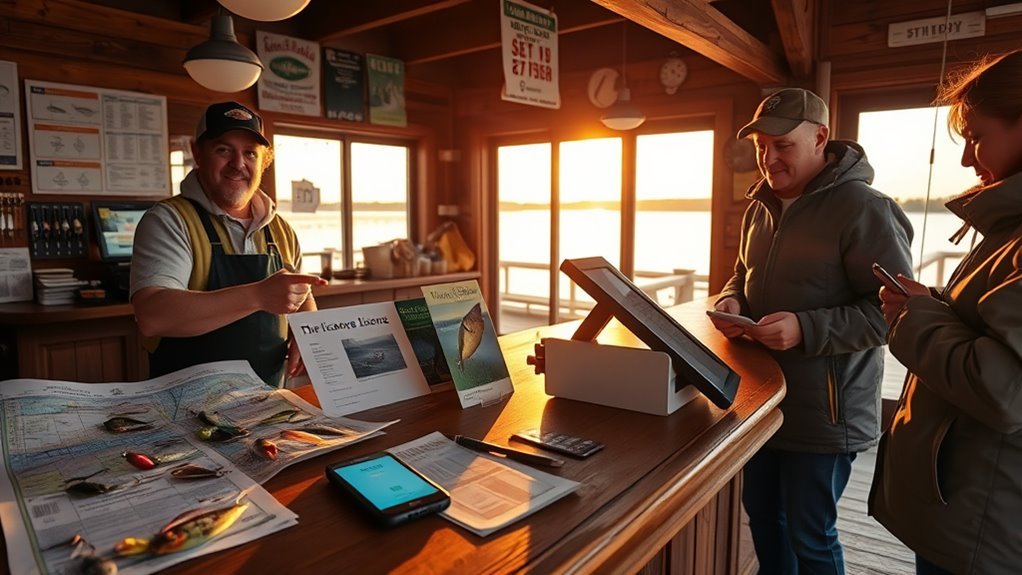
CDFW provides four main authorized ways to obtain a California sport fishing license:
- Online: Purchase through the CDFW Online License Sales and Services site. For an online 365-day license purchase, CDFW allows you to print a temporary license that is valid immediately for up to 30 days while the permanent document is mailed. Short-term licenses are printed at the end of the transaction and become valid for the specified date or dates.
- Telephone: CDFW lists its authorized telephone sales number as (800) 565-1458.
- Authorized License Agents: CDFW works with more than 1,100 retail license agents, ranging from local tackle and sporting-goods stores to larger retailers. Use CDFW’s official agent locator to find a current seller.
- CDFW License Sales Offices: Selected CDFW offices sell licenses. CDFW license counters do not accept cash; accepted methods include check, money order, and qualifying Visa or Mastercard debit/credit cards.
Eligible sport fishing licenses and validations can also be displayed electronically through the official CDFW License App. A screenshot or photograph of the license is not valid. If you rely on the app, your device must be able to display the license when requested.
Physical report cards generally remain separate. Proof of purchase shown in the app does not replace a required physical report card, so keep the applicable card in your immediate possession while participating in the fishery.
Reduced-Fee, Free Licenses and Special Eligibility Criteria
Some visitors may qualify for reduced-fee California sport fishing licenses even though they are not California residents:
- Disabled Veterans: An honorably discharged U.S. military veteran with a service-connected disability rating of at least 50 percent may qualify. CDFW lists a 2026 fee of $10.04 at CDFW offices or $10.54 through license agents after eligibility is established.
- Recovering Service Members: Qualifying recovering members of the U.S. military may receive the same reduced fee after completing CDFW’s eligibility process.
Other free or reduced-fee programs use different eligibility rules. For example, CDFW’s low-income senior program is for qualifying California residents age 65 or older receiving specified benefits. The mobility-impaired and low-income Native American programs also include California residency requirements. CDFW’s published blind and developmental-disability eligibility criteria are different, so do not assume the same residency rule applies to every free-license category.
Review the current eligibility documentation and application requirements on the CDFW Sport Fishing Licenses page before applying.
Frequently Asked Questions
How Much Is a California Non-Resident Fishing License in 2026?
A California nonresident 365-day sport fishing license costs $174.14 in 2026. Short-term options are $21.09 for one day, $32.40 for two consecutive days, and $64.54 for a ten-day nonresident license. Validations and report cards can add to the total depending on the water, gear, and species.
Are There Age Restrictions for Non-Resident Fishing License Buyers?
Anglers under 16 generally do not need a California sport fishing license. Anyone age 16 or older—resident or nonresident—must have a valid license when fishing inland or ocean waters unless a specific exemption applies. Anglers under 16 can still need an applicable species report card.
Can I Use a Non-Resident License for Commercial Fishing?
No. A California sport fishing license is for noncommercial recreational fishing. Commercial fishing activities use separate licenses and permits. California Fish and Game Code Section 7121 also generally prohibits selling or purchasing sport-caught fish, subject to specific statutory or regulatory exceptions.
Do Non-Resident Licenses Cover Saltwater and Freshwater Both?
Yes. A standard California sport fishing license covers recreational fishing in inland and ocean waters statewide. Additional requirements can still apply. For example, an Ocean Enhancement Validation is generally required when a license holder fishes ocean waters south of Point Arguello, except when fishing under a one-day or two-day sport fishing license.
Can I Get a Refund or Exchange After Purchase?
CDFW states that sport fishing license, validation, and report-card purchases are nonrefundable, and its online sales system states that sales are final with no refunds or exchanges. If a sport fishing license is lost or stolen, CDFW lists a $14.30 duplicate sport fishing license fee for 2026.
Can I Show My California Fishing License on My Phone?
Yes. Eligible sport fishing licenses and validations can be displayed through the official CDFW License App. Screenshots and photographs of the license are not valid. Required physical report cards generally must still be in your immediate possession.
Is Catch-And-Release Policy Different for Non-Residents?
No. California fishing seasons, bag and size limits, gear restrictions, report-card requirements, and catch-and-release rules apply according to the fishery and location rather than your state of residence. Always check the current regulation for your target species and water before fishing.
Conclusion
A California visitor should choose a fishing license based on the timing of the trip, not a supposed universal breakeven number. A single day costs $21.09, two consecutive days cost $32.40, and the $64.54 ten-day nonresident license is usually the strongest base-license value for one trip covering several consecutive fishing days. The $174.14 365-day license makes more sense when enough fishing days are spread across separate trips that repeated short-term licenses would cost more.
Before buying, check whether your location requires the $7.30 Ocean Enhancement Validation and whether your target species requires a physical report card. Then confirm current seasons and closures through CDFW, purchase through an authorized channel, and keep either your valid physical license or an electronically displayed license in the official CDFW License App available while fishing.

This Ultra PRO bundle provides layered protection for standard trading cards with clear rigid toploaders and soft inner sleeves. It helps guard against bending, scratches, and dust while keeping cards visible for display, storage, shipping, and everyday handling. Ideal for collectors who want a reliable way to protect and organize valuable cards.

Nature Made Burp Less Fish Oil provides omega-3 support for heart health in easy-to-take softgels designed to help reduce fish burps. Each serving delivers concentrated EPA and DHA from purified fish oil sourced from wild-caught ocean fish, with no artificial colors, flavors, or preservatives. This gluten-free, dairy-free supplement is a trusted daily option for adults looking to support overall cardiovascular wellness.

This Pokémon card bundle gives collectors and players a fun mix of 50 assorted cards plus one double rare legendary card for extra excitement. It also includes an LCC deck box that can store up to 100 cards, making it easy to organize and protect your collection at home or on the go.
