
A lifetime fishing license can be a good value, but the price and coverage depend on the state. This guide uses Florida as the main example because its age-based fees are widely quoted online. Freshwater, saltwater, hunting, tags, and special permits are separate privileges, so checking the exact license package is essential before you buy.
Quick Answer
Florida residents currently pay $126.50 for ages 4 and under, $226.50 for ages 5–12, or $301.50 for ages 13 and older for either a lifetime freshwater or lifetime saltwater fishing license. There is no national price: each state sets its own fees, eligibility rules, included permits, and purchase process.
Key Takeaways
- Florida lifetime freshwater and lifetime saltwater licenses use the same three age-based price tiers.
- The $301.50 adult license equals about 18 annual $17 resident licenses before inflation and optional transaction costs.
- A freshwater lifetime license does not cover saltwater fishing, and the saltwater license does not cover freshwater fishing.
- Only Florida residents can purchase these licenses, although the license remains valid for authorized Florida activities if the holder later moves away.
- Special registrations, report cards, tags, seasons, and harvest limits can still apply even when the base license lasts for life.
At a Glance
| Time Required | Usually 5–15 minutes after residency and identity records are ready |
| Difficulty | Easy for adults with a verified Florida ID; additional documents are needed for minors |
| Tools Needed | Florida driver license or ID, identifying information, payment method, and age-specific documents for children |
| Cost | $126.50–$301.50 for one Florida lifetime fishing license; $401.50–$1,001.50 for Lifetime Gold Sportsman |
Why a Lifetime Fishing License Can Be a Smart Financial Choice
A lifetime license replaces future purchases of the same base license. That can save money for a Florida resident who expects to fish for many years, especially if annual fees rise later.
The current Florida resident annual freshwater fishing license is $17. The adult lifetime freshwater license is $301.50. At today’s listed prices:
$301.50 ÷ $17 = 17.7 annual licenses.
In simple terms, the lifetime price is passed during the 18th annual purchase because 17 annual licenses cost $289 and 18 cost $306. This calculation does not include inflation, investment returns, temporary promotions, transaction charges, or years when the angler would not have bought a license.
At current Florida prices, an adult lifetime freshwater license costs about the same as 18 resident annual freshwater licenses.
The nonfinancial benefits can matter too. A lifetime holder does not have to remember a yearly base-license renewal, and the license remains valid for its authorized Florida activities if the holder later becomes a resident of another state.
Note: Continued validity after moving means the license still works when fishing in Florida. It does not replace the fishing license required by the holder’s new home state.
Comparing Lifetime, Annual, and Short-Term Licenses
The right license depends on residency, age, how often you fish, and whether you target freshwater or saltwater species. Florida does not offer short-term freshwater licenses to residents because the $17 annual license is already the standard low-cost option. Short-term licenses are mainly sold to nonresidents.
| Florida option | Listed price | Best fit |
|---|---|---|
| Resident annual freshwater | $17 | Adults who are unsure how many future years they will fish |
| Resident five-year freshwater | $79 | Regular anglers who want fewer renewals without a lifetime commitment |
| Resident lifetime freshwater | $126.50–$301.50 | Long-term Florida anglers or families buying before a child enters a higher age tier |
| Nonresident three-day freshwater | $17 | Visitors making one short fishing trip |
| Nonresident seven-day freshwater | $30 | Visitors fishing during a longer vacation |
Warning: Buy the license for the species you plan to target. A Florida freshwater license does not authorize saltwater fishing, and a saltwater license does not authorize freshwater fishing. Mixed or tidal waters can require careful attention to the species being targeted or kept.
Products Worth Considering

Enough to Use: you will receive 6 pieces of fishing license holders, and 6 pieces of safety pins, abundant in quantity, enough for you to choose and replace, can meet your different needs; You can also share them with your friends

FISHING LICENSE HOLDER W/ZIP CLOSURE

Enough to Use: you will receive 6 pieces of fishing license holders, and 6 pieces of safety pins, abundant in quantity, enough for you to choose and replace, can meet your different needs; You can also share them with your friends
Breakdown of Florida Lifetime License Prices and Age Tiers
The Florida Fish and Wildlife Conservation Commission offers separate lifetime freshwater and lifetime saltwater fishing licenses to Florida residents. Each type uses the same age-based fees.
Products Worth Considering

Package length: 0.508 cm

【Durable materials】Our license plate frame is made of high-quality aluminum, wear-resistant, rust-resistant, anti-aging, long-lasting use; Even if it gets dirty in the rainy season, it is easy to clean, can be used for a long time, can withstand all kinds of bad weather, and is not easy to fade.

【MATERIAL】: oFloral License plate frame is made from premium quality aluminum, which can provide long-lasting protection from corroding, rusting and aging, durability for long lasting usage.Personalized Car Frame Can Perfect to Put on Your Front of Car or for Decorative Purposes Around the House Like in Your Bedroom, Garage, Basement, Ect.
Age-Based Pricing Tiers in Florida
| Age when purchased | Lifetime freshwater | Lifetime saltwater | Lifetime Gold Sportsman |
|---|---|---|---|
| 4 or younger | $126.50 | $126.50 | $401.50 |
| 5–12 | $226.50 | $226.50 | $701.50 |
| 13 or older | $301.50 | $301.50 | $1,001.50 |
The lifetime freshwater license includes the Florida freshwater fishing license. The lifetime saltwater license includes the saltwater fishing license plus snook and spiny lobster permits. The Lifetime Gold Sportsman’s License combines hunting, freshwater fishing, saltwater fishing, and several listed state hunting and fishing permits.
Youth vs. Adult Rates: What the Math Means
Florida residents younger than 16 generally do not need an ordinary recreational fishing license. A family buying a lifetime license for a child is therefore not avoiding annual license fees immediately. The main benefits are locking in the lower age-tier price and giving the child a license that can be used once ordinary licensing requirements apply.
- Ages 4 and under: $126.50 equals about 7.4 current $17 annual licenses.
- Ages 5–12: $226.50 equals about 13.3 current annual licenses.
- Ages 13 and older: $301.50 equals about 17.7 current annual licenses.
These are comparisons in licensed fishing years, not the child’s age at break-even. Years before the child would normally need a license do not create an avoided annual fee.
Pro Tip: If a child is close to turning 5 or 13, review the application early. Florida bases the price on the child’s age tier, and the next tier costs more.
How Other States Compare in 2026
There is no national lifetime fishing license price. States use different age bands, residency rules, and included privileges. Current examples show how wide the range can be.
| State | Resident lifetime fishing price example | Key difference |
|---|---|---|
| Florida | $126.50–$301.50 | Separate freshwater and saltwater licenses with three age tiers |
| Minnesota | $344–$574, with a $379 tier for ages 51 and older | Four resident age groups and separate nonresident lifetime options |
| Texas | $1,000 | Flat resident fishing-package price and Texas-specific tag procedures |
| California | $709–$1,160.25 | Four age tiers and optional lifetime fishing privileges |
How to Purchase a Florida Lifetime Fishing License

Florida lifetime licenses are for residents. Adults with a verified Florida driver license or identification card usually have the simplest application process. A lifetime license can be ordered through official Florida channels, including GoOutdoorsFlorida.com and participating county tax collector offices.
- Choose the correct license. Decide whether you need freshwater, saltwater, or the combined Lifetime Gold Sportsman package.
- Confirm Florida residency. Online applicants generally use a Florida driver license or ID that can be verified through state records.
- Create or retrieve the customer account. The licensing system may use the applicant’s date of birth, last name, driver-license information, or last four digits of the Social Security number.
- Gather age-specific documents. Children and teens may need additional identity and parent-residency records.
- Review included privileges. Do not assume a freshwater license includes saltwater fishing or that every saltwater registration is included.
- Pay and save the confirmation. Review the full checkout total before submitting, then retain the receipt and customer number.
- Store proof of the license. Keep the issued card or an accepted electronic copy available while fishing.
Products Worth Considering

FLORIDA STATE FLAG DESIGN: Features a textured, raised Florida flag design for an authentic, high-end look and feel.

FULLY CUSTOMIZABLE TEXT: Personalize this Florida Sunshine State plate replica with any name, phrase, or text you choose for a one-of-a-kind novelty sign.
Embossed aluminum license plate in team colors
Documents for Children and Teens
For a child younger than 13, Florida FWC lists the following documents for a lifetime-license purchase:
- A certified copy of the child’s birth certificate
- The child’s Social Security card
- A copy of the Florida driver license of a parent whose name appears on the birth certificate
Youths ages 13–18 may use a Florida school student ID together with a parent’s proof of Florida residency. At an in-person purchase, the child may need to be accompanied by that parent.
Where to Buy
Florida recreational licenses and permits are available through several official channels:
- Online through GoOutdoorsFlorida.com
- At participating county tax collector offices
- At authorized license agents when the selected product is available there
- Through the Fish|Hunt FL mobile app
- By calling an official Florida licensing number listed on the FWC ordering page
Note: Use only Florida FWC’s official website, app, telephone numbers, tax collectors, or authorized agents. Search advertisements and unofficial licensing sites may add unnecessary charges or collect personal information.
Tags, Permits, and Annual Requirements for Lifetime Holders
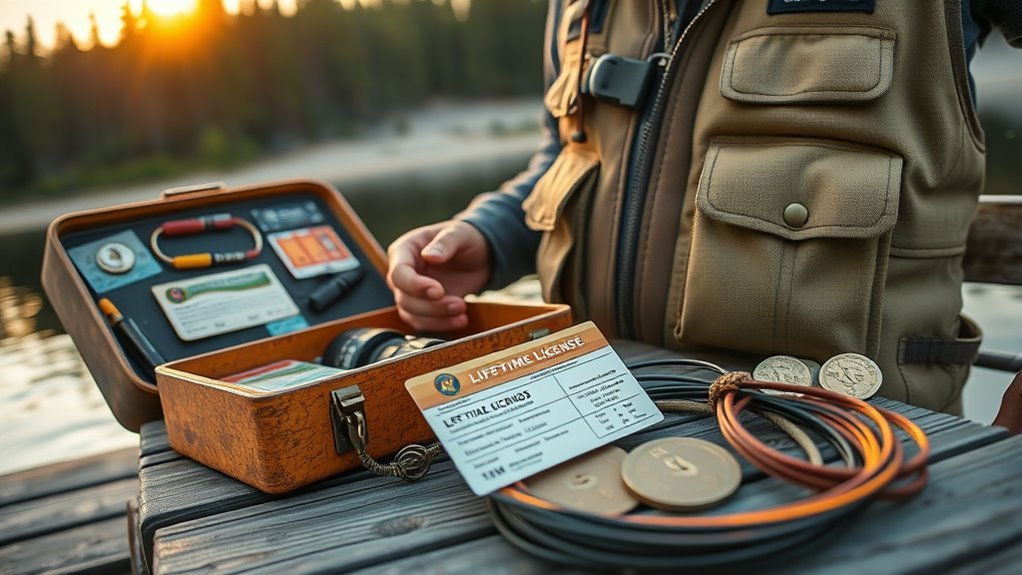
A Florida lifetime fishing license removes the need to renew the included base license each year. It does not create an exemption from fishing regulations, closed seasons, bag limits, size limits, gear restrictions, or every activity-specific permit.
Are Annual Tags Required in Florida?
A Florida lifetime freshwater fishing holder does not request a new general freshwater license tag each August. The August 15 annual-tag rule often repeated online comes from the Texas licensing system, not Florida’s lifetime freshwater program.
Florida anglers may still need a separate registration, designation, permit, or harvest tag for a particular saltwater activity. Examples can include:
- State Reef Fish Angler designation
- Shore-based Shark Fishing Permit and required educational course
- Blue crab or stone crab recreational trap registration
- A tarpon tag when landing a tarpon
- Any limited-entry, species-specific, or reporting requirement in effect for the activity
Requirements can change by species, location, gear, and season. Check the current Florida saltwater license and permit list before each trip.
What Florida Lifetime Licenses Include and Exclude
| Lifetime freshwater | Covers the Florida freshwater fishing license. It does not include the saltwater fishing license. |
| Lifetime saltwater | Covers the Florida saltwater fishing license and includes snook and spiny lobster permits. Other registrations and tags can still apply. |
| Lifetime Gold Sportsman | Combines freshwater, saltwater, hunting, and the state permits specifically listed by Florida FWC. |
| Commercial or guide activity | Not covered. Commercial fishing, charter, and guide operations use separate licenses and rules. |
| Other states | Not covered. The license authorizes the listed activities in Florida, even if the holder later lives elsewhere. |
Digital vs. Physical Proof
The listed Florida lifetime price includes a credit-card-style license card. Holders can also keep eligible license information in the Fish|Hunt FL app, which Florida FWC recognizes as possession of the license.
- Physical card: Useful when phone service or battery power is limited.
- Electronic copy: Convenient for quick access through the official app.
- Free online reprint: A paper copy can generally be reprinted online at no cost.
- Agent reprint: Florida FWC currently lists a $2.50 charge for a reprint at an agent or tax collector.
- Replacement hard card: A separate replacement charge may apply if the physical lifetime card is lost or damaged.
Pro Tip: Save the customer number and a screenshot or downloaded copy before traveling to an area with weak mobile service. Carrying the physical card provides an additional backup.
Special Programs, Exemptions, and Lower-Cost Alternatives
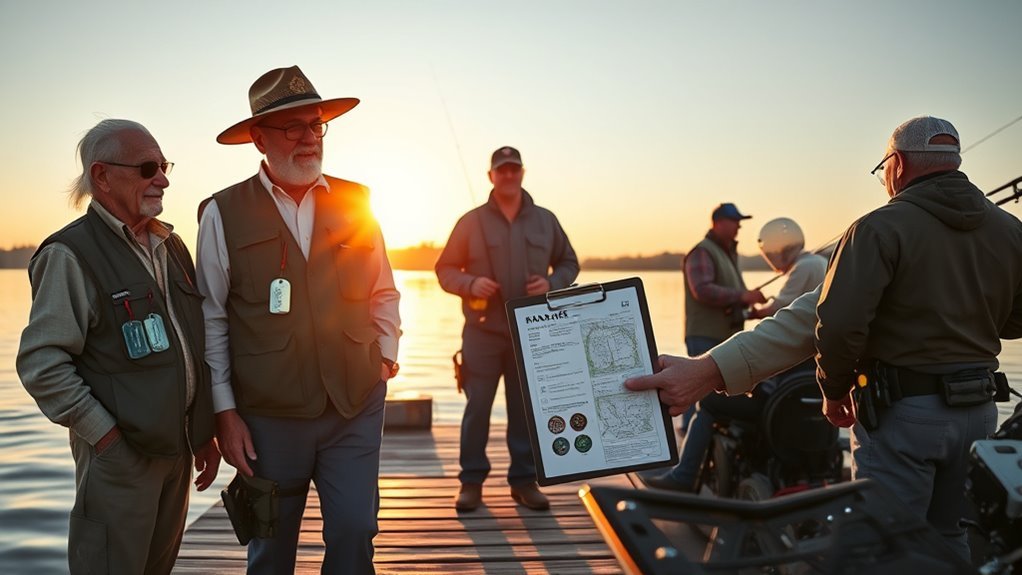
Florida has exemptions and reduced-cost programs, but they should not be confused with discounted lifetime fishing licenses. Eligibility, coverage, and expiration periods differ.
| Program or exemption | What to know |
|---|---|
| Florida residents under 16 | Generally exempt from ordinary recreational fishing-license requirements, although activity-specific permits can still apply. |
| Florida residents 65 or older | Generally exempt when carrying proof of Florida residency and age. An optional license may still help document participation and support conservation funding. |
| Resident Persons with Disabilities License | A qualifying no-cost hunting and fishing license valid for two or five years, depending on the documents used. It is not a lifetime license. |
| Military Gold Sportsman | A $20 annual package for qualifying active-duty or retired military Florida residents. Residency and military verification are required. |
| Resident shoreline saltwater license | A no-cost license for qualifying shoreline fishing. Its limits must be reviewed carefully because it does not cover every saltwater setting or method. |
Qualifying anglers should compare these options with the privileges of a paid lifetime license. A no-cost or reduced-cost license may expire, require renewal, or cover fewer activities.
Frequently Asked Questions
Will my Florida lifetime license remain valid if I move to another state?
Yes. Florida law says a resident lifetime license bought while the holder was a Florida resident remains valid for the Florida activities authorized by that license after the holder moves. It does not authorize fishing in the new state.
Can I sell or transfer my lifetime fishing license?
No. The license belongs to the person named on it and cannot be sold or transferred. A parent or another buyer may pay for an eligible person’s new license, but an existing license cannot be reassigned.
Does a freshwater lifetime license cover saltwater fishing?
No. Florida sells lifetime freshwater and lifetime saltwater licenses as separate products. Anglers who want both may buy both licenses or compare the Lifetime Gold Sportsman package.
Must I renew a Florida lifetime fishing license every year?
The included base license does not require an annual renewal. However, some species, gear types, saltwater activities, report cards, registrations, or harvest tags may have separate annual or seasonal requirements.
Does a lifetime license cover commercial or guide fishing?
No. Florida lifetime fishing licenses cover personal recreational privileges. Commercial harvest, charter vessels, and professional guide operations use separate licenses, permits, reporting rules, and fees.
Is the purchase tax-deductible?
A personal recreational license is generally treated as a personal expense rather than a charitable contribution. Tax treatment can depend on individual facts, so ask a qualified tax professional before claiming any deduction.
What happens to the license when the holder dies?
The license ends at the holder’s death. It cannot be inherited, sold, or transferred to another person.
Conclusion
A Florida lifetime fishing license can be a practical purchase for a resident who expects to fish for many years. Current prices range from $126.50 to $301.50 for either freshwater or saltwater privileges, depending on age. At the adult price, the simple break-even point is about 18 annual $17 licenses.
Before buying, choose the correct water type, check the included permits, and compare the lifetime price with Florida’s age exemptions and reduced-cost programs. The lifetime license removes annual base-license renewals, but it does not override seasons, harvest limits, activity-specific registrations, or the license rules of another state.
Sources
- Florida Fish and Wildlife Conservation Commission — Lifetime Licenses — Florida age tiers, included privileges, and documents for minors
- Florida FWC — Freshwater Recreational Licenses and Permits — annual and five-year resident prices and license options
- Florida FWC — Saltwater Recreational Licenses and Permits — saltwater permits, tags, and registrations
- Florida FWC — How to Order a License or Permit — approved purchasing methods and Fish|Hunt FL app information
- Florida Statutes §379.3501 — lifetime duration and validity after the holder moves out of Florida
- Florida FWC — Persons with Disabilities Hunting and Fishing License — eligibility and two- or five-year no-cost license terms
