
In Arizona, anglers ages 10–17 generally need the $5 Youth Combination Hunt and Fish License to fish public accessible waters. Children under 10 and blind Arizona residents are exempt from the state license requirement, but catch limits, closures, bait restrictions, and other fishing rules still apply. This guide explains the correct license, how long it lasts, how to buy it, and which special programs may apply.
Quick Answer
Arizona’s official youth license is the Youth Combination Hunt and Fish License. It costs $5 for residents and nonresidents ages 10–17 and runs for one year. Children under 10 and blind Arizona residents do not need a state fishing license. Carry valid proof and follow all water-specific limits and closures.
Key Takeaways
- Arizona’s Youth Combination Hunt and Fish License costs $5 for both residents and nonresidents ages 10–17.
- Children under 10 and blind Arizona residents are exempt from the state fishing-license requirement.
- The license has a one-year term; use the start and expiration dates shown on the issued credential.
- You can buy it online, at an Arizona Game and Fish Department office, or with help from a participating license dealer.
- A license or exemption does not cancel bag limits, seasonal closures, legal-bait rules, or special regulations for a particular water.
At a Glance
| Time Required | About 5–10 minutes for a typical online purchase |
| Difficulty | Easy |
| Tools Needed | Legal name, date of birth, contact details, payment method, and a phone or computer; the Arizona E-Tag app is optional |
| Cost | $5 for residents and nonresidents ages 10–17 |
Who Needs an Arizona Youth Fishing License?
Under current Arizona Game and Fish Department licensing rules, residents and nonresidents age 10 or older generally need a valid license to fish public accessible waters.
Anglers ages 10–17 can buy the $5 Youth Combination Hunt and Fish License. The same youth product and price apply to Arizona residents and nonresidents.
The main state-license exemptions are:
- Children under 10: They do not need an Arizona fishing license.
- Blind Arizona residents: They are exempt from buying a state fishing license.
- Qualifying private waters: A state license generally is not required when fishing qualifying private waters with the landowner’s permission. Confirm the water’s legal status before relying on this exemption.
- Arizona Free Fishing Day: A license is waived on the designated day, but only for waters and activities covered by that year’s official announcement.
Arizona keeps youth access affordable: the statewide Youth Combination Hunt and Fish License costs $5 for residents and nonresidents ages 10–17.
An exemption applies only to the license requirement. Exempt anglers must still follow bag and possession limits, legal-method rules, seasonal closures, protected-species rules, and restrictions for the specific lake, stream, river, or pond.
Products Worth Considering

ARIZONA STATE FLAG DESIGN: Features the bold red, yellow, and blue of the Arizona state flag with full embossed detail.

FISHING LICENSE HOLDER W/ZIP CLOSURE

Comes with pre-drilled holes for easy installation
Age Categories, Eligibility, and License Validity
Arizona divides youth fishing-license eligibility into three basic age groups:
| Age Range | State License Requirement | Validity or Next Step |
|---|---|---|
| 0–9 | No state license required on public accessible waters | Fishing limits and water-specific rules still apply |
| 10–17 | Youth Combination Hunt and Fish License required unless an exemption applies | One-year license term |
| 18+ | No longer eligible to purchase the youth product | Use the expiration shown on any valid issued license, then purchase an appropriate adult license |
The current Arizona Administrative Code gives the Youth Combination Hunt and Fish License a one-year term. A license bought through a dealer begins on the purchase date. For purchases made online or through an AGFD office, the applicant may select an authorized start date, including a date up to 60 days after purchase.
Note: The current rule defines youth eligibility through age 17 but does not say that an already-issued license automatically becomes invalid on the holder’s 18th birthday. Follow the start and expiration dates printed on the license. Once that license expires, an angler who is 18 or older must obtain the appropriate adult credential unless another exemption applies.
Cost and Privileges of the Youth Combination License
The Arizona Youth Combination Hunt and Fish License costs $5 for both residents and nonresidents ages 10–17. There is no higher nonresident youth price for this product.
According to the current Arizona Fishing Regulations, the license includes:
- Fishing for legal aquatic wildlife statewide, subject to area and species rules.
- Fishing in Community Fishing Program waters.
- Two-pole fishing privileges where two-pole use is otherwise legal.
- Certain youth hunting privileges, including small game and other listed categories.
The $5 license does not override a closed season, restricted water, daily bag limit, protected-species rule, or legal-method requirement. Hunting activities may also require separate tags, federal stamps, hunter education, or other credentials depending on the species and activity.
Warning: “Statewide” does not mean every body of water follows identical rules. Always check the current statewide regulations and the special rules for the exact water before fishing.
Products Worth Considering

DECORATIVE LICENSE PLATE – Signs 4 Fun License Plates give personality to any vehicle. These license plates do not intend to cover or block any existing license plate on a vehicle. Our decorative license plates can be hung on walls as well as decoration in man caves, garages, or other displays.

[Compliance] This license plate is a decorative craft item, not a real license plate. It is for interior decoration only and is prohibited from being installed on vehicles. Please comply with US laws and state regulations.
Decorative Item Only: This product is a vintage-style decorative license plate, crafted as a replica/artifact. It is NOT a real license plate and cannot be used as such. Please comply with all applicable laws—it must NOT be mounted on any vehicle to replace, cover, or imitate an official license plate. Use only for indoor or outdoor decoration where legally permitted.
Where and How to Buy an Arizona Youth License
The fastest option is the official Arizona Game and Fish Department license portal. Licenses are also available through AGFD offices and participating license dealers.
Products Worth Considering

High-quality metal novelty license plate Universal 12" x 6" size Four standard mounting holes Created by Graphics and More in the USA
How to Purchase the License Online
- Open the official portal. Use the AGFD licensing website rather than an unofficial third-party service.
- Sign in or create the required account. Enter the youth angler’s legal name, date of birth, address, and other requested customer details accurately.
- Select the correct product. Choose the Youth Combination Hunt and Fish License for an eligible angler age 10–17.
- Review the start date. Confirm when the one-year license should begin under the options offered by the portal.
- Pay the $5 fee. Review all information before completing the transaction.
- Save valid proof. Print or save the issued license and make sure the youth angler can produce it while fishing.
Buying Through an Office or Dealer
An AGFD office can help resolve customer-record or eligibility questions and complete the transaction. A participating dealer may also help the customer use the current electronic licensing system. Check the official AGFD license page before visiting because services and operating hours can vary by location.
Pro Tip: The free Arizona E-Tag app can store and display license information, including when the device is offline. Set it up before leaving cellular coverage and keep a printed backup when practical.
Replacing a Lost License
A license purchased online can generally be reprinted without charge through the official AGFD reprint service. The current fishing regulations list an $8 replacement fee when a replacement license is obtained through an AGFD license dealer.
Special Programs, Exemptions, and Free Fishing Days
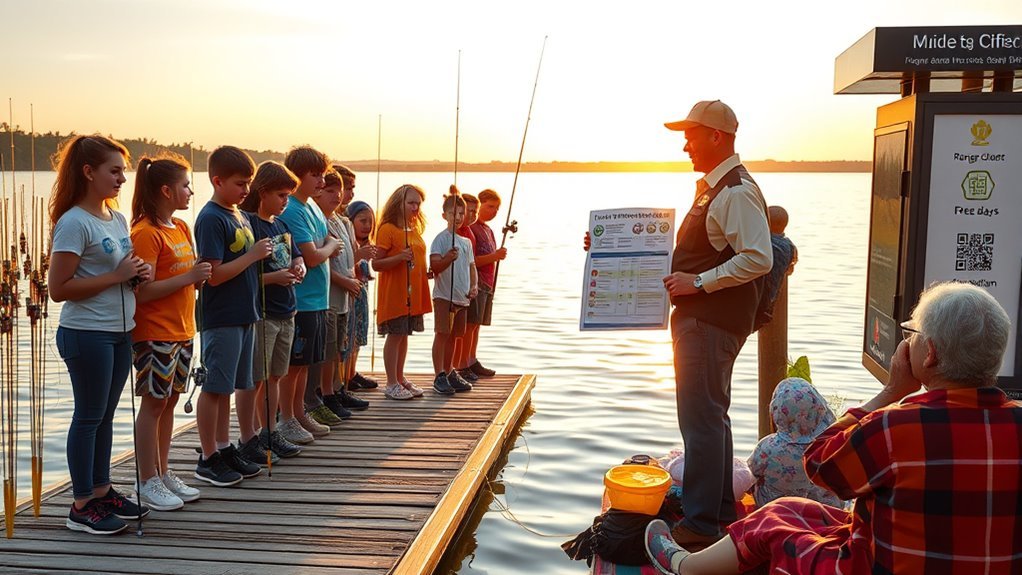
Arizona provides several exemptions and special-license programs in addition to the regular $5 youth product.
Free Fishing Day
Arizona’s Free Fishing Day is normally held during National Fishing and Boating Week. Recent dates were June 7, 2025, and June 6, 2026. Both dates have passed, and anglers should check the latest AGFD fishing announcements for the next officially designated date.
Free Fishing Day waives the state license requirement only within the scope of the official announcement. Bag limits, legal-method rules, closures, and other fishing regulations remain in force. The 2026 waiver did not apply to private waters, tribal waters, or Central Arizona Project canals.
Youth Group Two-Day Fishing License
A qualifying nonprofit organization or government agency may apply for an Arizona Youth Group Two-Day Fishing License. The license currently costs $25, covers up to 25 participating youths, and is valid for two consecutive days. It is issued through an AGFD office rather than as an ordinary individual online license.
Pioneer License
An Arizona resident age 70 or older who has lived in the state continuously for at least 25 years may qualify for a complimentary Pioneer License. This is a separate senior program and does not change the ordinary youth-license rules.
Disabled Veteran Licenses
A complimentary license is available to a qualifying Arizona resident veteran with a 100% permanent and total service-connected disability who meets the applicable residency requirement. Arizona also lists reduced-fee options for certain other service-connected disability and Purple Heart categories. Applicants should review the current Disabled Veteran License requirements before applying.
Private and Tribal Waters
A state fishing license generally is not required on qualifying private waters when the angler has the landowner’s permission. Tribal waters are different: a tribal permit or other authorization may be required, and an Arizona state license does not replace the rules established by the governing tribal authority.
Rules to Check Before a Youth Angler Fishes
Buying the license is only the first step. Before each trip, an adult should review the current regulations for the intended water and confirm:
- The water is open on the planned date.
- The fish species is legal to target and keep.
- The daily bag and possession limits.
- Whether special size limits apply.
- Which bait, hooks, lures, and fishing methods are legal.
- Whether two-pole fishing is allowed at that location.
- Whether the water is managed by AGFD, a federal agency, a municipality, a private owner, or a tribal authority.
- Whether a child on a boat must wear a life jacket.
Arizona boating guidance requires children age 12 and younger to wear a properly fitted, U.S. Coast Guard-approved life jacket while a vessel is underway. This boating rule is separate from the fishing-license requirement.
Note: Vehicle booster-seat requirements are road-safety laws, not fishing regulations. They still apply when transporting a child to or from the fishing location.
Frequently Asked Questions
Do youth licenses differ for freshwater versus saltwater fishing?
No. Arizona does not sell separate freshwater and saltwater versions of the Youth Combination Hunt and Fish License. The $5 youth license provides statewide Arizona fishing privileges, subject to the rules for the particular species and water.
Can nonresident children buy the Arizona youth license?
Yes. Residents and nonresidents ages 10–17 may buy the same Arizona Youth Combination Hunt and Fish License for $5. Children under 10 are exempt from the state license requirement.
Are booster seats or life jackets required for youth anglers?
Children age 12 and younger must wear a properly fitted, U.S. Coast Guard-approved life jacket while a boat is underway in Arizona. Booster-seat requirements apply during vehicle travel and are separate from fishing-license and boating rules.
Do youth fishing records or tournaments require separate permits?
AGFD does not issue fishing-tournament permits, but the lake, landowner, municipality, federal agency, or other site manager may require event approval. An Arizona fish-record entry uses a separate application and verification process, not a special youth fishing license.
How is a lost or stolen youth license replaced?
An online license can generally be reprinted free through the official AGFD reprint page. The current fishing regulations list an $8 fee for a replacement obtained through a license dealer. The Arizona E-Tag app may also provide access to stored digital license information.
Does an Arizona youth license expire when the angler turns 18?
The current rule gives the issued youth license a one-year term and does not state that it automatically ends on the holder’s 18th birthday. A person who is already 18 cannot purchase the youth product. Follow the start and expiration dates printed on the issued license, then buy the appropriate adult license when needed.
Do private or tribal waters follow the same license rules?
Not always. Qualifying private waters may be exempt from the state license requirement when the angler has the landowner’s permission. Tribal waters may require a separate tribal permit and follow rules established by the governing tribal authority.
Conclusion
Arizona makes youth fishing affordable with a $5 combination license for residents and nonresidents ages 10–17. Check the issued license dates, carry valid proof, and review the rules for the exact water before every trip. Children under 10 and blind Arizona residents are exempt from the state license requirement, but every angler remains responsible for legal methods, limits, closures, and safe boating practices. License fees and responsible fishing both support long-term access and conservation.
Sources
- Arizona Game and Fish Department — Licenses and Regulations — current age requirements, exemptions, fees, license products, and purchase options.
- 2025–2026 Arizona Fishing Regulations — license possession, privileges, replacements, limits, and water-specific requirements.
- Arizona Administrative Code, Title 12, Chapter 4 — youth-license eligibility, duration, and authorized start dates.
- Arizona Game and Fish Department — Special Licenses — Pioneer, disabled-veteran, and youth-group programs.
- Arizona Game and Fish Department — Tournament Fishing — tournament-permit guidance and land-manager requirements.
- Arizona Revised Statutes §28-907 — child-restraint and booster-seat requirements for motor vehicles.
