

Alaska residents age 60 or older who meet the Alaska Department of Fish and Game (ADF&G) residency rules can apply for a free Permanent Senior Identification Card (PID). With a valid senior PID, you do not need to buy the regular $20 annual resident sport fishing license, and you do not need to purchase a King Salmon Stamp. You must still carry the PID while fishing and follow all seasons, bag limits, size limits, emergency orders, permits, and harvest-record requirements that apply to the fishery.
Last updated: August 11, 2026. License fees and senior rules were checked against the current ADF&G senior licensing information, ADF&G license pricing, and ADF&G residency rules.
Quick Answer
An Alaska resident age 60 or older who meets ADF&G residency requirements can apply for a free Permanent Senior Identification Card. The PID replaces the regular sport fishing license and exempts the holder from buying a King Salmon Stamp. However, senior anglers fishing for species with annual limits must obtain a free Sport Fishing Harvest Record Card and follow all area-specific fishing regulations.
Key Takeaways
- You must be at least 60 years old and meet ADF&G’s Alaska residency definition to qualify.
- Under the general residency rule, a civilian applicant must have maintained Alaska domicile for the preceding 12 consecutive months and must not claim residency or residency benefits elsewhere.
- The Permanent Senior Identification Card is issued without charge.
- A valid senior PID replaces the regular sport fishing license and removes the King Salmon Stamp purchase requirement.
- A free Sport Fishing Harvest Record Card is still required when fishing for species with annual limits.
- You must be physically present in Alaska when applying for the senior PID.
- The PID becomes void if you stop being an Alaska resident.
Alaska Senior Fishing License: Cost and Requirements at a Glance
| Requirement | Current Rule |
|---|---|
| Minimum age | 60 years old |
| Residency | Must meet ADF&G’s Alaska residency definition; the general civilian rule includes 12 consecutive months of Alaska domicile before applying. |
| Senior PID cost | $0 |
| Regular resident annual sport fishing license | $20 currently; a qualifying senior PID holder does not need to buy it. |
| King Salmon Stamp | A senior PID holder does not need to purchase the stamp. |
| Harvest Record Card | Free and required when fishing for species with annual limits. |
| Application | Apply through ADF&G’s online store or an ADF&G office while physically present in Alaska. ADF&G says processing may take up to a week. |
| Validity | The credential is permanent while you continue to qualify as an Alaska resident; it becomes void if residency ends. |
Who Qualifies for a Free Permanent Senior Fishing Identification Card

You qualify for a free Permanent Senior Identification Card if you are at least 60 years old and meet ADF&G’s residency definition. The card can serve in place of the regular sport fishing, hunting, and trapping licenses for an eligible Alaska senior resident.
For most civilian applicants, Alaska residency means being physically present in Alaska with the intent to remain indefinitely, maintaining Alaska domicile for the 12 consecutive months immediately before the application, and not claiming residency or residency-based benefits in another state, territory, or country. ADF&G has additional residency provisions for qualifying military members and dependents.
ADF&G lists several situations that can disqualify a senior applicant, including holding a resident hunting or fishing license in another state, being registered to vote in another state, receiving a property-tax benefit based on residency elsewhere, or receiving other benefits under a claim of residency somewhere else.
The senior PID removes the regular sport fishing license requirement, but it does not remove fishing seasons, bag limits, annual limits, permits, emergency orders, or area rules.
You must carry a valid senior PID when fishing under the exemption. If you later stop qualifying as an Alaska resident, ADF&G says the card becomes void.
Products Worth Considering

12"x6" metal embossed plate made from aluminum MADE IN U.S.A.

Includes Weight, Hook Size, Food Quality, And Coloring.

Heavy-duty automotive aluminum – Stop settling for thin metal that bends. Crafted from durable aluminum, this plate is built to withstand car washes and harsh weather without denting or rusting, making it a reliable choice for any vehicle.
Costs and Fee Waivers for Senior Anglers in Alaska
The main cost benefit is straightforward: the Permanent Senior Identification Card is issued without charge to qualifying residents age 60 or older, and a valid PID means you do not need to buy the regular resident annual sport fishing license.
ADF&G currently lists the regular resident annual sport fishing license at $20. The current resident annual King Salmon Stamp is $10, but a senior PID holder does not have to purchase that stamp. A resident who would otherwise need both charges therefore avoids those two state purchase costs once eligible for the senior PID.
The current resident low-income sport fishing, hunting, and trapping license is $5 for people who qualify under that separate program. For a broader breakdown of current fees, see our Alaska fishing license costs guide and confirm final prices on the official ADF&G pricing page.
Note: The PID removes specific license and stamp purchase requirements, not the fishing regulations themselves. Always check the rules for the water and species you plan to fish.
Alaska does not require an eligible senior to buy a separate lifetime sport fishing license to receive this benefit. The Permanent Senior Identification Card is the long-term credential as long as the holder continues to meet Alaska residency requirements.
How to Apply for the Permanent Senior ID and Required Documents

To apply for your Permanent Senior Identification Card, first confirm that you are at least 60 and meet ADF&G’s residency rules. Follow the application instructions and provide any residency information or supporting evidence ADF&G requests for your situation.
You can apply through the ADF&G online store or through an ADF&G office. The card is issued without charge. Applicants must be physically present in Alaska when applying, and ADF&G says an application may take up to a week to process.
Use these steps to prepare your application:
- Confirm that you are at least 60 years old.
- Review the ADF&G residency definition and make sure you qualify.
- Make sure you are physically present in Alaska when you apply.
- Submit the senior PID application through the ADF&G online store or an ADF&G office.
- Provide any additional residency information or documentation requested during the application process.
- After approval, keep the valid PID with you whenever you fish, hunt, or trap under the senior exemption.
The card is permanent rather than an annual license, but continued Alaska residency is essential. If you stop being an Alaska resident, the senior PID is immediately void. Review the official ADF&G senior PID instructions before applying.
Rules, Stamp Exemptions, and Harvest Reporting for Seniors
A valid ADF&G senior PID lets an eligible Alaska resident age 60 or older sport fish without buying the regular sport fishing license. Senior PID holders also do not need to purchase a King Salmon Stamp.
The exemption does not remove seasons, bag limits, size limits, gear rules, annual limits, emergency orders, or area closures. Those rules apply regardless of whether you paid for a regular license.
If you fish for a species in a fishery with an annual limit, you must obtain a free Sport Fishing Harvest Record Card. ADF&G says senior PID holders must carry the record card while fishing and record applicable catches immediately in the field. Free harvest record cards are available online, through participating license vendors, and at Fish and Game offices.
A senior PID holder may also need separate permits or harvest cards for personal-use fisheries that require them. Check the applicable regional sport fishing regulations and current emergency orders before fishing a new water or species.
Warning: A free senior PID does not exempt you from bag limits, closures, annual limits, reporting duties, or fishery-specific permit requirements.
Do not confuse the age rules for the PID and proxy fishing. The senior PID starts at age 60. Age-based proxy fishing eligibility starts at age 65. Alaska residents who are blind or meet certain physical or developmental disability requirements may also qualify for proxy fishing. Proxy authorization must follow ADF&G’s rules.
For details, review the official ADF&G sport fishing license and harvest-record rules and ADF&G proxy fishing information.
Products Worth Considering
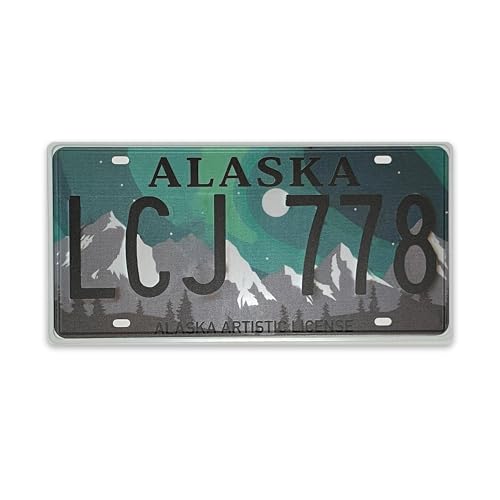
Decorative Item Only: This product is a vintage-style decorative license plate, crafted as a replica/artifact. It is NOT a real license plate and cannot be used as such. Please comply with all applicable laws—it must NOT be mounted on any vehicle to replace, cover, or imitate an official license plate. Use only for indoor or outdoor decoration where legally permitted.

"Welcome To Adventure" Alaska License Plate features a beautiful mountains and pine trees background scene.

Where to Obtain and Replace Senior Fishing Credentials
You can apply for the Permanent Senior Identification Card through ADF&G’s online store or an ADF&G office. The applicant must be physically present in Alaska when applying.
If you lose your Permanent Senior Identification Card, ADF&G says you do not need to submit a new senior application. Contact an ADF&G office or the licensing section for a replacement copy. ADF&G lists adfg.license@alaska.gov and (907) 465-2376 for licensing assistance and says staff can send a copy by email or print one.
- Use the official ADF&G senior licensing page to start a new senior PID application.
- Visit an ADF&G office if you need application or residency assistance.
- If an existing PID is lost, contact ADF&G for a copy instead of submitting a new application.
- Use license vendors for standard licenses and free Sport Fishing Harvest Record Cards where available.
What the Senior ID Does Not Cover
The senior PID covers eligible recreational licensing privileges, but it does not give you commercial fishing rights. Commercial fishing activities require the licenses and permits that apply to that activity.
The PID also does not replace fishery-specific permits, personal-use permits, harvest record cards, private-property permission, regional fishing regulations, or emergency orders. Always check the exact water, species, date, and type of fishing before your trip.
The benefit depends on Alaska residency. If you stop meeting the residency requirement, the PID becomes void. The card also does not replace another jurisdiction’s fishing license when you fish outside Alaska.
Frequently Asked Questions
Is an Alaska Senior Fishing License Free?
Yes. An Alaska resident age 60 or older who meets ADF&G residency requirements can apply for a Permanent Senior Identification Card without charge. A valid PID replaces the regular sport fishing license for the eligible senior.
Do Seniors Need a Separate Saltwater Fishing Permit?
No separate general Alaska sport fishing license is required solely because an eligible senior PID holder fishes in marine water. Alaska’s sport fishing licensing rules cover fresh and marine waters, but fishery-specific permits, harvest-record requirements, regional regulations, and federal rules may still apply depending on the species and trip.
Can Non-Residents Get the Senior Free ID?
No. The free senior PID is for people who meet ADF&G’s Alaska residency definition and are at least 60 years old. A senior visitor who does not qualify as an Alaska resident must follow the applicable nonresident rules. See our Alaska non-resident fishing license guide for the standard visitor options.
Do Alaska Seniors Need a King Salmon Stamp?
A qualifying Alaska senior who possesses a valid ADF&G Permanent Senior Identification Card does not need to purchase a King Salmon Stamp. However, a free Sport Fishing Harvest Record Card is still required when fishing for species in fisheries with annual limits.
Do Senior PID Holders Need a Harvest Record Card?
Yes, when fishing for species with annual limits. The Sport Fishing Harvest Record Card is free. Carry it while fishing and record applicable catches immediately as required by ADF&G.
What Happens if a Senior PID Holder Moves Out of Alaska?
If the holder is no longer an Alaska resident, ADF&G says the senior resident card becomes immediately void. The person must then follow whatever license rules apply to their new residency status.
Can a 60-Year-Old Use Proxy Fishing Based on Age?
Not based on age alone. The senior PID begins at age 60, but Alaska’s age-based proxy fishing eligibility begins at age 65. Separate proxy eligibility can also exist for qualifying residents who are blind or have certain disabilities.
Does the Senior ID Allow Commercial Fishing?
No. The senior PID does not authorize commercial fishing. Commercial activity requires the licenses and permits applicable to commercial fishing.
What if I Lose My Alaska Senior PID?
ADF&G says you do not need to reapply for the Permanent Identification Card. Contact an ADF&G office or the licensing section at adfg.license@alaska.gov or (907) 465-2376 to request a copy.
Conclusion
For an eligible Alaska resident, the senior fishing benefit begins at age 60: apply for the free ADF&G Permanent Senior Identification Card while physically present in Alaska, maintain your Alaska residency, and carry the PID when you fish.
Before each trip, check whether your fishery has an annual limit that requires a free Sport Fishing Harvest Record Card, then review the current regional regulations and emergency orders for the water and species you plan to fish. The PID removes the regular license and King Salmon Stamp purchase requirements, but it does not remove those fishing rules.
