
For 2026, an Alaska resident age 18 or older generally needs a $20 annual sport fishing license to sport fish or participate in personal-use fisheries. A $10 resident King Salmon Stamp is also required when fishing for king salmon unless an exemption applies. Reduced or free resident options exist for qualifying low-income anglers, blind residents, seniors, disabled veterans, and eligible National Guard or reserve members. Some fisheries also require a harvest record, permit, or the 2026 charter-halibut stamp.
Last updated: August 11, 2026 — resident fees, exemptions, and 2026 charter-halibut rules rechecked against ADF&G and NOAA Fisheries.
Quick Answer
An Alaska resident age 18 or older generally needs a $20 annual sport fishing license. Reduced options include a $5 low-income combination license and a $0.50 blind fishing license. Qualifying seniors and disabled veterans can fish with free ADF&G ID cards. A resident King Salmon Stamp costs $10 when required.
Key Takeaways
- The standard 2026 Alaska resident sport fishing license costs $20.
- Residents generally buy an annual license; the 1-, 3-, 7-, and 14-day sport-fishing licenses are nonresident products.
- The annual license is valid from the purchase date through December 31, not for 12 months.
- A $10 resident King Salmon Stamp is usually required when fishing for king salmon, including catch-and-release, unless an exemption applies.
- Fishing rules can change through emergency orders, so check the regulations for your exact area before each trip.
At a Glance
| Standard Resident Fee | $20 for an annual sport fishing license |
| Who Needs It | Alaska residents age 18 or older unless covered by a qualifying exemption or ADF&G ID card |
| Validity | Purchase date through December 31 of the same calendar year |
| Common Add-On | $10 resident annual King Salmon Stamp when required |
Need visitor prices too? See our full Alaska fishing license cost guide for resident and nonresident fees.
Who Needs a Resident Fishing License in Alaska?
Under the Alaska Department of Fish and Game sport-fishing rules, an Alaska resident must purchase and possess a sport fishing license when all of the following apply:
- You are age 18 or older.
- You are sport fishing or participating in a personal-use fishery.
- You are fishing in Alaska fresh or marine waters.
- You do not hold a qualifying senior or disabled-veteran ADF&G identification card.
Residents under age 18 do not need to buy a sport fishing license. However, young anglers must still follow bag limits, seasons, gear restrictions, and recording requirements. If they fish for a species with an annual harvest limit, they need a free Sport Fishing Harvest Record Card.
A license does not create a right to fish in every location or during every season. You must still comply with local regulations, permits, closures, emergency orders, federal rules, and land-access restrictions.
Warning: ADF&G can change seasons, limits, and methods through emergency orders. Check the current regulation book and ADF&G emergency-order notices for your fishing area before each trip.
Resident License Types and Eligibility Requirements
Alaska offers several resident fishing credentials based on age, income, vision, military service, and disability status. The standard license is appropriate for most residents age 18 through 59, while qualifying anglers may pay a reduced fee or receive a free ADF&G card.
Residency Criteria and Proof
For most applicants, Alaska residency means that you have been physically present in Alaska, have maintained your domicile in the state for the previous 12 consecutive months, intend to remain in Alaska, and are not claiming residency or receiving residency-based benefits elsewhere.
ADF&G’s official residency definition is more specific than simply owning property or receiving mail in the state. Actions such as obtaining a resident fishing license in another state, registering to vote elsewhere, or claiming another state’s residency benefits can affect eligibility.
Military members and their dependents may qualify under separate rules. Active-duty military personnel or U.S. Coast Guard members stationed in Alaska for 12 consecutive months may buy resident licenses even when they retain certain residency ties elsewhere. Those stationed in Alaska for less than 12 months may qualify for a discounted nonresident military license, but nonresident fishing regulations still apply.
Note: Residency decisions are fact-specific. Contact ADF&G Licensing or the Alaska Wildlife Troopers when your domicile, military assignment, extended absence, or benefits from another state create uncertainty.
License Categories Available
The main resident sport-fishing credentials are:
- Standard annual sport fishing license: $20.
- Annual sport fishing and hunting license: $60.
- Annual sport fishing, hunting, and trapping license: $85.
- Low-income fishing, hunting, and trapping license: $5.
- Resident blind sport fishing license: $0.50.
- Senior Permanent Identification Card: Free for qualifying residents age 60 or older.
- Disabled Veteran ID Card: Free for qualifying resident veterans certified at least 50% disabled.
The ADF&G pricing list does not offer standard 1-, 3-, or 7-day sport-fishing licenses for residents. Those short-term products are designed for nonresidents.
Special Exemptions and Fees
Residents younger than 18 do not need a sport fishing license. Qualifying senior and disabled-veteran cardholders can also sport fish without purchasing the standard annual license, but they must carry their valid ADF&G card.
Alaska residents actively serving in the Alaska National Guard or a qualifying branch of the U.S. military reserves may apply for a complimentary annual hunting, trapping, and sport-fishing license. This is separate from the disabled-veteran program.
Exemption from the standard license does not remove all other responsibilities. Anglers may still need a harvest record, personal-use permit, fishery-specific permit, charter-halibut stamp, or another credential.
How Much Does an Alaska Resident Fishing License Cost in 2026?
The following fees match the current ADF&G pricing list as of August 11, 2026. Charter fees and other fishery-specific charges are separate.
| Resident credential | Current fee | Important detail |
|---|---|---|
| Annual sport fishing license | $20 | For most residents age 18 or older |
| Sport fishing and hunting license | $60 | Annual combination license |
| Sport fishing, hunting, and trapping license | $85 | Annual combination license |
| Low-income fishing, hunting, and trapping license | $5 | Income and residency rules apply |
| Resident blind sport fishing license | $0.50 | Affidavit required |
| Senior Permanent Identification Card | Free | Qualifying residents age 60 or older |
| Disabled Veteran ID Card | Free | Residency and disability certification required |
| Annual resident King Salmon Stamp | $10 | Not required for exempt resident categories |
| Duplicate resident license | $5 | May not be needed when an electronic copy can be reprinted |
| Duplicate low-income license | $2 | For qualifying low-income credentials |
| Duplicate resident King Salmon Stamp | $5 | Applies when a replacement is required |
Products Worth Considering
Features a replica of an Alaska license plate, capturing the unique beauty and spirit of the state in a miniaturized form.

DURABLE IDENTIFICATION: Made from water-resistant Silicone, these luggage tags withstand baggage handling with your contact details clearly displayed.

Material: Metal
Annual License Price
The standard $20 annual license is the lowest-cost option for a resident who does not qualify for a special program and only needs sport-fishing privileges. It permits sport fishing for finfish and shellfish subject to the regulations for the water and species being fished.
Buying the license does not include the King Salmon Stamp, guided-trip charges, personal-use permits, or the 2026 charter-halibut stamp.
For most adult Alaska residents, the basic legal cost to sport fish in 2026 is $20. Fishing for king salmon generally raises the total to $30 unless a stamp exemption applies.
Low-Income Option
A resident whose family or household income is at or below Alaska’s current poverty guideline may purchase a $5 annual fishing, hunting, and trapping license. ADF&G uses income from the calendar year immediately before the application and may request proof of eligibility.
Household income must include income from all family or household members. Permanent Fund Dividends, other dividends, and interest payments are included.
| People in household | 2026 Alaska poverty guideline |
|---|---|
| 1 | $19,950 |
| 2 | $27,050 |
| 3 | $34,150 |
| 4 | $41,250 |
| 5 | $48,350 |
| 6 | $55,450 |
| 7 | $62,550 |
| 8 | $69,650 |
For households larger than eight people, add $7,100 for each additional person. Check the ADF&G low-income license page before applying because guidelines can change.
Blind and Senior Rates
A qualifying resident can purchase a blind sport fishing license for $0.50. An affidavit is required. Holders of this license do not need to buy a King Salmon Stamp, but they must follow harvest-record rules when fishing for species with annual limits.
Residents age 60 or older who meet the residency definition may apply for a free Permanent Senior Identification Card. The card provides sport-fishing, hunting, and trapping privileges and removes the King Salmon Stamp purchase requirement.
The applicant must be physically present in Alaska when applying. Applications can take up to a week to process, so the card should not be requested on the morning of a planned trip. Although called permanent, it becomes invalid if the holder stops qualifying as an Alaska resident.
King Salmon Stamp and Additional Resident Permits
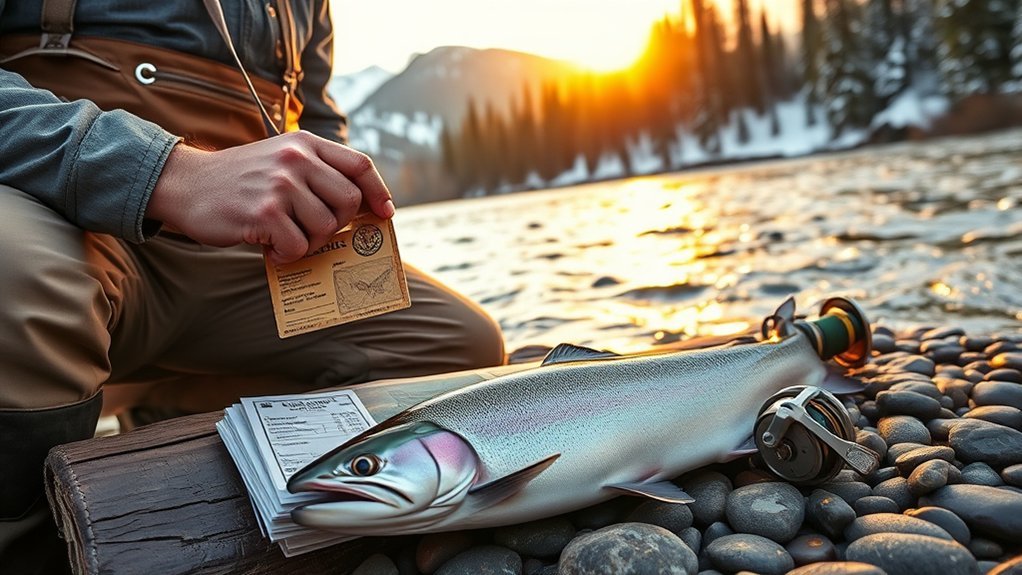
A resident annual King Salmon Stamp costs $10. It is generally required for a licensed resident age 18 or older who fishes for king salmon in fresh or salt water.
The requirement applies even when you plan to release every king salmon you catch. The main location-based exception is king salmon fishing in stocked lakes.
The following resident anglers do not need to purchase a King Salmon Stamp:
- Residents under age 18.
- Holders of a resident low-income license.
- Holders of a resident blind sport fishing license.
- Holders of an ADF&G Senior Permanent Identification Card.
- Holders of an ADF&G Disabled Veteran ID Card.
Exempt anglers may still need a harvest-record card and must immediately record retained fish when an annual limit applies.
Warning: A King Salmon Stamp does not override a closure, catch-and-release restriction, size limit, annual limit, or emergency order. Always check the rules for the exact river, lake, bay, or management area.
Products Worth Considering
Approximate Image Size: 3/4" x 1 1/2"

Approximate Image Size: 1 7/8" x 2 3/4"

Self inking stamp as seen in image, personalized for you by our professional graphic design team
New 2026 Charter-Halibut Stamp
According to NOAA Fisheries, beginning in 2026 an angler age 18 or older fishing aboard a charter vessel in IPHC Area 2C or 3A needs a charter-halibut stamp for each day the angler plans to catch and retain Pacific halibut. Area 2C covers Southeast Alaska, while Area 3A covers much of Southcentral Alaska.
The stamp costs $20 per fishing day. The charter guide handles the stamp, although the fee may be bundled into the trip price or charged separately. Tell the guide before fishing begins if you plan to keep halibut.
You do not need this stamp when fishing without a guide or when only catching and releasing halibut. This federal-program stamp is separate from the $20 Alaska resident sport fishing license.
Other Fishery Permits
Some personal-use, subsistence, salmon, shellfish, and controlled fisheries require a separate permit or registration. A permit may have its own harvest-report deadline even when the underlying sport-fishing license remains valid.
Check the regulation summary for the management area rather than assuming the statewide license and King Salmon Stamp are the only documents needed.
How Long Resident Licenses Are Valid and Renewal Rules
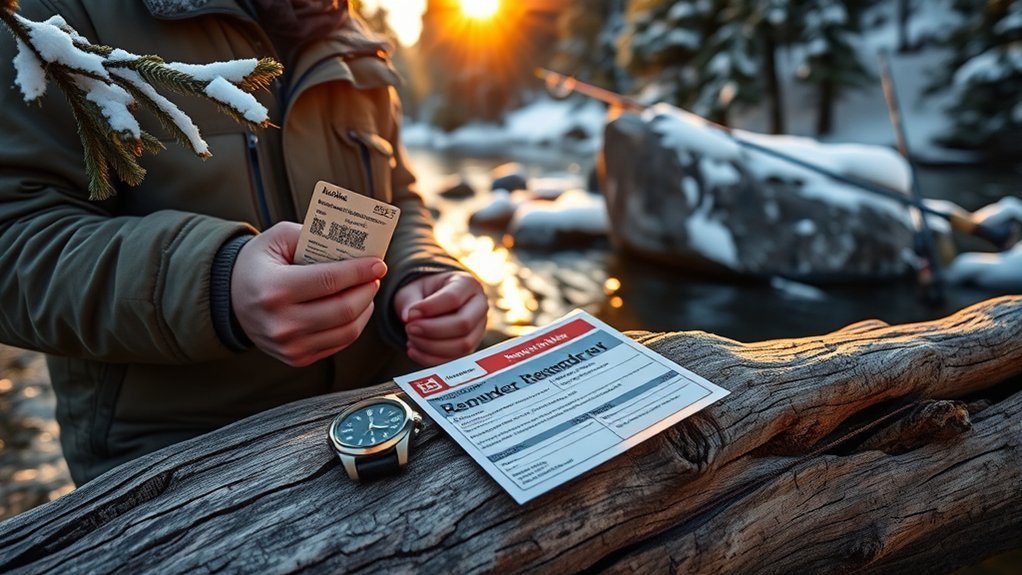
An Alaska annual sport fishing license is valid from its purchase date through December 31 of the same calendar year. It does not remain valid for 12 months after purchase.
For example, a license bought on January 10 and one bought on November 10 both expire at the end of December 31. There is no prorated resident fee for purchasing late in the year.
Instead of extending or renewing the old document, you purchase a new annual license for the next calendar year. Recheck your eligibility whenever you use a low-income credential or residency-based card.
How to Carry a Valid License
Your valid license must be in your possession while fishing and signed in the format ADF&G requires; an eSigned license purchased through your own ADF&G account is already electronically signed. ADF&G accepts several formats:
- A printed license with your physical signature.
- An electronically signed license saved to a phone or other device.
- A digital image of a physically signed license.
- A license displayed through the ADF&G mobile app.
- A handwritten carbon-copy license from a participating vendor or office.
You must also carry any required King Salmon Stamp, harvest record, PID or DV card, and fishery permit.
Pro Tip: Save the signed license for offline access and carry a paper backup on remote trips. A dead battery, damaged phone, or lack of service does not remove the requirement to show a valid license when requested.
Lost License and Replacement
If you bought an electronic or eSigned license, sign in to your ADF&G account and download or print another copy. A handwritten carbon-copy license generally requires a $5 duplicate.
If a harvest record was lost, transfer all prior annual-limit harvest information to the replacement record. Do not start a blank record that hides fish already retained.
Refunds are not normally issued simply because a license was lost, fishing was unsuccessful, or travel plans changed. ADF&G considers refunds only under narrow rules, such as certain serious disabling events, complete season cancellations, or qualifying catastrophes.
Where and How Residents Can Purchase Licenses

You can purchase a license through the ADF&G online store, the ADF&G mobile app, participating sporting-goods stores and license vendors, or an ADF&G office.
Products Worth Considering

12"x6" metal embossed plate made from aluminum MADE IN U.S.A.

Durable Material: Car license plate is crafted from high-quality ETP (electrolytic tinplate) with 2 layers of clear epoxy lacquer coating making the car tag water-proof, rust-proof, and weather-resistant

Heavy-duty automotive aluminum – Stop settling for thin metal that bends. Crafted from durable aluminum, this plate is built to withstand car washes and harsh weather without denting or rusting, making it a reliable choice for any vehicle.
How to Buy Online
- Open the ADF&G online store and sign in or shop as a guest.
- Select the correct resident sport-fishing license and any required stamp.
- Enter accurate identification, birth-date, address, and residency information.
- Review the purchase agreement and add your electronic signature when buying through your own ADF&G account.
- Download the license, save it to your device, and print a backup when practical.
You may purchase a license for another person, but you cannot sign it for them. The license holder must add their own physical signature or eSignature before fishing.
| Purchase method | Availability | What you receive |
|---|---|---|
| Online store | Normally available 24/7 | Downloadable PDF or eSigned license |
| ADF&G mobile app | Subject to device and store access | Digital license, stamps, permits, and harvest tools |
| ADF&G office | Business hours | Printed or other approved license format |
| Participating vendor | Vendor hours | Printed/electronic or carbon-copy format, depending on vendor |
Online and mobile purchases are convenient, but the angler remains responsible for choosing the correct license and carrying a valid, signed copy.
Special Resident Programs for Low-Income, Senior, Military, and Disabled Anglers
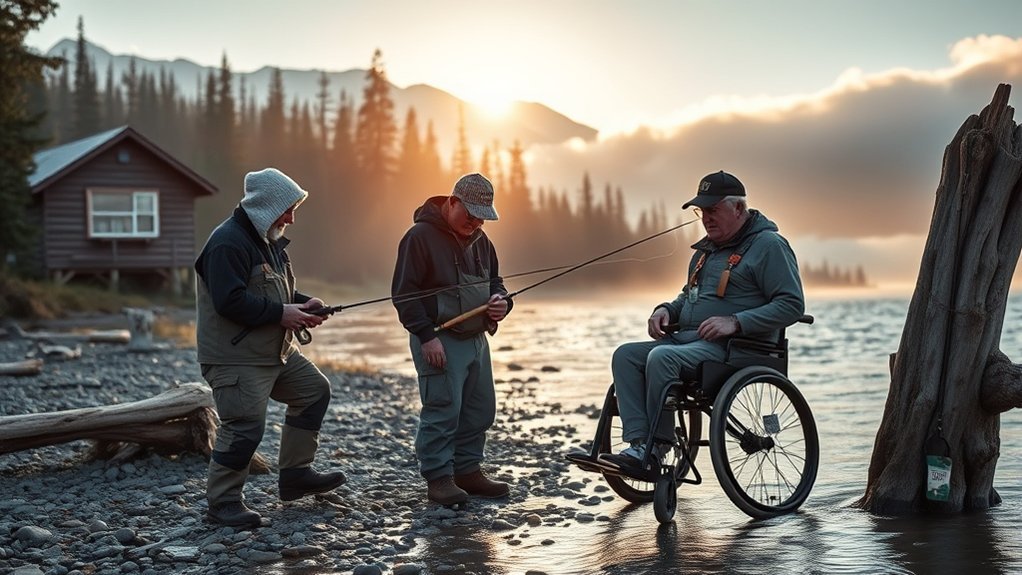
ADF&G offers several programs that reduce or remove the standard license cost. Each has its own qualification and documentation rules.
Low-Income Residents
The $5 low-income license includes fishing, hunting, and trapping privileges. Applicants must meet the Alaska residency definition and remain within the applicable household-income guideline.
Keep records supporting household size and income because ADF&G or the Department of Public Safety may request proof.
Senior Residents
A qualifying resident age 60 or older can apply for a free Senior Permanent Identification Card. The card removes the need to purchase a standard sport fishing license and King Salmon Stamp, but it does not replace required permits or harvest records.
Disabled Veterans
A resident veteran certified at least 50% disabled may apply for a complimentary ADF&G Disabled Veteran ID Card. The applicant must be physically present in Alaska and provide the required disability certification.
The card becomes void if the holder no longer qualifies as an Alaska resident. Disabled-veteran anglers fishing for a species with an annual limit must carry and use a free harvest-record card.
National Guard and Reserve Members
Qualifying Alaska residents actively serving in the Alaska National Guard or a listed U.S. military reserve component may apply for a complimentary annual fishing, hunting, and trapping license.
This benefit is different from the nonresident military license available to active-duty personnel stationed in Alaska for less than 12 months.
Blind Residents
The resident blind sport fishing license costs $0.50 and requires an affidavit. The holder does not need a King Salmon Stamp but must follow all applicable season, limit, permit, and harvest-record rules.
Recordkeeping, Harvest Limits, and Reporting Requirements
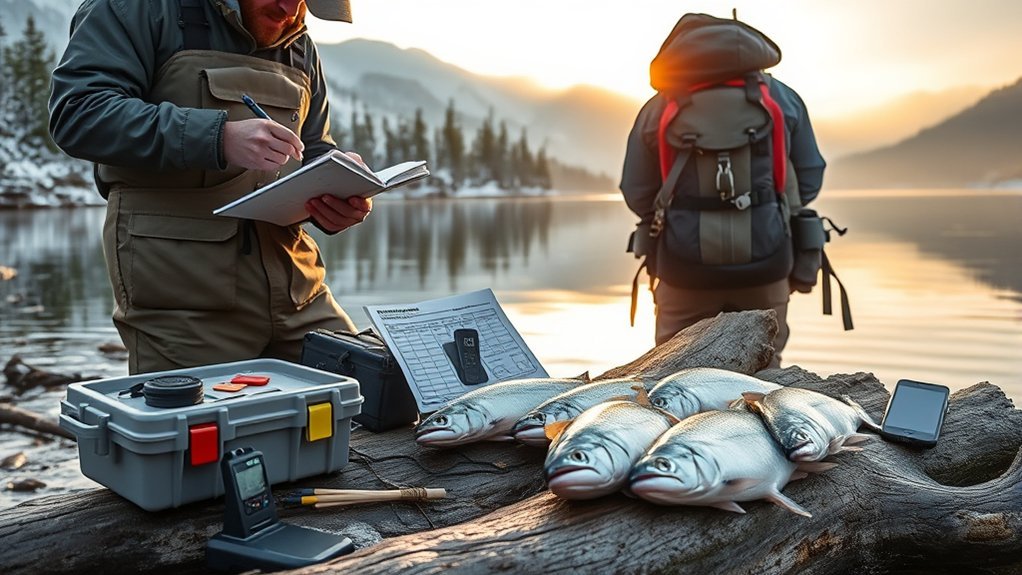
Every angler who retains a sport-caught fish with an annual limit must record the harvest immediately. Depending on the angler’s credential, the record may appear on the sport fishing license, in an electronic ADF&G record, or on a separate free Sport Fishing Harvest Record Card.
A separate card is required for:
- Resident anglers under age 18.
- Nonresident anglers under age 16.
- Senior PID cardholders.
- Disabled Veteran ID cardholders.
Standard licensed adults normally record annual-limit catches on the harvest-record portion of the license or through an approved electronic method.
| Recordkeeping item | Requirement | Why it matters |
|---|---|---|
| When to record | Immediately after landing and retaining an annual-limit fish | Shows how much of the angler’s annual limit has been used |
| Information recorded | Date, water or location, and fish species | Supports enforcement and fishery management |
| Possession | Carry the license or record while fishing | Must be shown when requested by an authorized officer or ADF&G representative |
| Replacement record | Transfer all previous entries to the new record | Prevents the replacement from appearing to reset the annual limit |
| End-of-season submission | The general sport-fishing harvest card is not turned in unless another permit specifically requires reporting | Permit-reporting rules can differ from the general card |
Note: Record only sport-caught fish on the Sport Fishing Harvest Record Card. Do not use it for personal-use or subsistence harvest, which may have separate permits and reporting systems.
Frequently Asked Questions
How much is an Alaska resident fishing license in 2026?
The standard 2026 Alaska resident annual sport fishing license costs $20. If you fish for king salmon and are not exempt from the stamp requirement, add the $10 resident annual King Salmon Stamp, for a typical total of $30.
How long is an Alaska resident fishing license valid?
An annual Alaska sport fishing license is valid from the date you buy it through December 31 of that calendar year. It is not valid for 12 months from the purchase date.
Can nonresidents get the Alaska resident license price?
Not through a general promotion. Resident rates depend on meeting the legal residency definition. Separate exceptions exist for qualifying military personnel and Yukon Territory residents, but those credentials do not automatically make the angler subject to resident fishing regulations.
Can Alaska residents buy a one-day or seven-day fishing license?
ADF&G does not list standard short-term sport-fishing licenses for Alaska residents. Residents normally buy the $20 annual license. The published 1-, 3-, 7-, and 14-day sport-fishing products are nonresident licenses.
Can I fish in federal waters with an Alaska resident license?
An Alaska sport fishing license is still part of the required documentation for recreational fishing from Alaska, but federal species and vessel rules may also apply offshore. Pacific halibut anglers, in particular, must follow federal and IPHC rules in addition to Alaska requirements.
Do Alaska residents need the new charter-halibut stamp?
Beginning in 2026, adult resident and nonresident anglers need a $20 stamp for each day they fish aboard a charter vessel and plan to retain halibut in IPHC Areas 2C or 3A. The guide handles the stamp. Unguided anglers and charter clients who only catch and release halibut do not need it.
Do residents under 18 need a King Salmon Stamp?
No. Resident anglers under 18 do not need a sport fishing license or King Salmon Stamp. They do need a free harvest-record card when fishing for or retaining fish subject to an annual limit.
Are there penalties for lending my resident fishing license?
Yes. Alaska sport fishing licenses cannot be altered, loaned, or transferred, and another person cannot use your license. Carry only the credential issued to you and show it when requested by law enforcement or an ADF&G representative.
Does Alaska offer a family fishing license?
ADF&G’s current pricing list does not include a general family or group sport-fishing license. Each adult who is required to be licensed must carry an individual license or qualifying ADF&G identification card.
What should I do if I lose my license?
Download or print another copy if the license is available through your ADF&G account. Certain physical formats require a paid duplicate. Transfer all prior annual-limit harvest entries to the replacement record. Losing the document alone is not a normal ground for a license refund.
Conclusion
For most Alaska residents age 18 or older, the 2026 sport fishing license costs $20 and remains valid through December 31. Reduced and free options are available for qualifying low-income residents, blind anglers, seniors, disabled veterans, and certain military members. Add the $10 King Salmon Stamp when required, carry every needed document, record annual-limit fish immediately, and check current area regulations and emergency orders before fishing.
Sources
- Alaska Department of Fish and Game — License Pricing — Current resident license, stamp, combination-license, and duplicate fees.
- Alaska Department of Fish and Game — Sport Fishing Licenses and King Salmon Stamps — Age requirements, license possession, exemptions, and harvest cards.
- Alaska Department of Fish and Game — Residency Definition — The 12-month domicile and residency requirements.
- Alaska Department of Fish and Game — Resident Low-Income Licenses — Income rules, proof requirements, and 2026 Alaska poverty guidelines.
- Alaska Department of Fish and Game — General License Information — Calendar-year validity, formats, age rules, refunds, and King Salmon Stamp exemptions.
- NOAA Fisheries — 2026 Alaska Charter-Halibut Stamp — Daily stamp cost, applicable areas, and guided-fishing requirements.
- Alaska Department of Fish and Game — Military Licenses — Complimentary resident National Guard and military reserve license eligibility.
