
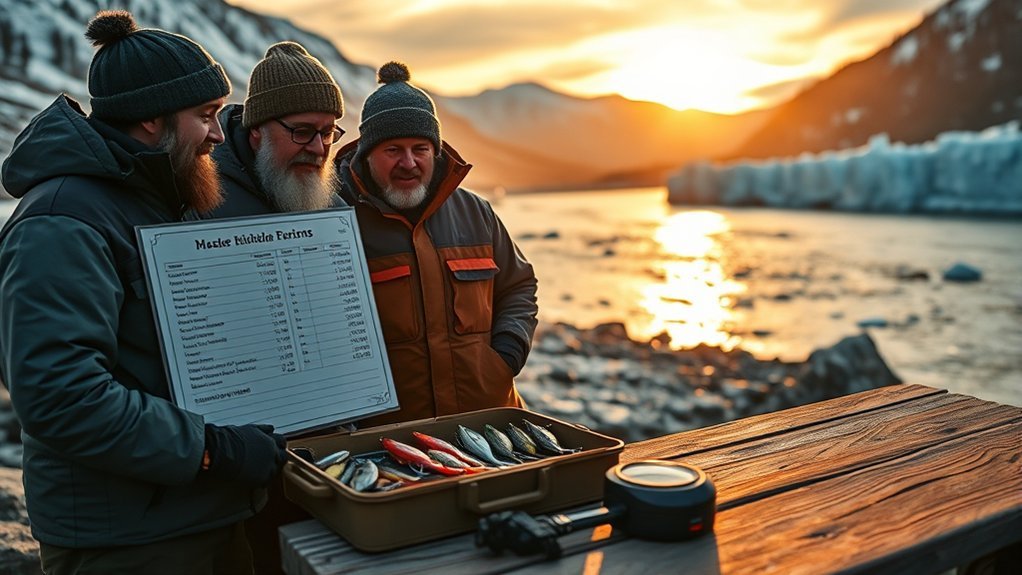
If you’re not an Alaska resident and you’re 16 or older, you’ll need a non-resident fishing license. Short-term options start at $15 for one day, $30 for three days, $45 for seven days, $75 for 14 days, and $100 for an annual license. If you’ll target King Salmon you’ll also need a King Salmon Stamp (single-day $15, or $100 for the year). You can buy licenses online, at local retailers or through charters, and there are easy ways to save money—keep reading for details.
Quick Answer
Non-residents 16 and older must have an Alaska sport fishing license to fish fresh or salt water. Here’s the quick rundown:
- License choices: 1-day $15, 3-day $30, 7-day $45, 14-day $75, or annual $100.
- Going after King Salmon? Add the matching King Salmon Stamp—same prices as the license durations, or $30 annual for qualifying military.
- Buy instantly online at the ADF&G store, grab one at a store, or often get it included with your charter.
- Kids under 16 fish free. Always carry your license (digital is fine) and follow bag limits.
Who Needs a Non-Resident Fishing License in Alaska
If you’re a non-resident aged 16 or older and plan to fish Alaska’s fresh or salt waters, you must buy a non-resident fishing license. If you intend to fish for Chinook (King) salmon you’ll also need a King Salmon Stamp on top of the license.
You’ll follow Alaska’s fishing regulations and age requirements: anyone under 16 doesn’t need a license, regardless of residency, while non-residents 16+ must carry one. Yukon Territory residents get a break—you can buy non-resident licenses at resident prices, so check eligibility before you purchase.
Keep in mind the King Salmon Stamp is mandatory only when targeting Chinook; you won’t need it for other species. Always carry your license while fishing and be prepared to show it if an enforcement officer asks.
These rules are straightforward, but you should confirm current details before your trip so you meet legal requirements and avoid fines.
Non-Resident License Types and Durations
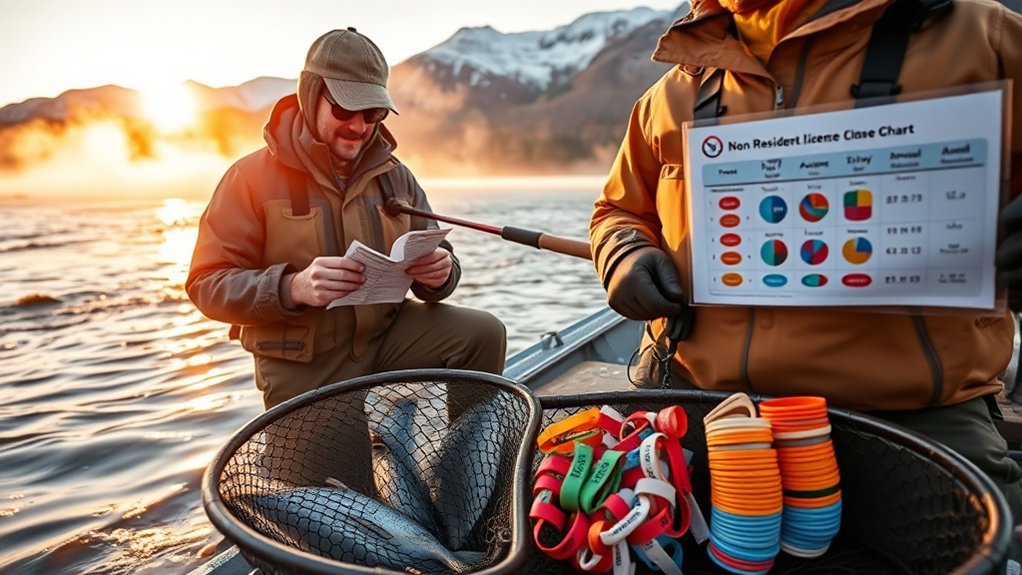
When planning your trip, you can pick from several non-resident sport fishing licenses that match the length of your stay. Options range from a single day ($15) up to an annual license ($100).
Choose a duration that fits your itinerary and the fishing locations you want to visit, balancing flexibility with cost.
- 1-day license — $15, covers all species except King Salmon without a stamp
- 3-day license — $30, short-term option for quick trips
- 7-day license — $45, ideal for a week of guided or independent fishing
- 14-day license — $75, good for extended vacations or multiple locations
- Annual license — $100, best if you’ll fish multiple seasons or visit often
Pick shorter licenses for a single weekend. Go annual if you expect several trips or varied fishing locations.
Each option clearly shows what you get so you can decide fast.
Products Worth Considering

12"x6" metal embossed plate made from aluminum MADE IN U.S.A.

DURABLE IDENTIFICATION: Made from water-resistant Silicone, these luggage tags withstand baggage handling with your contact details clearly displayed.
Features a replica of an Alaska license plate, capturing the unique beauty and spirit of the state in a miniaturized form.
Current Non-Resident License Fees and Examples
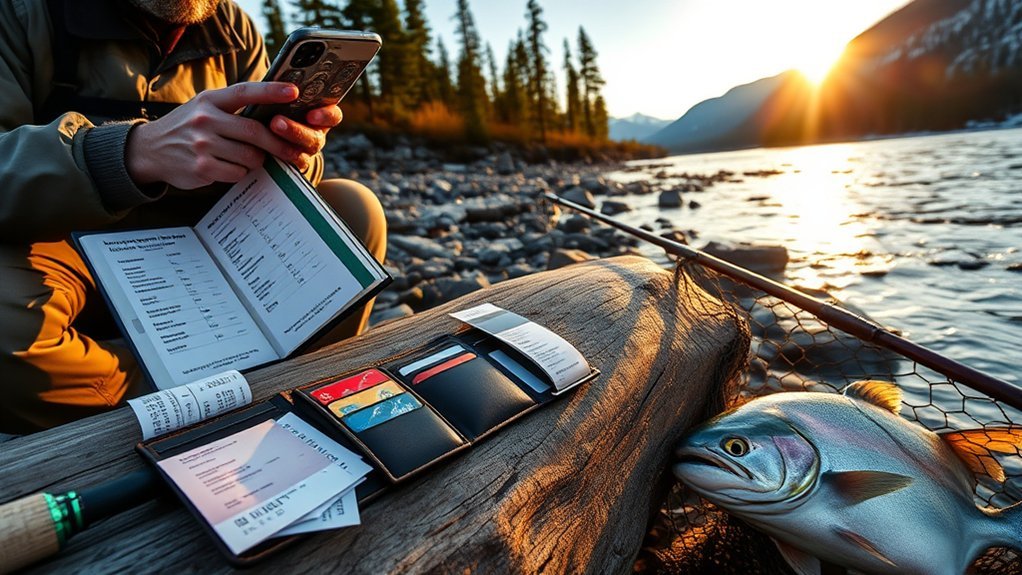
You’ve got clear, affordable choices for non-resident sport fishing in Alaska: a 1-day license is $15, 3-day is $30, 7-day is $45, 14-day is $75, and an annual license runs $100.
Pick based on trip length, convenience, and budget. For a quick stopover, the 1- or 3-day options keep cost low. A weeklong charter usually makes the 7-day license the best match.
If you plan multiple trips or extended stays, the 14-day or annual license often reduces per-day cost. Use a simple license comparison to weigh upfront cost against how many days you’ll fish.
Remember to factor in any gear, guide, or access fees. You’re still required to follow Alaska fishing regulations regardless of license duration: know bag limits, seasons, and area-specific rules before you cast.
Buying the right license keeps you legal and focused on fishing, not paperwork.
Products Worth Considering

Durable Material: Car license plate is crafted from high-quality ETP (electrolytic tinplate) with 2 layers of clear epoxy lacquer coating making the car tag water-proof, rust-proof, and weather-resistant

Includes Weight, Hook Size, Food Quality, And Coloring.

Material: Metal
King Salmon Stamp Requirements and Costs for Non-Residents
Although a regular fishing license gets you on the water, you’ll need a King Salmon Stamp in addition if you’re targeting king salmon as a non-resident.
You’ll have to buy the stamp regardless of method, except when fishing stocked lakes, and children under 16 don’t need one. The stamp helps enforce king salmon regulations and funds conservation.
- 1-day stamp: $15
- 3-day stamp: $30
- 7-day stamp: $45
- 14-day stamp: $75
- Annual stamp: $100
- Military annual stamp: $30
- Stamp required for all methods (not required in stocked lakes)
- Children under 16 are exempt
Plan your purchase based on how long you’ll fish and whether you qualify for the reduced military annual rate.
Keep the stamp with your license while you fish so you comply with king salmon regulations. If you’re unsure about exemptions or specific river rules, check current regulations before you go so you don’t get caught unprepared.
Products Worth Considering

Clear material and easy to use transparent stamp "Ice Mark"

Approximate Image Size: 1 7/8" x 2 3/4"

「Original Design Patterns」: Seafood clear stamps are designed with new and wonderful elements and patterns, including salmon, scallo, crab, lobster, squid, shrimp etc. Enrich your DIY creation and provide you with different great ideas. Create your unique artwork. Continue to create!
Where and How Non-Residents Can Buy a License
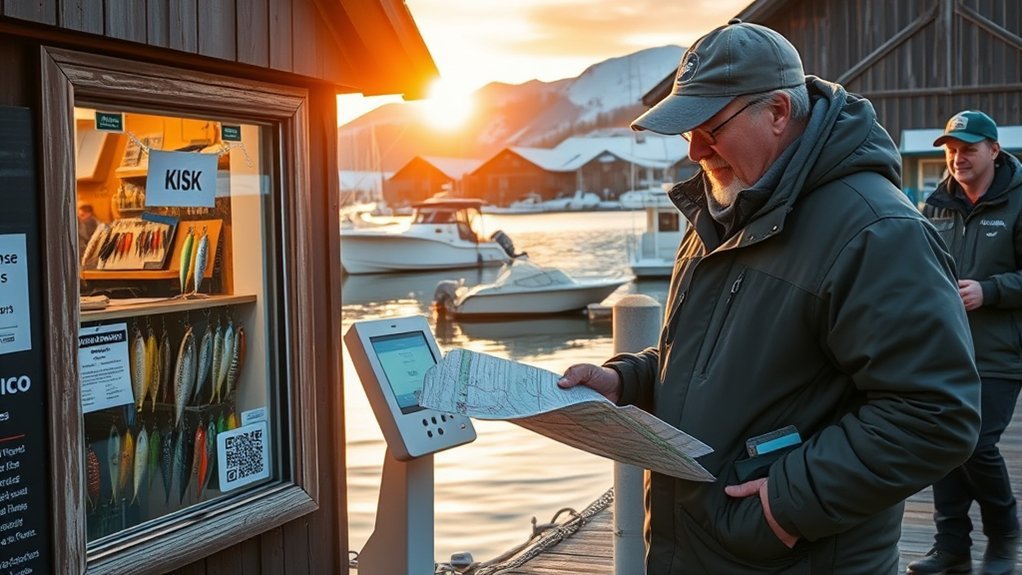
You can buy your non-resident fishing license instantly online through the Alaska Department of Fish and Game online store for the quickest, paper-free option.
If you prefer getting a physical copy or need one last-minute, pick up licenses at local retailers like Trustworthy Hardware, Sportsman’s Warehouse, Walmart, or Ken’s Tackle.
Keep in mind some charter operators include the license in their fee, so check before you buy.
Online via ADF&G
If you’re a non-resident, you can buy Alaska fishing licenses quickly online through the Alaska Department of Fish and Game website, choosing from 1-, 3-, 7-, 14-day, or annual options and storing the license digitally on your device instead of carrying a paper copy.
The site makes the process fast and reliable for planning your trip.
- 1-day non-resident license: $15
- 3-day non-resident license: $30
- 7-day non-resident license: $45
- King Salmon Stamp (required if applicable): matches license duration
- Annual and 14-day options available via the ADF&G portal
You’ll find the process user-friendly and ready to go from anywhere.
Local Retail Outlets
While buying a license online is fast and convenient, many non-residents still prefer picking one up in person at local retail outlets.
You can get non-resident licenses at sporting goods stores like Sportsman’s Warehouse, Walmart, and Ken’s Tackle in Soldotna, or directly at Fish and Game offices.
These retail options cater to short trips and longer stays, offering one-day, three-day, seven-day, and annual local fishing licenses.
Buying in person gives you a physical copy on the spot, which makes compliance simple when an officer asks to see it.
If you’re unsure which duration fits your trip, staff at retailers and Fish and Game can advise you, then issue the appropriate permit before you head out.
Short-Term License Use on Cruise and Charter Trips
If you’re on a cruise or charter, short-term non-resident licenses (1-day, 3-day, etc.) let you match coverage to your trip length and activities.
Remember a 1-day is $15 and a 3-day is $30 (valid 72 hours from purchase), and you’ll need a matching King Salmon stamp if you plan to target kings.
Check timing on purchase so your license and any required stamps are active for the exact hours you’ll be fishing.
Short-Term License Rules
Wondering how short-term Alaska fishing licenses work on cruises and charters? You’ll want to understand fishing regulations and license validity so you don’t get surprised on the water.
Short-term options are 1-day ($15), 3-day ($30), 7-day ($45) and 14-day ($75). Keep these rules in mind:
- 3-day license runs 72 hours from purchase — handy for cruise stops.
- Charters often include license cost, but confirm before you board.
- Targeting King Salmon requires a King Salmon Stamp that matches your fishing days.
- Check local fishing regulations for species-specific requirements and zone rules.
- Carry proof of license and any stamps while fishing to avoid fines.
Follow these rules and you’ll stay compliant and focused on fishing.
Cruise Trip Timing
Because cruise stops are short, you’ll want a short-term non-resident license timed to your port day—available as 1-day ($15), 3-day ($30), or 7-day ($45).
Choose the 3-day option if your fishing excursion timing may span late-night arrivals or unexpected delays, since it’s valid for 72 hours from purchase.
When targeting King Salmon, don’t forget the additional King Salmon Stamp.
Check local regulations at each port of call—rules can vary and affect what you can keep or where you can fish.
Many cruise-chartered fishing trips include the license cost, so confirm during cruise itinerary planning whether the charter covers permits.
Planning license length to match your shore time makes the experience smooth and compliant.
Rules, Harvest Limits, and Required Harvest Cards for Visitors
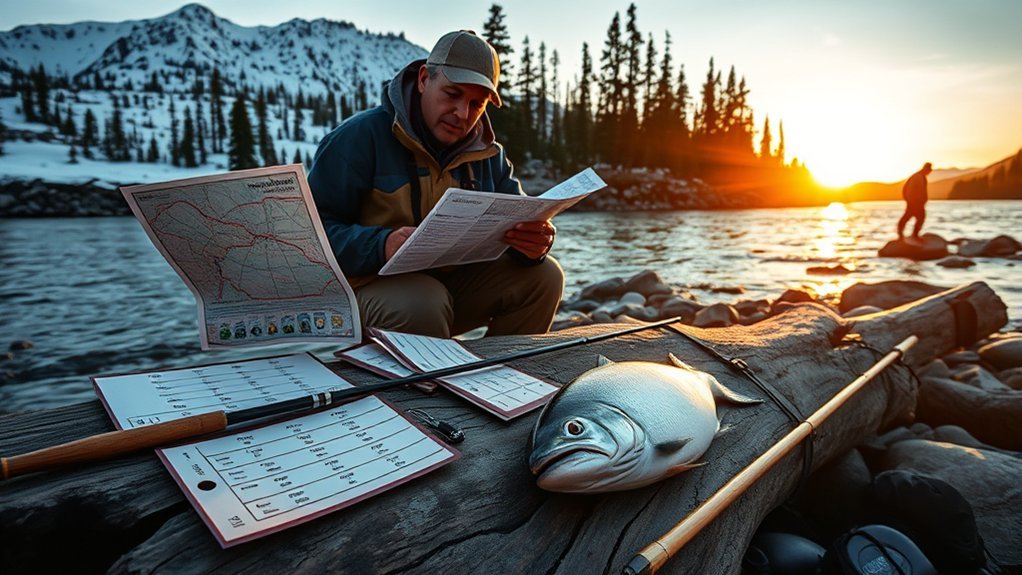
When you fish in Alaska as a non-resident, you’ve got to carry a valid fishing license (available from one day at $15 up to an annual at $100) and, when targeting King Salmon, a King Salmon Stamp ($15 per day or $100 annually).
You’ll also need to follow the Alaska sport fishing regulations and understand the compliance importance: limits vary by species and area, and some fish require you to record harvests.
- Check local limits before you cast; they change by location and species.
- Use the free Sport Fishing Harvest Record Card for species with annual limits.
- Get the Harvest Record Card online or from your guide to guarantee compliance.
- Record catches accurately; enforcement officers may inspect cards.
- Know King Salmon rules; the stamp doesn’t replace harvest recording.
Stay informed, carry the right stamps and cards, and record your take promptly so your trip stays legal and hassle-free.
How to Carry and Replace Your Non-Resident License
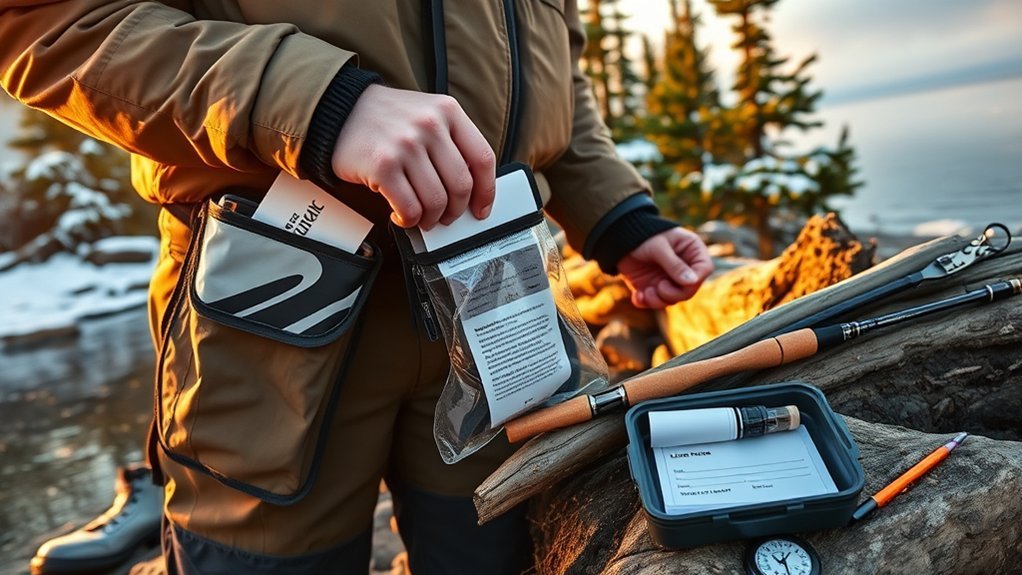
If you’re fishing in Alaska as a non-resident, carry your license on your phone or tablet—digital copies are fully accepted—yet it’s smart to keep a printed copy too in case your device dies or loses service.
Use secure digital storage like a screenshot saved to your photos or a PDF in a cloud folder so you can access it offline. Keep the file clearly labeled for quick retrieval and back it up to avoid accidental deletion.
You’re required to have easy license accessibility while fishing to comply with regulations and avoid penalties. If you lose your license, don’t panic: you can request a duplicate from the Alaska Department of Fish and Game website or from authorized vendors for a $5.00 fee.
Carry proof of purchase until your duplicate arrives. By planning for device failure and using both digital and printed options, you’ll stay compliant and spend more time fishing, not searching for documentation.
Tips to Save Money and Avoid Common Mistakes When Purchasing
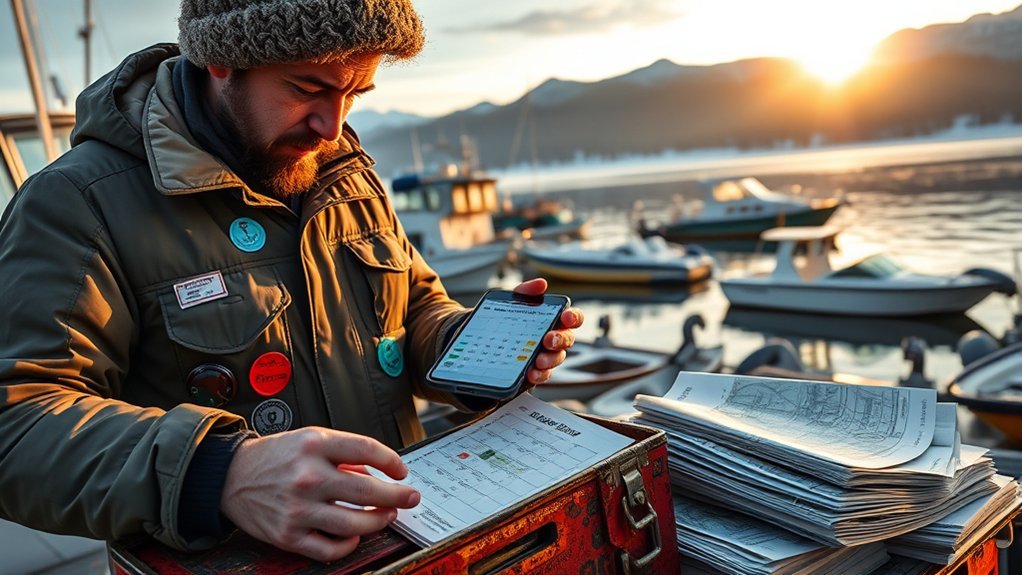
To save money and avoid headaches, plan the type and length of your trip before you buy a license so you only pay for what you need. For short outings, the 3-day non-resident license ($30) covers you for 72 hours and is far cheaper than a 7-day or annual pass.
Plan your trip length first — a 3-day nonresident license ($30) covers 72 hours and saves you money.
You’ll also want to factor in the King Salmon Stamp only when you’ll target kings and avoid overbuying based on vague plans.
- Buy online from Alaska Department of Fish and Game to avoid markups at shops.
- Choose the 3-day option when trips are short; it’s timed for 72 hours from purchase.
- Add King Salmon Stamp only when you’ll target kings to save per-day costs.
- Check for military or event discounts before purchase.
- Confirm local regulations for season, area, and gear limits to avoid fines.
Plan your fishing gear and dates, double-check local regulations, and you’ll save money and avoid common purchasing mistakes.
Frequently Asked Questions
Can Non-Residents Fish for Shellfish With a Standard License?
Yes — you can fish shellfish with a standard non-resident license in many cases, but you’ll need to follow specific shellfish regulations and permitted fishing methods, so check local limits, seasons, and gear rules before harvesting.
Are There Age Exemptions for Non-Resident Fishing Licenses?
Non-residents generally need licenses starting at age 16, but children under 16 don’t. Check Alaska Fish & Game for exact age cutoffs and documentation requirements.
Do Non-Resident Licenses Allow Fishing From Private Lodges?
Yes — you’ll need a valid non-resident license and follow Alaska fishing regulations; private lodge policies may add restrictions or provide guided permits, so check both lodge rules and state regulations before fishing from lodge waters.
Is Catch-And-Release Required for Certain Species by Non-Residents?
Yes — you’ll follow catch limits and species regulations; some species require catch-and-release, others have size or bag limits, and you’ll need to check local emergency orders before you fish.
Can Non-Residents Transfer Licenses Between People?
No, you can’t transfer licenses between people; Alaska’s license transferability is restricted under non resident regulations, so each non-resident must obtain their own valid fishing license and follow applicable residency-specific rules and stamp requirements.
Conclusion
If you’re planning to fish in Alaska as a non-resident, remember that most visitors need a license, with short-term options for cruise or charter trips. One useful stat: non-resident anglers account for roughly 70% of sport fishing license sales in Alaska, so you’re in good company. Buy your license beforehand or at the first opportunity, carry it with you, and don’t forget king salmon stamps or harvest cards to avoid fines and enjoy your trip.
