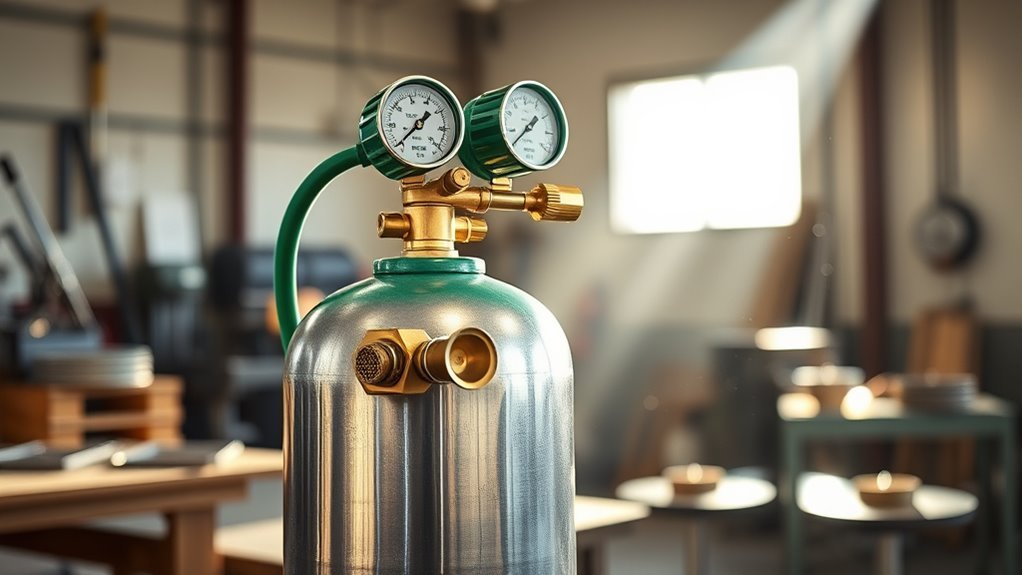
A 65 cu ft oxygen cylinder is a mid-size option for oxy-fuel welding, brazing, and cutting, but an exact 65 cu ft bottle is not widely stocked by U.S. suppliers. Most buyers compare nearby 60 and 80 cu ft cylinders instead. The real cost depends on whether the bottle is empty or filled, steel or aluminum, privately owned or tied to an exchange program, and accepted by a local gas supplier.
Quick Answer
Because 65 cu ft is not a common stocked size, use 60 and 80 cu ft cylinders as price guides. Listings checked July 28, 2026 ranged from about $124 to $490 for an empty cylinder, while an 80 cu ft oxygen fill or exchange was about $53 to $55. Local prices and exchange rules vary.
Key Takeaways
- A true 65 cu ft cylinder may be hard to find; 60 and 80 cu ft bottles are more common comparison sizes.
- Cylinder-only prices vary sharply by seller, material, shipping method, and exchange program.
- Confirm that a nearby supplier will fill or exchange the exact cylinder before you buy it online.
- Check the CGA valve, DOT specification, ownership markings, damage, and requalification date.
- Keep oxygen equipment free of oil and grease, secure the cylinder, and follow local fire and transport rules.
Typical Price Range for a New 65 Cu Ft Oxygen Cylinder

An exact 65 cu ft industrial oxygen cylinder does not appear in many current U.S. retail programs. Suppliers more often list 60 or 80 cu ft cylinders, so those nearby sizes provide the most useful price benchmark.
The examples below were checked on July 28, 2026. They are snapshots, not guaranteed prices. Taxes, hazardous-material handling, freight, local pickup, and the cost of oxygen may be separate.
| Current example | Listed price | What the price includes |
| 60 cu ft steel cylinder | $123.50 | New empty cylinder with CGA-540 valve; shipping extra |
| 80 cu ft steel cylinder | $143.50 | New empty cylinder with CGA-540 valve; shipping extra |
| 80 cu ft exchange-program cylinder | $354.99 | Cylinder only; fill or exchange fee applies |
| 80 cu ft exchange-program cylinder | $489.99 | Cylinder only; oxygen sold separately |
| 80 cu ft oxygen fill or exchange | $52.99 | Gas/service only for a compatible customer cylinder |
| 80 cu ft oxygen contents | $54.99 | Oxygen contents only; compatible cylinder required |
Note: A low online cylinder price may not be the lowest total cost. Heavy-cylinder freight, local fill refusal, requalification fees, and a required first fill can erase the savings.
Is 65 Cu Ft a Standard Cylinder Size?
Not consistently. Sellers may use approximate capacity labels, while local gas programs often group cylinders by trade size or stock 60, 80, 125, and larger capacities. Ask the seller for the stamped specification, water capacity, service pressure, overall dimensions, tare weight, valve type, and actual rated gas capacity before ordering.
Do not assume a shop will treat a 60, 65, and 80 cu ft cylinder as interchangeable. Exchange cages usually require a matching program cylinder and size.
Factors That Affect Oxygen Cylinder Pricing
The sticker price is only one part of the cost. Compare the complete setup and the supplier relationship.
- Empty or filled: Many cylinders sold online ship empty. A full-cylinder listing includes oxygen but may require store pickup.
- Steel or aluminum: Aluminum generally costs more at this capacity. It can reduce carrying weight and resist rust, while steel is usually the lower-cost choice.
- Valve and service: Most U.S. industrial oxygen cylinders in this range use a CGA-540 connection. Confirm the valve before buying a regulator.
- Ownership program: A privately owned cylinder and a branded exchange-program cylinder may have very different purchase prices and refill rules.
- Hydrostatic status: A cylinder near or beyond its required requalification date may need testing before a supplier will fill it.
- Shipping: Empty cylinders can still be costly to ship because of their weight and size. Filled cylinders often have pickup or hazardous-material restrictions.
- Accessories: A regulator, flashback arrestors, check valves, hose, cart, chain, and protective cap can add substantially to the setup cost.
- Local market: Gas prices, labor, delivery, rental, and exchange fees vary by region and supplier.
Comparing Aluminum vs. Steel 65 Cu Ft Cylinders
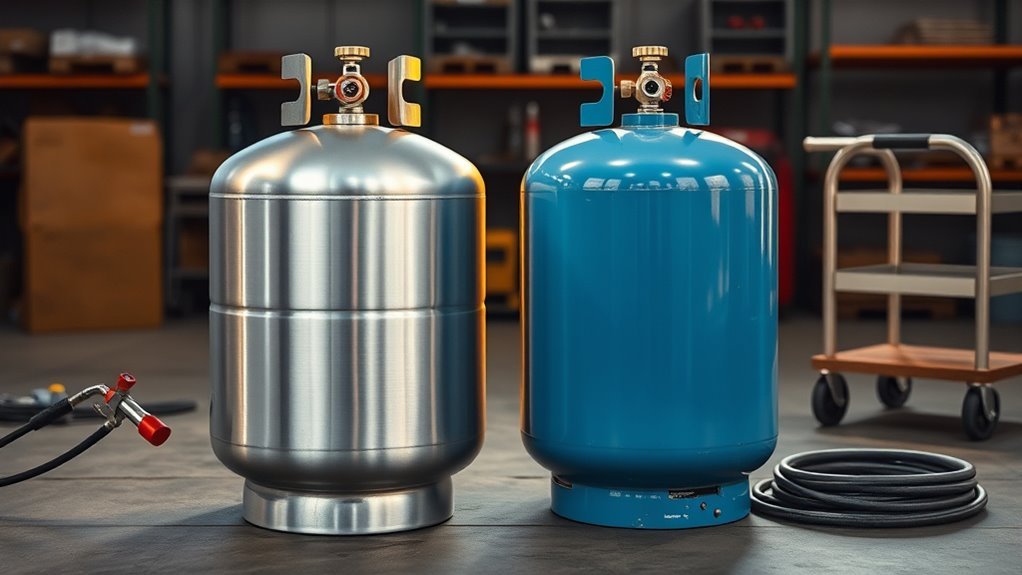
Material affects weight, corrosion behavior, price, dimensions, and how the cylinder handles daily use. It does not replace the need to inspect markings and test dates.
| Feature | Aluminum | Steel |
| Weight | Often lighter for comparable capacity. Luxfer states some aluminum oxygen cylinders are up to 40% lighter than comparable steel models. | Usually heavier, which matters when loading a vehicle or moving the bottle often. |
| Price | Usually higher. A current 60 cu ft aluminum listing was $279.60. | Usually lower through specialty cylinder sellers. |
| Corrosion | Does not rust, but still needs inspection for dents, gouges, heat, and other damage. | Can rust if coating is damaged or the cylinder is stored in damp conditions. |
| Availability | Less common in welding exchange programs at this size. | Common in industrial and welding-gas channels. |
| Best fit | Frequent transport, corrosion-prone settings, or users who value lower carrying weight. | Budget-focused buyers and stationary shop use. |
Pro Tip: Call your preferred fill station before choosing the material. A lighter cylinder is not useful if the nearest supplier will not service or exchange that model.
Lease, Rental, and Purchase Options Explained
Suppliers use different terms for cylinder access. Some sell customer-owned cylinders, some rent or lease bottles, and others operate branded owner-exchange programs. There is no universal five-year term, maintenance package, early-cancellation rule, or deposit amount.
Lease and Rental Terms Overview
A lease or rental can make sense when you need a cylinder for a limited job, want the supplier to manage cylinder qualification, or do not want to pay a large purchase price. Ask for the full written cost before signing.
- Rental or lease charge and billing period
- Deposit, account, or credit requirements
- Initial gas charge and later refill or exchange fees
- Lost-cylinder and damage charges
- Minimum term and cancellation rules
- Which branches can exchange the cylinder
- Whether delivery, pickup, and regulatory maintenance are included
Purchase vs. Rental
Buying is often best for regular long-term use when a nearby supplier accepts customer-owned bottles. You avoid recurring cylinder rent, but you are responsible for protecting the cylinder, keeping proof of ownership, and dealing with requalification when required.
Renting or leasing is often better for short-term or occasional work, especially when the supplier has convenient branches. You may pay more over several years, but you avoid tying up cash in a cylinder that another supplier may refuse to service.
An owner-exchange program sits between those options. You buy a program cylinder and later exchange it for another qualified cylinder of the same gas and size. This is convenient, but exchanges may be limited to participating locations.
Refill, Exchange, and Ongoing Cost Considerations
Current big-box examples place an 80 cu ft oxygen fill or exchange near $53 to $55, but local welding suppliers may charge more or less. Ask whether the quoted amount is for gas only, an exchange, a same-cylinder refill, a hydrostatic test, or a new customer account.
The cheapest cylinder is not always the cheapest system. Refill access, exchange acceptance, freight, and test status usually matter more over time than a small difference in purchase price.
Use this simple ownership estimate:
Total first-year cost = cylinder price + first fill + regulator and safety equipment + shipping or pickup + rental or account fees + any required testing.
- Compare the gas cost per cubic foot only after confirming that all service fees are included.
- Ask whether the shop fills your cylinder or swaps it for another qualified cylinder.
- Confirm whether you keep the same bottle and whether proof of ownership is required.
- Check whether an out-of-date cylinder triggers a separate test charge.
- Ask about turnaround time; some shops exchange immediately while others send cylinders to a filling plant.
How Long Does a 65 Cu Ft Oxygen Cylinder Last?
Runtime depends on the torch, tip size, metal thickness, cutting pressure, preheat setting, leaks, and how often the cutting-oxygen lever is used. A single fixed burn-time claim is not reliable for every job.
For a planning estimate, divide the cylinder’s usable gas capacity by the torch manufacturer’s total oxygen flow in cubic feet per hour:
Estimated hours = usable cylinder capacity ÷ total oxygen flow rate.
Use the flow chart for your exact torch and tip. Cutting thick steel can consume oxygen much faster than light brazing or heating. Stop work and close the cylinder if the regulator, hose, or fittings leak.
Where to Buy or Refill a 65 Cu Ft Oxygen Cylinder
Start with the place where you expect to buy gas. A cylinder is most useful when that supplier will fill or exchange it without ownership, valve, size, or test-date problems.
Local Gas Suppliers
Local industrial-gas and welding-supply shops may offer the best advice because cylinder programs vary by region. Ask whether they stock a 60 or 80 cu ft equivalent, whether they sell or rent cylinders, and whether they accept privately owned bottles bought online.
- Request the current cylinder, fill, exchange, rental, and test prices.
- Confirm the accepted valve connection and cylinder specification.
- Ask whether they require an ownership receipt or branded cylinder.
- Check same-day exchange availability and after-hours access.
National Chains and Dealers
National retailers can provide predictable exchange programs, but price and stock vary by store. Some sell the cylinder and oxygen as separate items. Read the product page carefully so you do not mistake a gas-only price for a full cylinder or a cylinder-only price for a ready-to-use bottle.
Cylinder Exchange and Refill Centers
An exchange center normally swaps an empty compatible cylinder for a filled qualified cylinder. A refill center may return your original bottle after filling. Ask which process the location uses, because it affects turnaround time, cylinder identity, and whether a used bottle with a special finish or recent hydro date comes back to you.
How to Inspect a New or Used Oxygen Cylinder
Do not buy a used cylinder based only on paint color or appearance. Oxygen cylinders must be identified by their markings and label, not color alone.
- Ownership: Avoid cylinders stamped or marked as supplier property unless the seller can legally transfer them.
- Gas label: Confirm that the cylinder is intended and labeled for oxygen service.
- Specification: Look for the DOT or authorized UN/ISO marking accepted by your supplier.
- Valve: Confirm a clean, undamaged oxygen-service valve and the correct connection for your regulator.
- Requalification mark: Read the month and year and ask the supplier when the next test is due.
- Physical condition: Reject cylinders with serious rust, gouges, bulges, fire exposure, damaged threads, a bent valve, or questionable repairs.
- Documentation: Keep the invoice and any proof that the cylinder is customer-owned.
Warning: Do not repair, modify, repaint over required markings, change the valve, or attempt to fill a high-pressure oxygen cylinder yourself. Have the gas supplier or an authorized cylinder service facility inspect questionable equipment.
Oxygen Cylinder Safety, Storage, and Transport
Oxygen does not burn by itself, but it makes many materials ignite more easily and burn much faster. The OSHA oxygen-fuel gas standard requires workplace cylinders and equipment to be kept away from oil, grease, heat, sparks, and combustible materials.
Safe Storage
- Close the valve when the cylinder is not in use.
- Install the valve-protection cap when the cylinder is designed for one and no regulator is attached.
- Secure the cylinder so it cannot tip, fall, or be struck.
- Store it in a dry, protected, well-ventilated place away from heat.
- Keep oxygen equipment completely free of oil and grease, including hands and gloves.
- For workplace storage, OSHA requires oxygen cylinders to be separated from fuel-gas cylinders or combustible materials by at least 20 feet, or by a qualifying noncombustible barrier.
- Follow local fire-code and supplier requirements for a home garage or business.
Hydrostatic Testing and Markings
A welding oxygen cylinder does not simply expire on one universal date. It must remain within the requalification period for its specification and service. Under 49 CFR 180.209, common DOT 3A and 3AA cylinders generally use five-year requalification, with some cylinders eligible for longer intervals when specific conditions are met. Let the supplier or an authorized requalifier interpret the marks.
Road and Air Transport
For road transport, close the valve, remove the regulator unless the cylinder is on a purpose-built protected carrier, install the valve cap, and secure the bottle against movement. Keep the vehicle ventilated and follow the supplier’s instructions and all applicable transport rules.
You cannot take your own compressed oxygen cylinder in carry-on or checked baggage on a U.S. passenger flight. The FAA prohibits passenger-carried compressed or liquid oxygen; airline-provided oxygen and approved portable oxygen concentrators follow separate rules.
Tips for Choosing the Right 65 Cu Ft Oxygen Cylinder
Choose the cylinder around your local gas supply, not just an online product description.
- Call a nearby supplier first. Ask which customer-owned or exchange sizes they accept.
- Compare 60 and 80 cu ft options. These may be easier to buy, refill, and exchange than an exact 65 cu ft bottle.
- Match the valve and regulator. Confirm the cylinder uses the correct oxygen connection for your market and equipment.
- Estimate your runtime. Use the torch tip’s oxygen-flow chart and your normal duty cycle.
- Check total cost. Include freight, gas, regulator, cart, safety devices, rental fees, and future testing.
- Inspect the markings. Verify ownership, specification, service pressure, serial number, and requalification date.
- Plan safe storage and transport. A cylinder that cannot be secured and stored correctly is not the right purchase.
Frequently Asked Questions
Is a regulator included with a new 65 cu ft oxygen cylinder?
Usually not. Most cylinder-only listings include the cylinder and valve but not the oxygen regulator, hose, flashback arrestors, or cart. Confirm every included item. In the United States, many industrial oxygen cylinders in this size use a CGA-540 valve, so the regulator must match that connection and oxygen service.
Can I transport a 65 cu ft oxygen cylinder on a passenger airplane?
No. The FAA says passengers may not carry their own compressed or liquid oxygen in carry-on baggage, checked baggage, or on their person. Contact the airline about airline-provided oxygen or review the rules for approved portable oxygen concentrators.
Are there special storage requirements for an unused oxygen cylinder at home?
Yes. Close the valve, fit the protection cap when applicable, secure the cylinder, provide ventilation, and keep it away from heat, flames, oil, grease, fuel gas, and combustible storage. OSHA rules are workplace standards, so also check your local fire code, insurer, landlord rules, and gas supplier’s guidance for home storage.
Do welding oxygen cylinders expire or need periodic safety tests?
They need periodic requalification, but there is no single interval for every cylinder. The schedule depends on the DOT specification, material, service, and markings. Five years is common for many steel cylinders, while some qualify for longer intervals. A supplier may refuse a cylinder that is out of qualification.
Is insurance required for a business-owned oxygen cylinder?
A separate policy for one cylinder is not universally required. However, commercial property, general liability, workers’ compensation, vehicle, lease, fire-code, or contract requirements may apply to the business. Tell your licensed insurance agent that the business stores and transports compressed oxygen so the policy reflects the actual risk.
Can any welding shop refill a cylinder bought online?
No. A shop may reject an unfamiliar, out-of-date, damaged, incorrectly valved, privately marked, or supplier-owned cylinder. Some locations only exchange bottles from their own program. Call first and provide the size, valve, DOT specification, test date, and ownership details.
Can welding oxygen be used for breathing or medical treatment?
No. Use a cylinder’s contents only for the purpose identified by the supplier. Medical oxygen is regulated and supplied through medical-gas systems. Do not breathe from an industrial welding cylinder or use it for medical treatment.
Conclusion
A realistic budget for a 65 cu ft-equivalent welding oxygen setup starts with nearby 60 and 80 cu ft prices, not one fixed national figure. As of July 28, 2026, empty-cylinder examples ranged from about $124 to $490, and an 80 cu ft fill or exchange was about $53 to $55. Before buying, confirm local refill acceptance, ownership rules, valve type, requalification status, accessories, and safe storage. For many users, the easiest-to-exchange 60 or 80 cu ft cylinder is a better value than chasing an uncommon exact 65 cu ft size.
Sources
- Gas Cylinder Source oxygen cylinders — current examples for steel and aluminum cylinder-only pricing, capacity, valves, and empty-shipment terms.
- Northern Tool 80 cu ft oxygen cylinder — current owner/exchange-program cylinder price and service terms.
- Northern Tool 80 cu ft oxygen fill or exchange — current gas/service price example.
- OSHA 29 CFR 1910.253 — oxygen-fuel gas cylinder marking, storage, handling, regulator, oil, grease, and separation requirements.
- PHMSA 49 CFR 180.209 — cylinder requalification requirements and intervals.
- FAA PackSafe: Oxygen — passenger-aircraft restrictions for compressed and liquid oxygen.