
Florida residents ages 8–15 can buy an optional Resident Youth Saltwater Fishing License for $17. Children under 16 may already fish without a license, but the youth license remains valid until the holder’s 17th birthday, so it can cover the year when a fishing license normally becomes required. The rules differ for shoreline fishing, boats, regulated species, and nonresidents.
Quick Answer
Florida’s Resident Youth Saltwater Fishing License costs $17, is optional for resident children ages 8–15, and stays valid until their 17th birthday. Youth under 16 are exempt from ordinary fishing-license requirements, but they must still follow seasons, size limits, bag limits, gear rules, and any permit rule that has no age exemption.
Key Takeaways
- The $17 youth saltwater license is optional and is sold only to Florida residents ages 8–15.
- Its main practical benefit is continued coverage after the child turns 16, through the day before the 17th birthday.
- Children under 16 are generally exempt from the saltwater license and from snook and spiny lobster permits, but all fishing regulations still apply.
- A no-cost shoreline license is for eligible Florida residents who fish only from land or a structure fixed to land; it does not cover fishing from a boat or a shoreline reached by boat.
- Always check current FWC rules before targeting tarpon, sharks, reef fish, lobster, snook, or crabs.
At a Glance
| Time Required | Varies by purchase channel; an online or app purchase can be completed in one session |
| Difficulty | Easy |
| Tools Needed | Phone or computer for an electronic purchase, or a visit to an agent; acceptable residency information |
| Cost | $17, plus any applicable online, phone, agent, or card fees |
What the Florida Youth Saltwater Fishing License Covers
The official name is the Resident Youth Saltwater Fishing License. According to the Florida Fish and Wildlife Conservation Commission (FWC), it is optional for Florida residents ages 8–15, costs $17, and remains valid until the holder’s 17th birthday.
The license provides the same basic recreational saltwater-fishing privilege needed to take or attempt to take saltwater fish, crabs, clams, marine plants, and other saltwater organisms. It covers ordinary fishing from shore and from a vessel, but it does not replace species rules, seasons, size limits, bag limits, gear restrictions, or special permits that apply to a particular activity.
A Florida saltwater license is also required to land saltwater species in Florida when a license is otherwise required, even if the fish was caught outside state waters. A child who is under 16 remains exempt from the ordinary license requirement, but must be able to show proof of age if asked.
Note: Buying the optional youth license does not give a child larger bag limits or different seasons. It mainly creates a license record and keeps the fishing privilege active through age 16, until the 17th birthday.

This daily devotional helps parents pray purposefully for their children through a full year of Scripture readings, reflections, and guided prayer prompts. Written to encourage faithful family discipleship, it offers practical, biblically grounded support for parents who want to shape their prayers around God's Word. A foreword by Sinclair B. Ferguson adds trusted theological insight and encouragement.

Aegend Swim Goggles are designed to help swimmers enjoy a clear, comfortable, and secure fit in the pool. Built for adults and youth, they aim to reduce leaking and provide full eye protection for training, recreation, and water sports. Their versatile design makes them a practical choice for men and women looking for dependable swim eyewear.

This kid-friendly cookbook helps young chefs build confidence in the kitchen with more than 100 recipes designed for fun, learning, and delicious results. Created by America's Test Kitchen Kids, it offers approachable instructions, helpful guidance, and a wide range of dishes that make cooking and eating an engaging family activity.
Eligibility: Age Requirements and Florida Residency
To buy the $17 youth saltwater license, the applicant must be a Florida resident who is at least 8 but not yet 16 at the time of purchase. The license then stays valid until the holder turns 17.
Is a Fishing License Required Before Age 16?
No. Florida residents and nonresidents under age 16 are exempt from ordinary freshwater and saltwater fishing-license requirements. They still must follow all other regulations, including legal fishing methods, closed seasons, minimum and maximum sizes, daily bag limits, protected-species rules, and area closures.
What Happens at Ages 16 and 17?
- Before age 16: A fishing license is generally not required, although the optional resident youth license may be purchased from ages 8–15.
- At age 16: A license normally becomes required. However, a previously purchased youth license remains valid until the 17th birthday.
- At age 17: The youth license expires. The angler must then buy an adult resident or nonresident license unless another exemption applies.
Acceptable Proof of Florida Residency
FWC lists a Florida driver license or Florida identification card with verified residency as the primary proof. When the youth does not have one, acceptable options may include a Florida school identification card or the accompanying parent’s acceptable proof of residency. Other alternate documents for eligible residents include a current Florida voter information card, a declaration of domicile, or proof of a Florida homestead exemption. Review the current FWC residency requirements before purchasing.
Cost Breakdown by License Type and Duration
Florida offers separate youth licenses for saltwater and freshwater fishing. Each costs $17 and is valid until the holder’s 17th birthday. They are not annual licenses and do not expire 12 months after purchase.
Youth License Pricing
| License or Permit | Who Can Buy It | Price | Validity |
| Resident Youth Saltwater Fishing License | Florida residents ages 8–15 | $17 | Until the 17th birthday |
| Resident Youth Freshwater Fishing License | Florida residents ages 8–15 | $17 | Until the 17th birthday |
| Resident Youth Gold Sportsman’s License | Florida residents ages 8–15 who meet hunter-education requirements | $100 | Until the 17th birthday |
| Resident Annual Saltwater Shoreline License | Eligible Florida residents fishing only from shore | No cost, although ordering fees may apply | Annual |
Duration and Validity
The youth license uses a birthday-based expiration date, not a 12-month term. A license bought at age 8 may remain valid for many years. A license bought shortly before the 16th birthday can still cover the angler through age 16 and expires on the 17th birthday.
Purchase Fees Beyond the Listed Price
The listed license price may not be the final checkout total. FWC states that online recreational-license orders carry a handling fee, and phone orders carry a higher handling fee plus a percentage surcharge. An agent may also charge a small issuance fee, and a plastic hard card may cost extra. Check the total before submitting payment because recreational license and permit sales are final and nonrefundable.
Pro Tip: If the child is nearly 16 and expects to fish during the next year, the optional $17 youth license may offer better value than waiting to buy a one-year adult license on the 16th birthday.
How to Purchase a Florida Youth Fishing License
Florida does not normally call this a “junior fishing permit.” Look for the Resident Youth Saltwater Fishing License in the official licensing system.
Where to Buy
FWC licenses and permits are available through the following official channels:
- Online at Go Outdoors Florida.
- Through the Fish|Hunt FL app for Apple and Android devices.
- In person at an authorized license agent or county tax collector’s office.
- By phone at 888-FISH-FLORIDA (888-347-4356) or 888-HUNT-FLORIDA (888-486-8356).
Required Information
Be ready to provide the youth’s legal name, birth date, identifying information requested by the licensing system, and proof of Florida residency. A parent or guardian may need to assist, especially when the child uses the parent’s residency documentation.
Purchase Steps
- Confirm that the child is a Florida resident age 8–15.
- Decide whether the saltwater, freshwater, or Youth Gold Sportsman’s option fits the child’s activities.
- Gather acceptable residency and identity information.
- Use an official sales channel and review all added fees.
- Save the electronic license in the Fish|Hunt FL app or print a copy.
Shoreline-Only vs. Vessel Fishing Rules for Youth
The no-cost Resident Annual Saltwater Shoreline License is intended for eligible Florida residents who saltwater fish only from land or from a structure attached to land. It is not a special youth permit, and children under 16 generally do not need it because they are already age-exempt.
The shoreline license covers fishing from beaches, banks, seawalls, bridges, and piers that are fixed to land. It also covers wading when the angler can stand on the bottom and did not reach or leave the location by boat.
It does not cover:
- Fishing from a boat or other vessel.
- Fishing from an island or shoreline reached by vessel.
- Taking marine organisms while swimming or diving.
- Nonresidents, who are not eligible for the no-cost resident shoreline license.
A regular saltwater fishing license, including a valid youth saltwater license, covers both shoreline and vessel fishing. No separate shoreline license is needed when the angler already has a license that includes saltwater fishing privileges.
Required Permits for Specific Species and Gear
A basic saltwater license does not override species and gear rules. However, the child’s age matters because Florida exempts youth under 16 from many ordinary license and permit requirements.
Youth under 16 are generally exempt from snook and spiny lobster permit requirements, but they are never exempt from fishing seasons, size limits, bag limits, protected-species rules, or safe handling requirements.
- Snook permit: Normally $10 annually when taking or attempting to take snook. Youth under 16 are exempt from the permit requirement, but current snook seasons, slot limits, and bag limits still apply.
- Spiny lobster permit: Normally $5 annually when taking or attempting to take spiny lobster. Youth under 16 are exempt from the permit requirement, but lobster seasons, size rules, bag limits, measuring requirements, and local restrictions still apply.
- Tarpon tag: A $51.50 tag has no exemption and is available only at tax collector offices. Florida’s tarpon fishery is catch-and-release except for one fish pursued as a state or world record under a pre-purchased tag. Ordinary catch-and-release tarpon fishing does not require a tag.
- Shore-based shark permit: Required for anglers age 16 or older who target sharks from shore. It is free, but the angler must complete the required educational course.
- State Reef Fish Angler designation: Required for anglers age 16 or older fishing for specified reef fish from a private vessel. The designation is free.
- Blue crab and stone crab trap registrations: Required for recreational harvesters age 16 or older who use qualifying traps. These registrations are free and have no permit exemptions for covered anglers.
Warning: Permit exemptions do not create an exemption from harvest rules. Check the current species page and local area rules before every trip; seasons and emergency closures can change.

The LG LT1000P is a genuine replacement refrigerator water filter designed to deliver cleaner, fresher-tasting water and ice for your household. Certified to meet NSF standards, it helps reduce a wide range of contaminants while ensuring a proper fit and reliable performance in compatible LG refrigerators. With a recommended replacement cycle of several months and support for substantial water volume, it offers dependable filtration and peace of mind.

These compact binoculars deliver 12x magnification and a wide field of view for clearer, farther viewing during birdwatching, travel, sports, and outdoor adventures. FMC broadband coating and BAK4 prisms help produce bright, realistic images, while adjustable eyecups and long eye relief make them comfortable for both eyeglass wearers and non-wearers. Their lightweight, portable design with rubber armor and water-resistant construction makes them easy to carry and reliable for everyday use.

These colorful answer buzzers turn lessons, review games, and family activities into lively game-show style challenges that boost participation and make learning more interactive. Each buzzer has a distinct sound to clearly identify who buzzed in first, while the durable, palm-sized design makes them easy for kids and adults to use in classrooms, homeschools, and group settings.
Exemptions, Discounts, and Special Programs
The most important exemption is age: anyone under 16, resident or nonresident, is generally exempt from Florida recreational fishing licenses. Florida residents age 65 or older may also fish without buying a license when they carry acceptable proof of age and residency.
Other exemptions may apply to customers fishing from a properly licensed charter vessel, party boat, recreational vessel, or licensed pier; anglers fishing on a license-free fishing day; qualifying Florida residents with disabilities; and certain military members.
Florida residents who are members of the U.S. Armed Forces, are not stationed in Florida, and are home on leave for 30 days or less may qualify for an exemption when they carry their orders. This is different from the reduced-fee Military Gold Sportsman’s License.
The optional Resident Youth Gold Sportsman’s License costs $100, is available to qualifying residents ages 8–15 who complete hunter-safety requirements, and remains valid until the 17th birthday. It combines hunting, freshwater fishing, saltwater fishing, and several permits, including snook and lobster privileges. It does not include every possible tag or limited-entry authorization.
License-Free Fishing Days and Education Events
Florida schedules license-free fishing days on which the fishing-license requirement is waived, although all other regulations still apply. Separately, qualifying FWC or FWC-approved fishing education events may obtain an event license-exemption permit for registered participants, staff, and volunteers. A youth license itself does not automatically include workshops, classes, or tournament entry.
Tips for Parents: Preparing Young Anglers
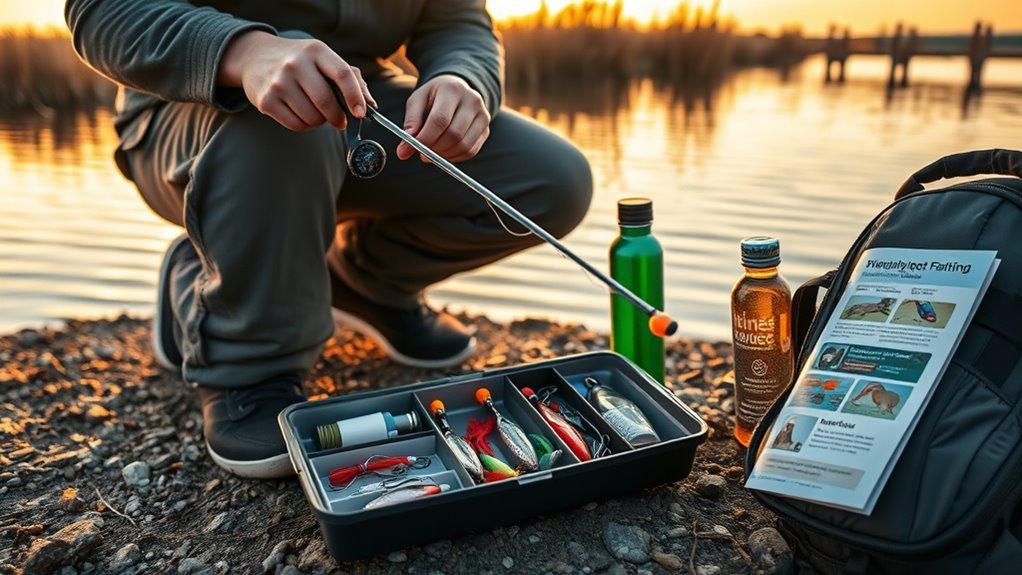
Start by confirming the child’s age, residency, fishing location, target species, and whether the trip is from shore, a private boat, or a licensed charter. Then check the current FWC saltwater regulations.
- Carry proof: Keep proof of age available for an exempt child, or store the license in the Fish|Hunt FL app.
- Choose simple gear: Use a short rod, barbless or easy-to-remove hooks when practical, eye protection, and a properly fitted life jacket near deep or moving water.
- Check the site: Look for stable footing, railings, safe casting space, shade, drinking water, and nearby restrooms.
- Review the rules: Confirm the species, season, size range, bag limit, legal gear, and local closures before fishing.
- Bring handling tools: Pack pliers, a dehooker, a measuring device, wet gloves or wet hands for fish handling, and a camera ready for quick photos.
- Keep trips short: Match the outing to the child’s attention span and weather tolerance.
Teach young anglers to keep fish in the water when possible, support fish horizontally, avoid touching gills and eyes, cut the line when a hook cannot be removed safely, and release unwanted fish quickly. Also teach them never to cast near people, power lines, wildlife, or passing boats.
Frequently Asked Questions
Do youth fishing licenses transfer between states?
No. A Florida youth fishing license does not replace another state’s license, and an out-of-state youth license is not valid in Florida. Follow the licensing and fishing rules of the state where the child is fishing.
Can youth fish during youth-only tournament events?
Usually, but entry depends on the organizer’s age limits, registration rules, safety requirements, and event permits. A tournament may impose stricter rules than Florida’s general license exemptions, so review the event rules before arriving.
Are educational fishing workshops included with the youth license?
No. The license provides fishing privileges; it does not automatically enroll the child in a workshop. FWC, schools, parks, conservation groups, and local clubs may offer separate youth fishing programs or clinics.
Do lost or stolen youth licenses require buying the license again?
No. An active license can be reprinted online at no cost or stored in the Fish|Hunt FL app. FWC lists a $2.50 fee for a reprint at a license agent or tax collector’s office. A lost plastic hard card may have a separate replacement fee.
Is catch-and-release etiquette taught with the permit?
Not automatically. Catch-and-release education is available through FWC education materials and fishing programs, but it is separate from the license purchase. Parents should review safe fish-handling practices before the trip.
Does a child under 16 need a snook or spiny lobster permit?
Generally, no. Florida’s under-16 exemption includes ordinary snook and spiny lobster permit requirements. The child must still follow every season, size, bag, gear, and area rule.
Can a 16-year-old buy the $17 youth license?
No. The youth license is available for purchase only from ages 8–15. A youth license bought before the 16th birthday remains valid until the 17th birthday; otherwise, a 16-year-old needs the appropriate adult license unless exempt.
Conclusion
Florida’s $17 Resident Youth Saltwater Fishing License is an optional, long-duration license for resident anglers ages 8–15. Children under 16 can generally fish without it, but buying it before the 16th birthday can keep the angler covered until age 17. Confirm residency, choose the correct saltwater or freshwater privilege, account for ordering fees, and check current species and location rules before each trip.
Sources
- FWC Saltwater Recreational Licenses and Permits — youth-license age, price, validity, shoreline privilege, and special permits.
- FWC License and Permit Exemptions — under-16, senior, military, charter, pier, snook, and spiny lobster exemptions.
- FWC Saltwater Shoreline Fishing Information — shore, wading, vessel-access, and nonresident restrictions.
- FWC How to Order — official purchase channels, handling fees, and nonrefundability.
- FWC Florida Residency Requirements — accepted proof for adults and youth.
- FWC Replace a Lost or Stolen License — online reprints, app storage, and agent replacement fees.

These Rawlings practice baseballs are built for young players ages 8 and under, offering an easy grip and consistent feel for recreational play. Each ball features a synthetic leather cover with a solid cork and rubber center, plus official size and weight for reliable training. The set includes a durable bucket for convenient storage and transport, making it a smart choice for coaches, parents, and teams.

This heartfelt memoir blends laugh-out-loud honesty with tender reflections on love, loneliness, and the unexpected healing power of rescue dogs. Isabel Klee shares her journey fostering pups in the city while navigating dating and self-discovery, offering an intimate, relatable story for readers who enjoy emotional, character-driven narratives. It is a warm, engaging read about opening your heart and finding connection in surprising places.

52 Modern Manners for Kids is a practical guide that helps children build confidence, kindness, and respectful behavior in everyday situations. Written by Brooke Romney, it offers easy-to-follow lessons that support social skills, friendship, and school life. The spiral-bound format makes it convenient for families, teachers, and kids to use regularly.
