New York does not require a separate trout stamp. As of September 8, 2026, anglers age 16 and older generally need a regular New York State freshwater fishing license unless a specific exemption or designated Free Fishing Day applies. NYSDEC currently lists annual fishing licenses at $25 for New York residents ages 16–69, $5 for resident seniors age 70 and older, and $50 for nonresidents. The license covers freshwater trout fishing, but statewide and water-specific seasons, size limits, daily limits, tackle restrictions, access rules, and border-water regulations still apply.
Published: March 2, 2026
Last Updated: September 8, 2026
By: GetCostIdea Editorial Team
Quick Answer
New York does not require a separate trout stamp or trout endorsement fee. Anglers age 16 and older generally need only a standard New York State freshwater fishing license unless an exemption or Free Fishing Day applies. An annual license costs $25 for New York residents ages 16–69, $5 for resident seniors age 70 and older, and $50 for nonresidents. Short-term 1-day and 7-day licenses, resident lifetime licenses, and qualifying free or reduced-fee licenses are also available.
Key Takeaways
- New York has no separate trout-stamp requirement as of September 2026.
- Anglers 16 and older generally need a standard New York State freshwater fishing license to fish for freshwater trout.
- Annual licenses cost $25 for NY residents ages 16–69, $5 for resident seniors 70+, and $50 for nonresidents.
- Short-term options include 1-day licenses ($5 resident / $10 nonresident) and 7-day licenses ($12 resident / $28 nonresident).
- Valid proof includes the digital license in the HuntFishNY mobile app, a printed plain-paper license, or the 12-digit DEC ID number.
- A fishing license does not override water-specific trout regulations, tackle restrictions, access requirements, boundary agreements, or private-property rights.
New York Trout License Snapshot
| Separate Trout Stamp | Not required in New York. A standard freshwater fishing license covers freshwater trout fishing. |
| Who Needs a License | Anglers age 16 and older fishing for freshwater fish in New York, unless a statutory exemption or designated Free Fishing Day applies. |
| Accepted Forms of Proof | HuntFishNY mobile app digital display, plain-paper printout, or 12-digit DEC ID number. |
| Standard Annual Cost | $25 for NY residents ages 16–69, $5 for resident seniors 70+, and $50 for nonresidents. |
Do You Need a Separate Trout Stamp in New York?
No. You do not need a separate trout stamp to fish for trout in New York. Unlike states that sell an additional trout privilege or endorsement, NYSDEC’s current fishing-license system lists the standard New York State freshwater fishing license without a separate trout-stamp requirement.
Anglers age 16 and older generally need a valid freshwater fishing license when taking or attempting to take freshwater fish by angling, spearing, hooking, longbow, or tip-ups. For trout anglers, that includes brook trout, brown trout, rainbow trout, lake trout, and splake in New York rivers, streams, ponds, lakes, and reservoirs.
If you are 16 or older and targeting trout in New York freshwaters, you generally need a standard New York State freshwater fishing license unless a specific exemption or official Free Fishing Day applies. You do not need to add a separate trout stamp.
Holding a fishing license does not replace the need to follow the official New York freshwater fishing regulations for your specific waterbody, including open seasons, minimum size limits, daily limits, and tackle restrictions.
Warning: Special regulations can supersede statewide baseline rules. Depending on the water, rules may require catch-and-release fishing, artificial lures only, or other bait and tackle restrictions. Check the specific waterbody regulations before fishing.
New York Trout Fishing License Cost (2026 Pricing)
Because New York charges no separate trout stamp fee, your required license expense is normally the standard freshwater fishing license. NYSDEC states that an annual fishing license remains valid for a full 365 days from the date of purchase or renewal rather than expiring at the end of the calendar year.
| License Type | Resident Fee | Nonresident Fee |
|---|---|---|
| Annual License (Ages 16–69) | $25 | $50 |
| Annual License (Resident Seniors 70+) | $5 | $50 (Standard Nonresident Rate) |
| 7-Day License | $12 | $28 |
| 1-Day License | $5 | $10 |
| Lifetime Freshwater Fishing | $460 (Ages 0–69); $65 (Ages 70+) | Not available to nonresidents |
For visitors, the cheapest option depends on how many days you will actually fish. A single-day trip is cheapest with a 1-day license. For a nonresident, two separate 7-day licenses cost $56, so the $50 annual license is already cheaper if you would otherwise need two separate week-long licenses within 365 days. For a resident age 16–69, two 7-day licenses cost $24, so the $25 annual license does not become the cheaper choice until your short-term-license total would exceed $25.
Which License Is the Most Cost-Effective for Your Trip?
Compare the number and spacing of your fishing days before buying. Resident seniors age 70 and older should normally choose the $5 annual license rather than repeatedly buying short-term licenses.
| Planned Fishing Schedule | NY Resident (Ages 16–69) | Nonresident Visitor |
|---|---|---|
| 1 single day | 1-day license: $5 | 1-day license: $10 |
| 2 separate days | Two 1-day licenses: $10 | Two 1-day licenses: $20 |
| 3 to 7 consecutive days | 7-day license: $12 | 7-day license: $28 |
| 2 separate 7-day trips | Two 7-day licenses: $24 | Annual license: $50 (vs. $56 for two 7-day licenses) |
| Frequent trips after short-term costs exceed the annual fee | Annual license: $25 | Annual license: $50 |
For more detailed breakdowns on out-of-state pricing, explore our complete New York nonresident fishing license guide or review short-visit passes in our guide to New York day fishing licenses.
New York State Residency Requirements
To qualify for resident annual-license pricing, you must have permanent residency in New York State for more than 30 days. NYSDEC defines residency as the place where you maintain a fixed, permanent home and intend to return. Simply owning New York property does not establish sporting-license residency.
Accepted proof can include a valid New York State driver license or non-driver ID showing a current NY address, NY vehicle registration, qualifying tax documents, voter registration, a current lease, employment documentation, student documentation, or qualifying military records. Consult the official NYSDEC residency qualifications for the complete current documentation rules. A resident lifetime license requires proof of New York residency for one full year before the application date.
How to Purchase and Display Your Fishing License
You can purchase a New York freshwater fishing license online, by phone, or in person through an authorized License Issuing Agent. Electronic delivery lets you obtain proof without waiting for a mailed copy.
- Visit the official New York freshwater fishing license portal.
- Log in to your existing DECALS account or create a new profile.
- Select your license type: Annual, 7-Day, 1-Day, or an eligible Lifetime license.
- Enter the required personal information and any residency or eligibility details.
- Complete the transaction using a payment method accepted by DECALS.
- Save the emailed license, print a plain-paper copy, or confirm your electronic proof in the HuntFishNY app.
You can also purchase by phone through DECALS at 1-866-933-2257. For fishing licenses purchased by phone, NYSDEC states that the 12-digit DEC ID number can serve as proof of licensure, and you can also receive or print the license electronically.
Pro Tip: Choose email delivery or print the license from your online account when possible. This avoids the $2 printing-and-mailing fee and avoids waiting up to 14 business days for mailed items.
When Is a Fishing License Required for Trout in New York?
A New York freshwater fishing license is generally required for anglers age 16 and older pursuing freshwater trout, whether you plan to keep fish or practice catch-and-release fishing. Specific statutory exemptions and official Free Fishing Days can waive the license requirement.
Freshwater License vs. Marine Registry: A freshwater fishing license covers freshwater fish species. Separately, anglers age 16 and older must enroll in New York’s free Recreational Marine Fishing Registry when fishing for migratory fish of the sea in covered tidal waters, or when fishing for saltwater species in the Marine and Coastal District. NYSDEC defines the Marine and Coastal District on the Hudson as tidal waters south of the Governor Mario M. Cuomo Bridge, formerly the Tappan Zee Bridge. The marine registry does not replace the freshwater fishing license for inland trout fishing.
Common situations requiring a valid freshwater fishing license include:
- Angling for wild or stocked trout in inland streams, rivers, ponds, or lakes.
- Targeting lake trout or landlocked Atlantic salmon in freshwater lakes where the applicable season is open.
- Ice fishing for trout during open seasonal periods with legal tip-ups or hand lines.
- Practicing catch-and-release fly fishing or lure fishing on trout waters.
One important public exception is New York’s designated Free Fishing Days. On these dates, residents and nonresidents can fish New York freshwaters without a freshwater fishing license, although all other fishing regulations remain in effect.
For 2026, New York’s designated Free Fishing Days are February 14–15, June 27–28, September 26, and November 11 (Veterans Day). As of September 8, 2026, the remaining 2026 Free Fishing Days are September 26 and November 11.
Statewide New York Trout Seasons and Harvest Limits
NYSDEC manages inland trout streams and standing waters under statewide season and harvest frameworks. These are baseline rules only; waterbody-specific special regulations can supersede them.
| Trout Water & Species Category | Statewide Season Window | Statewide Baseline Limits |
|---|---|---|
| Brook trout in lakes and ponds | April 1 – October 15 | Daily limit 5; no statewide minimum size limit |
| Brown, Rainbow trout & Splake in lakes and ponds | All year (Open continuously) | Daily limit 5; no more than 2 fish longer than 12 inches |
| Inland trout streams (Harvest Season) | April 1 – October 15 | Daily limit 5; no more than 2 fish longer than 12 inches |
| Inland trout streams (Catch-and-Release Season) | October 16 – March 31 | Catch-and-release only; artificial lures and flies only |
| Lake trout (Lakes and Ponds) | April 1 – October 15 | Daily limit 3; 21-inch minimum length limit |
Under the New York Trout Stream Management Plan, stream reaches can be categorized as Wild-Premier, Wild-Quality, Stocked-Extended, or Stocked. Great Lakes tributaries, Finger Lakes tributaries, border waters, and other specially regulated waters can follow different rules. Check the official 2026 NYSDEC statewide seasons and catch limits guide and the special regulations for your exact destination before your trip.
How to Check the Exact Trout Rules for Your Water
Use this three-step check before fishing. It prevents the common mistake of treating a statewide rule as the final rule for every stream or lake.
- Check the statewide species rule: Confirm the baseline season, size limit, and daily limit for the trout species and water type.
- Check the exact waterbody: Review NYSDEC’s freshwater fishing regulations for regional, special-water, Great Lakes, Finger Lakes, or border-water rules. If a special rule differs from the statewide baseline, follow the special rule.
- Check access and jurisdiction: Confirm public access, landowner permission, municipal access permits, and any reciprocal border-license restrictions before entering or fishing the property.
Border Waters, Access Permits, and Public Fishing Rights
A New York fishing license is valid in New York waters and in specific reciprocal boundary waters. It does not automatically authorize you to fish the Canadian or nonreciprocal out-of-state portions of Lake Ontario, Lake Erie, the St. Lawrence River, or the Niagara River.
Current NYSDEC reciprocity rules include:
- Delaware River & West Branch Delaware River: A New York license covers the Pennsylvania portion along the state boundary, subject to the border-water regulations.
- Lake Champlain: New York has reciprocity with Vermont for qualifying portions of the lake, but NYSDEC excludes the Inland Sea, The Gut, Mallett’s Bay, Missisquoi Bay, and all rivers from that reciprocity.
- Greenwood Lake & Indian Lake: NYSDEC lists reciprocity with New Jersey and Connecticut respectively and notes that a New York fishing license covers the out-of-state portion from a boat or on the ice.
Always check the current NYSDEC border-water special regulations because seasons and catch limits can also differ from statewide rules.
Some public waters also require a separate access permit. For example, certain New York City watershed lands require an NYC Department of Environmental Protection access permit. A state fishing license also does not give you permission to enter private property. Where DEC holds Public Fishing Rights or another public-access easement, remain within the authorized access area.
Warning: A state fishing license does not grant permission to enter private property. Obtain landowner permission when required and confirm the boundaries of any public fishing easement before entering.
Accepted Payment Methods and Processing Fees
Online and phone transactions are handled through DEC’s licensing system using its accepted payment methods. Payment options at an in-person License Issuing Agent can vary by location, so check with the agent if you need to pay by a specific method.
| Fulfillment Channel | Associated Surcharge / Fee | Processing / Availability |
|---|---|---|
| Email / home print / electronic proof | $0 additional printing or mailing fee | Available after the transaction is completed |
| Printed items mailed to home address | $2 printing/mailing fee | Allow up to 14 business days |
| In-person agent printout | Agent may charge a $1 printing fee | Printed at the agent location |
Beginning with the 2024/2025 license year, New York formatted sporting licenses, tags, and other printable items to fit on standard 8.5″ x 11″ plain paper. Anglers can provide proof through the HuntFishNY app, a printed plain-paper copy, or their 12-digit DEC ID number.
License Exemptions and Reduced-Fee Eligibility
New York provides specific license exemptions and free or reduced-fee options for qualifying anglers. Eligibility depends on the exact category and documentation rules, so use the current NYSDEC criteria rather than assuming a discount applies automatically.
Who Is Fully Exempt from Buying a Fishing License?
NYSDEC lists situations in which a freshwater fishing license is not required, including:
- Youth: Children age 15 and younger.
- Free Fishing Days: Anyone fishing on a designated New York Free Fishing Day.
- DEC Clinics: Participants fishing as part of an approved free learn-to-fish clinic.
- Licensed Fishing Preserves: Anglers fishing on a qualifying licensed fishing preserve.
- Qualifying Active-Duty Military: Certain New York resident active-duty service members stationed outside New York and home on qualifying leave can receive free fishing privileges under DEC’s current eligibility rules.
- Resident Farmers: Qualifying resident landowners or lessees primarily engaged in farming, including qualifying immediate family members, when fishing on farm lands they occupy and cultivate.
- Farm Fish Ponds: Farm Fish Pond license holders and qualifying immediate family members fishing on waters covered by that license.
- Reservation Lands: Native Americans living and fishing on reservation land under the applicable exemption.
- VA Patients: Patients residing at qualifying U.S. Veterans Administration hospitals or facilities in New York State.
Reduced-Fee and Free License Categories
NYSDEC publishes current qualification and documentation rules on its free and reduced-fee sporting license page. Current categories include:
- Resident Seniors (70+): $5 annual fishing license.
- Legally Blind Residents: Eligible for a free fishing license when current documentation requirements are met.
- Disabled Military Veterans (40%+ Disability): Qualifying New York resident veterans with a service-related disability of 40% or more pay $5 for the first fishing, hunting, or trapping license purchased in a calendar year; subsequent purchases of the other two license types are free during that calendar year.
- Active-Duty Service Members Stationed in NY: Qualifying nonresident military personnel stationed in New York for more than 30 days can receive resident pricing.
- Full-Time College Students: Qualifying nonresident full-time students attending a New York State college or university can receive resident pricing.
- Eligible Indigenous Nation Members: NYSDEC provides separate free-license eligibility rules for qualifying members; check the current DEC documentation requirements for fishing outside reservation territory.
How License Sales Fund Trout Stocking and Habitat Conservation
Fishing-license revenue supports New York’s fish-and-wildlife management programs through the state’s conservation funding system. NYSDEC also operates 12 fish hatcheries that support fisheries management and stocking programs across the state.
For the 2026 trout season, NYSDEC announced plans to stock more than 1.7 million catchable-size brook, brown, and rainbow trout statewide from mid-March through early June. Stocking information and distribution tools are available through the DEC 2026 trout-season announcement and DEC fishing resources.
Anglers can also purchase an optional $5 Habitat & Access Stamp. It is a voluntary conservation contribution that supports habitat and public-access work. It is not a trout stamp and is not required to fish.
Before eating wild or stocked trout, review the latest New York State Department of Health fish consumption advisories for waterbody-specific guidance.
Field Enforcement, Legal Proof, and Angler Compliance
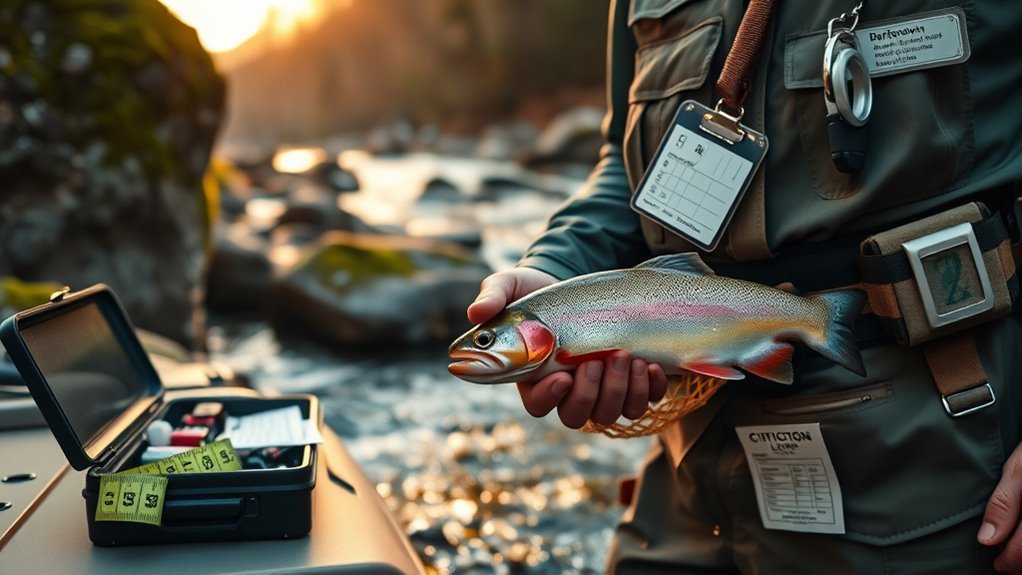
Anglers must have valid proof of their fishing license and display it when legally required. NYSDEC’s license-holder responsibilities also make clear that a fishing license does not grant access to private property and that anglers remain responsible for complying with current fishing regulations.
NYSDEC recognizes the following practical forms of fishing-license proof:
- HuntFishNY Mobile App: Electronic proof of your license through the official app.
- Printed Paper License: A readable plain-paper copy.
- 12-Digit DEC ID: Anglers can provide their 12-digit DEC ID number as proof of licensure.
Fishing without a required license or violating trout regulations can result in enforcement action and penalties under New York law. The exact consequence depends on the specific violation, so do not rely on a single universal fine amount. The safest approach is to verify your license, the current regulations for your waterbody, and any access requirements before fishing.
Field Checklist: Carrying and Verifying Your License
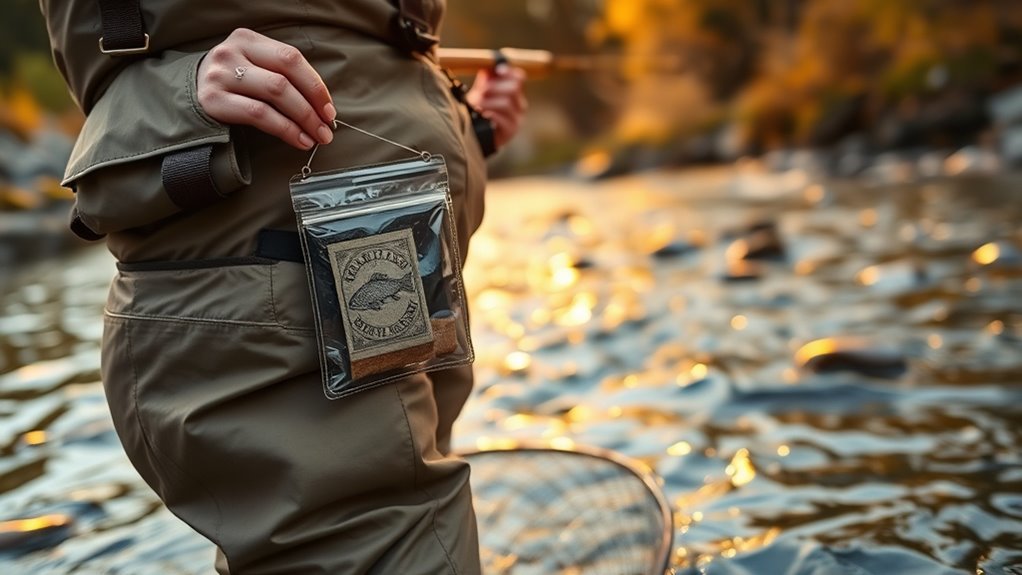
Use this checklist before leaving for a New York trout trip:
- Install HuntFishNY: Log in before traveling into an area where cellular service may be weak.
- Use the Tackle Box Tool: Check places to fish, freshwater regulations, likely fish species, stocking information, boat launches, and parking information available for your waterbody.
- Pack a Waterproof Backup: Keep a printed plain-paper copy of your license protected in your tackle bag if you want a backup to your phone.
- Record Your DEC ID: Keep your 12-digit DEC ID somewhere you can access if your phone battery fails.
- Check Access Requirements: Confirm whether your destination requires an NYC DEP Access Permit or another land-access authorization.
- Confirm Property Boundaries: Make sure you are on authorized public access, a valid fishing easement, or property where you have landowner permission.
Frequently Asked Questions
Do I need a trout stamp to fish for trout in New York?
No. New York State does not issue or require a separate trout stamp. A standard New York State freshwater fishing license covers freshwater trout fishing, subject to the applicable seasons and water-specific regulations.
Do stocked trout waters require an extra endorsement or fee?
No. A regular freshwater fishing license covers both stocked and wild trout fishing. You still must follow the season, daily limit, size limit, tackle rules, and special regulations for the specific waterbody.
Is the Habitat & Access Stamp required for trout fishing?
No. The $5 Habitat & Access Stamp is an optional conservation contribution that supports habitat and public-access work. It is not a trout stamp and is not required to fish.
How much does a New York trout fishing license cost for nonresidents?
An annual nonresident freshwater fishing license costs $50 and is valid for 365 days. Nonresidents can also purchase a 1-day license for $10 or a 7-day license for $28.
Do nonresidents need a separate trout stamp in New York?
No. The no-trout-stamp rule applies to nonresidents as well. A nonresident needs the appropriate New York freshwater fishing license for trout fishing, but there is no separate trout endorsement fee.
Where can I buy a New York fishing license for trout?
You can buy a New York freshwater fishing license online through DECALS, by phone at 1-866-933-2257, or in person at an authorized License Issuing Agent.
Does a standard New York fishing license cover ice fishing for trout?
Yes. The standard freshwater fishing license covers legal ice fishing for trout on waters where ice fishing is permitted and the applicable season is open. Water-specific size, daily limit, and gear rules still apply.
Can I show my fishing license on my phone during a check?
Yes. NYSDEC allows anglers to provide electronic proof through the HuntFishNY app. A plain-paper printout or your 12-digit DEC ID number can also serve as proof of licensure.
Can a New York fishing license be transferred to another angler?
Annual and short-term fishing licenses are issued to the named angler and cannot simply be used by another person. A narrow exception exists for qualifying lifetime sporting licenses: NYSDEC allows certain lifetime licenses to transfer to a qualifying New York resident relative if the holder dies within one year of purchase or dies while on active U.S. military duty during wartime, subject to DEC’s other transfer conditions.
Do children under 16 need a license to fish for trout in New York?
No. Children age 15 and younger do not need a New York State freshwater fishing license. They must still follow the applicable fishing regulations, including seasons, limits, and tackle rules.
When are the official New York Free Fishing Days in 2026?
The designated 2026 New York Free Fishing Days are February 14–15, June 27–28, September 26, and November 11. The freshwater fishing license requirement is waived on these dates, but all other fishing regulations remain in effect.
Does a New York license cover fishing on Lake Champlain and border rivers?
Only in specified reciprocal waters. New York has reciprocity with Pennsylvania on the Delaware River boundary and with Vermont on qualifying portions of Lake Champlain, subject to listed exceptions. NYSDEC also lists reciprocity for Greenwood Lake and Indian Lake under specific conditions. A New York license does not cover Canadian or other nonreciprocal portions of Lake Ontario, Lake Erie, the St. Lawrence River, or the Niagara River.
Summary & Final Checklist
New York does not require a separate trout stamp. If you are 16 or older and not covered by an exemption or Free Fishing Day, start by getting the appropriate New York freshwater fishing license. Then check the current rules for your exact stream, lake, or pond because special regulations can override statewide trout limits. Finally, verify public access, private-property permission, municipal access permits, and border-water jurisdiction before fishing. Carry your HuntFishNY electronic proof, a plain-paper copy, or your 12-digit DEC ID so you can show valid licensure when required.
Authoritative Regulatory Sources
- NYSDEC Freshwater Fishing Licenses — Official license categories, current fees, age requirements, exemptions, border-license summary, and access-permit links.
- New York State Freshwater Fishing License Service — Official license-purchasing service.
- NYSDEC Automated Licensing System (DECALS) — Licensing-system, delivery, printing, and account information.
- NYSDEC General Sporting License Information — Residency qualifications, proof requirements, and license-holder responsibilities.
- NYSDEC Free and Reduced-Fee Sporting Licenses — Current eligibility for seniors, military members, veterans, legally blind residents, students, and Indigenous peoples.
- NYSDEC Lifetime Sporting Licenses — Resident lifetime fishing fees, residency requirements, and lifetime-license transfer conditions.
- NYSDEC 2026 Statewide Fishing Seasons and Catch Limits — Official baseline trout and splake seasons, size limits, and daily limits.
- NYSDEC Border Waters Special Regulations — Reciprocal licensing boundaries and special fishing rules for New York border waters.
- NYSDEC Recreational Marine Fishing Registry — Registry requirements, covered species, tidal waters, and Marine and Coastal District boundaries.
- NYSDEC 2026 Free Freshwater Fishing Days — Official 2026 license-free fishing dates.
- NYSDEC Fish Hatcheries — Information on New York’s state fish hatchery system.
- New York State Department of Health Fish Consumption Advisories — Waterbody-specific sportfish consumption guidance.