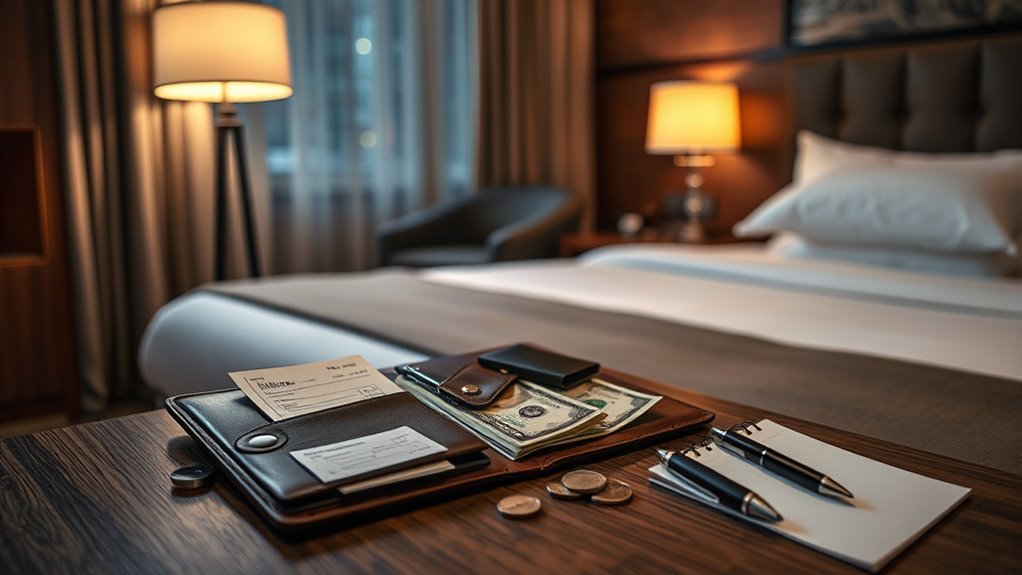
Tipping hotel staff in the USA is customary for personal service, but there is no universal nightly total. Most guests should budget a few dollars for each service they use: about $3 to $5 per day for housekeeping, $1 to $5 per bag for bell staff, $2 to $5 for valet service, and 15% to 20% for room service when a gratuity is not already included.
Quick Answer
In the United States, tip housekeeping $3 to $5 per night and leave it daily; bell staff $1 to $5 per bag; valet $2 to $5 when the car is returned; concierge $5 to $10 for reservations; and room service 15% to 20% when no gratuity or service charge is included.
Key Takeaways
- Check every bill for an included gratuity, automatic service charge, delivery fee, or resort fee before adding more.
- Leave housekeeping tips daily because a different person may clean the room each day.
- Simple directions usually do not require a concierge tip, but reservations, tickets, and complex planning do.
- Cash and hotel-approved digital tipping are both acceptable; make sure the tip is clearly assigned to the right employee.
- Increase the amount for suites, large groups, heavy bags, extra cleanup, difficult requests, or exceptional service.
Why Hotel Tipping Matters: Essential Guidelines for Guests
Hotel tipping is a voluntary way to recognize personal service. It is common in the United States for housekeeping, bell service, valet parking, concierge help, room service, shuttle service, and spa treatments. It is usually not expected for routine check-in, opening a door, or answering a simple question.
A tip does not replace an employer’s legal duty to pay wages. The U.S. Department of Labor’s hotel and motel guidance explains that hotels must follow federal wage, overtime, and tip rules. Your gratuity should be based on the service you received, your budget, and the hotel’s policy—not on pressure from a payment screen.
The clearest rule is to match the tip to the work performed, then check the bill so you do not pay the same gratuity twice.
For housekeeping, place cash in a hotel envelope or beside a short note marked “Housekeeping—Thank you.” For other staff, tip when the service is completed. A concierge who helps throughout the stay may be tipped after each major request or at checkout.
Average Hotel Tipping Costs: What to Expect
There is no fixed hotel tipping rate for every property. The ranges below are practical U.S. starting points based on current etiquette guides from the Emily Post Institute, FairHotel/UNITE HERE, and AAA Club Alliance.
At a Glance
| Hotel Service | Typical U.S. Tip |
| Housekeeping | $3–$5 per night; $5–$10 or more for a suite, extra guests, or extra cleanup |
| Bellhop or porter | $1–$5 per bag; use the higher end for heavy bags or a full cart |
| Valet | $2–$5 when the car is returned; more for special help or severe weather |
| Concierge | No tip for simple directions; $5–$10 for reservations; $15 or more for difficult arrangements |
| Room service | 15%–20% of the pre-tax food and beverage subtotal when no gratuity is included |
| Hotel shuttle driver | $1–$2 per person or about $4–$5 per party |
| Special item delivery | About $2 for one item, plus $1 for each additional item |
| Hotel restaurant, bar, or spa | 15%–20%; bartenders may also receive $1–$2 per drink |
A limited-service stay may require only a housekeeping tip. A full-service stay can cost $10 to $25 in tips on a day when you use housekeeping, valet, or bell service. At a luxury hotel, frequent use of several services can push the daily total above $50. These are planning examples, not mandatory fees.
Daily Tipping Guidelines for Housekeeping Staff
Leave the housekeeping tip each day rather than placing one lump sum in the room at checkout. Staff assignments can change, so daily tipping is more likely to reach the person who cleaned the room that day.
A practical starting point is $3 to $5 per night. Increase it when you stay in a suite, travel with several people, request extra linens or amenities, leave a larger-than-normal mess, or receive especially thoughtful service. Some labor and travel guides now recommend at least $5 per day, while older etiquette guidance starts at $2.
If you decline daily housekeeping, a checkout tip is still considerate because staff prepared the room before arrival and must complete the final turnover after you leave. AAA’s current hotel guidance notes that this work remains even when guests opt out of mid-stay cleaning.
Cash is simple and direct, but it should be clearly marked. Do not leave loose money without a note because staff may treat it as forgotten property. If the hotel provides a digital tipping system, select the housekeeper or department named in the app or QR page.
Pro Tip: Pack small bills before the trip and place each day’s housekeeping tip in a labeled envelope. This prevents a last-minute search for cash and helps the correct employee receive it.
Extra Tips for Concierge and Valet Services

Concierge and valet tips should reflect the work performed. A quick answer or basic direction normally needs only a thank-you. A reservation, ticket purchase, transportation plan, or difficult request usually deserves a gratuity.
Tipping for Special Requests
- Simple directions or a basic recommendation: No tip is required.
- Restaurant reservation, standard tickets, or transportation arrangement: $5 to $10 is a common range.
- Hard-to-get tickets, a complex itinerary, or several coordinated requests: Start around $15 and increase the amount for extensive work or exceptional results.
- Several requests during one stay: Tip after each major task or give one clearly identified amount at checkout if the same concierge handled everything.
The concierge tip is for the service, not the price of the ticket or reservation. Never ask an employee to break hotel policy, bypass a waiting list, or disclose another guest’s information.
Valet Service Expectations
Tip the valet when the vehicle is returned. A common range is $2 to $5 per retrieval. Consider $5 to $10 for help with luggage, a special parking request, difficult weather, or service that goes well beyond bringing the car around.
A parking fee or resort fee is not automatically a valet gratuity. Unless the bill clearly lists a valet tip or gratuity, assume the attendant has not been tipped. You do not need to tip for self-parking.
Note: If several attendants handle the vehicle, give the tip to the person who returns it. The hotel may pool tips, but that policy varies by property.
Tipping for Room Service and Deliveries: Key Guidelines
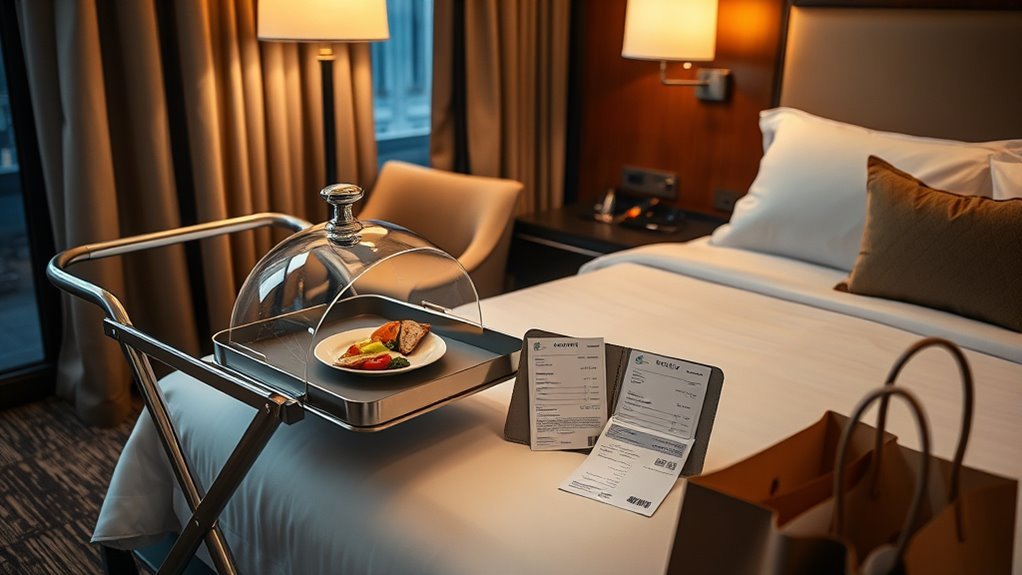
Room-service receipts often contain several fees. Read each line before adding a tip. A “gratuity” may already compensate the server, while a “delivery fee,” “room-service fee,” or “service charge” may be handled differently by the hotel.
Warning: Do not assume every fee goes to the employee. The IRS treats mandatory service charges as employer-imposed charges rather than voluntary tips. When the receipt is unclear, ask the hotel whether the listed charge is distributed to the server before adding more.
Room Service Tipping Rates
If no gratuity is included, tip 15% to 20% of the pre-tax food and beverage subtotal. Tip more for a large order, complicated setup, special dietary handling, or excellent service. If a 15% to 20% gratuity is already included, an extra amount is optional rather than expected.
Do not calculate the tip from only the amount left after a gift card or hotel credit. Use the full eligible food-and-beverage subtotal. Taxes, mandatory fees, and unrelated room charges do not need to be included in the percentage.
Delivery Personnel Expectations
Outside food delivery to a hotel follows normal delivery etiquette rather than room-service rules. A practical tip is 15% to 20%, with a minimum of about $4 to $5 for a small order. Increase it for a large order, bad weather, long waits, or complicated access.
Some hotels require outside drivers to meet guests in the lobby. Follow the property’s security rules and do not expect a driver to enter a restricted guest floor.
Tipping for Convenience Orders
When a hotel employee brings towels, pillows, toiletries, ice, or another requested item to the room, tip about $2 for one item and $1 for each additional item. For a larger bundle or repeated delivery, $3 to $5 is reasonable.
No tip is needed when you collect the items yourself from the front desk or a self-service station. If a delivery charge appears, ask whether it is a gratuity before adding another tip.
Calculating Tips for Large Groups
Large families, wedding parties, and group travelers create more work for housekeeping, bell staff, room service, and hotel restaurants. Plan by service rather than choosing one flat percentage for the entire stay.
- Check every contract and receipt. Banquets, room service, and group dining may include an automatic gratuity or service charge.
- Avoid double tipping. Add an extra amount only when the included charge does not cover the employee or when you want to recognize exceptional service.
- Increase housekeeping for extra work. Add roughly $1 to $2 per additional guest when the room has more occupants, more beds, or heavier cleanup.
- Calculate restaurant tips on the pre-tax subtotal. If no gratuity is included, 15% to 20% is customary for table service.
- Split costs clearly. Group members can reimburse one payer based on individual purchases or divide shared services evenly.
For example, a family staying four nights might budget $5 to $8 per day for housekeeping, plus separate tips for bags, valet retrievals, shuttles, and food service. The final total depends on which services the group actually uses.
Cash vs. Digital Payments: What’s Best for Tipping?
Cash remains useful because it is immediate and easy to direct to a specific employee. Digital tipping is also common and can be more convenient for travelers who do not carry small bills. Neither method is automatically better at every hotel.
Cash does not provide a general tax-free advantage. The IRS tip-reporting guidance states that cash, card, and qualifying electronic tips are income and must be reported. Tax treatment is the employee’s responsibility and should not be used as a reason to hide a tip.
Cash Benefits Explained
- Immediate handoff: The employee receives the money at the time of service.
- Clear recipient: A labeled envelope or direct handoff identifies who the tip is for.
- No phone or app needed: Cash works even when the hotel has no digital tipping system.
Use small bills and a written note for housekeeping. Do not leave money where it may look forgotten or where another guest could take it.
Digital Convenience Factors
Many hotels now use QR codes, mobile wallets, or brand apps for cashless gratuities. Ask the front desk whether the system is official and whether you can select the employee or department. Processing time, tip pooling, and any fees depend on the hotel’s system.
Before scanning a QR code, check that it belongs to the property and uses a legitimate hotel or payment page. Confirm the employee’s name or role before submitting the payment, and keep the receipt until the charge appears correctly.
Tipping Exceptions: When Not to Tip
You generally do not need to tip for routine check-in, opening a door, giving simple directions, using self-service facilities, or receiving a service you did not request. You may also skip an extra tip when a clear gratuity has already been included.
- Front desk: No tip is expected for normal check-in, checkout, key replacement, or answering basic questions. A tip may be appropriate for unusually helpful service, but it is optional.
- All-inclusive resorts: Policies vary. Some include gratuities, some allow optional tips, and some restrict employees from accepting them. Check the resort’s written policy before arrival.
- No-tipping properties: Respect a hotel policy that says staff cannot accept gratuities.
- Poor or missing service: You are not required to reward rude, unsafe, or unperformed service. Report a serious problem to a manager instead.
Hotel customs should not be carried into unrelated professional settings. Doctors, therapists, teachers, tutors, military personnel, postal workers, and government employees follow different professional or ethics rules. Federal gift rules can restrict cash and gifts, so use an official agency policy rather than hotel tipping advice.
Frequently Asked Questions About Hotel Tipping
Before checkout, confirm four details with the hotel when they are not clear from the room information or receipt:
- Is daily housekeeping automatic, available only on request, or limited to certain days?
- Does the room-service charge include a gratuity for the server?
- Does the property offer an official digital tipping option?
- Are gratuities included or restricted under an all-inclusive or no-tipping policy?
These questions prevent double tipping and help the intended employee receive the gratuity. Tipping customs outside the United States can be very different, so do not automatically use U.S. amounts abroad.
Maximizing Your Tipping Experience: Tips and Tricks
- Set a small-bill budget: Estimate the services you expect to use and bring enough $1 and $5 bills.
- Tip at the right time: Tip housekeeping daily and most other staff when the service is completed.
- Read the receipt: Separate gratuities from service, delivery, parking, and resort fees.
- Name the recipient: Use an envelope, note, app selection, or direct handoff.
- Adjust for effort: Add more for heavy luggage, suites, extra guests, difficult requests, adverse weather, or exceptional service.
Frequently Asked Questions
How much should you tip hotel staff in 2026?
Use $3 to $5 per night for housekeeping, $1 to $5 per bag for bell staff, $2 to $5 for valet service, $5 to $10 for a concierge reservation, and 15% to 20% for room service when no gratuity is included. Luxury service, extra work, and difficult requests justify more.
Is a 10% tip insulting?
For U.S. room service or a hotel restaurant, 10% is below the usual 15% to 20% when no gratuity is included, but “insulting” depends on the situation. Fixed-dollar hotel services such as housekeeping, bell service, and valet parking do not use a 10% rule.
Is $20 a good tip for housekeeping?
Yes, but the meaning depends on the stay. A $20 tip for one night is generous at most hotels. For a four-night stay, $20 equals $5 per night and fits current guidance. Leave the money daily when possible so each housekeeper receives the correct share.
Do you tip housekeeping every day or at the end?
Tip every day because housekeeping assignments can change. Leave cash in a labeled envelope or use the hotel’s official digital system. When daily service is declined, a checkout tip can recognize the final room turnover.
Is a resort fee the same as a tip?
No. A resort fee normally pays for property amenities or services and is not automatically distributed to individual employees. Check the bill for a separate gratuity or service-charge line and ask the hotel when the wording is unclear.
Do you tip when you skip daily housekeeping?
A checkout tip is still considerate because housekeeping prepares the room before arrival and performs a full turnover after departure. The amount can reflect the length of the stay, room condition, and amount of final cleaning required.
Conclusion
Hotel tipping in the United States is easier when you treat it as a set of small, service-based decisions instead of one required nightly charge. Tip housekeeping daily, reward bell and valet staff when they help you, and check food-service bills before adding a percentage. Clear labeling, a reasonable budget, and a quick review of hotel policy help your gratuity reach the right person without double tipping.
Sources
- Emily Post Institute General Tipping Guide — customary ranges for housekeeping, bell staff, valet, concierge, dining, and spa services.
- FairHotel/UNITE HERE Tipping Guide — hotel-worker guidance for housekeeping, bell service, shuttle drivers, room service, and special deliveries.
- AAA Club Alliance Hotel Tipping Guide — current guidance on daily housekeeping, cashless tipping, skipped service, valets, and shuttles.
- Internal Revenue Service: Tip Recordkeeping and Reporting — distinction between voluntary tips and mandatory service charges, plus tax reporting rules.
- U.S. Department of Labor Fact Sheet #45 — wage, overtime, and tip requirements for hotel and motel employers.
- Beaches Resorts All-Inclusive Tipping Guidance — example of why guests should check a resort’s specific gratuity policy.