
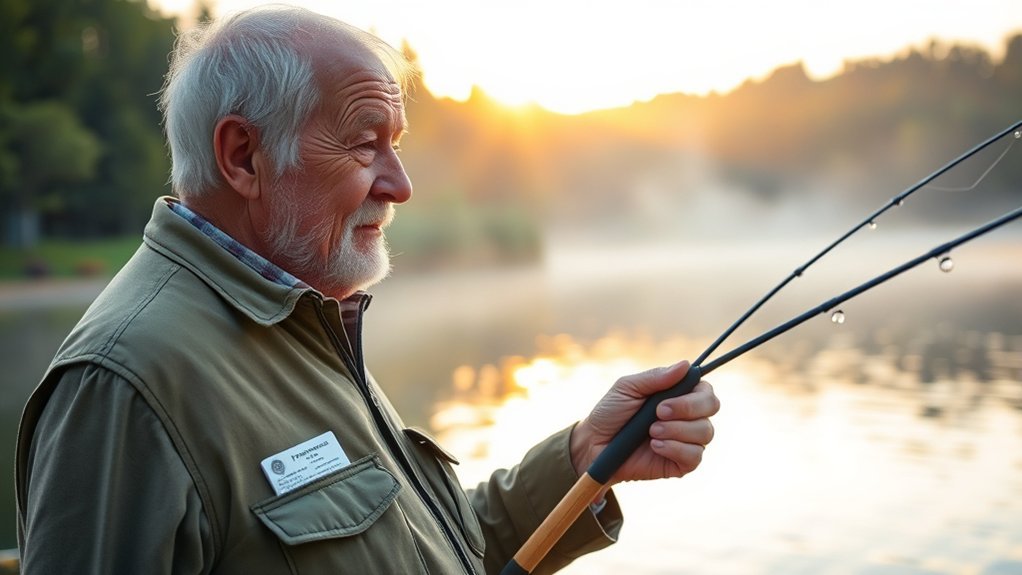
Senior fishing license discounts can make fishing more affordable, but there is no single nationwide age, price, or exemption. Each state sets its own rules for residents, nonresidents, license periods, and special permits. The examples below were checked against official agency information available on July 29, 2026, but fees and regulations can change.
Quick Answer
Many states offer reduced fishing license fees to older residents, commonly beginning at age 65, but the rules differ. Some states provide a low-cost annual license, while others use age-based exemptions, birth-date exemptions, or special programs for qualifying veterans, people with disabilities, or low-income seniors.
Key Takeaways
- A senior fishing license is usually a state resident benefit; nonresidents may have to pay the regular nonresident price.
- Age thresholds vary. Examples include age 65, age 75, age 90, or a specific birth-date cutoff.
- A reduced or free license does not automatically include trout stamps, salmon stamps, report cards, tags, or other special permits.
- License periods vary between fixed state license years and 365-day validity from the purchase date.
- Check the issuing wildlife agency immediately before buying because fees, legislation, and eligibility rules can change.
Eligibility for Senior Fishing License Discounts

Senior fishing license eligibility depends on the state where you live and, in some cases, the type of benefit you receive. Turning 65 does not automatically give you the same fishing privileges in every state.
Before choosing a license, check these four eligibility factors:
- Age: Many resident senior programs begin at age 65, but some states use a lower or higher threshold.
- Residency: Discounted senior prices are commonly limited to residents. A nonresident senior may have to purchase a regular nonresident license.
- Special qualifications: Separate reduced-fee or free programs may be available for qualifying veterans, people with disabilities, or low-income residents.
- Fishing activity: Your general license may not cover trout, salmon, sturgeon, additional rods, commercial gear, or other regulated activities.
Documents You May Need
A current driver’s license or state identification card is often the simplest way to establish age and residency. A wildlife agency may also request a customer identification number, Social Security number, prior license record, or proof that you have lived in the state for the required period.
Special programs can require additional records. California, for example, requires qualifying low-income seniors to show eligibility through Supplemental Security Income or the Cash Assistance Program for Aged, Blind, and Disabled Legal Immigrants. Disabled-veteran and recovering-service-member programs require their own supporting documents.
Note: Do not assume that a photograph of your ID or an unofficial copy of a license will meet field-identification requirements. Carry the license and identification in the format accepted by the state where you are fishing.
Cost of Senior Fishing Licenses
Senior fishing license prices range from no fee to a modest annual charge, but low advertised prices may not include transaction fees, stamps, validations, or species permits. The following examples show why you should compare the exact product rather than rely on a national average.
Products Worth Considering

FISHING LICENSE HOLDER W/ZIP CLOSURE

【MATERIAL】: oFloral License plate frame is made from premium quality aluminum, which can provide long-lasting protection from corroding, rusting and aging, durability for long lasting usage.Personalized Car Frame Can Perfect to Put on Your Front of Car or for Decorative Purposes Around the House Like in Your Bedroom, Garage, Basement, Ect.

【MATERIAL】: oFloral License plate frame is made from premium quality aluminum, which can provide long-lasting protection from corroding, rusting and aging, durability for long lasting usage.Personalized Car Frame Can Perfect to Put on Your Front of Car or for Decorative Purposes Around the House Like in Your Bedroom, Garage, Basement, Ect.
Current Senior License Examples
| State | Qualifying Group | Current Example | Important Detail |
|---|---|---|---|
| Michigan | Resident age 65+ | $11 annual all-species senior base price | The daily all-species license is $10 and is not a special senior daily rate. Applicable surcharges may be added. |
| Illinois | Resident age 65–74 | $7.75 annual senior fishing license | Residents age 75+ have a separate super-senior license listed at $1.50. |
| Kansas | Resident age 65–74 | $12.50 annual senior fishing license | Residents age 75+ are exempt from the general license, but other permits and fees can still apply. |
| Wisconsin | Resident age 65+ | $7 annual senior fishing license | The $5 first-time-buyer license is a separate program. Residents born before January 1, 1927, are license-exempt. |
| California | Qualifying low-income resident age 65+ | $10.04 reduced-fee license | This is not a general discount for every senior. The applicant must receive SSI or CAPI and renew through a CDFW license sales office. |
Note: These examples were verified on July 29, 2026. State agencies may add agent fees, online transaction fees, surcharges, stamps, report cards, or activity-specific permits.
How to Compare the Real Cost
Look beyond the price printed beside the general license. Your final cost can depend on:
- Online, phone, or retail-agent transaction fees
- Trout, salmon, or Great Lakes stamps
- Sturgeon tags or species report cards
- Second-rod or three-pole privileges
- Short-term versus annual validity
- Resident versus nonresident status
- Whether the license is a base license or a combination hunting-and-fishing product
Types of Senior Fishing Licenses Available
States use several different systems to make fishing more affordable for older anglers. The best choice depends on how often you fish, where you live, and which species you plan to target.
Products Worth Considering

Classic retro design: This metal sign adopts classic retro design, which is very suitable for consumers who love nostalgic style and adds a unique style to any space.

Durable Material: Car license plate is crafted from high-quality ETP (electrolytic tinplate) with 2 layers of clear epoxy lacquer coating making the car tag water-proof, rust-proof, and weather-resistant

Product Material:made of Stainless steel. Personalized Car Frame Can Perfect to Put on Your Front of Car,Decorate your car to make it look more beautiful and unique,just wipe with a damp cloth
Annual Senior Resident License
This is the most common format. A resident who meets the state’s age requirement buys an annual license at a lower price than a standard resident adult license.
Daily or Short-Term License
A daily, two-day, three-day, or other short-term license may make sense for an occasional trip. Do not assume it has a senior discount. Michigan, for example, currently charges the same daily all-species price for qualifying adults regardless of senior status.
Multi-Year and Lifetime Options
Some agencies offer multi-year or lifetime products. These can reduce repeat purchasing, but they are not always the least expensive option. Compare the upfront price with the number of years you realistically expect to use it and check whether annual stamps or validations must still be obtained.
Age-Based Exemptions
An exemption means the qualifying person does not need the general license. It does not necessarily remove every other permit requirement. Kansas residents age 75 and older, for example, do not need the general fishing license, but the state says other permits, tags, stamps, and fees still apply when required.
Disability, Veteran, and Income-Based Programs
These programs are separate from standard senior pricing. A person may qualify because of service-connected disability, active military status, blindness, mobility impairment, developmental disability, or participation in a qualifying income-assistance program. Documentation and application procedures can be more detailed than those for an age-only license.
Pro Tip: Compare every category for which you qualify. A veteran, disability, first-time-buyer, super-senior, or license-exempt option may be less expensive than the state’s regular senior product.
How to Apply for a Senior Fishing License
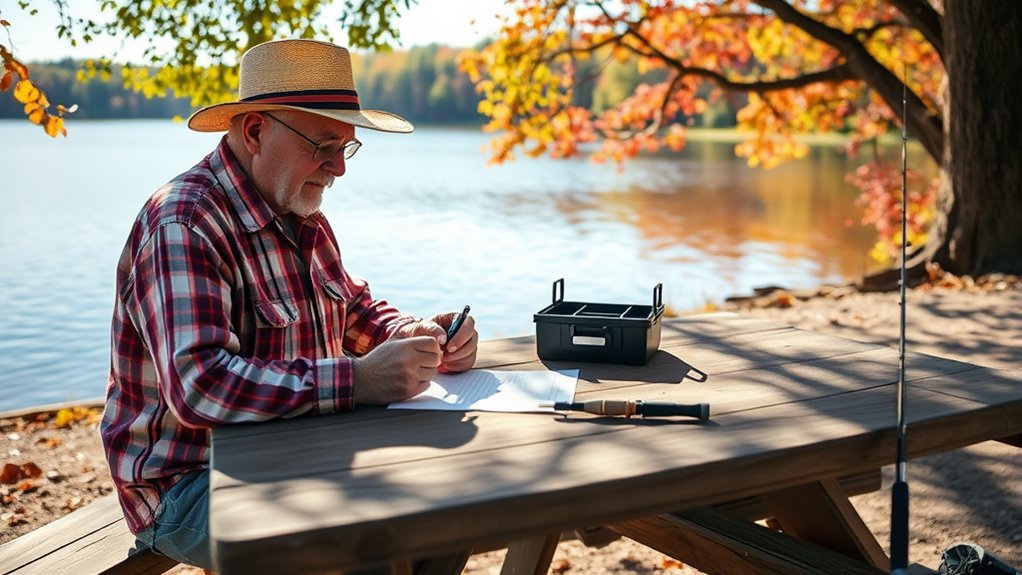
Most standard senior licenses can be purchased in a few steps. Applications for disability, veteran, or income-based programs may require advance approval or additional processing.
At a Glance
| Time Required | About 5–15 minutes for a standard license; longer if eligibility must be reviewed |
| Difficulty | Easy for age-based licenses; moderate for special reduced-fee applications |
| Tools Needed | Accepted identification, residency information, payment method, and any required eligibility documents |
| Cost | Varies by state and qualification; stamps, permits, surcharges, and transaction fees may cost extra |
Application Steps
- Find your official state wildlife agency. The U.S. Fish and Wildlife Service fishing-license directory links to state-specific information.
- Confirm the current age and residency rule. Check whether the price is limited to residents and whether your state uses an age range, birth-date cutoff, or exemption.
- Choose the correct license type. Compare annual, short-term, multi-year, lifetime, combination, veteran, disability, and income-based products.
- Check additional requirements. Identify any trout stamp, salmon stamp, report card, tag, or extra-rod permit needed for your planned trip.
- Gather the required documents. Have your accepted photo ID, residency information, customer number, and special-program evidence ready.
- Purchase through an approved channel. Depending on the state, this may include the agency website, mobile app, telephone service, wildlife office, sporting-goods store, bait shop, or authorized vendor.
- Save proof of the license. Print it, store it in the official app, or carry the original document as required by that state.
- Read the current fishing regulations. Check the waterbody, species, season, size, possession, and equipment rules before fishing.
Warning: Do not purchase through a website merely because it appears in a search result. Use the official state agency or an agent the agency identifies as authorized.
Benefits of Fishing for Seniors
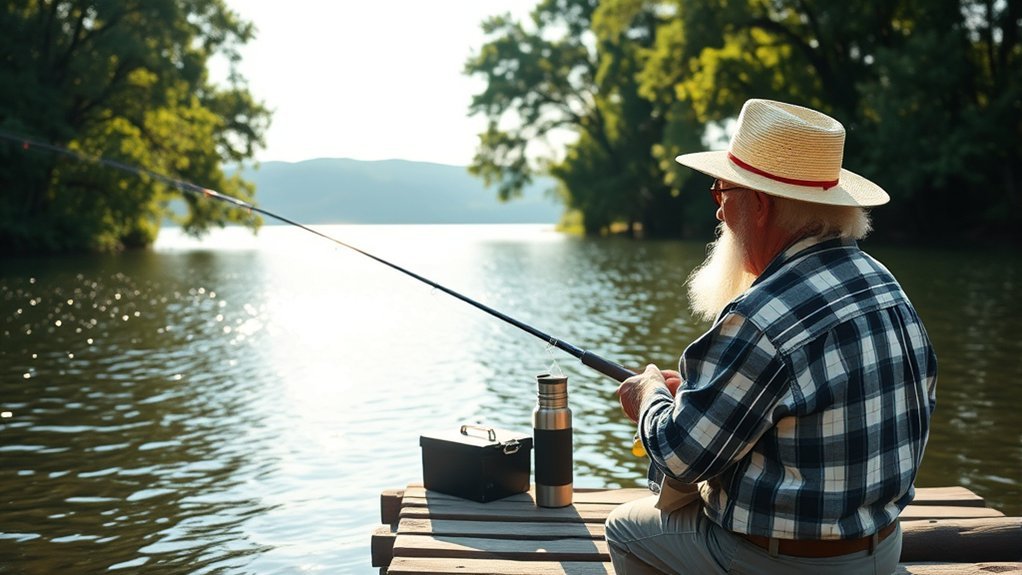
Fishing can combine outdoor time, light movement, concentration, skill development, and social contact. The exact experience depends on the setting and the angler’s mobility, health, equipment, and fishing method.
A 2026 study of 364 older recreational anglers found that angling participation was positively associated with subjective well-being. The study was observational, so it does not prove that fishing alone caused better mental health. It does support the idea that autonomy, competence, and a sense of belonging may be meaningful parts of the activity.
| Possible Benefit | How Fishing May Support It | Practical Example |
|---|---|---|
| Relaxation | Quiet outdoor settings and focused tasks may help some people feel calmer. | Bank fishing during a low-traffic morning period |
| Light activity | Walking to a fishing site, casting, handling equipment, and safely landing fish can involve movement. | Using an accessible pier with a short, level approach |
| Social connection | Shared trips, clubs, and community programs can create regular contact with other anglers. | Joining a local fishing clinic or going with a friend |
| Skill and coordination | Selecting tackle, tying knots, casting, and watching a float use attention and hand-eye coordination. | Practicing simple knots with larger, easy-grip tools |
Note: Choose a stable fishing location, watch for heat and slippery surfaces, carry drinking water, use sun protection, and wear an appropriate life jacket when fishing from a boat or near hazardous water.
Regulations for Senior Fishing License Holders

A senior discount changes the license price, not the fishing rules. Unless an official regulation says otherwise, senior anglers must follow the same seasons, legal methods, size limits, daily limits, possession limits, closures, and reporting rules as other anglers.
Rules That Still Apply
- Species and season rules: A valid license does not allow fishing during a closed season or keeping prohibited fish.
- Size and possession limits: Minimum lengths, slot limits, daily limits, and possession limits remain in effect.
- Special stamps and permits: Trout, salmon, sturgeon, extra-rod, or area-specific privileges may cost extra.
- Waterbody restrictions: Special regulations can apply to individual lakes, rivers, boundary waters, marine areas, or managed properties.
- Private property: A fishing license does not grant permission to enter private land.
- Identification: Carry your license and any required identification in the form accepted by the issuing agency.
License Exemptions and Free-Fishing Days
A permanent age-based exemption and a free-fishing day are different. An exempt resident may not need the general license because of age or another qualification. A free-fishing day temporarily waives the general license requirement for eligible participants on specific dates.
In both cases, fishing regulations still apply. Some states also require species report cards, tags, or other permits even when the general license fee is waived.
Warning: Fishing licenses and exemptions are issued to an individual. Do not lend your license, identification, exemption document, tag, or customer account to another person.
Exemptions for Seniors Over 90
Age 90 is used by at least one state, but it is not a standard national cutoff. Minnesota states that residents age 90 and older do not need a fishing license, although other fishing rules and certain tags can still apply.
Other states use different systems:
- Kansas: Residents age 75 and older do not need the general fishing license.
- Wisconsin: Residents born before January 1, 1927, do not need a general fishing license.
- Missouri: Residents age 65 and older generally may fish without a permit, although trout permits or daily tags can still be required in designated areas.
- Michigan: Residents age 65 and older receive a discounted annual license rather than a general age-only exemption.
Keep accepted proof of age and residency with you when the exemption rule requires it. A state can also change an exemption through legislation or regulation, so verify the rule before each license year or trip.
There is no nationwide age at which every senior can fish without a license. The correct answer always depends on the state, residency status, species, and waterbody.
Renewal Process for Senior Fishing Licenses
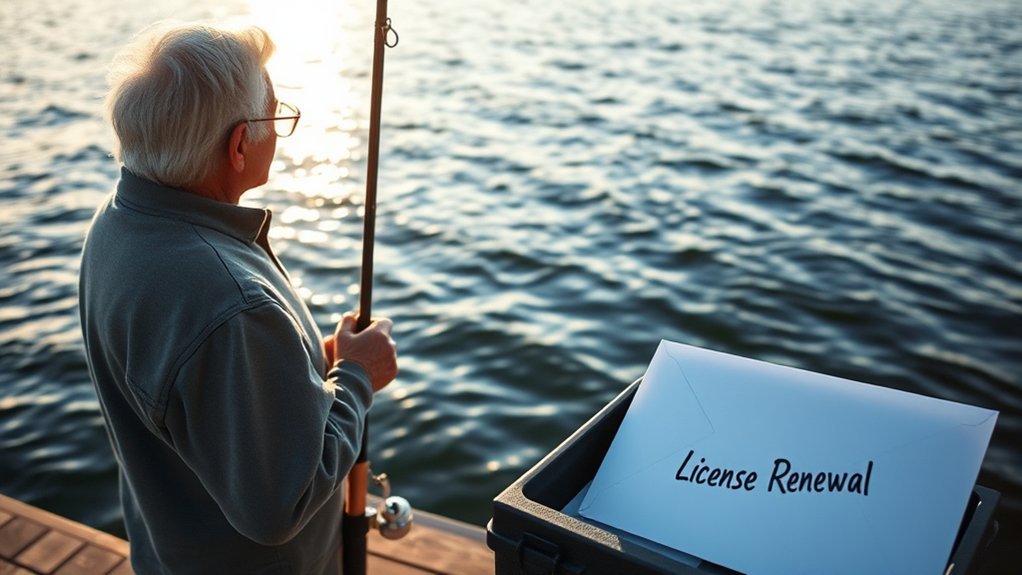
Do not assume that every senior license expires on the same date. States use different validity systems, and buying too early can sometimes result in receiving a license for the outgoing license year.
Products Worth Considering

Showcase your passion for fishing with intricately etched designs Built tough to withstand the elements of your fishing adventures Sleek design seamlessly complements your...
Fixed License-Year Products
Michigan’s annual fishing license is valid from March 1 through March 31 of the following year. Illinois states that its 2026 license year began March 1, 2026, while licenses from the prior year expired March 31, 2026.
365-Day Products
Kansas lists its one-year senior license as valid for 365 days from purchase. California also sells 365-day sport fishing licenses, including qualifying reduced-fee products.
Renewal Checklist
- Check the expiration date printed in your official account, app, or license document.
- Confirm whether the agency offers automatic renewal.
- Review your residency and eligibility information for changes.
- Renew special stamps, validations, tags, or report cards separately when required.
- Save the new license and remove an expired copy from your wallet or tackle bag.
- Read the new season’s fishing regulations because limits and closures may change even if the license price does not.
Lifetime-license holders may not pay for another general lifetime license, but they may still have to claim an annual privilege, obtain a current license document, or purchase separate stamps and permits. Follow the issuing state’s instructions.
Replacing a Lost License
Use the issuing agency’s official account, app, license office, or authorized vendor to obtain a reprint or duplicate. Fees and procedures vary. Michigan, for example, allows many licenses purchased online to be reprinted through the customer’s account and charges for some agent-issued replacements.
Pro Tip: Save the purchase confirmation and official license file in a secure location before your trip. This can make a permitted reprint easier if the original document is lost or damaged.
Community Resources for Senior Anglers
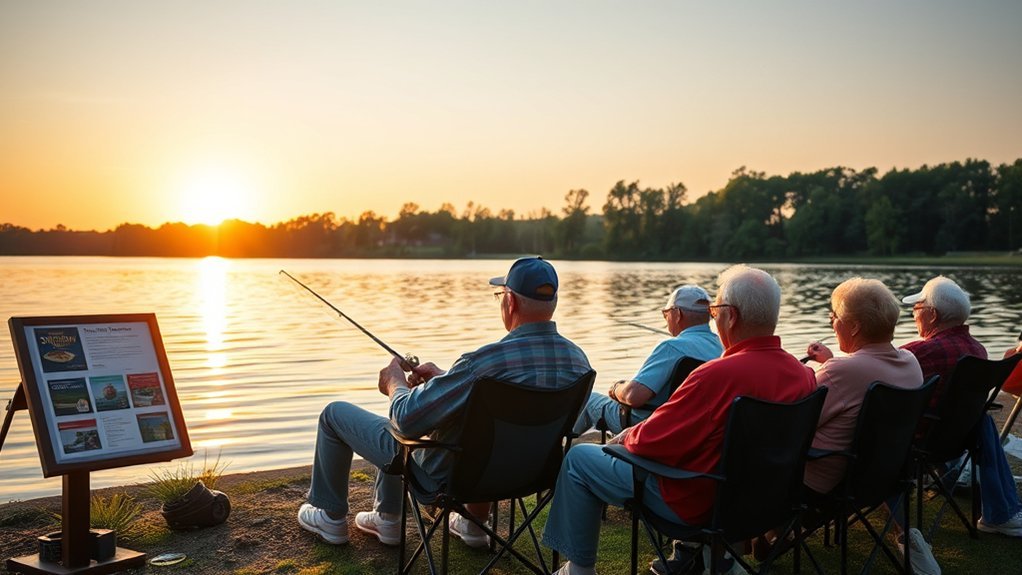
State wildlife agencies, municipal recreation departments, fishing clubs, veterans’ groups, and nonprofit organizations may offer programs that make fishing easier to try or return to.
Useful resources can include:
- Free-fishing days and weekends
- Beginner fishing clinics
- Accessible piers, platforms, and shoreline locations
- Loaner rods and tackle
- Guided community fishing events
- Veteran and adaptive recreation programs
- Local angling clubs and conservation groups
- Fish-identification, knot-tying, and regulations workshops
Check the current event calendar on your state wildlife agency’s website. Free events can have registration limits, equipment rules, parking fees, or separate property-use requirements.
Importance of Fishing License Compliance
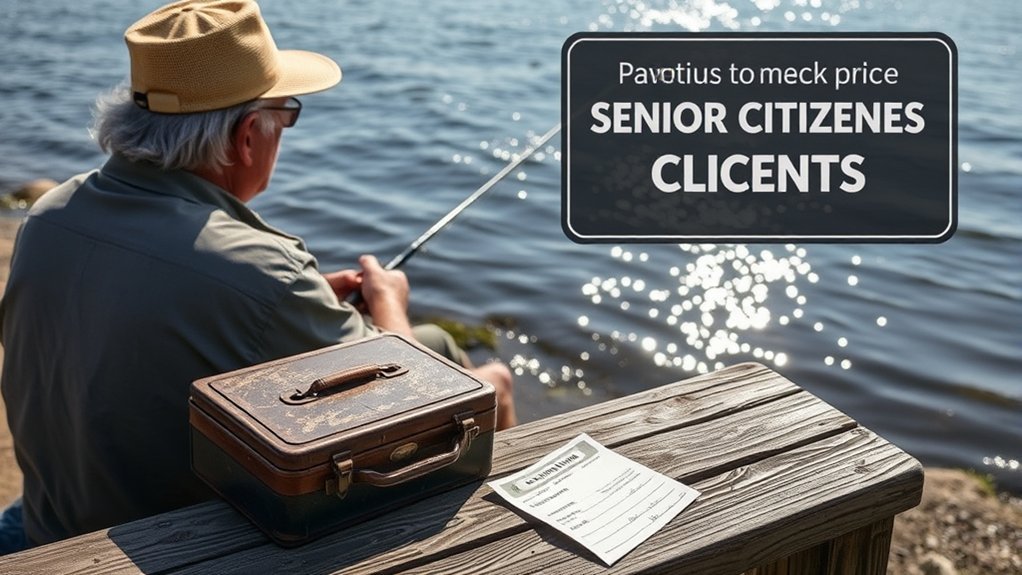
Following license and fishing rules protects you from avoidable enforcement problems and supports the management of public fisheries. According to the U.S. Fish and Wildlife Service, fishing-license revenue is an important source of funding for state fish and wildlife agencies.
License revenue and federal Sport Fish Restoration funding help support work such as:
- Fishery research and population monitoring
- Habitat restoration and enhancement
- Fish stocking where appropriate
- Boat ramps, fishing piers, and public access
- Aquatic education and angler outreach
- Enforcement of seasons, limits, and conservation rules
Before leaving home, confirm that you have the correct license, required stamps or permits, accepted identification, and the current regulations for the water you plan to fish.
Frequently Asked Questions
Can seniors fish without a license in Wisconsin?
Age 65 alone does not make a Wisconsin resident license-exempt. Residents age 65 and older generally qualify for the $7 senior license. Residents born before January 1, 1927, may fish without the general license, subject to all other fishing rules.
Are there age-related discounts for fishing gear?
Some retailers, clubs, veteran organizations, or community programs may offer discounts, coupons, loaner equipment, or promotional days. These are retailer-specific benefits, not rights provided by a senior fishing license.
Do senior fishing licenses cover every type of fishing?
Not always. A general license may still require additional trout or salmon stamps, sturgeon tags, species report cards, extra-rod privileges, or area permits. Special rules can also apply to marine waters, boundary waters, managed lakes, and tribal waters.
Can seniors fish in all Wisconsin waters with a senior license?
A Wisconsin senior license provides general fishing privileges, but it does not override waterbody closures, seasons, size limits, possession limits, or stamp requirements. Inland trout and Great Lakes salmon or trout fishing can require an additional stamp.
What should a senior do after losing a fishing license?
Use the issuing agency’s official website, mobile app, service office, or authorized vendor to obtain a permitted reprint or duplicate. Do not continue fishing without the proof required by that state merely because the original license is still within its validity period.
Do all states offer a senior fishing license discount?
No. States may offer a reduced senior price, a lifetime option, a free license, an age-based exemption, a birth-date exemption, or no general senior benefit. The qualifying age and residency rule are set by each state.
Can a nonresident receive the same senior discount?
Often not. Many senior prices are resident-only benefits. A visiting senior may need a regular nonresident annual or short-term license unless the destination state expressly offers a nonresident senior product or another exemption.
Conclusion
Senior fishing license discounts can lower the cost of getting on the water, but the correct license depends on your state, age, residency, qualifications, and planned fishing activity. Verify the current fee, validity period, required documents, and any extra stamps or permits through the official wildlife agency before each trip. Once the paperwork is in order, you can focus on enjoying the water responsibly and safely.
Sources
- U.S. Fish and Wildlife Service — Purchase a Fishing License — State license directory and explanation of conservation funding.
- Michigan Department of Natural Resources — Fishing License Information — Michigan senior, resident, nonresident, daily, validity, and replacement information.
- Kansas Department of Wildlife and Parks — Fishing Licenses and Permit Fees — Kansas senior prices, age-75 exemption, validity, and extra-permit rules.
- Wisconsin Department of Natural Resources — Fishing Licenses — Wisconsin senior, first-time-buyer, birth-date exemption, and stamp prices.
- California Department of Fish and Wildlife — Sport Fishing Licenses — 2026 fees and eligibility for low-income seniors, disabled veterans, recovering service members, and free licenses.
- PubMed — Recreational Angling and Mental Health Among Older Adults — 2026 observational research on angling and subjective well-being.
