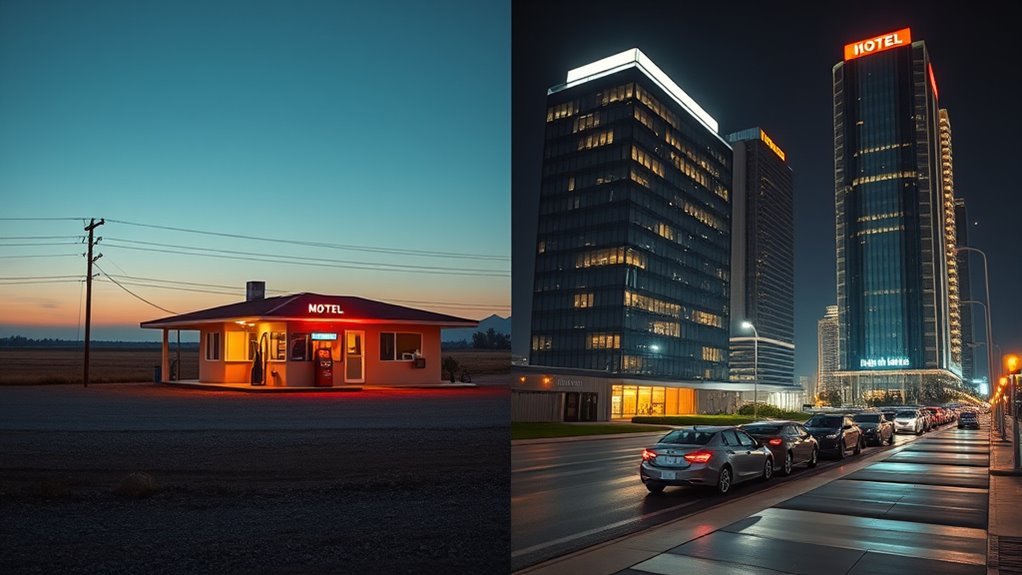
Rural hotels often cost less than comparable hotels in major U.S. cities, but that pattern is not guaranteed. A small town with few rooms, a national-park gateway, or a rural resort can become expensive during peak dates. To find the better value in 2026, compare similar hotel classes, the full booking price, transportation costs, and local events.
Quick Answer
Rural hotels are often cheaper than big-city hotels, but there is no reliable national 2026 forecast showing rural rates rising exactly 1% versus 2.4% in cities. The latest CoStar forecast puts overall U.S. ADR growth at 2.0%. Actual savings depend more on dates, events, hotel class, fees, and local room supply.
Key Takeaways
- CoStar and Tourism Economics forecast overall U.S. hotel average daily rates to rise 2.0% in 2026, but they do not publish a nationwide rural-versus-urban split matching the original 1% and 2.4% figures.
- Big-city hotels often have higher base rates, parking charges, and event-driven spikes, while rural hotels may have fewer rooms and less competition.
- Rural resorts, ski towns, beach communities, and national-park gateways can cost more than ordinary city hotels during peak season.
- Compare the full stay cost, including mandatory fees, taxes, parking, breakfast, transportation, and cancellation terms.
Rural vs. Big-City Hotel Prices in 2026
The latest public data supports a modest overall rise in U.S. hotel prices, but it does not prove that every rural market is becoming cheaper relative to every large city. In its June 2026 outlook, CoStar and Tourism Economics forecast full-year average daily rate growth of 2.0%, occupancy of 62.8%, and revenue per available room growth of 2.8%.
Average daily rate, or ADR, is the average amount paid for an occupied room. RevPAR, or revenue per available room, combines room rates with occupancy. A hotel market can therefore report rising RevPAR because rooms cost more, more rooms are occupied, or both.
Note: Major hotel reports commonly group properties as urban, suburban, airport, town, resort, or interstate. Those categories are not identical to the Census Bureau’s definition of rural, so a “town” statistic should not automatically be presented as a nationwide rural-hotel statistic.
The current 2026 U.S. forecast calls for 2.0% ADR growth overall—not a verified split of 1% for rural hotels and 2.4% for big-city hotels.
| 2026 Evidence | What It Means |
|---|---|
| Full-year U.S. ADR forecast: +2.0% | The national outlook is for moderate growth, although individual destinations can move much more sharply. |
| Q1 ADR: +2.2% overall | According to CBRE, luxury ADR rose 4.4%, while midscale fell 0.5% and economy fell 2.6%. Hotel class mattered as much as location. |
| June ADR: $173.76, up 6.7% | This was an unusually strong event-affected month. CoStar reported that the FIFA World Cup helped lift rates. |
| No national rural ADR forecast | Travelers should compare live prices for their exact dates instead of relying on a single rural-versus-city percentage. |
How Do Economic Factors Affect Hotel Prices?
Hotels adjust prices according to demand, available inventory, operating costs, local competition, and the type of guest a property serves. These forces affect rural and urban hotels differently, but they do not always make one setting cheaper.
Supply and Demand
A city may have thousands of rooms, yet a convention, concert, sports event, or holiday weekend can fill much of that inventory. Hotels then raise rates as the remaining supply becomes scarce. Business districts can show the opposite pattern on quiet weekends, when weekday corporate demand disappears.
A rural community may have lower everyday demand but only a handful of hotels. A wedding, festival, college event, holiday weekend, or peak outdoor season can sell out the local supply quickly. In that situation, less competition may push prices up rather than down.
Hotel Class and Guest Demand
Hotel class is separate from location. A rural luxury resort may cost far more than an economy hotel in a large city. Likewise, a suburban or airport hotel outside a major downtown area may offer a lower rate without requiring a fully rural trip.
CBRE’s Q1 2026 figures found that luxury hotel ADR rose 4.4% year over year, while economy ADR fell 2.6%. That difference reflects guest spending power and hotel class, not a simple city-versus-country divide.
Operating Costs and Local Events
Wages, insurance, utilities, maintenance, financing, and property costs can affect the rate a hotel needs to charge. Large cities often have higher labor, real-estate, and parking costs. Rural properties may face different expenses, including seasonal staffing, long supply routes, weather exposure, and limited year-round demand.
Events can outweigh normal economic trends. CoStar reported that June 2026 U.S. ADR rose 6.7% year over year, helped by the World Cup. That monthly jump was much larger than the 2.0% full-year forecast, showing why event dates should be checked separately.
Regional Price Variations
The most useful comparison is not “rural versus urban” by itself. Compare the type of destination, hotel class, season, and complete trip cost.
| Cost Factor | Rural or Small-Town Stay | Big-City Stay |
|---|---|---|
| Typical base rate | Often lower for ordinary motels, inns, and limited-service hotels. | Often higher downtown, especially for upscale and luxury properties. |
| Peak-price risk | High when room inventory is limited or the destination has a short peak season. | High during conventions, concerts, sports events, holidays, and major festivals. |
| Transportation | A car may be necessary, adding rental, fuel, toll, or mileage costs. | Public transit may reduce car costs, but parking can be expensive. |
| Food and amenities | Free parking and breakfast are more common at some limited-service properties, but nearby choices may be fewer. | More dining and entertainment choices may be within walking distance, though hotel extras may cost more. |
| Common exceptions | Ski towns, rural resorts, beach communities, wedding destinations, and national-park gateways. | Airport, suburban, and weekend business-district hotels can undercut downtown leisure prices. |
Five Destinations to Price-Check Instead of Assuming Are Cheap
Punta Gorda, Charleston, Sarasota, Boise, and Burlington appeared in the original comparison, but airfare snapshots do not prove that their hotels are inexpensive. They are better used as examples of destinations whose value changes by season and neighborhood.
- Punta Gorda, Florida: A smaller waterfront destination may offer lower prices than South Florida’s largest resort markets, but winter demand and special events can tighten availability.
- Charleston, South Carolina: Charleston is a popular historic city, not a rural town. Weekend, wedding, festival, and central historic-district rates can be high.
- Sarasota, Florida: Beach access can create resort-style pricing. Compare mainland properties with hotels near the barrier islands and check seasonal demand.
- Boise, Idaho: Boise is a midsize city. Compare downtown hotels with airport, suburban, and roadside options rather than treating the entire market as rural.
- Burlington, Vermont: Limited inventory can raise prices during fall travel, summer weekends, and major college events. Expanding the search radius may reveal better value.
Pro Tip: Search the same dates in a downtown area, an outer neighborhood, and a nearby town. Keep the hotel class and guest rating similar so you are comparing location rather than comparing a luxury hotel with a roadside motel.
Understanding Hotel Rate Trends for 2026
Latest U.S. Hotel Forecast
Current forecasts point to growth, but the exact numbers differ slightly by research organization and publication date. CoStar and Tourism Economics forecast 2.0% ADR growth and 2.8% RevPAR growth for 2026. PwC’s May 2026 outlook projected 2.9% RevPAR growth and said demand growth was expected to outpace supply growth.
These are industry-wide forecasts, not promises about the price of an individual reservation. A major event can send one city’s rates sharply higher, while weak demand can cause another market or hotel class to discount rooms.
Urban Versus Rural Comparisons
The U.S. Census Bureau defines rural territory as everything outside an urban area. Hotel analysts often use different location groups, which is one reason a clean national rural-versus-urban room-rate figure is difficult to produce.
CBRE’s Q1 2026 report found that urban hotel occupancy remained farther below its 2019 level than other location types. However, that occupancy finding does not prove that rural room rates rose by a specific percentage or that every urban room costs more.
A safer conclusion is that urban hotels often carry higher everyday costs, while rural hotels can be more volatile when local supply is small. Your exact dates and destination matter more than a broad national label.
Affordable Experiences in Rural and Urban Destinations
Price is only one part of the decision. Rural and urban trips provide different kinds of value, and the cheaper room does not always create the cheaper vacation.
- Lower room cost: A rural motel or inn may offer a lower base rate and free parking.
- Outdoor access: Rural destinations may place trails, lakes, scenic roads, and parks close to the hotel.
- Walkability and transit: A city hotel may cost more but eliminate a rental car, fuel, and daily parking.
- More included value: Breakfast, a kitchenette, parking, or laundry facilities can make one hotel cheaper overall even when its nightly rate is higher.
Note: Compare the total trip, not just the room. A rural hotel that saves $40 per night may not be the better deal when it requires a rental car, extra fuel, and long drives to meals or attractions.
Tips for Scoring the Best Hotel Deals in Both Settings

Hotel rates change with demand and inventory. Instead of relying on one universal “best day to book,” use a repeatable comparison process.
| Strategy | Rural Areas | Big Cities |
|---|---|---|
| Book a refundable option | Reserve early when the town has few hotels, then check the price again before the cancellation deadline. | Lock in a fallback rate while watching for event-calendar changes and new inventory. |
| Check peak dates | Look for festivals, weddings, leaf season, ski dates, park events, and college weekends. | Look for conventions, concerts, sports games, holidays, and major exhibitions. |
| Expand the map | Compare nearby towns, but calculate the added drive time and fuel. | Compare downtown with airport, suburban, and transit-connected neighborhoods. |
| Compare total prices | Include taxes, mandatory fees, breakfast, pet charges, and transportation. | Include taxes, mandatory fees, parking, destination charges, and transit costs. |
| Value included amenities | Free parking, breakfast, a refrigerator, or a kitchenette may reduce daily spending. | Walkability, public transit, lounge access, or included breakfast may offset a higher room rate. |
Under the FTC’s Rule on Unfair or Deceptive Fees, short-term lodging sellers that display a price must include calculable mandatory fees in the upfront total. Taxes, government charges, and optional additions may be shown later, but the final payment amount must be displayed before payment.
Warning: A lower nonrefundable rate can become the most expensive option if your dates change. Read the cancellation deadline, deposit rules, change restrictions, and no-show policy before paying.
Pro Tip: After booking a refundable room, set two calendar reminders: one a few weeks before arrival and another shortly before the free-cancellation deadline. Recheck the same room type and rebook only when the new total price and terms are better.
Frequently Asked Questions
What is the U.S. hotel forecast for 2026?
As of June 2026, CoStar and Tourism Economics forecast U.S. average daily rates to rise 2.0%, occupancy to reach 62.8%, and revenue per available room to rise 2.8% for the full year. Individual markets and hotel classes may perform very differently.
Are rural hotels always cheaper than city hotels?
No. Ordinary rural motels and inns are often less expensive than comparable downtown hotels, but rural resorts, national-park gateways, ski towns, beach communities, and destinations with very little inventory can be costly during peak periods.
Which U.S. city has the cheapest hotels?
No city remains the cheapest for every date, neighborhood, and hotel class. Rates change with season, weekday, local events, room inventory, and demand. Search your exact dates and compare similar properties by total price rather than relying on a permanent cheapest-city ranking.
Do hotel prices go up or down closer to check-in?
They can move in either direction. Hotels use dynamic pricing based on demand and remaining inventory. Rates often rise when rooms are selling quickly, but they may fall when a hotel has unsold inventory. Booking a refundable rate early and checking again is safer than waiting for a guaranteed last-minute discount.
What costs should I compare besides the nightly hotel rate?
Compare mandatory fees, taxes, parking, breakfast, pet charges, Wi-Fi, transportation, rental-car costs, fuel, tolls, and cancellation terms. Also check whether the room includes a refrigerator, kitchenette, laundry access, or other features that reduce spending during the trip.
Conclusion
Rural hotels are often less expensive than comparable big-city properties, but the difference is not fixed and does not follow a verified nationwide 1% versus 2.4% formula. The current U.S. outlook points to moderate overall rate growth in 2026, with much larger differences by hotel class, destination, event calendar, and season.
For the best value, compare equivalent hotels for your exact dates, include every fee and transportation expense, and book with flexible terms when possible. A lower nightly rate is useful only when it also produces a lower total trip cost.
Sources
- CoStar and Tourism Economics: U.S. Hotel Forecast Assumptions, Q2 2026 — 2026 demand, supply, chain-scale, and RevPAR outlook.
- CoStar: U.S. Hotel Performance for June 2026 — June occupancy, ADR, RevPAR, and World Cup effects.
- CBRE: U.S. Hotel Figures, Q1 2026 — location-type occupancy and hotel chain-scale ADR changes.
- PwC: U.S. Hospitality Directions, May 2026 — demand, supply, RevPAR, and lodging-sector recovery.
- Federal Trade Commission: Rule on Unfair or Deceptive Fees FAQs — upfront lodging-price, mandatory-fee, and dynamic-pricing rules.
- U.S. Census Bureau: Urban and Rural Classification — official explanation of urban and rural geographic categories.