

If you’re fishing North Carolina public waters and aren’t a resident, you’ll need a non‑resident inland or coastal license and must carry it while fishing. Annual non‑resident coastal and inland licenses run about $38 and $54 respectively; ten‑day options cost roughly $28–$38, and a non‑resident lifetime coastal license is available for about $630. Licenses are nontransferable, subject to species size and possession limits, and enforceable by officers — continue for specifics on purchases, permits, and savings.
Who Must Buy a Non-Resident Fishing License
Who needs a non-resident fishing license? You do if you’re 16 or older and fishing public waters in North Carolina unless a specific non resident exemptions condition applies.
Under fishing license requirements, non-residents must obtain the appropriate permit for the water type: inland (freshwater) activities require the non-resident Inland Fishing License, while saltwater activities require the Coastal Recreational Fishing License.
Non-residents must carry the correct permit: an Inland Fishing License for freshwater and a Coastal Recreational License for saltwater.
You won’t need a state license for fishing in private ponds on privately owned land or when legally covered by an exemption, such as fishing aboard a permitted saltwater charter boat where no license is necessary.
Make sure you select the license that matches your planned activity and water body to remain compliant with state regulations. Carry proof of your license while fishing in public waters; enforcement officers will expect documentation that aligns with the stated fishing license requirements and applicable non resident exemptions.
Current Non-Resident License Fees and Recent Changes

Fee schedules for non-resident anglers specify a $38 Coastal Recreational Fishing License and a $54 annual Inland Fishing License, with short-term options of a 10-day Coastal license at $38 and a 10-day Inland license at $28.
You’ll note fee comparisons show coastal and inland annual structures differ and that recent adjustments raised non-resident season fees, including a season-long hunting license increase to $119.
These rates reflect regulatory aims to fund conservation and manage access.
- Confirm license validity by water type before purchase.
- Compare fees across coastal, inland, and season-long products.
- Check regulatory notices for effective dates of fee changes.
You must purchase the appropriate non-resident license for designated waters; specific regulations apply by license type.
Fee comparisons should guide your selection based on trip duration and target area.
Maintain documentation while fishing to demonstrate compliance with current validity rules and recent fee revisions.
Short-Term Options: Ten-Day and Block Licenses
For short trips you can purchase a Coastal Recreational Fishing Ten-Day license as a non-resident for $38, while residents pay $14 for the same 10-day coverage.
You can also buy a non-transferable block of ten Ten-Day licenses for $150, which must be used within two years.
Each Ten-Day license only authorizes fishing in designated coastal waters, so check applicable local regulations before you fish.
Products Worth Considering

【Material】Our License Plate Frame Is Made Of Stainless Steel, Strong And Durable.

Comes with pre-drilled holes for easy installation

Comes with pre-drilled holes for easy installation
Ten-Day License Rates
If you need temporary fishing privileges, you can choose ten-day coastal or inland licenses: the Coastal Recreational Fishing Ten-Day License costs $38 and the Inland Fishing Ten-Day License costs $28, each valid only for the ten-day period shown and nontransferable.
You must confirm license eligibility and follow applicable fishing regulations; these short-term permits suit visitors and non-residents who won’t buy an annual license. Documentation and dates printed on the license govern use and enforcement.
- Use the license only within the specified waters (coastal vs inland) and dates.
- Licenses are nontransferable, nonassignable, and subject to inspection by enforcement officers.
- Fees cover only the ten-day term; purchasing multiple ten-day permits requires separate transactions.
Comply strictly with bag limits, seasons, and gear restrictions.
Block-of-Ten Options
Having covered single ten-day permits, you can also buy a block of ten Coastal Recreational Fishing Ten-Day Licenses for $150, which lets non-resident anglers make multiple short trips over a two-year period without repurchasing individual permits each time. You’ll find block advantages in cost-per-trip and administrative simplicity versus repeated $38 coastal or $28 inland ten-day purchases. Licenses are non-transferable and valid only for dates you specify; buy online or at authorized vendors. Use blocks when planning recurrent fishing trips to reduce per-trip expense and compliance burden. Below is a concise visual contrast.
| License Type | Key Data |
|---|---|
| Coastal single ten-day | $38 |
| Inland single ten-day | $28 |
| Block of ten coastal | $150 |
| Validity | Two years |
Where to Purchase Out-of-State Licenses
Where can you buy a North Carolina non-resident fishing license? You can obtain one through regulated channels that verify identity and issue the proper fishing license types for non-residents. You’ll need a valid photo ID at point of sale.
- Online via the Go Outdoors North Carolina portal (a $2 transaction fee applies).
- In person at registered out of state vendors statewide, including tackle shops and large retailers like Walmart (instant issuance).
- By phone: call 888-248-6834 during business hours to purchase.
Use the online portal for documentation and convenience; the $2 fee is charged per transaction.
In-person vendors provide immediate physical licenses if you prefer paper proof.
Phone sales follow the same identity verification procedures and will confirm which short-term or annual license you’re purchasing.
Keep proof of purchase with you while fishing to comply with enforcement.
Products Worth Considering
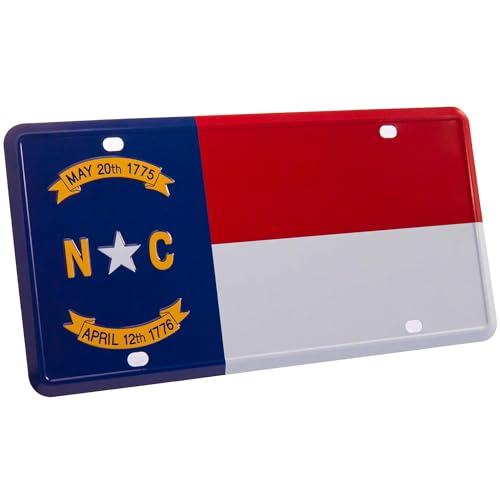
NORTH CAROLINA STATE FLAG DESIGN: Features a textured, raised North Carolina flag design for an authentic, high-end look and feel.

LASTING PERSONALIZATION: Create your own personalized plate with custom name, number, or text on genuine aluminum plate material. Our high-quality finish won't fade or peel like cheaper alternatives. Suitable as a personalized attachment or customized plate for any collection. Each plate offers professional detailing at a compact size, making it versatile for displaying on bikes, toy cars, or as decorative signs.

Premium material: made from durable metal tin with embossed-style diamond background for enhanced texture and long-lasting use
License Types That Cover Coastal and Inland Waters
Non-resident anglers must purchase separate licenses for coastal and inland waters because the Unified Inland/Coastal Recreational Fishing License is restricted to residents.
You can buy a Coastal Recreational Fishing License ($38) or short-term options—a Coastal 10‑Day License ($14) or a 10‑Day Inland License ($28)—to legally fish in the corresponding waters.
You can’t use the resident unified license; non-resident access is jurisdiction-specific. For sustained coastal fishing, you must obtain the $38 Coastal Recreational Fishing License.
For brief coastal trips, the Coastal 10‑Day License at $14 provides temporary legal access. For inland fishing, non-residents must purchase the applicable inland license; the 10‑Day Inland License ($28) covers short stays.
Regulatory compliance requires you to carry the purchased license and observe zone definitions that distinguish coastal versus inland waters.
Always carry your valid license and follow the defined coastal versus inland zone boundaries to stay compliant.
Enforcement treats licenses by water-type authority; violations can result in fines.
Choose the license type that matches your intended fishing location and duration to remain compliant.
Products Worth Considering

Add a touch of humor and flair to your car with this funny "Weekend Hooker" front license plate. Perfect for the bass fishing enthusiast, this custom car tag is a great gift for men, especially for dads, husbands, or any fishing fanatic. Whether you're an outdoorsman or just enjoy a good laugh, this novelty license plate is sure to bring a smile to your face and enhance your fishing-themed car decor. Let your personality shine on the road with this fun and unique accessory.

【Material】Our License Plate Frame Is Made Of Stainless Steel, Strong And Durable.

Material :High-Quality Metal Aluminum With High Gloss Stamped Metal License Plate.Lightweight, Waterproof,Anti-Rust And Very Durable.
Special Permits and Tournament Licensing Rules

If you plan to run or enter organized fishing events, you must follow specific permit and tournament-licensing rules designed to separate recreational competition from commercial activity and protect fishery resources.
You’ll need a Recreational Fishing Tournament License when the event sells fish caught during competition; this guarantees compliance with tournament regulations that distinguish commercial sales from recreational outcomes.
Alternatively, you can apply for a Coastal Recreational Fishing License Exemption Permit at least 30 days before the event to waive individual recreational licenses for participants. Under the exemption, you must follow local fishing regulations and fishing conservation measures; seafood harvested can’t be sold.
Proper permitting aids monitoring of fish populations and enforces sustainable practices.
- Apply 30+ days ahead for the exemption permit and supply required documentation.
- Use the tournament license if fish sales occur; recordkeeping and reporting are mandatory.
- Confirm all participants observe local catch limits, gear restrictions, and conservation protocols.
Lifetime and Discounted License Alternatives

Although lifetime and discounted license options expand affordability for some anglers, they’re largely unavailable to out-of-state visitors; nonresidents can only purchase a Coastal Recreational Fishing Lifetime License at $630 or opt for a 10-day Coastal Recreational Fishing License at $38, while the Unified Inland/Coastal lifetime and annual licenses (resident $49 annual) and reduced-fee or free veteran/disability programs are restricted to residents.
You should evaluate lifetime license advantages against your expected participation and residency prospects: the $630 coastal lifetime removes annual renewal for coastal fishing but doesn’t grant inland privileges.
Discounted license options such as reduced-fee or free veteran/disability programs apply only to residents, so you can’t rely on those savings as a nonresident.
For short visits you’ll typically choose the 10-day coastal license at $38, which delivers time-limited access at lower cost than a nonresident annual.
Make purchasing decisions based on trip frequency, target waters (coastal vs inland), and eligibility constraints defined by residency-based regulations.
Rules, Size Limits, and Possession Restrictions for Non-Residents
When fishing in the state, you’ll need the appropriate Coastal ($38) or Inland ($54) nonresident license and must carry it on your person; you’re also bound by species-specific size and possession limits, gear and method restrictions, and any tighter quotas that apply to fish like flounder and trout.
You must follow non resident regulations precisely: size minima, slot limits, and bag limits differ by species and are enforced to support conservation efforts. Inspect local tables before you fish and retain documentation.
- Check species-specific size and possession limits before harvesting.
- Use only authorized gear and methods; prohibited gear nullifies your license compliance.
- Observe stricter quotas for flounder, trout, and other designated species tied to conservation efforts.
Enforcement is regulatory: officers may inspect catch and license, issue citations for violations, and seize illegally taken fish.
You’re personally responsible for understanding current rules, updating knowledge from agency notices, and ensuring all retained fish meet measured limits and possession rules at point of contact.
What to Do If Your License Is Lost or Needs Renewal

Because licenses can be lost or expire, you should promptly replace or renew them through your Go Outdoors North Carolina account or at a local license agent, carrying a valid photo ID to verify identity. Online transactions incur a $2 fee and some special cases (youth or disabled lifetime licenses) may require direct contact with an agent or the designated phone line for assistance.
Follow the license replacement process by logging into your account, selecting the replacement option, and completing payment; retain confirmation either digitally or printed. For in-person service, present photo ID and any supporting documentation to the registered vendor.
Comply with renewal requirements by renewing before expiration via the Go Outdoors North Carolina portal or at a vendor; online renewals also incur the $2 transaction fee. Keep records of transaction receipts and expiration dates to demonstrate compliance during enforcement checks.
If you encounter eligibility or account issues, contact the local agent or the designated phone line for resolution prior to engaging in fishing activities.
Tips for Saving Money and Choosing the Right License
If you’re fishing for only a few days, choose the ten-day coastal license at $14 to minimize cost.
Compare available unified or inland options — remember non-residents can’t purchase resident-only unified inland/coastal licenses — to match the $38 coastal or $54 inland annual rates to your trip frequency.
Check for agent or promotional discounts and group purchase programs to further reduce fees.
Choose the Short-Term License
1 clear option for short visits is the 10-day Coastal Recreational Fishing License, which costs $38 and authorizes fishing in designated coastal waters for a limited stay.
You’ll appreciate the short term benefits when your trip is brief and you need compliance with fishing regulations without annual commitment. Compare inland and coastal scopes before purchase.
- Choose the Inland 10-day license ($28) for freshwater-only trips.
- Opt for the Coastal 10-day license ($38) for designated coastal waters.
- Buy in person to avoid the $2 online transaction fee when cost-sensitive.
Select the license matching where you’ll fish; don’t mix zones unless you purchase a unified option.
Maintain documentation while fishing to demonstrate legal compliance to enforcement officers.
Compare Unified Options
When you need coverage for both saltwater and freshwater trips, compare unified licenses by cost, duration, and eligibility to pick the most economical option for your itinerary.
Use a Unified License Comparison framework: list available products, covered waters, eligibility, and per-trip effective cost.
Non-residents can buy a Coastal Recreational Fishing License ($38) for saltwater only or the Unified Sportsman/Coastal Recreational Fishing License ($82) for both inland and coastal.
For short stays, consider the Ten-Day Coastal License ($14) or a block of ten Ten-Day licenses ($150) valid two years; compute per-day cost.
Perform a Cost Analysis against trip count and duration to choose single unified coverage or stacked ten-day passes.
Exclude tournament permits unless you meet event requirements.
Use Agent Discounts
After comparing unified options and short-term passes, look to agent discounts and vendor choices to lower costs and simplify purchase.
You’ll evaluate agent benefits and discount eligibility to determine the most efficient non-resident purchase path. Agents may issue Coastal Recreational Fishing Licenses immediately, avoiding a $2 online processing fee; check vendor status before relying on in-person issuance.
For repeated short trips, a block of ten Ten-Day Coastal Recreational Fishing Licenses for $150 often yields per-trip savings versus single $14 ten-day tickets.
- Verify agent benefits: immediate issuance, local knowledge, and promotional offers.
- Confirm discount eligibility via local forums, community groups, or agent records.
- Compare total cost: single $38 coastal license vs blocks or ten-day passes.
Follow regulatory guidance and document purchases for compliance.
Frequently Asked Questions
Are Non-Resident Youth Licenses Available at Discounted Rates?
Yes — you can often obtain youth fishing discounted rates; you’ll need to meet age and residency criteria, provide ID, and purchase through the licensing agency’s portal or office. Check state regulations for applicable fee reductions and exemptions.
Can Non-Residents Buy Combo Hunting and Fishing Licenses?
Yes, you can purchase combo license options that cover both hunting and fishing; you’ll follow hunting regulations, meet residency and age requirements, and comply with species, season, and equipment restrictions specified by the issuing state’s wildlife agency.
Do Non-Resident Licenses Allow Fishing From Private Docks?
Yes — you can fish from private docks if access is lawful; investigate whether private dock regulations or landowner permission restrict fishing access rights. You’ll comply with state-specific rules, permits, and seasonal or species limits.
Are There Reciprocity Agreements With Neighboring States?
Yes — you’ll find reciprocity benefits with some neighboring states; check each state’s regulatory schedule because agreements vary by species, waters, and license class, and you must carry proof of residency plus applicable permits while fishing.
Can Non-Residents Purchase Licenses Online While Abroad?
Yes — like a passport clearing customs, you can usually buy non-resident licenses via online purchase options while abroad, but you’ll need to comply with international regulations, provide required ID, and follow issuing agency verification procedures.
Conclusion
You’ve covered who needs an out-of-state fishing license, current fees, short-term and lifetime options, purchase locations, and rules on size and possession. If you lose or need to renew a license, follow the agency’s replacement process promptly. To avoid splurging, compare ten-day, seasonal, and annual permits and check for discounts. Keep documentation handy while fishing coastal or inland waters to sail smoothly through inspections and stay on the right side of regulations.
