
If you’re an out-of-state angler in North Carolina, you’ll need a non-resident license for public waters if you’re 16 or older. Annual coastal and inland licenses run about $38 and $54 respectively; ten-day coastal and inland options and 10-license blocks are available at different prices. Unified inland/coastal licenses aren’t sold to non-residents. Buy online, by phone, or at vendors and obey size/possession rules and tournament permit requirements — keep going and you’ll find details on short-term options, purchases, and exemptions.
Quick Answer
Non-residents aged 16 and older need a license to fish public waters in North Carolina. Here are the basics:
- Coastal annual: $38; 10-day: $14
- Inland annual: $54; 10-day: $28
- No unified inland/coastal option available to non-residents
- Buy online at the Go Outdoors NC portal, by phone, or at vendors statewide
- Free on July 4; also exempt on private ponds or licensed charter boats
- Follow size and possession limits at all times — no selling your catch
Who Must Buy a Non-Resident Fishing License
Who needs a non-resident fishing license? If you’re a non-resident aged 16 or older, you must purchase one to fish North Carolina’s public waters.
Non-residents aged 16 and older must purchase a license to fish North Carolina’s public waters.
The Coastal Recreational Fishing License is available to non-residents in both 10-day and annual options. The Unified Inland/Coastal Recreational Fishing License is not offered to non-residents.
License exemptions are limited: you don’t need one if you fish in private ponds on privately owned land, you’re aboard a licensed saltwater charter boat, or you fish on the 4th of July.
These are the only clear exceptions. Get the right coastal permit when fishing public coastal waters unless you meet one of those exemptions.
Short-term options exist, but inland and coastal rules stay separate.
Current Non-Resident License Fees and Recent Increases
You’ll pay $54 for a Non-Resident Inland Fishing License and $38 for the annual Coastal Recreational license. The 10-day Coastal option is $14.
Recent July 1 fee adjustments raised some non-resident hunting licenses (season to $119, ten-day to $95). This shows the general trend toward higher non-resident fees that could affect fishing in the future.
Knowing these rates helps with planning and staying legal.
Products Worth Considering

Deluxe Super Stock Embossed aluminum license plate mirror finish background with imprint in team colors

Decorative Item Only: This product is a vintage-style decorative license plate, crafted as a replica/artifact. It is NOT a real license plate and cannot be used as such. Please comply with all applicable laws—it must NOT be mounted on any vehicle to replace, cover, or imitate an official license plate. Use only for indoor or outdoor decoration where legally permitted.

Team colored license plate measures 6-inches by 11.5-inches
Annual Nonresident Rates
Here’s a quick comparison of non-resident annual rates: the Coastal Recreational Fishing License is $38, the Inland Fishing License is $54, and specialized permits like the Recreational Commercial Gear License run $501.
Use these numbers to figure out what makes sense for your trip frequency and target species. For occasional trips, short-term 10-day options ($14 coastal, $28 inland) are available.
Note that the $49 unified inland/coastal license is only for residents, so non-residents buy separate permits.
Recent Fee Increases
Recent adjustments have raised costs on several non-resident licenses to support conservation and management. Effective July 1, the non-resident Coastal Recreational Fishing License is $38, inland annual is $54, the ten-day non-resident hunting license rose to $95, and the season-long hunting license is $119.
These changes help fund habitat work and programs. Expect similar adjustments in the future as agencies balance access and funding needs. Here’s a quick comparison:
| License Type | Current Fee |
|---|---|
| Coastal Recreational Fishing | $38 |
| Inland Annual (Non‑resident) | $54 |
These rates are confirmed on the NC Division of Marine Fisheries website.
Short‑Term Options: Ten‑Day and Block Licenses
For short visits, non-residents can buy ten-day coastal or inland licenses. These give you time-limited access and let you fish under the same size and possession limits as residents.
A Coastal Recreational Fishing Ten-Day License costs $14 and covers designated coastal waters for that period.
If you make several short trips, a block of 10 Ten-Day Coastal licenses costs $150 and stays valid for two years.
The ten-day non-resident inland license is $28.
All short-term licenses are nontransferable and must be used within their set dates. You follow resident limits while using them.
Products Worth Considering

brand new and officially licensed

Authentic Diamond Etched engraving
How Non‑Resident Licenses Differ From Resident and Unified Licenses
Non-resident fees are noticeably higher. The Coastal Recreational Fishing License costs $38 for non-residents versus $19 for residents.
Non-residents cannot buy the resident-only packages like the Unified Inland/Coastal ($49) or Unified Sportsman/Coastal ($82), so separate permits are required.
Higher Per-License Fees
Non-resident anglers pay more per license than residents. Coastal Recreational Fishing is $38 versus $19, Inland Fishing is $54 versus $30, and short-term options follow the same pattern.
Lifetime authorization shows the same gap ($630 non-resident versus $315 resident). The unified license is not available, so cost savings are limited.
Limited Package Availability
Non-residents can buy standard coastal and inland permits but are blocked from bundled resident options. This raises both per-trip and long-term costs.
You cannot buy the Unified Inland/Coastal Recreational Fishing License or unified lifetime versions. Lifetime coastal is $630 for non-residents versus $315 for residents.
Short-Term Options Costlier
Short-term permits cost more for non-residents too. Ten-day coastal is $14 non-resident versus $8 resident, annual coastal is $38 versus $19, and inland annual is $54 versus $30.
- Ten‑day coastal: $14 non‑resident / $8 resident
- Annual coastal: $38 non‑resident / $19 resident
- State inland: $54 non‑resident / $30 resident
- Lifetime coastal: $630 non‑resident / $315 resident
Where to Purchase a Non‑Resident License (Online, Phone, and In‑Person)
Buying is straightforward. Use the Go Outdoors North Carolina portal online; a $5 transaction fee applies per purchase.
Select your license type, pay, and get electronic proof right away. For the phone option, call 833-950-0575 during business hours and pay by card.
For instant paper licenses, stop at registered vendors — tackle shops, Walmart, and similar spots across the state.
The license coverage depends on the type you buy, not the purchase method. Pick the channel that works for your schedule and double-check the license covers your waters.
Products Worth Considering
NORTH CAROLINA STATE FLAG DESIGN: Features a textured, raised North Carolina flag design for an authentic, high-end look and feel.

LASTING PERSONALIZATION: Create your own personalized plate with custom name, number, or text on genuine aluminum plate material. Our high-quality finish won't fade or peel like cheaper alternatives. Suitable as a personalized attachment or customized plate for any collection. Each plate offers professional detailing at a compact size, making it versatile for displaying on bikes, toy cars, or as decorative signs.

Premium material: made from durable metal tin with embossed-style diamond background for enhanced texture and long-lasting use
Tournament and Exemption Permits for Out‑of‑State Anglers
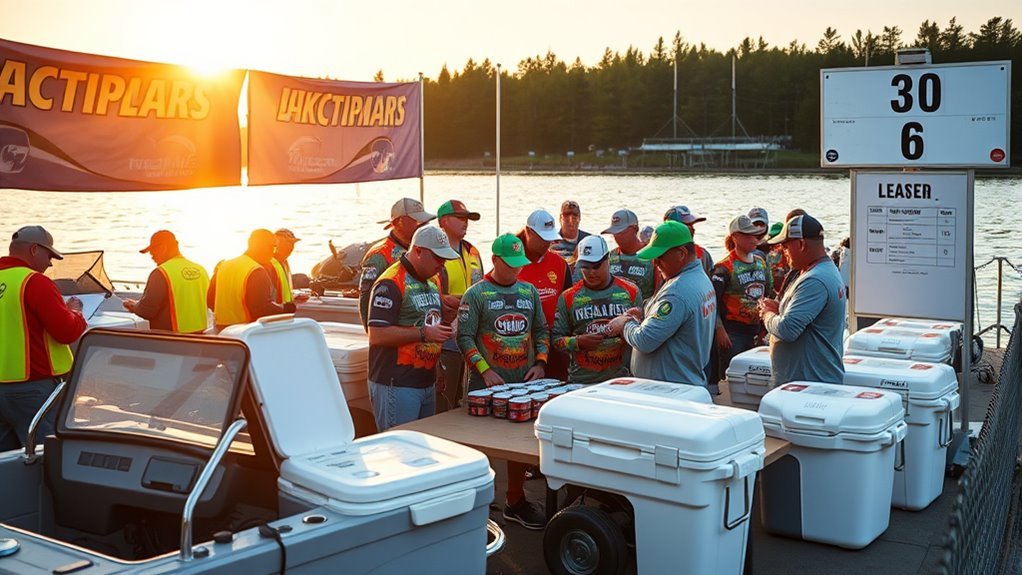
For organized tournaments, you have two main paths: a Coastal Recreational Fishing License Exemption Permit (for participants who fish without individual licenses during the event) or the Recreational Fishing Tournament License (if you plan to sell fish caught in the tournament).
Apply in writing for the exemption at least 30 days before the event. Late or incomplete applications may be denied. If you intend to sell catches, get the tournament license and follow reporting rules.
Apply in writing at least 30 days before the event; late or incomplete requests may be denied. Obtain a tournament license to sell catches.
- Exemption permits allow temporary license waiver for event duration and aid data collection.
- Tournament licenses authorize sale of tournament-caught fish and require reporting.
- You must adhere to local fishing regulations and size limits as enforced by DEQ.
- Both permit types contribute to population monitoring and sustainable event management.
Rules on Possession Limits, Size Limits, and Sale Prohibitions
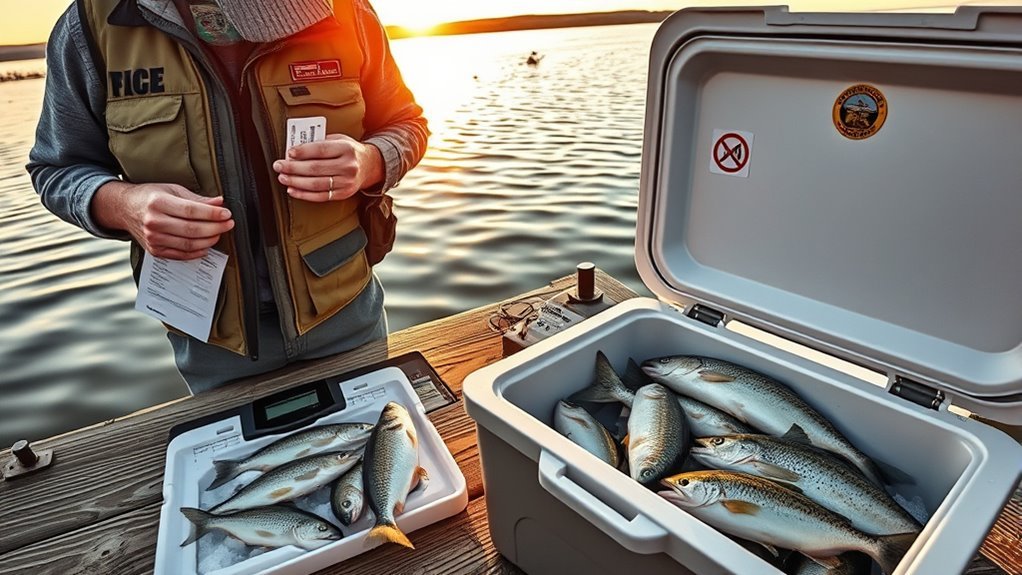
You must follow species-specific possession and size limits, which can vary by season and location. These are enforced in coastal waters under the Coastal Recreational Fishing License and DMF rules.
Recreational catches are for personal use only — you may not sell any finfish. Check the official North Carolina fishing regulations before your trip, because violations can lead to fines or other penalties.
Possession and Size Limits
Possession and size limits set exact numbers and measurements by species. Follow them to help keep fish stocks healthy.
Key points:
- Species-specific daily and possession maximums
- Minimum (and sometimes maximum) size thresholds per species
- Mandatory release of sublegal fish
- Enforcement actions and penalty ranges
No Sale of Catch
North Carolina keeps recreational catches for personal consumption only. Non-resident anglers cannot sell any fish taken in state waters.
Possession limits, size rules, and seasons protect spawning fish and support recovery. Review the published tables and seasonal notices for your target species before you go.
Lifetime and Special‑Rate Licenses for Non‑Residents
The Coastal Recreational Fishing Lifetime License costs $630 and gives permanent coverage without annual renewals. No equivalent lifetime option exists for unified inland/coastal fishing.
- Non-resident lifetime license: $630, permanent coverage for coastal recreational fishing.
- Unified Inland/Coastal: no non-resident lifetime option; purchase annual licenses instead.
- Special rates: legally blind and disabled veteran discounts apply only to residents.
- Recreational Commercial Gear License: $501 for non-residents needing specific gear permissions.
If you fish coastal waters often, the lifetime license can pay off over time despite the higher upfront cost and limited scope.
What to Do If You Lose Your License or Need a Replacement
Lost your North Carolina fishing license? Get a replacement quickly at a registered vendor or through your Go Outdoors NC account. Online requests may take extra processing time and usually include a replacement fee.
Report it lost in your profile or tell a vendor right away. In-person replacements are usually immediate. Have your license number or ID ready to speed things up.
Carry the replacement while fishing and keep any receipt or confirmation in case you’re checked.
Tips for Planning a Fishing Trip to North Carolina (Vessels, Guides, and Local Regulations)
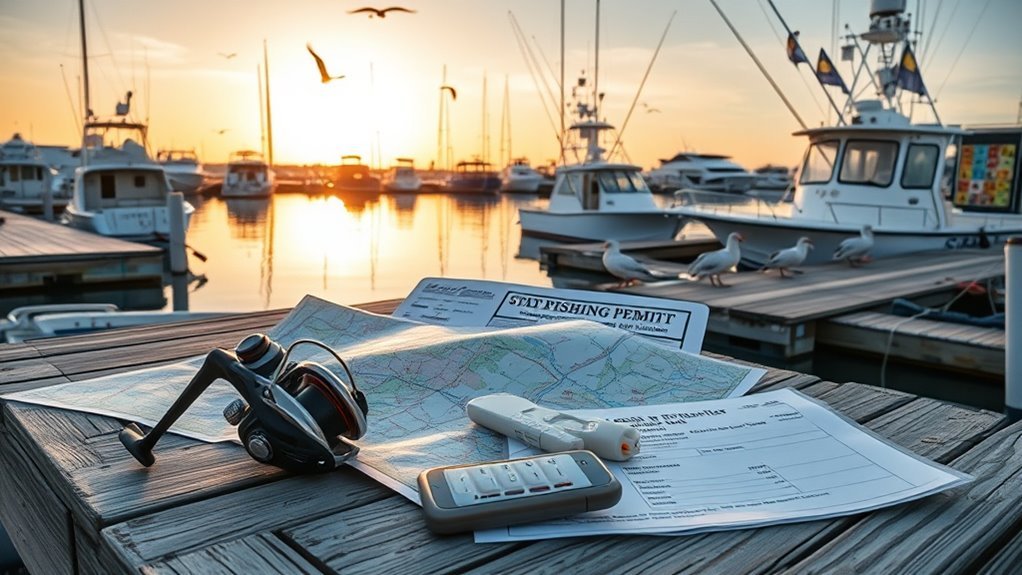
Start by picking the right non-resident license — for example the $38 annual Coastal Recreational, the 10-day Coastal for $14, or the inland options as needed.
Check regional rules for the waters you’ll fish because inland and coastal regulations differ. Also handle vessel registration, guides, and gear ahead of time.
- Register or rent a vessel online before arrival to avoid fines.
- Hire a licensed local guide for better success and help with regulations and bait.
- Match your gear to the rules for the area (rod limits, tackle restrictions).
- Confirm size and possession limits for your target species and keep licenses handy.
Frequently Asked Questions
Do Non-Resident Youth Need a Separate License or Are They Exempt?
You’re generally required to purchase a youth license unless fishing age exemptions apply. Check state-specific youth license requirements for exact ages, fee waivers, and documentation.
Can I Transfer a Non-Resident License Between People?
No, you generally can’t transfer a non-resident license. License transfer policies prohibit reassignment. Check state fishing license regulations for any specific exceptions or penalties.
Are There Discounts for Veterans or Active-Duty Non-Residents?
Yes — you may qualify in many states. Check specific state agency policies, provide proof (DD-214 or military ID), and review eligibility and fee reductions.
Does a Non-Resident License Cover Saltwater and Freshwater Fishing?
No — most states separate saltwater and freshwater. Buy the appropriate nonresident coastal or inland license (or both) per local policy.
Are Refunds Available if I Cancel a Planned Trip Early?
Refunds depend on the agency’s policy and timing. Check the issuing agency’s published rules and deadlines for eligibility and required paperwork.
Conclusion
You’ll need a non-resident fishing license if you live out of state and plan to fish North Carolina waters. Costs and short-term options change, so check current fees before you go. Follow possession and size limits, buy online, by phone, or in person, and replace lost licenses promptly. Stick to the rules to avoid fines, protect the fisheries, and enjoy your trip.
