
Last updated: August 11, 2026
If you’re a non-resident age 16 or older, California generally requires a sport fishing license before you fish in inland or ocean waters. For 2026, the 365-day nonresident sport fishing license costs $174.14. Short-term choices cost $21.09 for one day, $32.40 for two consecutive days, and $64.54 for ten consecutive days. A qualifying public ocean pier is a major exception, but report cards, bag limits, seasons, size limits, and other rules can still apply. The official California Department of Fish and Wildlife (CDFW) license page lists the current fees and requirements.
2026 California Non-Resident Fishing License Costs
| License or add-on | 2026 fee | Key rule |
|---|---|---|
| 365-Day Nonresident Sport Fishing License | $174.14 | Valid for 365 days from the purchase date |
| One-Day Sport Fishing License | $21.09 | Resident or nonresident; exempt from Ocean Enhancement Validation |
| Two-Day Sport Fishing License | $32.40 | Resident or nonresident; two consecutive days; exempt from Ocean Enhancement Validation |
| Ten-Day Nonresident Sport Fishing License | $64.54 | Nonresidents only; ten consecutive days; not exempt from Ocean Enhancement Validation |
| Ocean Enhancement Validation | $7.30 | Required in ocean waters south of Point Arguello when the exemption does not apply |
| Second Rod Validation | $20.26 | Allows two rods or lines in many inland waters, subject to local restrictions |
| Recreational Crab Trap Validation | $2.98 | Required for qualifying recreational crab traps, with specified exceptions |
CDFW states that most listed fees already include the 5% license-agent handling fee and the 3% nonrefundable application fee. Do not automatically add another 8% to the posted fee; use the final amount shown at checkout.

This daily devotional helps parents pray purposefully for their children through a full year of Scripture readings, reflections, and guided prayer prompts. Written to encourage faithful family discipleship, it offers practical, biblically grounded support for parents who want to shape their prayers around God's Word. A foreword by Sinclair B. Ferguson adds trusted theological insight and encouragement.

See You Later, Alligator is a charming children's picture book that blends playful rhyme with colorful animal storytelling. Written by Sally Hopgood and illustrated by Emma Levey, it makes read-aloud time fun and engaging while helping young readers enjoy rhythm, repetition, and early language development.

Die With Zero offers a fresh perspective on personal finance by encouraging readers to use money intentionally to create memorable life experiences instead of simply accumulating wealth. Written by Bill Perkins, this book combines practical guidance with a motivating philosophy to help readers align spending, saving, and life goals for a more fulfilling future.
Who Must Purchase a Non-Resident Sport Fishing License
Any nonresident age 16 or older generally needs a valid California sport fishing license when attempting to take fish, mollusks, crustaceans, invertebrates, amphibians, or reptiles in California inland or ocean waters.
Nonresidents age 16 or older generally need a California sport fishing license unless a specific exemption applies.
The rule still applies when you fish from a licensed charter boat or with a fishing guide. The operator’s commercial or guide license does not replace your personal sport fishing license.
The main location-based exception is angling from a qualifying public pier in ocean waters. California defines a public pier narrowly: it must meet ownership, access, connection, and fishing-purpose requirements. Beaches, banks, private docks, promenades, and many jetties or breakwaters do not qualify. CDFW’s public-pier guidance explains the definition.
Children under 16 do not need a sport fishing license, but they may still need a species report card. California also has two Free Fishing Days in 2026—July 4 and September 5—when no sport fishing license is required, although all other fishing rules remain in force.
You do not have to wear a fishing license. It must be in your immediate possession, and eligible licenses and validations can be displayed through the CDFW License App. The app does not replace required physical report cards; follow any species-specific possession exception.
Annual Non-Resident License Fees and What They Cover
The 2026 Nonresident Sport Fishing License costs $174.14 and is available to nonresidents age 16 or older. It is a 365-day license, so it remains valid for 365 days from the purchase date rather than expiring on December 31.
The license covers the basic privilege to take fish and other aquatic or amphibious wildlife covered by California sport-fishing law in inland and ocean waters. It does not override seasons, bag limits, size limits, area closures, gear restrictions, or species-specific rules. Depending on where and how you fish, you may also need a validation or report card.
- 2026 fee: $174.14
- Validity: 365 days from the date of purchase
- Who can buy it: nonresidents age 16 or older
- Coverage: basic sport-fishing privilege in California inland and ocean waters
- Still required: all applicable seasons, limits, closures, validations, and report cards
Short-Term License Options for Visitor Anglers
California offers three short-term choices. A one-day license costs $21.09, a two-day license costs $32.40, and a ten-day nonresident license costs $64.54. The one-day and two-day licenses are available to residents and nonresidents; the ten-day license is only for nonresidents.
Only the one-day and two-day licenses are exempt from the Ocean Enhancement Validation. A ten-day license is not exempt, so a $7.30 Ocean Enhancement Validation may be required when you fish ocean waters south of Point Arguello. Other validations and species report cards can still apply to short-term anglers.
Which Short-Term License Costs Less?
- 1 day: one-day license — $21.09.
- 2 consecutive days: two-day license — $32.40.
- 3 consecutive days: one two-day plus one one-day license — $53.49 before any other required items.
- 4 consecutive days: the ten-day license is $64.54, slightly below two two-day licenses at $64.80. However, if you need the Ocean Enhancement Validation, the ten-day total becomes $71.84, while two two-day licenses remain exempt from that validation.
- 5–10 consecutive days: the ten-day license generally has the lowest base-license cost; add required validations or report cards for your area and target species.
Choose by total trip cost, not just the base fee. A shorter license can be cheaper when its validation exemption applies.
Required Validations and Species Report Cards
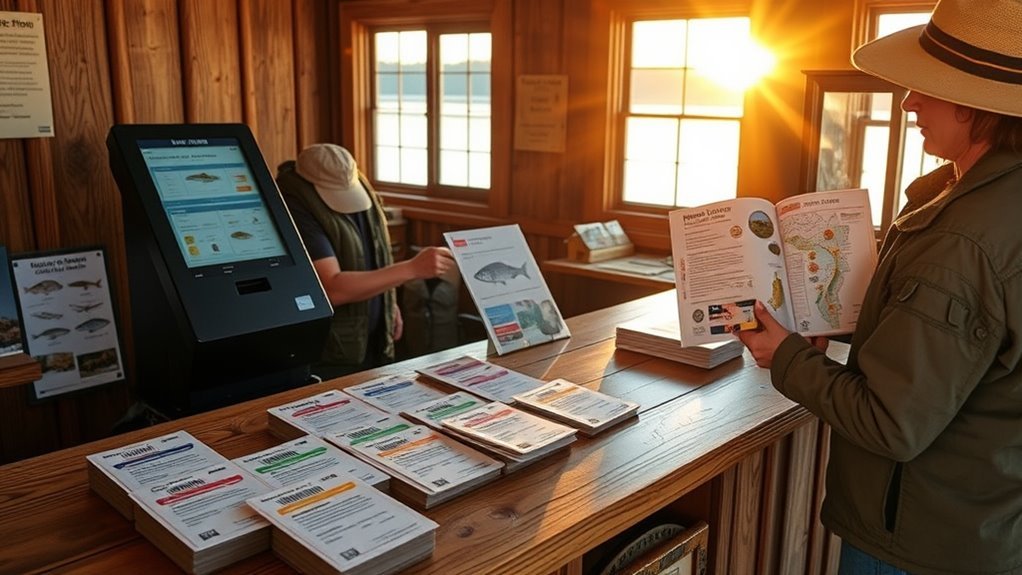
A basic sport fishing license does not cover every location, method, or species. CDFW lists additional validations and report cards that may be required for both residents and nonresidents.
Report cards can be required even when you do not need a sport fishing license, including for children under 16, public-pier anglers, and anglers fishing on a Free Fishing Day.
- Ocean Enhancement Validation — $7.30: required in ocean waters south of Point Arguello when a sport fishing license is required. It is not required with a one-day or two-day sport fishing license.
- Second Rod Validation — $20.26: allows two rods or lines in many inland waters, except where special regulations prohibit that use.
- Recreational Crab Trap Validation — $2.98: required for qualifying recreational crab traps. It is not required for hoop nets or crab loop traps, and beginning January 1, 2026, anglers using crab traps from a licensed commercial passenger fishing vessel are exempt from the individual validation.
- North Coast Salmon Report Card — $9.21: required for salmon fishing in the Smith River System or Klamath-Trinity River System.
- Steelhead Report Card — $10.29: required for steelhead fishing in inland waters.
- Sturgeon Fishing Report Card — $8.13 for the 2026–2027 season: CDFW says the new card will be available starting August 15, 2026. White sturgeon fishing is catch-and-release only; as of this update, the season is closed through September 30 and is scheduled to reopen October 1.
- Spiny Lobster Report Card — $12.70: required for all persons taking spiny lobster. Missing the April 30 reporting deadline can trigger a $21.60 non-return fee when buying the following season’s card.
Species seasons and emergency rules can change independently of license validity. Check the current CDFW regulation page for your target species before fishing.
Reduced-Fee and Exemptions for Non-Residents
California does offer some reduced-fee programs to qualifying nonresidents. The original assumption that all reduced or free options are limited to California residents is incorrect. Eligibility depends on the specific program.
Qualifying disabled veterans and recovering U.S. service members can receive reduced-fee licenses even when they are not California residents. Other programs—such as the low-income senior and low-income Native American programs—do require California residency.

This Pokémon card bundle gives collectors and players a fun mix of 50 assorted cards plus one double rare legendary card for extra excitement. It also includes an LCC deck box that can store up to 100 cards, making it easy to organize and protect your collection at home or on the go.

This heartfelt memoir blends laugh-out-loud honesty with tender reflections on love, loneliness, and the unexpected healing power of rescue dogs. Isabel Klee shares her journey fostering pups in the city while navigating dating and self-discovery, offering an intimate, relatable story for readers who enjoy emotional, character-driven narratives. It is a warm, engaging read about opening your heart and finding connection in surprising places.

This hardcover cookbook offers fast, approachable recipes designed for busy days and low-energy nights. Caroline Chambers focuses on simple, flavorful meals that help you get dinner on the table without overthinking it. It's a practical pick for home cooks who want quick weeknight inspiration and minimal-fuss cooking.
Reduced-Fee Eligibility Criteria
- Disabled veteran: available to a resident or nonresident honorably discharged veteran with a service-connected disability rating of 50% or greater after CDFW prequalification.
- Recovering service member: available to qualifying U.S. military recovering service members after prequalification.
- Low-income senior: limited to qualifying California residents age 65 or older who receive SSI or CAPI benefits.
- Low-income Native American: no-fee program limited to financially eligible California residents.
- Disability-based free licenses: CDFW has separate legal criteria for blindness, developmental disability, and mobility impairment; residency requirements differ by category, so applicants should use the exact CDFW application for their situation.
Veteran and Service Discounts
The 2026 disabled-veteran and recovering-service-member sport fishing licenses cost $10.04 at CDFW offices or $10.54 from license agents after eligibility is approved.
| Category | 2026 Fee / Requirement |
|---|---|
| Disabled veteran, 50%+ service-connected disability | $10.04 at CDFW office or $10.54 from agent; prequalification required |
| Recovering U.S. service member | $10.04 at CDFW office or $10.54 from agent; prequalification required |
Disabled veterans must provide qualifying Veterans Affairs documentation. Recovering service members must provide qualifying military documentation. Once CDFW updates the customer record, eligible anglers can buy the reduced-fee license through authorized channels.
Disability and Low-Income Exemptions
Do not treat every disability or low-income program as resident-only. CDFW’s detailed eligibility rules differ by category. The low-income senior, low-income Native American, and mobility-impaired free-license categories include California-residency requirements, while the agency’s blindness and developmental-disability criteria are written separately.
Because eligibility turns on statutory definitions and documentation, use CDFW’s current free and reduced-fee license guidance before applying.
Where and How to Buy a Non-Resident License
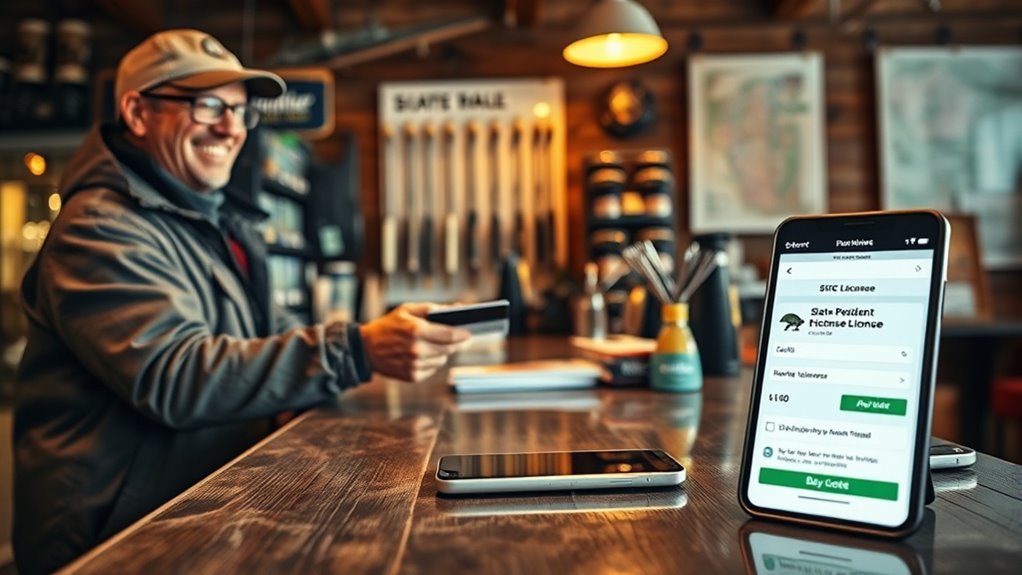
You can buy a California nonresident sport fishing license online, by telephone through CDFW’s authorized sales agent, from an authorized license agent, or at a participating CDFW license sales office.
- Online: use CDFW’s Online License Sales and Services system.
- Telephone: CDFW lists (800) 565-1458 for its authorized telephone sales agent.
- In person: use an authorized license agent or participating CDFW license sales office.
CDFW license counters do not accept cash. They accept checks, money orders, and debit or credit cards with a Visa or Mastercard logo. Independent license agents may set their own payment rules.
Eligible sport fishing licenses and validations can be displayed on a mobile device through the CDFW License App. If your phone cannot display the license when checked, you can still be in violation if you are not carrying the physical license. Report cards are different: proof of purchase in the app does not replace a required physical report card.
Reporting Harvests and License Management
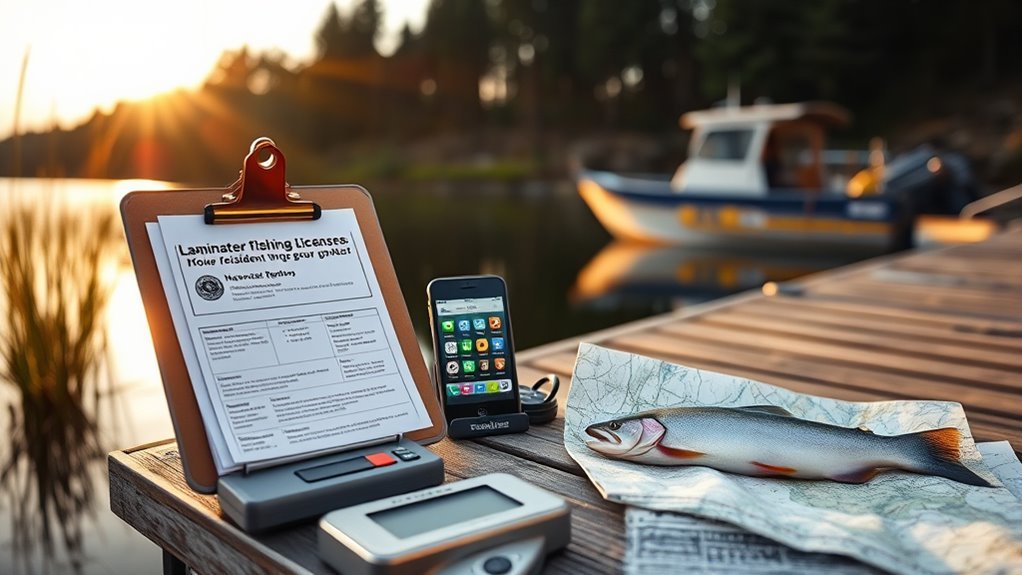
Report cards have their own seasons, possession rules, and reporting deadlines. They do not automatically follow the 365-day validity period of a sport fishing license.
A 365-day sport fishing license can remain valid while a species report card expires or enters a separate reporting period.
- Sturgeon: under the season-based card system, the current CDFW sturgeon page says cards run from October 1 through June 30 and must be reported by July 31 after expiration.
- North Coast Salmon: CDFW lists a January 31 reporting deadline.
- Steelhead: CDFW lists a January 31 reporting deadline.
- Spiny lobster: report by April 30 after the season; failure to report can trigger the following season’s non-return fee.
Follow the instructions printed on each report card and the current species regulations. Keep any required physical card in your immediate possession while fishing and submit the report even when the program requires a no-catch or no-effort report.
Because sturgeon rules changed in 2025, use the current CDFW Sturgeon Report Card page rather than relying on older January 31 guidance for the new season-based card.
Rules, Limits, and Penalties for Unlicensed Fishing
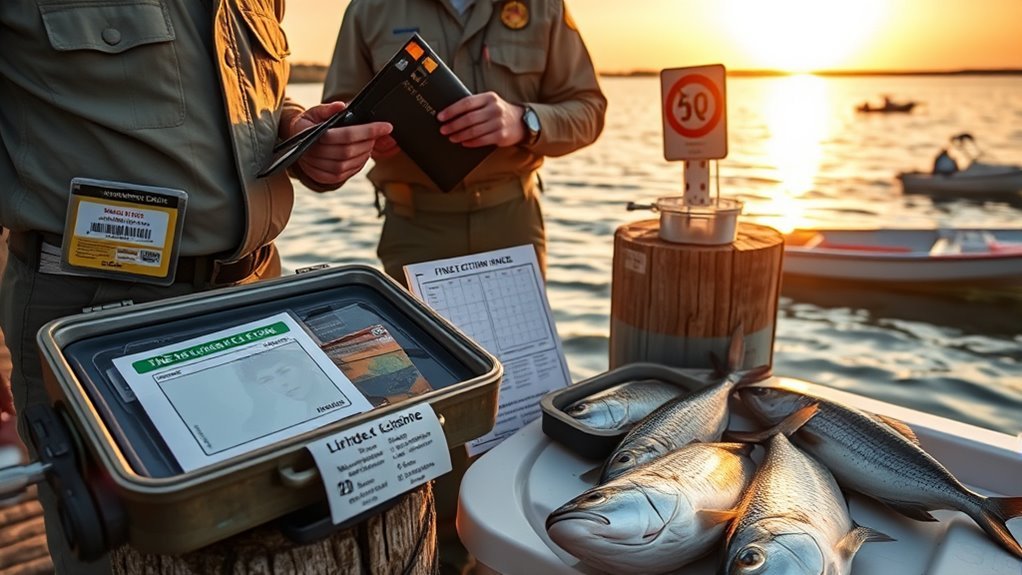
Fishing without a required California sport fishing license is not accurately described as a fine that “starts near $1,000.” Under California Fish and Game Code section 12002.2, a first violation of the sport-fishing license requirement is an infraction punishable by a fine of $100 to $1,000.
Separate violations—such as fishing during a closure, exceeding a bag limit, using prohibited gear, or failing to carry a required validation or report card—can bring additional consequences under other laws and regulations.
License Penalties and Fines
- First license offense: $100 to $1,000 under Fish and Game Code section 12002.2.
- Repeat license offense within five years: $250 to $1,000.
- Had a valid license but could not display or possess it: if the person later produces a license that was valid at the time and the fishing was otherwise lawful, the court may reduce the fine to $25.
- Other fishing violations: separate penalties can apply for seasons, limits, gear, report cards, or protected species.
See the current California Fish and Game Code section 12002.2 for the license-violation penalty.
What Happens After a License Citation?
A simple violation of the sport-fishing license requirement is specifically classified by section 12002.2 as an infraction. The article should not state that a basic first unlicensed-fishing offense automatically creates misdemeanor prosecution or routine seizure of rods, gear, or vessels.
More serious or separate Fish and Game Code violations can carry different penalties. The safest approach is to carry a valid license or display it through the CDFW License App, keep required physical report cards with you, and check the current regulations for the water and species you plan to fish.
Frequently Asked Questions
Do Non-Resident Youth Need a Separate License or Fall Under Exemptions?
No sport fishing license is required for a nonresident under age 16. However, a child may still need the appropriate report card when fishing for a species that requires one, and all seasons, limits, closures, and gear rules still apply.
Can I Display a California Fishing License on My Phone?
Yes. CDFW allows eligible sport fishing licenses and validations to be displayed through the CDFW License App. Required report cards are different: the app can show proof of purchase, but it does not replace a required physical report card; follow any species-specific possession exception.
Do Non-Residents Need a License on a California Public Pier?
Not when angling from a structure that meets California’s legal definition of a public pier in ocean waters. The exemption does not automatically cover beaches, banks, private docks, or every jetty or breakwater, and species report cards can still be required.
Does a Non-Resident License Cover Charter, Guide, or Fish-Processing Fees?
No. A California sport fishing license covers the state fishing privilege, not the private price charged by a charter, guide, marina, or fish processor. You generally still need your own valid sport fishing license while fishing from a licensed charter boat.
Can Non-Residents Transfer or Refund an Unused License?
CDFW states that sport fishing licenses, validations, and report card purchases are nonrefundable. Licenses are issued to an individual customer record and cannot be used as another person’s fishing privilege.
Does a California Nonresident Fishing License Expire on December 31?
No. The standard resident and nonresident sport fishing licenses are 365-day licenses. A license bought on August 11, 2026, for example, remains valid for 365 days from that purchase date, subject to the dates printed on the license. Report cards and species seasons follow separate schedules.
Conclusion
For 2026, a California nonresident sport fishing license costs $174.14 for 365 days. Short-term licenses cost $21.09 for one day, $32.40 for two days, and $64.54 for ten days. Before buying, compare your trip length with any required Ocean Enhancement, second-rod, crab-trap, or species-report-card costs. Then confirm the current fee and fishing rules on the CDFW sport fishing license page and the regulations for the water and species you plan to fish.

This kid-friendly cookbook helps young chefs build confidence in the kitchen with more than 100 recipes designed for fun, learning, and delicious results. Created by America's Test Kitchen Kids, it offers approachable instructions, helpful guidance, and a wide range of dishes that make cooking and eating an engaging family activity.

These Rawlings practice baseballs are built for young players ages 8 and under, offering an easy grip and consistent feel for recreational play. Each ball features a synthetic leather cover with a solid cork and rubber center, plus official size and weight for reliable training. The set includes a durable bucket for convenient storage and transport, making it a smart choice for coaches, parents, and teams.

Stay organized with a durable 1-subject notebook set designed for school, note-taking, and digital study support. The college ruled pages resist ink bleed, tear out cleanly, and work with the Five Star Study App to create flashcards and sync notes to Google Drive. Tough pockets, a water-resistant cover, and Spiral Lock wire help protect your work throughout the year.
