
You’ll pay a one-time fee for a lifetime fishing license that removes annual renewals and funds conservation. Fees vary by age: about $691.75 for ages 0–9 and 62+, $1,131.75 for ages 10–39, and $1,019.50 for ages 40–61. Apply online or by mail with proof of age; temporary licenses print immediately. Add-ons and privilege packages cost extra, and licenses are nontransferable. Continue below to see application steps, fees, add-ons, and replacement details.
What a Lifetime Fishing License Covers
While you’re not required to renew annually, a California Lifetime Fishing License gives you permanent fishing privileges—freshwater and ocean—subject to state rules, with fees varying by age (from $579.25 for ages 0–9 and 62+ up to $1,131.75 for ages 10–39).
You get all standard fishing privileges covered by that one-time fee, so you won’t pay annual licensing costs again. You still must follow the fishing regulations overview: season limits, bag limits, species-specific rules, and required validations or report cards for certain fisheries.
The license streamlines access across state waters but doesn’t override permit requirements for special areas or gear restrictions. From a practical, data-driven perspective, the license offers long-term savings and predictable access.
It also delivers conservation benefits because fees fund resource management, research, and habitat programs that sustain fisheries. If you fish regularly and comply with regulations, the lifetime license is a straightforward investment in access and conservation.
Lifetime License Fees by Age Group
Several clear price tiers make it easy to see how a California Lifetime Fishing License scales by age: kids (0–9) and seniors (62+) pay $691.75, adults 10–39 pay $1,131.75, and those 40–61 pay $1,019.50—each is a one-time fee that grants lifetime fishing privileges and funds conservation programs.
You can quickly evaluate age specific pricing to decide whether the upfront cost matches your multi-year use and priorities. If you fish frequently or plan decades of outings, the break-even point versus annual licenses is straightforward to calculate.
The fee differences reflect a policy choice to lower barriers for youth and seniors while charging full adult rates in mid-life. License benefits extend beyond access: your payment supports habitat restoration, stocking, and enforcement, which sustain resource quality for years.
California’s tiered fees ease access for youth and seniors while funding habitat restoration, stocking, and enforcement for lasting fisheries.
Use the tiered numbers to compare present value against expected fishing days, factoring in inflation and potential regulatory changes, so you pick the option that maximizes long-term value.
Products Worth Considering

PREMIUM QUALITY: Crafted from high-grade materials, our License Plate is built to withstand the elements and maintain its vibrant appearance over time. It is resistant to fading, cracking, and peeling, ensuring long-lasting performance.

DESIGN: Military-style camouflage pattern license plate featuring rugged outdoor aesthetics perfect for vehicle customization

EASY & FUN TO CUSTOMIZE: Click "Customize Now" to add your personalization to your mini Calfironia state plate!
How to Apply for a Lifetime Fishing License
To apply for a Lifetime Fishing License, you’ll complete the specific application form available online or at CDFW offices or license agents and provide age proof (birth certificate or driver’s license).
Submit the signed form and documents by mail or fax to the California Department of Fish and Wildlife and expect about 15 business days for eligibility review and processing.
Check fees by age group (e.g., $691.75 for ages 0–9 and 62+ to $1,131.75 for ages 10–39) and ask about optional fishing privilege packages you can purchase with the lifetime license.
Products Worth Considering

USA, License, plate, Vintage, tag, lot, set, plates, number, wall, decor, art, bar, restaurant, design, gift, cool, nice, american, america, hawaii, alaska, california, texas
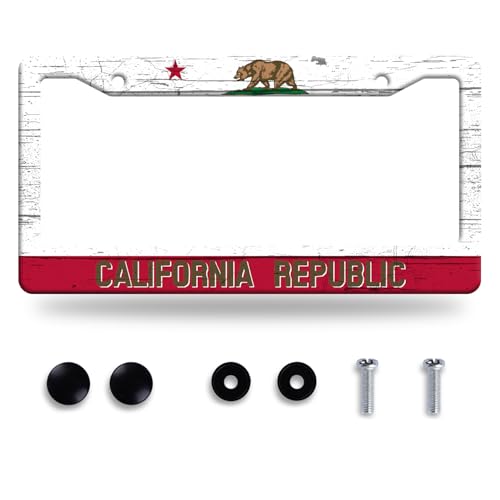
Product Material:made of Stainless steel. Personalized Car Frame Can Perfect to Put on Your Front of Car,Decorate your car to make it look more beautiful and unique,just wipe with a damp cloth

The size of the license plate frame is: 12.3" x 6.3" , it fits all standard size US and Canada vehicle license plates.the stylish design frame fits ly on your car license plate.
Eligibility and Documentation
Before you apply for a Lifetime Fishing License, gather proof of age (birth certificate or driver’s license), residency (California resident for at least six months or active military), and any documentation for reduced fees (VA letter for disabled veterans or commanding officer verification for recovering service members).
Review eligibility criteria: you must be a California resident (≥ six months) or active military.
Note fee tiers by age:
$691.75 (0–9),
$1,131.75 (10–39),
$1,019.50 (40–61),
$691.75 (62+).
Meet documentation requirements at time of purchase to avoid delays: proof of age, proof of residency, and supporting letters for reduced fees.
Keep originals and digital copies ready. You’ll use these documents when submitting your application to CDFW online, by mail, or fax.
Application Steps and Timeline
How do you apply and how long will it take?
Start by downloading the appropriate application form from the California Department of Fish and Wildlife website or pick up a PDF at license sales offices.
Include proof of age (birth certificate or driver’s license) and the correct fee—$691.75 for ages 0–9 and 62+, up to $1,131.75 for ages 10–39.
Submit the packet via mail or fax to CDFW.
Expect an application timeline that allows about 15 business days for the review process and issuance.
After approval, CDFW mails your permanent Lifetime Fishing License; you can print a temporary license immediately for use.
Track submissions and keep copies to speed any follow-up.
Payment Options and Processing Times
You can pay by check, money order, or Visa/Mastercard (cash isn’t accepted at CDFW sales offices), so pick the method that matches your application route.
Expect about a 15-business-day review for mailed, online, or in-person applications, with duplicate licenses available quickly for a small fee if yours is lost or stolen.
If you need proof while the application’s processed, check for temporary license access online or ask the office about immediate documentation.
Products Worth Considering

Comes with pre-drilled holes for easy installation

Enough to Use: you will receive 6 pieces of fishing license holders, and 6 pieces of safety pins, abundant in quantity, enough for you to choose and replace, can meet your different needs; You can also share them with your friends

Enough to Use: you will receive 6 pieces of fishing license holders, and 6 pieces of safety pins, abundant in quantity, enough for you to choose and replace, can meet your different needs; You can also share them with your friends
Accepted Payment Methods
Although cash isn’t accepted at CDFW License and Revenue Branch and regional counters, you can pay with checks, money orders, or debit/credit cards (Visa/Mastercard).
Most purchases will include a 5% handling fee plus a 3% nonrefundable application fee; note that purchases are final and valid through the license year.
You’ll choose methods that balance payment convenience and transaction security. Cards are fast and traceable; checks and money orders work if you prefer paper records.
Duplicate licenses can be ordered online or at agents for a fee if yours are lost or stolen.
Free/reduced-fee applicants must submit documentation to qualify. Keep receipts—sales are nonrefundable, and eligibility documentation affects available payment options.
- Card payments: convenience, traceability.
- Checks/money orders: paper trail.
- Online duplicates: fee-required.
- Documentation: needed for concessions.
Processing Timeframes
Now that you know which payment methods are accepted, factor processing times into when you apply: online purchases and agent transactions that use debit/credit cards or money orders typically post immediately, letting you print a 30‑day temporary license if you renew online, while permanent licenses are mailed later. Expect processing delays for Free Sport Fishing applications — allow up to 15 business days for review. Duplicate or replacement licenses are handled quickly but may incur a fee. Fees include a 5% handling charge and a 3% nonrefundable application fee, which affects total cost and application efficiency. Plan ahead to avoid gaps.
| Method | Typical Posting | Notes |
|---|---|---|
| Online card/money order | Immediate | Temp license printable |
| Agent/office | Immediate | Mailed permanent |
| Check | Variable | Slower posting |
| Duplicate request | Quick | Replacement fee |
Temporary License Access
One clear advantage of online renewal is that you can print a temporary fishing license immediately after payment, giving you 30 days of valid fishing privileges while the permanent license is mailed.
You’ll get instant access to fishing privileges and a valid document to carry that complies with fishing regulations during the interim.
Payments accept checks, money orders, or debit/credit cards (Visa/Mastercard); cash isn’t accepted at CDFW counters.
Processing is immediate for the temporary license; the permanent card is mailed post-transaction.
- Print temporary license immediately for 30-day validity.
- Keep the temporary license on hand while fishing.
- Use accepted payment methods—no cash at counters.
- Treat temporary license as official proof under fishing regulations.
Privilege Packages and Add-Ons
When you buy a lifetime fishing license, consider adding a Privilege Package and individual validations so you’re covered for specific waters and species; the standard Fishing Privilege Package costs $467.25 and bundles required validations and report cards, while add-ons like the Ocean Enhancement Validation ($7.05), the Second Rod Validation for inland waters ($19.70), and the annual Sturgeon Fishing Report Card ($11.06) are sold separately.
You’ll want to evaluate privilege benefits versus additional costs: the package simplifies compliance by combining multiple authorizations, but you’ll pay more upfront. If you fish ocean, inland with two rods, or target sturgeon, budget each validation individually.
Combine specific privilege packages with your lifetime license only if they match your intended species and areas; otherwise purchase validations a la carte. Always verify current fees before purchase and factor recurring report card costs like the $11.06 sturgeon card.
Add privilege packages only when they fit your species and waters; otherwise buy validations individually and confirm current fees.
That way you avoid surprise expenses and remain compliant with state fishing regulations.
Replacing a Lost or Damaged Lifetime License
After you’ve weighed privilege packages and individual validations, plan for the possibility of losing or damaging your lifetime fishing license.
You’ll follow a straightforward replacement process: request a duplicate through CDFW license agents or online for a $14.04 fee. Keep documentation of the transaction and the replacement number for license preservation and proof of ownership.
- Use CDFW agents or the online portal to order a duplicate; fee: $14.04.
- Avoid heat laminating the replacement; heat can warp text and void readability, undermining license preservation.
- If the card discolors but text and signature remain legible, it’s still valid—inspect legibility before replacing.
- For a lost Sturgeon Fishing Report Card, go to a CDFW sales office; replacement fee: $18.28.
Act promptly after loss or damage to minimize enforcement issues.
These steps are data-driven and practical, reducing downtime and ensuring continuous legal compliance while protecting your one-time investment.
Residency, Documentation, and Eligibility Requirements
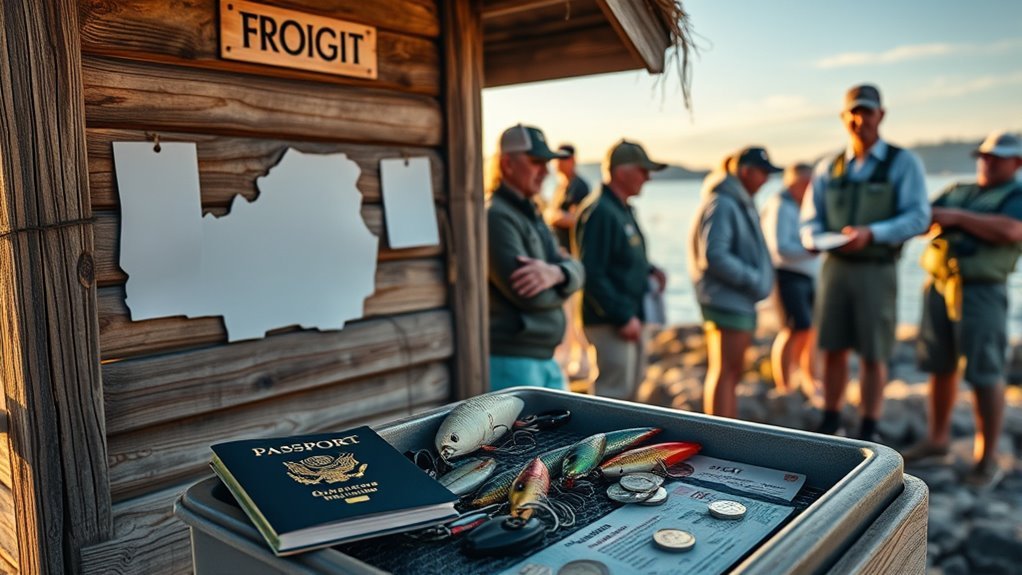
Because residency and documentation determine your price and eligibility, you’ll need to prove age and California residence before buying a lifetime fishing license.
Fees vary by age group — $579.25 for ages 0–9 and 62+, up to $1,131.75 for ages 10–39 — so accurate residency verification and eligibility criteria matter for correct pricing.
You must supply proof of age (birth certificate, driver’s license) and proof of California residency (six months’ residence or active military status).
Applications go to CDFW online or by mail; processing typically takes 15 business days. If you buy at CDFW offices or agents, bring original or certified documents for immediate verification.
Follow CDFW instructions precisely to avoid delays: submit clear scans for online applications, include all required fields for mail submissions, and keep copies of documents.
Meeting residency verification and eligibility criteria up front guarantees you get the correct resident rate and prevents processing setbacks.
How Lifetime Licenses Support Conservation
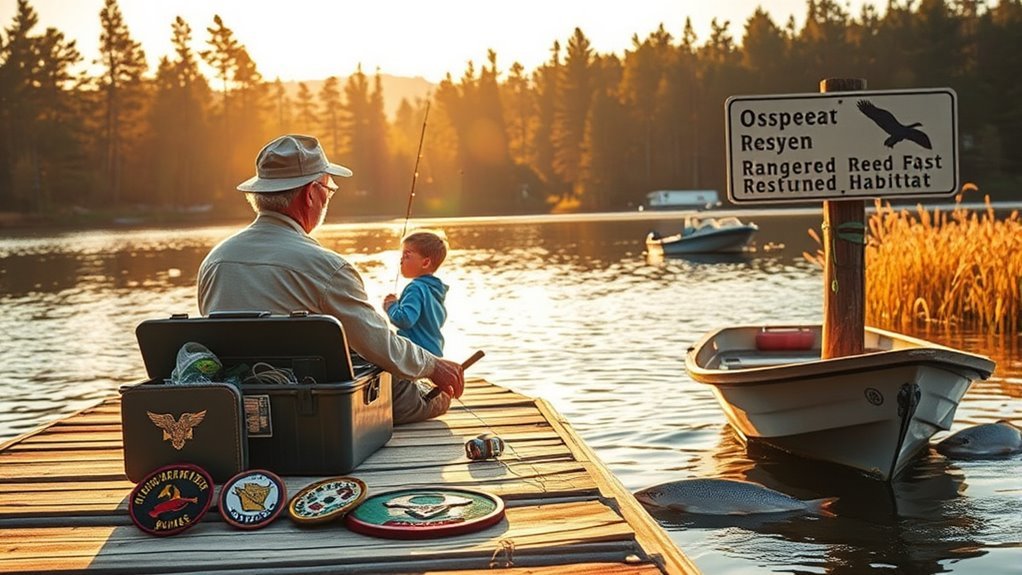
Although a one-time payment might seem large up front, buying a California lifetime fishing license directly funds conservation: those fees give the CDFW stable revenue to manage fisheries, restore habitats, and run research and monitoring programs that track fish health and ecosystem integrity.
You’ll be investing in conservation funding that supports sustainable habitats and long-term population goals rather than short-term fixes. The steady income lets managers plan multi-year projects, improve habitat connectivity, and respond to declines more quickly.
Investing in conservation creates steady funding for multi-year projects, healthier habitat connectivity, and quicker responses to population declines.
- You help underwrite scientific monitoring that quantifies fish populations, water quality, and ecosystem trends.
- Fees enable habitat restoration — removing barriers, replanting riparian zones, and improving spawning grounds.
- Stable funding reduces dependence on annual sales, allowing multi-year eradication or enhancement programs.
- Revenue supports outreach and education so you and other anglers follow best practices, reinforcing sustainable habitats.
Your purchase translates directly to measurable conservation outcomes and practical resource management.
Transferring or Gifting a Lifetime License
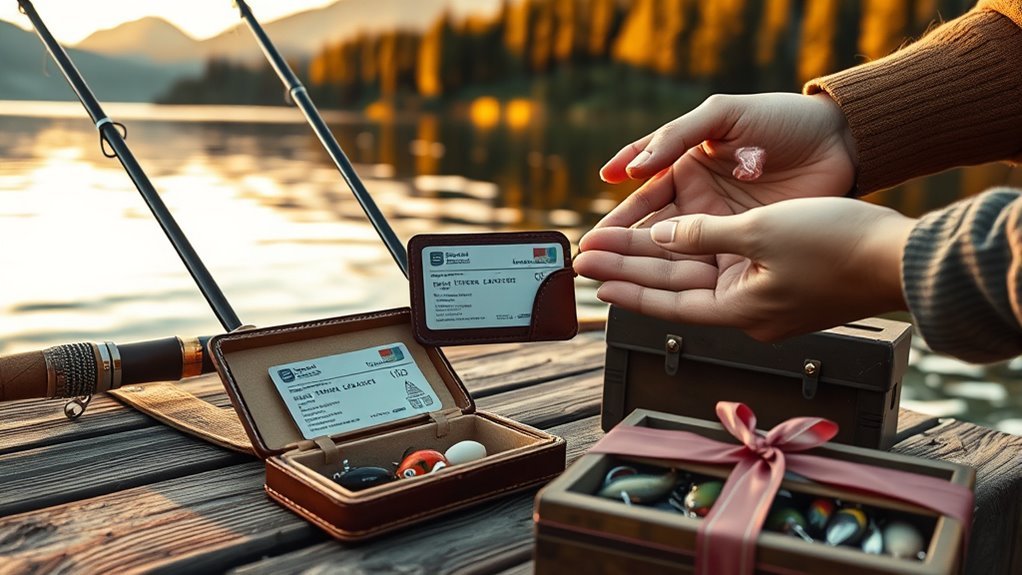
If you’re wondering whether you can sell, give away, or pass on a California Lifetime Fishing License, you can’t — it’s permanently tied to the individual who purchased it and can’t be transferred, sold, or inherited. You retain exclusive use while alive; residency changes don’t affect validity. The rule is strict: heirs get no automatic transfer.
| Fact | Implication | Action |
|---|---|---|
| Non-transferable | Only original holder may use | Buy new license for others |
| Valid despite residency | Mobility doesn’t void it | Keep original documentation |
| No inheritance | Survivors receive no rights | Consider gifting alternatives below |
Gifting alternatives: purchase a standard or lifetime license in the recipient’s name, or cover the cost as a monetary gift. That avoids violating license restrictions and gives clear legal title to the recipient. If you want to help someone fish long-term, paying for their own license is the compliant, data-backed approach.
Frequently Asked Questions
Can a Lifetime License Be Used in Other States’ Waters?
Generally no — you’re restricted to the issuing state’s waters. Check interstate fishing regulations and fishing license reciprocity; some states honor others’ permits or offer reciprocal day permits, but rules and species seasons often still differ.
Are Refunds Available After Purchase?
Generally no — refund policies usually deny returns after purchase; you’ll need to review purchase conditions carefully. Rare exceptions (clerical errors, duplicate payments) may allow refunds, but you’ll have to provide documentation and follow agency procedures.
Do Lifetime Licenses Cover Commercial Fishing Activities?
A Maine lobsterman had to buy separate permits; no, lifetime licenses rarely cover commercial fishing activities. You’ll need to follow commercial fishing regulations, obtain specific permits, and respect lifetime license limitations for gear, quotas, and zones.
Is There a Blackout Period for New Lifetime License Purchases?
No, you usually won’t face a blackout period for new lifetime license purchases; verify lifetime license eligibility and blackout period specifics with your state agency, since some jurisdictions temporarily pause sales during policy updates or funding shifts.
Does a Lifetime License Expire if I Change My Name?
You won’t lose your lifetime license when you change your name, but you should update records promptly. Investigate your agency’s name change procedure and any license transfer process requirements; follow documentation steps to keep credentials valid.
Conclusion
A lifetime fishing license saves you time and money while giving ongoing access to waters and conservation benefits—it’s a one-time fee that pays dividends for decades. Fees vary by age, residency and add-ons, so check requirements and processing times before you apply. Replacement, transfer or gifting options exist but follow state rules. This investment supports habitat work, fisheries research and recreation—it’s practically a small fortune for anglers and wildlife conservation combined.
