

If you’re weighing welding school, you’ll want clear costs and what they cover so you can plan realistically. Programs run from short certificates to two‑year degrees, and tuition plus gear and consumables can vary widely. You’ll also need to take into account certification fees, apprenticeships, and aid options that change the out‑of‑pocket total—keep this in mind as you decide whether the investment matches the job prospects ahead.
Typical Tuition Ranges by School Type
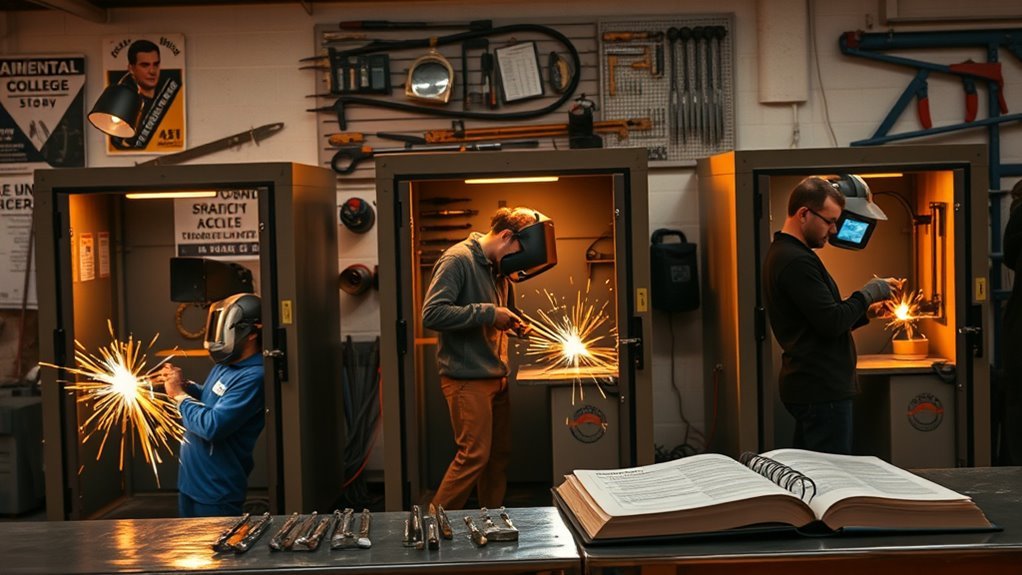
Tuition for welding programs varies widely—typically from about $3,000 for short certificate courses up to $30,000 for longer, more detailed programs—so you should pick a school type that matches your budget and goals.
When you do a tuition comparison, you’ll see certificate programs often cost $3,000–$10,000 and focus tightly on specific welding skills, ideal if you want fast entry.
Community colleges typically charge about $5,000 for a two-year program and bundle hands-on training with general education, which can broaden career options.
Trade schools emphasize vocational training with tuition usually between $5,000 and $20,000 and tend to prioritize shop time and industry alignment.
Associate degree programs, taking two years, commonly range $10,000–$25,000 and offer a more thorough credential.
Match school offerings to your needs: if you want quick skill acquisition pick a certificate; if you want credentials and broader coursework, consider community college or an associate degree.
Products Worth Considering
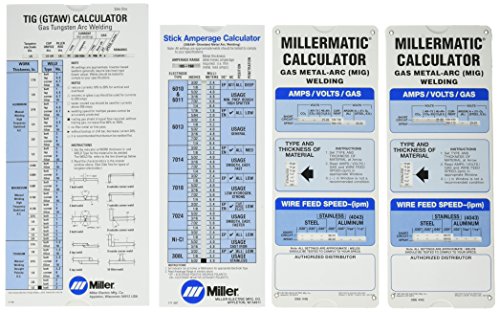
Miller electric 043125 Package, Miller Calculator pack

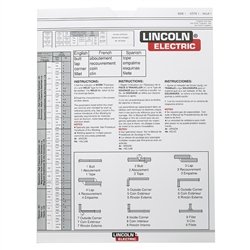
Includes standard welding symbols confirm to AWS A2.4 specifications
Program Lengths and What They Include
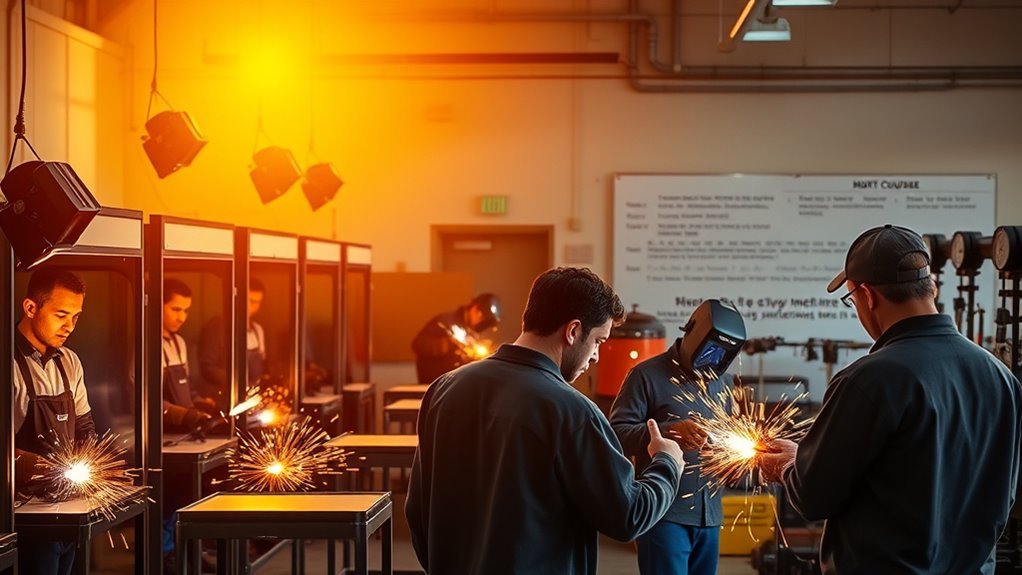
Along with cost, program length shapes what you’ll learn and how quickly you can enter the workforce. Short certificate programs run weeks to months and focus on core skills and shop time; tuition typically ranges $3,000–$10,000.
Diploma programs take about a year, offering expanded hands-on practice and more structured curriculum details; expect $5,000–$15,000. Associate degrees span roughly two years, combining extensive lab work with technical theory and broader program structure, costing about $10,000–$25,000.
Bachelor’s programs take four years, adding courses like business or engineering alongside advanced welding topics and often preparing you for supervisory roles.
Across all lengths, institutions vary training focus and the balance of classroom versus shop time. When comparing options, examine program structure, required contact hours, certification preparation, and curriculum details to match your timeline, career goals, and desired depth of technical and theoretical training.
Additional Equipment and Materials Costs
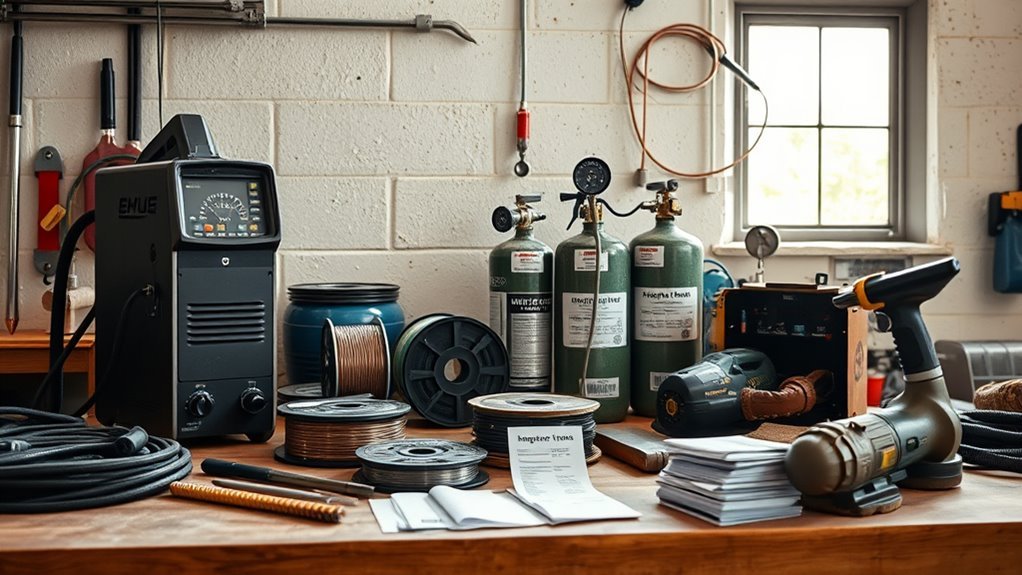
You’ll need to budget for protective gear essentials like a helmet, gloves, jacket and boots, plus consumables and metals that get used up with practice.
Expect tools, basic maintenance items, and occasional replacement parts to add to costs—these can range from modest to several hundred dollars depending on program requirements.
Add books and course supplies and you could see total extra expenses anywhere from about $100 up to $2,400 or more, so factor them into your overall plan.
Products Worth Considering

Function: Genuine leather welding hoods are heat and fire resistant and protect your head, face and neck from shooting sparks, debris, sawdust and welding slag.

New bag for Auto Darkening Welding Helmet Hood Mask

Fit YESWELDER Welding Helmet L500A, M800H, Q800D, S400S
Protective Gear Essentials
Safety gear is one of the first costs you’ll face in welding school, and it usually runs from about $100 to $500 depending on program requirements and personal choices.
You’ll need a welding helmet, quality gloves, safety glasses, and flame-resistant clothing to meet safety regulations and protect yourself during hands-on work.
Prioritize gear selection that balances certified protection and durability; spending a bit more on a comfortable helmet or well-lined gloves saves money over time.
Programs may list minimum standards, so check school lists before buying.
Remember to budget separately for larger optional items like personal welding machines and for books or supplies, which can add several hundred dollars to your total training investment.
Consumables and Metals
Consumables and metals add a predictable but sometimes overlooked chunk to your welding-school budget, typically $100–$500 for rods, wire, gas, and scrap used in labs and projects.
You’ll plan for consistent replacement of filler metals and shielding gas as labs consume them, and adopt consumable pricing strategies to keep costs steady.
Consider these practical points:
- Shop for bulk rods/wire and compare suppliers to lower welding materials costs per unit.
- Reserve a small scrap budget for practice pieces and project iterations—waste adds up fast.
- Track gas usage and choose cylinders or refill plans that match your school’s schedule to avoid emergency expenses.
Being deliberate about purchases saves you money and prevents interruptions in hands-on learning.
Tools and Maintenance
After accounting for rods, wire, gas, and scrap, don’t forget that your personal tools and upkeep add another layer of expense—expect to spend roughly $100–$500 on safety gear and supplies, $500–$2,000 if you need a basic welding machine, and an additional $1,100–$2,500 for an extensive tool kit; books and course materials can tack on $100–$500 more.
You’ll want to budget accordingly because these items are essential for hands-on practice. Invest in quality PPE and a reliable machine to reduce repair costs.
Regular tool maintenance extends service life, saves money, and supports equipment longevity. Track warranties, replace consumables timely, and set aside funds for occasional repairs so your training isn’t interrupted.
Financial Aid, Scholarships, and Payment Options

If you’re worried about the up-front cost of welding school, federal aid, low‑interest loans, GI Bill® benefits, and school scholarships can substantially lower what you pay out of pocket.
You should explore financial aid options early—many schools participate in federal programs so you can access grants and loans that may also cover tools, supplies, and safety gear. Scholarship opportunities are offered by institutions like MTI and the American Welding Society; apply to multiple awards to increase your chances.
- Federal and veteran aid — complete FAFSA, check GI Bill® eligibility, and confirm school participation to gain access to grants and low‑interest loans.
- School and industry scholarships — research MTI, AWS, and local foundations; meet deadlines and submit targeted applications for welding-specific awards.
- Payment plans and cost coverage — ask schools about installment plans (7– or 10‑week increments) and whether aid can be applied to tuition, fees, and required equipment.
Prioritize applications, document requirements, and compare offers to minimize out‑of‑pocket expense.
Products Worth Considering

Keep your first aid kit full so you always have what you need in an emergency

Quantity and size:Welding Practice Kit, With 8 Of 3x5”, 8 Of 2x4”, 4 Of 3x3” And 4 Of 2x2” 24 pieces in total.

【Complete Set】: The package includes 48 pieces of welding coupons with welding magnets, can welding 2 dice, 2 cube frames, 2 cuboid frames, and 2 cuboids, a complete tools to improve welding skills quickly.
Certification, Licensing, and Career Placement

You’ll want to weigh certification types and their costs—like AWS test fees or school-run exams—against the wage boost they can bring.
Even in states without welder licensing, holding recognized credentials improves your credibility and hiring prospects.
Also check whether the program includes career placement services to connect you with the estimated 45,800 job openings projected through 2033.
Products Worth Considering

This card is perfect for your loved one's welding graduation gift. Congrats Grad Card for that special Welder in your life! Card measure 8" x 5.3" inches when folded and come...
Certification Types and Costs
Because employers often look for verified skills, getting certified can be one of the fastest ways to make your resume stand out in welding. Many programs bundle certification or offer exam options so you don’t have to arrange testing on your own.
You’ll see clear certification benefits: school certificates boost marketability, while industry credentials verify specialty skills. Understand the certification process early so you can budget and meet prerequisites.
Costs vary — some programs include fees in tuition, others charge separately for exams like the American Welding Society Certified Welder test.
- AWS Certified Welder — exam fee may be separate or bundled; validates practical skill.
- School graduation certificate — often included in tuition; helps with hiring.
- Specialty certs — variable costs for niche welding methods.
Licensing and Job Placement
While Illinois and Missouri don’t require welders to hold state licenses, getting certified can make your resume stand out and open more job options; many programs (including MTI) help students earn industry-recognized credentials like the American Welding Society Certified Welder, and often include career-placement support to connect you with employers seeking those specific skills. You’ll find that welding certifications validate skillsets employers want and target niches the job market demands. Career services often review resumes, set interviews, and place grads with employers needing certified welders. Pick programs that align certifications with local job market needs so you don’t train for credentials nobody’s hiring for.
| Benefit | Impact |
|---|---|
| AWS Certified Welder | Employer recognition |
| Career placement | Interview and job matches |
Apprenticeships and Employer-Sponsored Training
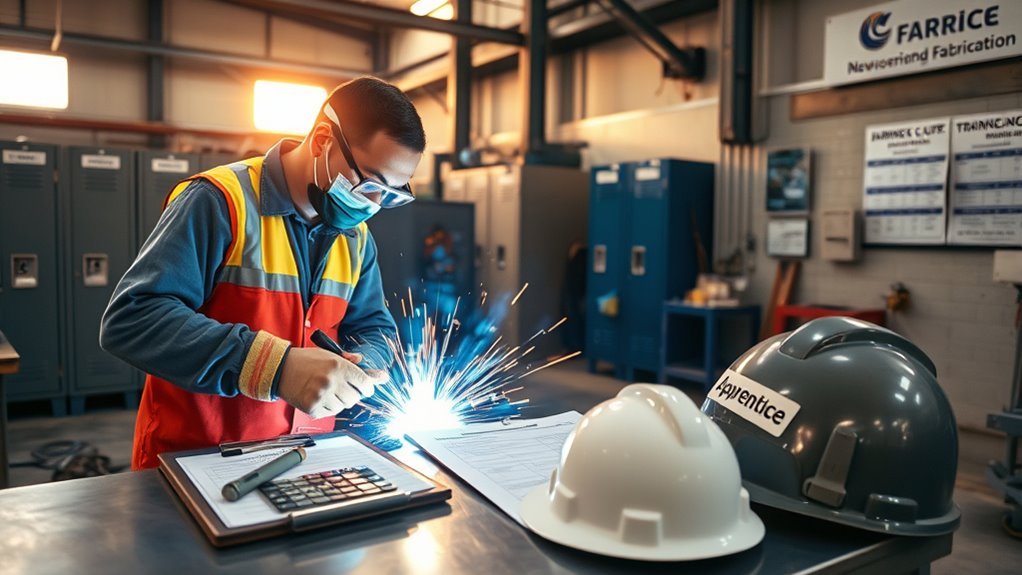
If you want to learn welding without taking on heavy debt, apprenticeships and employer-sponsored programs give you a practical route by combining paid on-the-job training with classroom instruction.
You’ll get apprenticeship benefits like incremental wages, hands-on skill development, and formal instruction that shorten the learning curve and reduce tuition costs. Employer incentives often lead companies to cover tuition, tools, and materials, lowering your out-of-pocket expenses while they build a trained workforce.
Apprenticeships combine paid, hands‑on training and formal instruction while employers often cover tuition and tools.
- Program length and pay: Most apprenticeships run one to four years; your wage typically rises as your skills advance, so you earn while you train.
- Cost coverage: Employer-sponsored training can pay tuition and supply essential gear, removing common financial barriers to entry.
- Industry connections: Working with a company gives you practical experience and direct contacts, which helps facilitate entry into long-term employment without significant debt.
Evaluating Return on Investment and Job Prospects

How do you judge whether a welding program is worth the cost? Start by comparing program price—typically $5,000–$30,000—to expected starting salary and wage growth. The median welder wage was $47,540 in May 2022; entry pay is lower but rises with experience and skills.
Factor in projected demand: the BLS expects 45,800 openings from 2023–2033, so job availability is steady.
Next, evaluate outcomes: placement rates, employer partnerships, and networking opportunities that can shorten your job search. Look for programs that teach specialized welding—underwater, aerospace, or other niche certifications—as those roles lead to higher pay and clearer career advancement paths.
Also consider apprenticeship or employer-sponsored pathways that reduce tuition and provide on-the-job income.
Calculate payback period: tuition divided by expected annual salary increase. If schools show strong placement and industry ties, the investment usually pays off. Prioritize programs with measurable results and direct employer connections.
Products Worth Considering

🧲 Sticks to Toolboxes & Welders – Heavy-duty magnetic welding chart adheres to metal surfaces like your welding table, toolbox, or wall for instant reference while working.
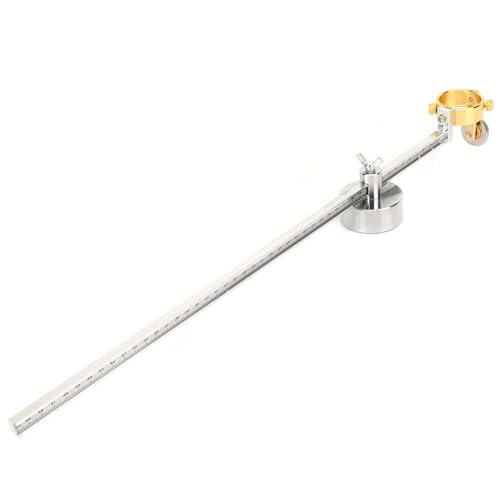
【For P80 Cutting Torch】This compass roller is specifically suitable for the P80 cutting torch. If you own a P80 cutting torch, this roller is the perfect companion. It enhances the performance of the torch and helps you achieve better cutting results

Richard Finch, Welder's Handbook: A Complete Guide to MIG, TIG, Arc & Oxyacetylene Welding, "Completely Revised and Updated Edition!" paperback
Frequently Asked Questions
Can I Start Welding School With No Prior Metalworking Experience?
Yes — you can start welding school with no prior metalworking experience. Many programs list minimal welding prerequisites, offer beginner classes, and provide hands-on training so you’ll build safety, basic techniques, and confidence quickly.
Are Online Welding Courses Accepted by Employers?
Like a flashlight in fog, yes — online certifications can help, but employer preferences vary: many want hands‑on proof, accredited programs, or ASA/AWS credentials. You’ll boost hireability by combining online learning with practical, accredited experience.
What Safety Gear Is Mandatory on Day One?
You’ll need basic safety equipment on day one: welding helmets with proper shade, flame-resistant jacket or sleeves, leather gloves, safety boots, and eye protection. You’ll also use ear protection and respiratory gear as instructed.
Do Schools Offer Night or Weekend Welding Classes?
About 70% of trade schools offer flexible hours, so yes — you’ll find night classes and weekend workshops at many programs. You’ll be able to work evenings or weekends, gain hands-on practice, and finish training faster.
Can Credits Transfer Between Welding Programs?
Yes — you can often transfer credits between welding programs, but transfer policies vary widely; you’ll need to compare programs, verify course equivalencies, and get approvals from both schools before credits will be accepted.
Conclusion
You’ll find welding school costs span a wide spectrum—from modest certificate fees that won’t dent your pocket to associate degrees that require a deeper investment—but tools, gear, and consumables can quietly swell the total. Think of tuition as the map and equipment as the supplies for the journey: factor both in, seek grants or apprenticeships to lighten the load, and weigh likely wages in your area to guarantee the road ahead is worth the ticket you buy.
