
Choosing a cooler for road trips is easier when you first decide how you want to keep food and drinks cold. A hard cooler is a practical choice when durability and ice-based cooling matter most, a soft cooler is easier to carry, and a plug-in thermoelectric cooler can provide powered cooling while you are traveling. The three options below cover those different needs without forcing every buyer into the same cooler style.
This article contains affiliate links. If you buy through a qualifying link, this site may earn a commission at no extra cost to you.
Choose a YETI Roadie when you want a durable hard cooler, the RTIC Ultra-Tough Soft Cooler when portability matters most, or the Igloo Iceless 28 Qt Thermoelectric Cooler when you specifically want cooling powered by a vehicle’s 12V outlet.
Top Picks
| Product | Cooler Type | Best For | Main Consideration |
|---|---|---|---|
| YETI Roadie | Hard cooler | Durability and traditional ice-based cooling | Roadie comes in multiple sizes, so capacity and portability depend on the model |
| RTIC Ultra-Tough Soft Cooler | Soft cooler | Portable day trips and frequent carrying | Soft construction offers less rigid protection than a hard cooler |
| Igloo Iceless 28 Qt Thermoelectric Cooler | 12V thermoelectric cooler | Powered cooling during road travel | Requires 12V power and cooling performance depends on ambient temperature |
How We Chose
These picks represent three useful road-trip cooler styles rather than three products that solve exactly the same problem. We focused on cooling method, portability, power requirements, ease of loading into a vehicle, model and size differences, and the type of trip each cooler suits best.
- Cooling method: Ice-based hard and soft coolers were compared separately from powered thermoelectric cooling.
- Portability: We considered whether the cooler is better suited to frequent carrying or spending most of the trip in a vehicle or campsite.
- Power requirements: Powered models need access to a compatible electrical source, while passive coolers rely on ice, frozen packs, or another cold source.
- Buyer fit: Each recommendation is matched to a specific use case instead of declaring one cooler universally best.
- Practical limitations: The roundup considers storage, carrying convenience, model size, and the differences between powered and passive cooling.
YETI Roadie Hard Cooler
The YETI Roadie is the strongest fit here for buyers who prefer a traditional hard-sided cooler. It is especially useful when you do not want to depend on vehicle power and would rather pack food and drinks with ice or cold packs.
Roadie is a cooler family rather than one single size, so capacity, exterior dimensions, weight, and carrying convenience depend on the exact Roadie model you choose. Check the selected model’s measurements before ordering, especially if it needs to fit behind a seat or in a packed cargo area.
Why You’ll Like It
- Hard-sided construction suits road travel, camping, and general outdoor use.
- No electrical connection is required.
- Rigid construction provides more physical protection for the contents than a typical soft cooler.
- Multiple Roadie sizes let buyers choose between more compact and higher-capacity formats.
Who Should Buy This?
Choose a Roadie if you value a rigid cooler and traditional ice-based cooling more than minimum weight or shoulder-carry convenience. It also makes sense when you may not have dependable access to vehicle or household power throughout the trip.
Who Should Avoid This?
A hard cooler may be more bulk than you need if your priority is carrying a light load for a short outing. Buyers who specifically want continuous powered cooling while driving should also look at the Igloo thermoelectric option instead.
RTIC Ultra-Tough Soft Cooler
The RTIC Ultra-Tough Soft Cooler is the more convenient choice when carrying comfort and portability matter more than having a rigid cooler body. This is the current Soft Pack-style option from RTIC and is designed for travelers who regularly move drinks, lunches, and snacks between the vehicle and destination.
RTIC offers the soft cooler in multiple capacities, so check the exact size, dimensions, and weight before buying. The soft-sided format, carrying handles, and adjustable shoulder strap make it particularly useful when the cooler will not stay in one place all day.
Why You’ll Like It
- Soft-sided construction is easier to carry and store than a bulky rigid cooler.
- A removable, adjustable shoulder strap and carrying handles support frequent transport.
- The waterproof interior can be used with loose ice or gel packs.
- No vehicle power connection is required.
Who Should Buy This?
The RTIC is the best fit of these three if your cooler will spend as much time on your shoulder or in your hands as it does inside the car. It is especially practical for day trips, picnics, beaches, and stops where you expect to carry your supplies away from the vehicle.
Who Should Avoid This?
Choose a hard cooler instead if rigid exterior protection is your main priority. Choose the Igloo if your main reason for shopping is to get an electrically powered cooler for use while traveling in a vehicle.
Igloo Iceless 28 Qt Thermoelectric Cooler
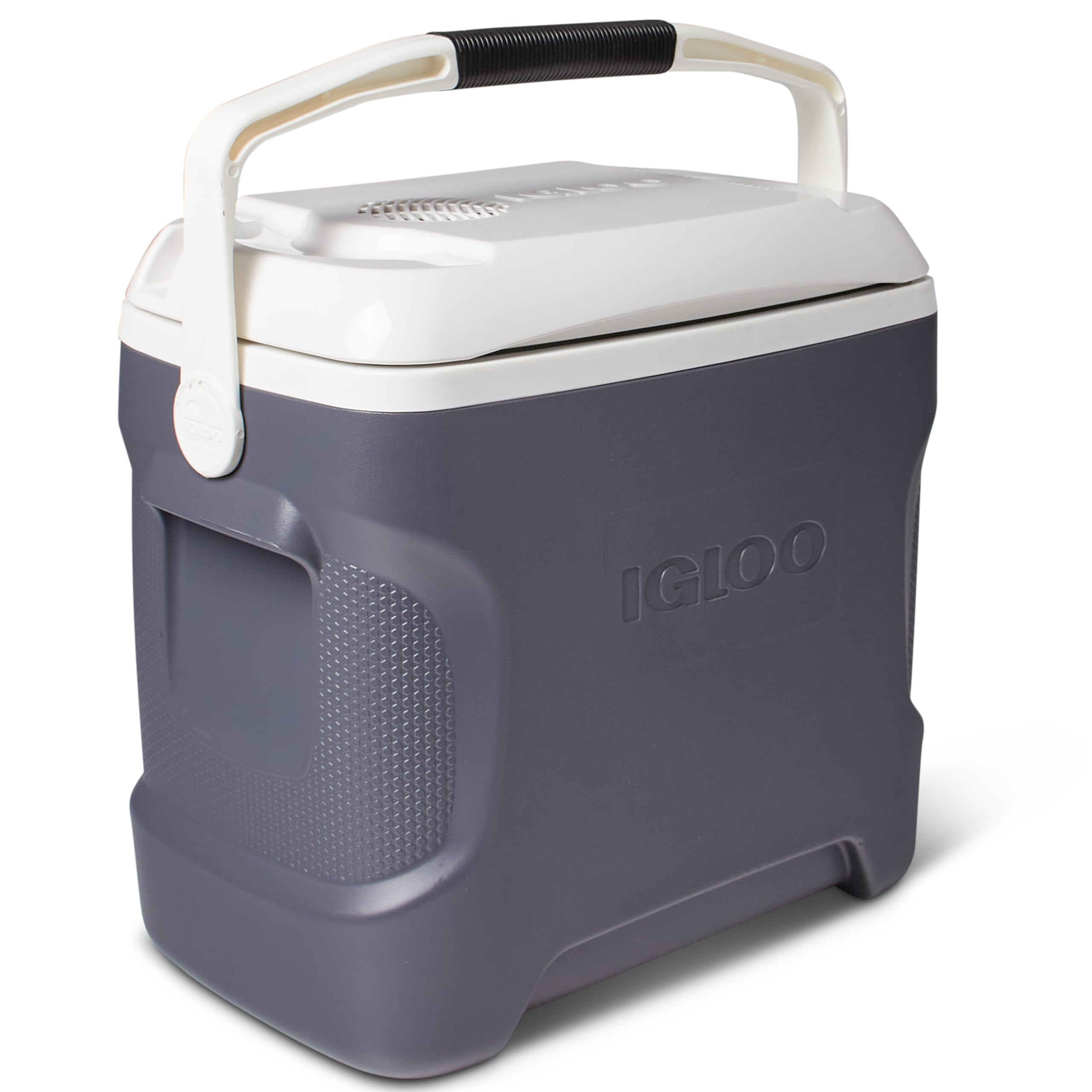
The Igloo Iceless 28 Qt Thermoelectric Cooler solves a different problem from the YETI and RTIC. Instead of relying mainly on ice, it uses thermoelectric cooling and is intended for buyers who want a cooler powered from a compatible 12V vehicle outlet while traveling.
The product listing describes an 8-foot 12V DC power cord and cooling performance of up to 36°F below the surrounding air temperature. That makes ambient temperature important: a thermoelectric cooler should not automatically be treated like a household refrigerator or freezer.
This format can be particularly useful on long road trips where vehicle power is readily available and you want to avoid repeatedly adding melting ice. Starting with food and drinks that are already cold can also reduce the amount of cooling work the unit needs to do.
Why You’ll Like It
- Designed around powered thermoelectric cooling rather than loose ice.
- Uses a 12V DC connection for vehicle-based operation.
- Useful for long drives where compatible vehicle power is readily available.
- Leaves more interior space available because you do not need to fill much of the cooler with loose ice.
Who Should Buy This?
Choose the Igloo Iceless 28 Qt if your priority is powered cooling during road travel rather than maximum portability or the rugged simplicity of a passive hard cooler.
Who Should Avoid This?
Skip it if you regularly camp away from power or simply want a cooler that can be packed with ice and left almost anywhere. It is also a weaker fit when you need refrigerator-like temperature control regardless of outdoor or vehicle temperature.
For any powered cooler, plan where the unit will sit before your trip. Leave enough space around ventilation areas, confirm that your intended power source is compatible, and keep the vents unobstructed while the cooler is running.
Perishable cold food should be kept at 40°F or below. Because thermoelectric performance changes with ambient temperature, use a cooler or appliance thermometer when carrying perishable food and do not assume that powered operation alone guarantees a food-safe temperature.
Before You Buy
Decide Between Passive and Powered Cooling
The biggest decision is not the brand. It is whether you want a passive cooler that works with ice or cold packs, or a powered cooler that needs an electrical connection while operating. Passive coolers are easier to use away from a vehicle, while a 12V thermoelectric cooler is most useful when reliable vehicle power is part of the trip.
Choose the Right Capacity
Do not compare cooler families by brand name alone. YETI Roadie and RTIC soft coolers are sold in different sizes, and capacity can change the cooler’s dimensions, weight, and carrying convenience. Estimate how many drinks, meals, and cold packs you normally carry before selecting a size.
Think About How Often You Will Carry It
A hard cooler can make sense when durability is more important than carrying convenience. A soft cooler is generally the more practical format when you expect to carry it frequently between the vehicle, hotel, picnic area, campsite, or beach.
Check Available Vehicle Space
Measure the area where the cooler will ride before buying. Check the cooler’s exterior dimensions rather than relying only on quart or can capacity, and remember that you still need enough clearance to open the lid or access the contents after luggage and other travel gear are loaded.
Consider Your Power Access
A powered cooler is most useful when electrical access is predictable. Confirm that your vehicle has a compatible 12V outlet and follow the cooler and vehicle instructions for safe operation. If your trip involves long periods away from the vehicle or another suitable power source, a passive cooler may be the simpler choice.
Consider Ambient Temperature
A thermoelectric cooler’s performance is tied to the surrounding temperature. A specification such as cooling a certain number of degrees below ambient air is different from maintaining one fixed refrigerator temperature in every condition.
Do Not Treat Every Cooler the Same
Hard, soft, and thermoelectric coolers serve different purposes. The best road-trip cooler depends more on how you travel, how often you carry it, what you need to keep cold, and whether reliable power is available than on which design looks most impressive on paper.
FAQ
Which type of cooler is best for a road trip?
For most buyers, it depends on how the cooler will be used. A hard cooler is a strong choice for traditional ice-based cooling, a soft cooler makes carrying easier, and a 12V thermoelectric model is useful when powered cooling during vehicle travel is the priority.
Should I choose a hard or soft cooler?
Choose a hard cooler when rigid construction, physical protection, and traditional cooler use matter most. Choose a soft cooler when you expect to carry the cooler frequently and want something easier to move and store.
Which YETI Roadie size should I buy?
Choose based on how much food and drink you normally carry and how much room is available in your vehicle. Because Roadie is a family of coolers, capacity, dimensions, weight, and portability vary by model. Check the specifications for the exact Roadie size before ordering.
Is the Igloo Iceless 28 Qt better than an ice cooler?
Not automatically. It solves a different problem. The Igloo is better suited to buyers who specifically want 12V thermoelectric cooling while traveling, while a passive hard or soft cooler is more versatile when electrical power is unavailable.
Do I still need ice with the Igloo Iceless 28 Qt?
The main reason to choose this thermoelectric cooler is to use powered cooling rather than depending on loose ice. For better results, start with food and drinks that are already properly chilled instead of expecting the cooler to rapidly chill warm items.
Can a thermoelectric cooler replace a refrigerator?
Not in every situation. Thermoelectric cooling performance depends on ambient temperature, while a refrigerator is designed to maintain a controlled cold-storage temperature. If you are carrying perishable food, verify that the cooler stays at 40°F or below rather than relying only on the fact that the unit is running.
What should I check before buying a powered vehicle cooler?
Confirm that the cooler fits your available vehicle space, verify the required power connection, check the manufacturer’s cooling specification, and make sure you can position the cooler without blocking its ventilation areas.
Wrapping Up
Choose a YETI Roadie if you want a durable hard cooler that does not depend on vehicle power. Pick the RTIC Ultra-Tough Soft Cooler when portability and easy carrying are more important. If your priority is powered cooling while driving, the Igloo Iceless 28 Qt Thermoelectric Cooler is the most relevant option of these three.
Match the cooler to your trip rather than buying solely on brand reputation. Hard coolers suit traditional ice-based use, soft coolers make transportation easier, and the Igloo makes the most sense when access to compatible 12V vehicle power is a regular part of your travel plan. For YETI and RTIC, confirm the exact size and dimensions before ordering because those product lines are available in multiple capacities.