
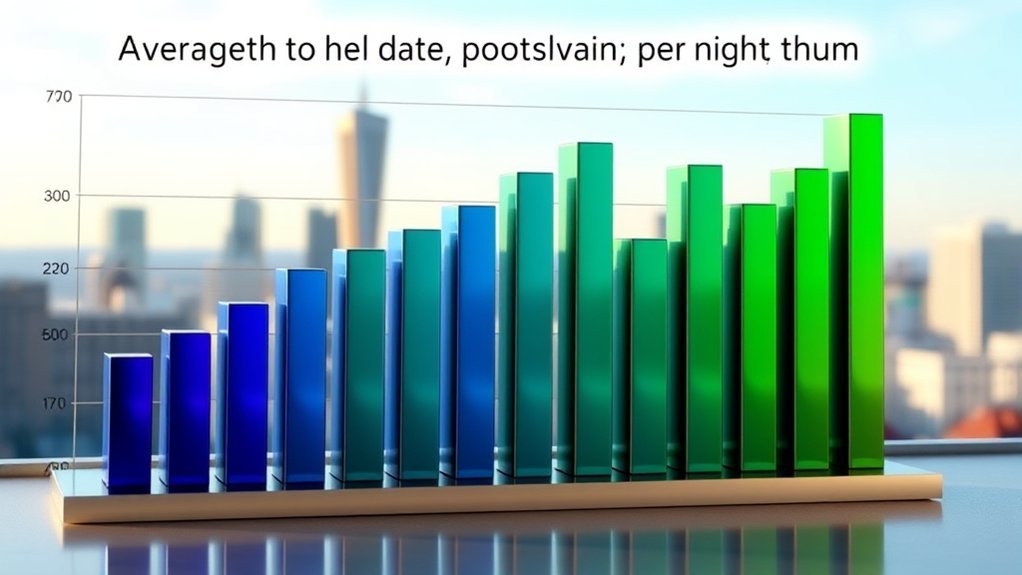
Hotel prices in Pennsylvania vary sharply by destination, travel date, room type, and local demand. A statewide average can help you set a starting budget, but it is not a guaranteed rate. Philadelphia events, Hershey weekends, Pocono resort stays, parking charges, local hotel taxes, and cancellation terms can all change what you actually pay.
Quick Answer
As of August 10, 2026, KAYAK lists the average Pennsylvania double room at about $159 per night. January averages about $136, while June averages roughly $182. Philadelphia, Pittsburgh, Hershey, and Pocono-area stays can cost considerably more depending on the date, hotel type, taxes, and optional extras.
Key Takeaways
- The current statewide double-room average is about $159 per night, but live hotel-search data can change from day to day.
- January currently averages about $136 statewide, while June averages roughly $182.
- Current KAYAK benchmarks are about $275 for four-star hotels and $686 for five-star hotels statewide, although individual properties can be much cheaper or more expensive.
- Philadelphia, Pittsburgh, Hershey, and Pocono resort areas can cost considerably more than budget properties in smaller cities or suburban locations.
- Mandatory lodging fees generally must be included in the advertised total price under the FTC fee rule, but government taxes and optional extras such as parking or pet charges can still raise your final bill.
- Book major-event dates early. For ordinary dates, a refundable reservation gives you the option to recheck prices before the cancellation deadline.
Hotel Costs in Pennsylvania: What to Expect in 2026

According to KAYAK’s Pennsylvania hotel data, the average price of a double room was approximately $159 per night when checked on August 10, 2026. The same current snapshot showed an average four-star rate near $275 and an average five-star rate near $686.
Those figures are useful planning benchmarks, not fixed quotations. Hotel-search data changes according to destination, occupancy, check-in date, length of stay, room type, cancellation policy, inventory, and the number of travelers included in the search.
Note: Current U.S. short-term-lodging pricing rules require covered sellers to display mandatory fees in the advertised total price. Government taxes and genuinely optional extras may still be shown separately. Always review the final payment total for your exact dates.
Current Statewide Price Benchmarks
The figures below were checked on August 10, 2026. They describe different slices of KAYAK’s Pennsylvania data, so use them as planning references rather than promises about a specific hotel.
| Benchmark | Current Figure | How to Use It |
|---|---|---|
| Average double room | About $159 per night | Useful as a statewide starting point, not a quote for every city. |
| Average four-star hotel | About $275 per night | Helps estimate an upscale budget before destination-specific checks. |
| Average five-star hotel | About $686 per night | Luxury inventory is limited and highly date-sensitive. |
| Recent three-star low | About $54 | A recent search result, not an average or a rate every traveler can obtain. |
| Recent four-star low | About $88 | A short-lived deal benchmark that can disappear as inventory changes. |
How to Read Hotel Price Averages
An “average hotel price” can describe several different things. One source may report the average price of a double room, while another reports recent weeknight prices, weekend prices, budget-hotel rates, a star-category average, or the lowest deal found during the previous few days. Those numbers should not be compared as though they measure identical inventory.
For a realistic trip budget, separate the price into three layers:
- Displayed lodging price: The advertised lodging total for the room and dates. Under the FTC’s current short-term-lodging fee rule, mandatory fees generally must be included in the total price shown upfront.
- Tax-inclusive lodging total: The displayed lodging price plus applicable government hotel and occupancy taxes.
- Final trip cost: The lodging total plus optional expenses such as parking, pet charges, breakfast, transportation, room upgrades, or other purchases you choose.
Budget-Friendly Hotels and Alternatives in Pennsylvania
Pennsylvania has budget hotels, motels, airport properties, hostels, extended-stay hotels, and suburban accommodations across a wide price range. In KAYAK’s August 10, 2026 statewide snapshot, a recent three-star room was found for about $54 and a recent four-star room for about $88. These are short-lived search results rather than prices every traveler will receive.
Lancaster can offer lower-cost options than central Philadelphia or resort-focused destinations, but a low advertised deal should not be confused with an average. Current KAYAK budget-hotel data for Lancaster puts the budget-category average around $169, while a recent low was about $75. That difference shows why a “from” price should never be presented as the normal citywide rate.
- Airport and highway hotels: These can cost less than downtown properties, but compare parking and transportation expenses.
- Motels and limited-service hotels: Lower rates may be available when you do not need a restaurant, room service, spa, or extensive facilities.
- Extended-stay hotels: A kitchenette or longer-stay rate can reduce food and lodging expenses on an extended trip.
- Hostels and shared lodging: These may suit solo travelers, but compare privacy, bathroom arrangements, security, and location.
- Nearby towns: Staying outside an attraction district may save money when transportation cost and travel time remain reasonable.
Two examples are worth noting. The official property pages for La Quinta Inn & Suites by Wyndham Harrisburg Airport Hershey and Microtel Inn & Suites by Wyndham Philadelphia Airport currently list free Wi-Fi and breakfast. Microtel also states that parking is available for a surcharge. Amenities and policies can change, so confirm them for your dates before paying.
Top Strategies for Booking Hotels
The lowest nightly number is not always the least expensive reservation. A slightly higher offer may provide better value when it includes breakfast, parking, airport transportation, flexible cancellation, or a location that reduces transportation costs.
Compare the Final Price on Several Channels
Check the hotel’s direct website and at least one reputable comparison platform using the same room type, occupancy, bed configuration, and cancellation terms. Do not compare a prepaid nonrefundable room with a flexible room and assume the lower price is an equivalent offer.
The Federal Trade Commission’s Rule on Unfair or Deceptive Fees, effective May 12, 2025, requires covered short-term-lodging businesses to prominently display a total price that includes mandatory fees. Government taxes and genuinely optional add-ons can be excluded from that upfront total, but applicable charges must be disclosed before final payment.
Warning: A displayed $150 lodging price can still become more expensive after government hotel taxes and optional extras such as parking, pet charges, breakfast, or room upgrades. Mandatory resort, destination, or service fees generally should already be included in the advertised total price under the FTC rule.
Choose the Right Booking Window
No single booking window works for every Pennsylvania trip:
- Major events and fixed dates: Reserve early because the best-located hotels and preferred room types may sell out.
- Family trips and multiroom bookings: Book early enough to secure connecting rooms, accessible rooms, suites, or specific bed arrangements.
- Ordinary dates with flexibility: A refundable reservation lets you secure an acceptable room and recheck the same dates later.
- Last-minute trips: Unsold inventory may become cheaper, but the remaining location, bed type, or cancellation terms can be poor.
Pro Tip: Reserve a refundable rate that fits your budget, save the confirmation and cancellation deadline, and check the identical room again before that deadline. Rebook only after confirming that the replacement has equal or better room details and cancellation terms.
Reduce the Total Trip Cost
Use filters for free cancellation, breakfast, parking, kitchen facilities, airport transportation, accessibility, pool access, and pet policies. Then calculate whether those features actually save money. A downtown hotel may cost more per night but eliminate daily parking or long drives. A suburban hotel may be cheaper but require tolls, fuel, rideshares, or train fares.
Seasonal Trends: When Are Pennsylvania Hotels Most Expensive?
Current statewide KAYAK data checked August 10, 2026 identifies January as the least expensive month, averaging about $136 per night, and June as the most expensive, averaging about $182. These statewide numbers can shift as KAYAK updates its search data.
A statewide monthly average is only a starting point. A convention, football weekend, amusement-park event, graduation, concert, holiday, or resort weekend can make one Pennsylvania destination far more expensive than the statewide figure.
- Winter: January may provide lower statewide rates, although ski weekends and holiday periods can keep Pocono properties expensive.
- Spring: Graduations, school trips, conventions, and weekend events can increase local demand.
- Summer: Theme parks, outdoor travel, family vacations, festivals, and major events can lift rates.
- Fall: College football, foliage trips, weddings, and weekend tourism can increase prices in specific markets.
Special-Event Pricing in 2026
Pennsylvania had an unusually large major-event calendar in 2026. The Commonwealth highlighted the NFL Draft, PGA Championship, FIFA World Cup, America250PA activities, and MLB All-Star events among the year’s largest tourism draws. As of August 10, the headline spring and summer events have passed, but they remain useful examples of how event-specific demand can overwhelm a normal statewide or city average.
Philadelphia hosted six FIFA World Cup matches between June 14 and July 4, 2026. The city’s FIFA Fan Festival ran throughout the tournament from June 11 through July 19, covering all 39 days. Those dates are now past, but the pricing lesson remains useful: a major sports tournament, convention, graduation weekend, concert, or festival can temporarily push hotel rates far above normal seasonal levels.
Before booking, search your destination’s official events calendar for games, conventions, concerts, festivals, graduations, college weekends, and holiday programs. If your dates overlap a high-demand event, reserve early or compare nearby towns with practical transportation connections.
How Location Affects Hotel Prices in Major Cities
Location strongly affects Pennsylvania hotel prices. Central business districts, airport areas, theme-park districts, convention zones, casinos, ski areas, and walkable historic neighborhoods each have different demand patterns and added trip costs.
Hotel Prices by City
The following figures were checked on August 10, 2026. They are planning benchmarks, but they do not all measure identical hotel categories. The middle column states exactly what each number represents.
| Destination | Current Planning Benchmark | What Can Raise the Price |
|---|---|---|
| Philadelphia | About $235 for an average double room | Center City location, conventions, sports, festivals, parking, and major event dates |
| Pittsburgh | About $222 for an average double room | Downtown events, stadium dates, college weekends, conferences, and parking |
| Lancaster | Budget-category average near $169; recent budget low about $75 | Weekend tourism, theater schedules, group travel, school holidays, and limited availability |
| Hershey | About $165 on weeknights and $268 on weekend nights in the current two-week benchmark | Hersheypark operating dates, concerts, school breaks, holidays, and family weekends |
| Mt Pocono | Current monthly averages range from about $150 to $192 | Ski weekends, water parks, casino demand, resorts, summer travel, and holiday packages |
These figures show why a citywide average, category average, weeknight benchmark, and recent deal should not be treated as interchangeable. Search data can change daily, so use the table to set an initial budget and then compare your exact dates.
Impact of Popular Attractions
Attractions affect hotel prices most when many visitors want the same location and dates. Hersheypark operating weekends, Philadelphia sports and convention dates, Pittsburgh stadium events, and Pocono ski or water-park periods can create concentrated demand.
Distance alone does not determine value. A hotel five miles from an attraction may require paid parking and daily transportation, while a more expensive nearby property may include a shuttle or allow you to walk. Compare the combined lodging and transportation cost.
Pennsylvania Hotel Taxes and Fees
The Pennsylvania Department of Revenue states that short-term lodging is generally subject to Pennsylvania’s 6% hotel occupancy tax. Its lodging guidance also describes an additional 1% state-administered local hotel tax in Allegheny and Philadelphia counties. Other county or municipal lodging taxes may also apply.
Philadelphia has an important additional city tax. The City of Philadelphia states that its own Hotel Tax is 8.5% and that the Commonwealth hotel-tax component in the city is 7%, producing a stated combined hotel-tax rate of 15.5%.
For example, a $200 taxable Philadelphia room charge would generate about $31 in hotel taxes at a 15.5% rate, bringing the room-and-tax subtotal to roughly $231 before optional parking, food, pet charges, or other purchases.
How to Estimate Your All-In Hotel Cost
A simple calculation can keep a low nightly rate from turning into a budget surprise:
- Multiply the lodging price by the number of nights. A $200 room for three nights starts at $600.
- Add applicable government lodging taxes. At Philadelphia’s stated 15.5% combined hotel-tax rate, $600 would generate about $93 in hotel tax.
- Add optional costs you expect to use. Parking, pet charges, breakfast, transportation, or paid upgrades can increase the trip total further.
In that Philadelphia example, three $200 taxable nights would produce a room-and-tax subtotal of about $693 before optional extras. Other Pennsylvania destinations can have different local tax structures, so do not apply Philadelphia’s 15.5% rate statewide.
Last-Minute Hotel Deal Strategies
Last-minute hotel deals can work when your destination, room type, and cancellation terms are flexible. They are much riskier when you need a specific neighborhood, two beds, an accessible room, multiple rooms, or accommodation near a major event.
Last-Minute Booking Tips
- Search nearby areas: Expand the map beyond downtown, the park entrance, or the resort district.
- Compare one-night and full-stay totals: A lower first night may be followed by more expensive nights.
- Check the cancellation policy: A discounted last-minute offer may be prepaid or nonrefundable.
- Verify arrival deadlines: Small properties may not maintain a staffed desk all night.
- Call the hotel when necessary: Confirm parking, shuttle hours, pet acceptance, accessibility, or late check-in directly.
As of August 10, 2026, KAYAK’s statewide Pennsylvania page suggests booking at least 7 days before a stay for its current best-price benchmark. Treat that as a changing platform statistic rather than a universal booking rule. Event dates, limited-inventory destinations, suites, accessible rooms, and multiroom trips often justify booking much earlier.
Best Days to Stay
Current KAYAK statewide data shows an average of approximately $135 for Sunday nights and about $190 for Friday nights. These figures describe the average nightly price associated with the stay date. They do not prove that making the reservation itself on Sunday will produce a cheaper price.
| Stay Night | Current Statewide Average | Planning Meaning |
|---|---|---|
| Sunday | About $135 | Currently the lowest statewide average stay night |
| Friday | About $190 | Currently the highest statewide average stay night |
City-level patterns can differ. Business districts may become cheaper on some weekends, while amusement-park and resort destinations may become more expensive. Search the exact destination and dates before changing your trip solely because of a statewide day-of-week average.
Use Price Alerts
Price alerts can help you follow changing rates, but an alert should trigger a new comparison rather than an automatic purchase. Confirm that the new offer includes the same room, occupancy, bed type, cancellation terms, taxes, and mandatory lodging charges as the reservation you are comparing it with.
- Track more than one acceptable property rather than relying on a single hotel.
- Save the exact room description and cancellation deadline.
- Check the property’s direct rate after receiving a third-party alert.
- Do not cancel an existing room until the replacement reservation is confirmed.
Pennsylvania Hotel Cost Questions
A statewide average of about $159 is a useful starting point, but it is not a complete Pennsylvania lodging budget. Travelers should also account for destination, local taxes, parking, room configuration, cancellation terms, transportation, event demand, and the difference between an average price and a short-lived deal. The questions below address the most common points of confusion.
Frequently Asked Questions
What is the average hotel price in Pennsylvania in 2026?
KAYAK’s Pennsylvania data checked August 10, 2026 lists the average price of a double room at about $159 per night. Treat that as a statewide planning benchmark rather than a guaranteed rate because destination, dates, hotel class, room type, and demand can change the price substantially.
What happened to the $150 hotel room?
A $150 lodging rate still exists in many Pennsylvania markets, and it is close to the current $159 statewide double-room average. Your final bill can still rise after government taxes and optional expenses. In Philadelphia, a $150 taxable room charge would be about $173.25 after the stated 15.5% combined hotel tax, before optional extras.
Which Pennsylvania city has the cheapest five-star hotels?
There is no permanently cheapest Pennsylvania city for five-star hotels. Luxury inventory is limited, star classifications vary by platform, and prices change by date. Compare identical dates, room types, taxes, and cancellation policies across Philadelphia, Pittsburgh, resort areas, and smaller luxury properties.
Why have some Pennsylvania hotels been expensive in 2026?
Prices rise when many travelers compete for limited rooms. Pennsylvania’s 2026 calendar included the NFL Draft, PGA Championship, FIFA World Cup matches, America250 activities, and MLB All-Star events. Concerts, conventions, graduations, football weekends, theme-park dates, weddings, and resort seasons can also push one destination far above the statewide average.
How much tax is added to a Pennsylvania hotel room?
Pennsylvania generally imposes a 6% hotel occupancy tax on short-term lodging, with additional local hotel taxes in some areas. Pennsylvania lodging guidance describes an extra 1% in Allegheny and Philadelphia counties. Philadelphia also imposes an 8.5% city Hotel Tax, and the City states that the combined hotel-tax rate there is 15.5%.
Do advertised Pennsylvania hotel prices include all taxes and fees?
Mandatory lodging fees generally must be included in the advertised total price under the FTC’s short-term-lodging fee rule. Government taxes and genuinely optional charges can still be shown separately. Review the final checkout total and make sure you understand parking, pet, breakfast, upgrade, and cancellation costs before paying.
Is Sunday the cheapest day to book a Pennsylvania hotel?
Current statewide data shows Sunday as the least expensive average night to stay, at approximately $135. That does not necessarily mean making the reservation on Sunday produces a lower purchase price. Compare rates for your actual check-in date and destination instead of choosing a purchase day based on this statistic.
How far ahead should I book a Pennsylvania hotel?
KAYAK’s current statewide benchmark suggests booking at least seven days before a Pennsylvania stay, but there is no universal booking window. Reserve major events, family suites, accessible rooms, and fixed itineraries well in advance. For ordinary dates, consider a refundable reservation and recheck the price before its cancellation deadline.
Sources
- KAYAK Pennsylvania Hotels, plus its Philadelphia, Pittsburgh, Lancaster budget, Hershey, and Mt Pocono pages — statewide and destination price benchmarks checked August 10, 2026.
- Pennsylvania Department of Revenue: Short-Term Rentals — Pennsylvania hotel occupancy tax and additional local hotel-tax guidance.
- City of Philadelphia: Hotel Tax — Philadelphia’s 8.5% city Hotel Tax and stated 15.5% combined hotel-tax rate.
- Federal Trade Commission: Rule on Unfair or Deceptive Fees — current mandatory short-term-lodging price and fee disclosure requirements.
- Commonwealth of Pennsylvania: 2026 Major Tourism Events and City of Philadelphia: FIFA World Cup 2026 Event Information — 2026 event-demand context and Philadelphia World Cup dates.
- La Quinta Harrisburg Airport Hershey and Microtel Philadelphia Airport — official current amenity information for the properties mentioned.
Conclusion
In 2026, a practical starting budget for a Pennsylvania hotel is about $159 per night for the current statewide average double room, but the final cost depends heavily on destination, date, hotel category, taxes, parking, optional extras, and local events. January currently averages about $136 statewide, while June is around $182, and Sunday nights currently average less than Friday nights.
For the strongest value, compare equivalent rooms across the hotel’s own website and reputable booking platforms, review the tax-inclusive checkout total, and choose a booking strategy that matches your trip. Reserve high-demand dates early, use refundable rates when practical, and recheck prices before the cancellation deadline rather than relying on a single statewide average or advertised “from” price.

2 thoughts on “Average Hotel Cost Per Night in Pennsylvania (2026) | Prices & Tips”
Pingback: Average Resort Cost Per Night In Pennsylvania (2026) | Prices & Tips
Pingback: Pittsburgh Hotel Prices 2026: Average Costs & Deals