
The average hotel cost per night in Massachusetts is about $242 before taxes in Budget Your Trip’s current 1,503-hotel sample, while KAYAK’s current statewide search data puts the average double room at about $211 per night. These figures use different datasets, so treat them as planning benchmarks rather than guaranteed 2026 rates for Boston, Cape Cod, Salem, the Berkshires, Nantucket, Martha’s Vineyard, or any individual hotel.
Last verified: September 7, 2026
Quick Answer
As checked September 7, 2026, Budget Your Trip’s Massachusetts sample covers 1,503 hotels and lists an average base price of $242 per night before taxes, with a $200 median. KAYAK currently reports a lower statewide average of about $211 for a double room. The difference reflects different datasets and methods, so use these numbers to set a budget range, then price your exact dates and room.
Key Takeaways
- $242 is a planning benchmark, not an official statewide forecast. A second current benchmark from KAYAK is about $211 for a double room, showing why the source and methodology matter.
- Location can matter more than the statewide average. Boston, Cape Cod, Nantucket, Martha’s Vineyard, Salem, and the Berkshires follow different demand patterns.
- Massachusetts lodging taxes can materially increase the total. The state room occupancy excise is 5.7%, with possible local taxes and regional charges.
- Current statewide search data points to February and Sunday as lower-cost benchmarks. KAYAK currently lists February at about $163 per night and Sunday at about $211, but local events can override the statewide pattern.
- For high-demand trips, consider securing a refundable rate early. Recheck the same room and terms later and rebook if the price falls.
What Is the Average Hotel Cost in Massachusetts for 2026?

The most useful statewide benchmark in this guide comes from Budget Your Trip’s Massachusetts hotel analysis. As checked September 7, 2026, its current dataset covers 1,503 hotels and reports an average base price of $242 per night, a median of $200, and high-season pricing around $452.
The source says its hotel prices are in U.S. dollars before taxes and come from base prices reported by KAYAK. That makes the data useful for broad planning, but it is not an official Massachusetts government average, a guaranteed 2026 quote, or a rate that applies equally across the state.
Why Do Massachusetts Hotel Averages Differ by Source?
Two current statewide benchmarks do not match exactly because they measure different hotel sets and search activity. Budget Your Trip’s sample-based figure is $242 before taxes, while KAYAK’s Massachusetts hotel insights currently report about $211 for a double room. Neither number is a guaranteed quote for your trip.
| Source | Current statewide benchmark | Best use |
|---|---|---|
| Budget Your Trip | $242 average base price; $200 median | Broad planning from a 1,503-hotel sample before taxes |
| KAYAK | About $211 per night for a double room | A current search-market benchmark that can move as rates and searches change |
Bottom line: use the statewide averages to set expectations, but compare the same room, dates, guest count, cancellation terms, and taxes before booking. A difference between two statewide averages is not necessarily a contradiction; it usually means the sources are measuring different inventories or time windows.
Verification method: This update checked the statewide price sample from Budget Your Trip, current Massachusetts search insights from KAYAK, Massachusetts Department of Revenue lodging-tax guidance, the FTC lodging-fee rule, and Meet Boston’s latest published monthly hotel statistics on September 7, 2026.
Note: The budget, mid-range, and luxury labels below are categories used by the cited pricing source. They should not be treated as exact substitutes for hotel star ratings.
| Hotel category | Current sample average base price | How to use the figure |
|---|---|---|
| Budget-category hotel | About $126 per night | A source-defined category average, not a guaranteed minimum price |
| Mid-range hotel | About $250 per night | A planning benchmark for the source’s middle price category |
| Luxury-category hotel | About $524 per night | Expect especially large swings by destination, room type, and event date |
| All sampled hotels | Average $242; median $200 | Use as a statewide base-price benchmark before taxes |
Budget Your Trip’s current underlying data estimates about $727 for three days and $1,696 for one week before taxes and fees. Those figures are still broad planning estimates. Actual multi-night prices can change from one night to the next, especially when a stay overlaps a weekend, holiday, convention, graduation, festival, or other high-demand date.
How Much Do Massachusetts Hotel Taxes and Fees Add?
The Massachusetts Department of Revenue lists a 5.7% state room occupancy excise. Cities and towns may add a local room occupancy tax of up to 6%, or up to 6.5% in Boston. A 2.75% convention-center financing charge applies in Boston, Cambridge, Worcester, Springfield, West Springfield, and Chicopee.
A separate 2.75% Cape Cod and Islands Water Protection Fund charge may apply in Barnstable, Nantucket, and Dukes Counties. The Department of Revenue currently states that it applies in all Barnstable County municipalities. The exact tax on your stay depends on the property location and what is included in taxable rent.
For example, applying the 5.7% state tax, 6.5% Boston local tax, and 2.75% convention-center charge to a $242 taxable room amount produces an illustrative total of about $278.18, before parking and optional purchases.
Do Short-Term Rentals Have the Same Taxes?
Hotels and short-term rentals share several Massachusetts lodging taxes, but the rules are not identical. The Department of Revenue says cities and towns may impose an additional community impact fee of up to 3% on certain short-term rentals, including qualifying multi-property operators or some owner-occupied two- and three-family properties. That charge is separate from the normal hotel tax example above.
Warning: Do not compare hotels only by the first nightly number shown. Compare the full stay for the same room, guest count, cancellation policy, breakfast terms, parking needs, taxes, and selected extras.
Since May 12, 2025, the Federal Trade Commission’s Rule on Unfair or Deceptive Fees has required short-term lodging sellers that display prices to include mandatory business fees in the prominently displayed total price. Government taxes and genuinely optional add-ons may initially be excluded, but the final amount of payment must be clearly disclosed before the customer is asked to pay.
How Do Seasonal Trends Affect Hotel Prices?
There is no single high or low season for every part of Massachusetts. The state’s official tourism site presents Massachusetts as a year-round destination, with winter recreation, spring travel, summer beach trips, and fall foliage and festivals attracting different visitors.
What Is the Cheapest Month for Hotels in Massachusetts?
As checked September 7, 2026, KAYAK’s current statewide hotel insights list February at about $163 per night as the lowest monthly average and October at about $260 per night as the highest. Treat that as a current search-data benchmark, not a promise. Boston events, ski weekends, school vacations, Cape Cod summer demand, Salem in October, and island inventory can produce very different local prices.
| Area or trip type | Common high-demand periods | Potential value periods |
|---|---|---|
| Boston and Cambridge | Spring events and graduations, conventions, early fall, and major sports or concert dates | Selected winter dates and periods without major citywide events |
| Cape Cod and the islands | Summer beach season and holiday weekends | Late fall, winter, and early spring, although some seasonal properties may have limited schedules |
| Salem and the North Shore | October and major festival weekends | Winter and non-event weekdays |
| Berkshires and Central Massachusetts | Summer arts dates, fall foliage, weddings, and college events | Selected spring and late-fall periods outside major event weekends |
Boston data shows why a simple claim such as “July is always the most expensive month” can be misleading. As checked September 7, 2026, Meet Boston’s hotel statistics page still lists 2025 as its latest full year of monthly data. It reports average daily rates of $194.66 in January, $210.46 in February, $302.57 in July, and $386.46 in October. Those are Boston market ADR figures rather than statewide consumer quotes, but they show how a strong fall event period can exceed midsummer pricing.
The most useful pricing question is not “What is Massachusetts’ cheapest month?” It is “What creates demand in my exact destination on my exact dates?”
Which Days Offer the Best Hotel Rates?
Statewide hotel pricing does not follow one dependable weekly pattern. Leisure destinations may become more expensive on Friday and Saturday, while business-heavy districts can be costly during busy weekdays. Conventions, college events, weddings, concerts, sports, and holiday weekends can override normal patterns.
Cheapest Days to Stay
As checked September 7, 2026, KAYAK’s statewide hotel insights list Sunday at about $211 per night as the lowest average day and Saturday at about $265 as the highest. Use that only as a statewide benchmark. Compare at least three arrival patterns such as Sunday to Tuesday, Tuesday to Thursday, and Thursday to Sunday while keeping the room type, guest count, cancellation terms, and included benefits the same.
Most Expensive Days
The costliest night is generally the one facing the strongest local demand. In a beach town that might be a summer Saturday. In Boston it may be a convention or graduation night. In Salem it may be an October weekend. Check the destination’s event calendar before assuming that a weekday or weekend will automatically be cheaper.
Pro Tip: Compare the price of one continuous stay with a split stay at two nearby hotels when one night is unusually expensive. A split can occasionally reduce the lodging total, but include moving time, parking, baggage handling, and transportation before deciding it is worthwhile.
When Should You Book Your Hotel?
No single booking window guarantees the lowest Massachusetts hotel rate. A practical strategy is to match your timing to expected demand:
- Major event, island trip, summer beach stay, or October Salem visit: Start checking several months ahead and consider securing a refundable option when the price fits your budget.
- Normal city or suburban trip: Compare rates several weeks ahead, then check the same room periodically.
- Flexible off-season trip: Last-minute rates can sometimes work, but room choice and availability may be limited.
- Nonrefundable deal: Use it only when the discount is meaningful enough to justify losing flexibility and your travel plans are firm.
Track the same room and the same terms. A cheaper offer with no breakfast, no cancellation, or expensive parking may cost more overall than a slightly higher flexible rate.
How Location Changes Massachusetts Hotel Cost
Massachusetts includes expensive urban, coastal, island, resort, college, and highway markets. A single statewide average can hide large local differences:
- Boston and Cambridge: Central locations, convention demand, limited or expensive parking, and major events can raise both the room price and total trip cost.
- Nantucket and Martha’s Vineyard: Limited seasonal inventory can create high summer pricing, while ferry or air transportation adds another part of the trip budget.
- Cape Cod: Rates can change sharply between summer, shoulder season, and winter, and some smaller properties operate seasonally. See the Cape Cod hotel price guide for a more local benchmark.
- Salem: October demand makes advance planning much more important than a statewide average suggests. The Salem October hotel price guide covers that seasonal spike in more detail.
- Worcester, Springfield, and highway-access suburbs: Base room rates may be lower than central Boston, but include commuting time, fuel, tolls, transit, or parking when comparing the true trip cost.
What Kinds of Places Can You Stay?
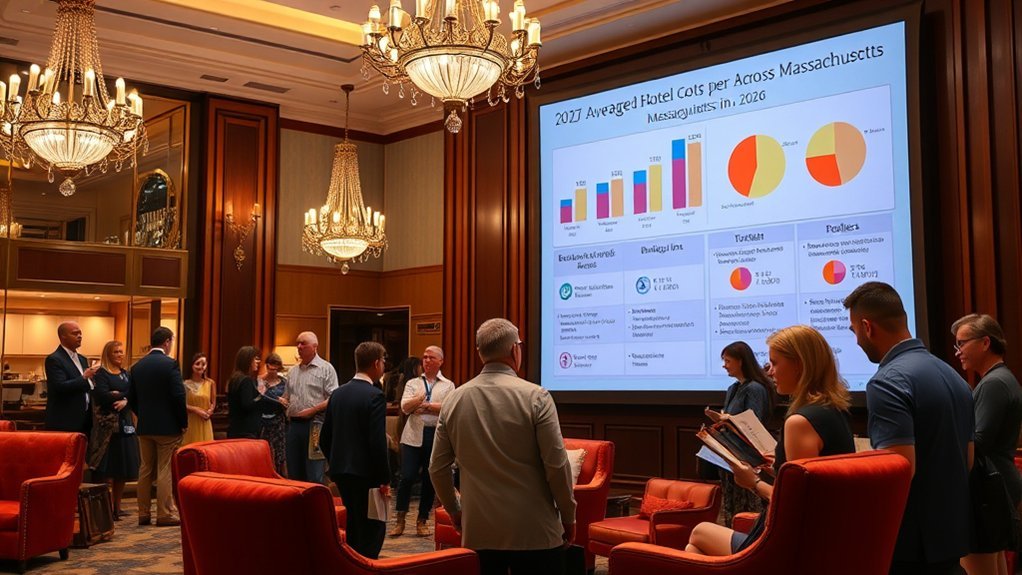
Massachusetts offers hostels, motels, chain hotels, boutique inns, bed-and-breakfasts, extended-stay properties, coastal resorts, and vacation rentals. The category with the lowest advertised nightly rate is not always the cheapest final choice, so compare what each stay includes.
| Accommodation type | Often best for | Check before booking |
|---|---|---|
| Hostel or shared lodging | Solo travelers and low room budgets | Dorm type, age rules, lockers, shared bathrooms, and membership charges |
| Budget motel or limited-service hotel | Road trips and short stays | Parking, breakfast, renovation status, and recent cleanliness reviews |
| Mid-range urban hotel | Sightseeing, business, and family trips | Parking, mandatory property fees, room size, transit access, and breakfast cost |
| Extended-stay hotel | Longer trips and travelers who want a kitchen | Weekly rate, housekeeping schedule, cookware, laundry, cancellation rules, and tax treatment for a long occupancy |
| Resort, inn, or boutique property | Special occasions and destination stays | Mandatory fees, meal plans, seasonal operations, minimum stays, and deposit policy |
Finding Affordable Hotels With Quality Assurance
A low rate is not a good value if the property has serious cleanliness, safety, noise, or maintenance problems. Use this checklist before committing:
- Read the newest reviews first, especially comments about beds, bathrooms, pests, heating or air conditioning, noise, and front-desk response.
- Check the street location, nighttime transportation options, and parking situation on a map.
- Confirm whether the quoted room has a private bathroom, especially at hostels and historic inns.
- Verify cancellation deadlines in the property’s local time.
- Look for renovation notices, construction, seasonal facility closures, or pool shutdowns.
- Save the confirmation email or a screenshot showing the room type, full price, included benefits, and cancellation terms.
Note: Guest ratings are not directly comparable across every booking platform. Review volume, recency, traveler type, and repeated complaints often tell you more than a small difference between two numerical scores.
Top Budget-Friendly Hotel Options in Massachusetts
Because hotel rates change by date, a permanent “cheapest hotels” ranking becomes outdated quickly. Start with the categories and locations most likely to deliver value for your specific trip:
- Boston hostels: Often among the lowest-priced central options for one traveler who is comfortable with shared facilities.
- Outer Boston suburbs near rail or subway service: May reduce the room price, but compare parking, fares, and transit time.
- West Springfield, Worcester, and highway corridors: Chain hotels may include parking or breakfast that would cost extra in central Boston.
- Extended-stay properties: A kitchen and guest laundry can lower food and service costs on longer trips.
- Off-season coastal inns: Can provide stronger value outside peak periods, although some facilities, restaurants, or nearby attractions may operate on reduced schedules.
Do not treat an older “cheapest hotels” list as a current ranking. Hotel names, ownership, inventory, and rates can change. Use older lists only to discover areas or property types, then confirm the hotel’s current identity and compare the live total for your exact dates.
How to Book During Peak Seasons
Peak-season savings usually come from controlling risk and comparing the whole trip cost rather than waiting for one perfect discount.
- Check the event calendar. Look for graduations, festivals, conventions, concerts, sports, school vacations, and holiday weekends.
- Book a refundable rate early when demand is high. This can protect your room while leaving you free to rebook if a better comparable rate appears.
- Compare nearby areas. Include parking, transit, ferry, fuel, tolls, and travel time.
- Recheck the same room. If the total falls and the terms truly match, secure the lower rate before canceling the original reservation.
- Test different stay lengths. A minimum-stay rule or one unusually expensive night can change the average nightly cost.
- Review the final payment amount. Check taxes, mandatory charges, deposit requirements, parking, pet charges, breakfast, and any optional services you selected.
How to Estimate Your Total Hotel Budget
Use this simple formula:
Total lodging budget = room total + occupancy taxes + mandatory property charges + parking + selected extras
For a quick first estimate, multiply the nightly base rate by the number of nights and add the applicable occupancy taxes. Then include fixed or optional costs that matter to you, such as parking, breakfast, pet charges, or transportation from a cheaper outlying hotel. Replace the estimate with the actual checkout total before paying.
How to Compare Two Hotel Quotes Fairly
| Compare | Keep the same | Watch for |
|---|---|---|
| Room | Room type, beds, occupancy, and dates | A cheaper rate for a smaller or different room |
| Cancellation | Refund deadline and payment timing | Nonrefundable or prepaid restrictions |
| Included benefits | Breakfast, parking, Wi-Fi, and other benefits | Extras that make the lower room rate more expensive overall |
| Final cost | Same guest count and selected options | Taxes, parking, pet charges, and optional add-ons |
Frequently Asked Questions
What is the current average Massachusetts hotel price in 2026?
As verified September 7, 2026, the cited Budget Your Trip sample covers 1,503 hotels and reports an average base price of about $242 per night and a $200 median. These are sample-based prices before taxes, not guaranteed live rates.
Are there hidden fees when booking hotels in Massachusetts?
Mandatory business fees must be included in the prominently displayed total price under the FTC’s lodging-fee rule. Government taxes and genuinely optional add-ons may initially be displayed separately. Review the final payment amount for taxes, parking, pet charges, breakfast, deposits, and optional services before paying.
Do hotel prices vary by city within Massachusetts?
Yes. Central Boston, Nantucket, Martha’s Vineyard, Cape Cod, Salem, the Berkshires, Worcester, and Springfield have different hotel inventories and demand cycles. Compare your exact destination and dates instead of relying only on a statewide average.
Can I find pet-friendly accommodations in Massachusetts?
Yes, but pet rules vary by property. Confirm accepted animals, size or breed limits, nightly or stay fees, room restrictions, and whether pets may be left unattended. Service animals are not pets: under ADA guidance, hotels cannot restrict guests with service animals to pet-friendly rooms or charge the ordinary cleaning fee for hair or dander, although normal damage charges can still apply if the animal damages the room.
What amenities should I expect in a mid-range hotel?
Many mid-range hotels offer Wi-Fi, private bathrooms, climate control, a television, an in-room coffee maker, and fitness facilities. Breakfast, parking, pools, refrigerators, microwaves, and daily housekeeping are not universal, so verify the exact room and rate before booking.
Are there discounts for extended hotel stays?
Many hotels offer weekly, corporate, or extended-stay rates, but the discount is not automatic. Massachusetts generally applies room occupancy excise to hotel stays of 90 consecutive days or less; when a qualifying hotel occupancy exceeds 90 consecutive days, the state regulation says the excise does not apply to any portion of that stay. Compare the full-stay total and confirm the property’s tax treatment before paying.
Does the $242 average include taxes and fees?
No. The cited statewide sample describes base hotel prices before taxes. Massachusetts adds a 5.7% state room occupancy excise, and local or regional taxes and charges may also apply depending on the location.
Do Massachusetts vacation rentals pay the same taxes as hotels?
They can share the 5.7% state occupancy excise and applicable local or regional lodging taxes, but certain short-term rentals may also face a community impact fee of up to 3% where a city or town has adopted it and the rental meets the qualifying conditions.
Is February always the cheapest month for Massachusetts hotels?
KAYAK currently lists February as the lowest statewide monthly average at about $163 per night, but it is not guaranteed to be cheapest for your destination or dates. Ski weekends, school vacations, conferences, and special events can raise winter rates, while coastal and island inventory follows different seasonal patterns.
What is the cheapest day to stay in a Massachusetts hotel?
KAYAK currently lists Sunday as the lowest statewide average at about $211 per night and Saturday as the highest at about $265. That pattern is not universal: conventions, graduations, festivals, sports, weddings, and holiday weekends can make a different day cheaper or more expensive in a specific destination.
Conclusion
A practical statewide benchmark for a Massachusetts hotel is about $242 per night before taxes in Budget Your Trip’s current 1,503-property sample, while KAYAK currently shows about $211 for a double room. Use the difference as a reminder that hotel averages depend on the dataset. For your actual trip, compare full stay totals, check local events, use refundable rates when flexibility matters, and include taxes, parking, transportation, and selected extras in your budget.
Sources
- Budget Your Trip: Massachusetts Average Hotel Costs — current sample-based statewide base-price benchmarks, category averages, median, and methodology.
- KAYAK: Massachusetts Hotels — current statewide double-room, monthly, and day-of-week pricing indicators.
- Massachusetts Department of Revenue: Room Occupancy Excise Tax — state, local, convention-center, water-protection, and qualifying short-term-rental tax information.
- Massachusetts Regulation 830 CMR 64G.1.1 — tax treatment for qualifying hotel occupancies that exceed 90 consecutive days.
- Federal Trade Commission: Rule on Unfair or Deceptive Fees FAQ — total-price requirements for short-term lodging and treatment of mandatory, government, and optional charges.
- Meet Boston: Hotel Statistics — Boston occupancy and average daily rate data, including the latest full-year monthly comparison currently published.
- Massachusetts Office of Travel and Tourism: Seasons — official year-round seasonal travel context across Massachusetts.
- ADA.gov: Service Animal FAQs — federal guidance on hotel rooms, cleaning fees, and service animals.