
Planning a 14-night hotel stay in the United States requires more than multiplying the first nightly rate you see. Based on the latest national hotel data, a reasonable 2026 room-rate benchmark is about $2,293 for 14 nights before government taxes and optional expenses. Your actual total can be much lower or higher depending on the city, dates, hotel class, room type, parking, meals, and cancellation terms.
Quick Answer
A data-based 2026 national estimate is about $2,293 for one hotel room for 14 nights before government taxes and optional extras. This applies CoStar’s 2% 2026 rate forecast to the 2025 U.S. average daily rate of $160.54. High-cost cities can exceed $3,000 to $4,500 in room charges alone.
Key Takeaways
- The projected national room-rate benchmark is about $163.75 per night, or approximately $2,293 for 14 nights.
- This is a per-room industry estimate, not a per-person vacation budget or guaranteed checkout price.
- Mandatory hotel fees must generally appear in the displayed total, but government taxes and optional services may still be added separately.
- For a two-week stay, compare weekly rates, kitchens, laundry, parking, transportation, cancellation rules, and the final checkout total.
How Much Does a Two-Week Hotel Stay Cost in the USA?

CoStar reported that the average daily rate, or ADR, for U.S. hotels was $160.54 in 2025. Its June 2026 forecast projected a 2% increase in ADR for 2026.
Applying that forecast produces an estimated 2026 national ADR of about $163.75:
| Calculation | Amount |
|---|---|
| 2025 national ADR | $160.54 |
| 2026 forecast increase | 2% |
| Estimated 2026 ADR | $163.75 |
| Estimated cost for 14 nights | $2,292.50, rounded to $2,293 |
At a projected national rate of about $163.75 per night, one room for 14 nights comes to approximately $2,293 before government taxes and optional expenses.
Note: ADR is an industry average for occupied rooms. It is not a guaranteed public rate, and it does not mean each traveler pays $163.75. Most standard prices are quoted per room for a stated number of guests.
What Changes the Cost of a 14-Night Hotel Stay?
The national estimate is useful for early planning, but hotel pricing is dynamic. The same room can have very different prices depending on the destination, date, demand, hotel category, occupancy, and booking conditions.
Location and Hotel Category
Large tourism and business markets can cost substantially more than the national average. CoStar’s 2025 results put New York City’s ADR at $333.71 and San Francisco’s at $225.82, compared with the national ADR of $160.54.
Hotels near convention centers, stadiums, beaches, theme parks, airports, and major attractions may charge more when demand is strong. Luxury, full-service, boutique, and resort properties also tend to cost more than economy and limited-service hotels.
A hotel outside the main tourist district may be cheaper, but do not compare the room rate alone. Add the cost of public transportation, rideshares, rental cars, fuel, parking, and the time required to reach the places you plan to visit.
Season, Weekday, and Local Events
Prices can change quickly around holidays, school breaks, conventions, concerts, sports events, festivals, and favorable weather. However, there is no universal rule that every summer hotel costs a fixed percentage more or that every weekday is cheaper.
The Bureau of Labor Statistics reported that its hotel and motel lodging index in June 2026 was 4.8% higher than a year earlier but 2.8% lower than the previous month. These movements show why current rates for the traveler’s exact dates are more useful than a broad annual percentage.
Room Type, Occupancy, and Length of Stay
A standard room, suite, connecting room, balcony room, kitchenette, or accessible room can have a different price. The number and ages of guests may also affect the rate, especially when the property charges for additional adults, rollaway beds, or breakfast.
For a two-week booking, check whether the property offers a weekly, extended-stay, advance-purchase, member, or corporate rate. A lower nightly price is not automatically the best deal if it is nonrefundable or excludes benefits included with another rate.
Recent Market Benchmarks and 14-Night Equivalents
The following figures show how strongly location can affect a two-week room subtotal. The New York and San Francisco figures are 2025 measured ADRs, while the national 2026 figure is derived from CoStar’s latest forecast. These amounts are not live quotes and do not include government taxes or optional additions.
| Benchmark | Nightly ADR | 14-Night Equivalent |
|---|---|---|
| U.S. national 2026 estimate | $163.75 | $2,292.50 |
| San Francisco 2025 ADR | $225.82 | $3,161.48 |
| New York City 2025 ADR | $333.71 | $4,671.94 |
Pro Tip: Search the exact 14-night period rather than multiplying a one-night search result. Some properties apply weekly discounts, while others increase the rate on high-demand nights within the stay.
Hotels, Hostels, Rentals, Extended Stays, and RVs
Alternative lodging can reduce costs, but only when you compare the complete price and the services you actually need. A low advertised nightly rate can become expensive after transportation, cleaning, parking, food, or equipment expenses are included.
| Accommodation | Potential Advantages | Costs to Check |
|---|---|---|
| Standard hotel | Front desk, housekeeping, central locations, predictable room setup | Taxes, parking, breakfast, laundry, pet charges, extra guests |
| Extended-stay hotel | Kitchen, laundry access, weekly rates, more practical for long stays | Reduced housekeeping, parking, cookware, deposit, cancellation terms |
| Hostel | Can be economical for one traveler; shared kitchen or social space | Private-room premium, locker or towel charges, shared facilities, location |
| Vacation rental | More bedrooms, kitchen, living space, useful for families and groups | Cleaning, service charges, parking, deposit, house rules, cancellation |
| RV or camper | Flexible route and combined transport and sleeping space | Rental, mileage, insurance, fuel, campground, hookups, cleaning, parking |
For two or more travelers, compare the total cost per room or property rather than only the price per person. A private hostel room can sometimes cost as much as a budget hotel, while a vacation rental may become economical only when several guests share the total.
Why Seasonal Demand Changes Hotel Prices
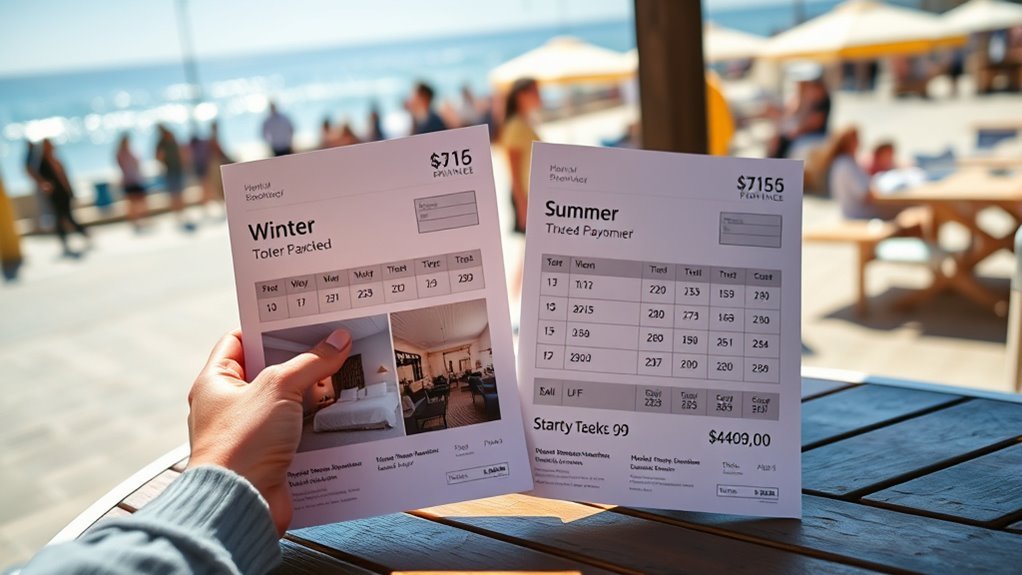
Hotels use dynamic pricing, which means room prices respond to expected demand and remaining availability. A property may raise rates as rooms sell or lower them when demand is weaker than expected.
Common demand drivers include:
- Local events: Conferences, games, concerts, graduations, festivals, and major public events can fill nearby rooms.
- Weather and destination type: Beach destinations, ski areas, national parks, and desert cities have different peak periods.
- Day of the week: Business districts may be expensive on weekdays, while leisure destinations may cost more on weekends.
- School and holiday calendars: Spring break, summer vacation, Thanksgiving, and year-end holidays can increase demand.
- Room supply: Markets with limited hotel inventory can experience larger price changes when demand rises.
There is no single best booking day for every hotel. A practical approach is to reserve a reasonably priced refundable rate, monitor the same dates, and rebook if a genuinely better rate appears before the cancellation deadline.
Hotel Fees, Taxes, and Card Holds You Should Know
The phrase “hidden resort fee” needs context under current U.S. rules. The FTC Rule on Unfair or Deceptive Fees, effective May 12, 2025, requires hotels, vacation rentals, and booking platforms to display the total price including mandatory charges more prominently than other pricing information.
Government taxes and optional additions may still be excluded from the first displayed price, but they must be disclosed before payment. That makes it important to distinguish each type of charge:
| Charge Type | How to Treat It in Your Budget |
|---|---|
| Mandatory resort or destination fee | It should be included in the prominently displayed total price, even if the hotel also itemizes it. |
| Government lodging and sales taxes | Rates vary by city, county, and state. They may be excluded from the initial total but must be disclosed before payment. |
| Parking | Add the property’s actual daily or overnight price only when you will bring a vehicle. |
| Breakfast, room service, minibar, and laundry | These are normally optional unless specifically included in the booked package. |
| Pet, extra-person, crib, or rollaway charges | Confirm them before booking because they depend on the property and guest details. |
| Incidental authorization or security deposit | This may be a temporary card hold rather than a final expense, but it can reduce available credit during the trip. |
Taxes differ substantially by jurisdiction. For example, the San Francisco Treasurer and Tax Collector states that the city’s transient occupancy tax is 14%. Tourism district assessments may also apply or be passed through. This is a San Francisco example, not a nationwide hotel-tax rate.
Warning: Do not compare a prepaid, nonrefundable rate with a flexible rate as though they are the same product. Check the room type, guest count, cancellation deadline, mandatory-fee total, taxes, parking, and deposit policy before choosing the lower number.
How to Calculate Your Two-Week Hotel Budget
Use the complete booking total rather than relying on a national average alone. The following formula works for a hotel, motel, extended-stay property, hostel, or vacation rental:
Two-week lodging budget: displayed room and mandatory-fee total + government taxes + parking + optional services + transportation difference − confirmed discounts or rewards.
Build the budget in this order:
- Search all 14 nights together. Record the displayed total that includes mandatory property fees.
- Check government taxes. Confirm whether the booking summary includes them.
- Add required transportation costs. Include hotel parking, public transport, rideshares, rental cars, fuel, and airport transfers as applicable.
- Add long-stay living costs. Consider breakfast, groceries, restaurant meals, laundry, and housekeeping.
- Review occupancy charges. Enter the correct number and ages of all guests before comparing prices.
- Confirm the card hold. Ask about security deposits or incidental authorizations if available credit is limited.
- Apply confirmed savings last. Count a member discount, reward night, statement credit, or promotion only after it appears in the final booking summary.
A room with a kitchenette may cost more per night but reduce restaurant spending. Free parking may make a suburban hotel cheaper for a road trip, while a central hotel may be less expensive overall when it removes the need for a rental car.
Smart Strategies for Finding a Better Two-Week Rate

- Compare the total for identical dates. Do not compare one site’s nightly rate with another site’s checkout total.
- Check the hotel’s direct website and reputable booking platforms. Compare the same room, occupancy, meal plan, and cancellation terms.
- Test flexible dates. Moving the stay by one or two days can avoid a costly event or high-demand weekend.
- Search nearby neighborhoods. Then add transit, parking, fuel, and travel time before deciding that the distant hotel is cheaper.
- Ask about weekly or extended-stay pricing. Some discounts do not appear in a standard one-night search.
- Compare useful amenities. A kitchen, refrigerator, laundry room, breakfast, or parking may lower the total trip cost.
- Consider a refundable booking. Recheck the same dates periodically and change the reservation only when the new total and terms are genuinely better.
- Use rewards carefully. Compare member rates, free-night awards, parking benefits, and resort-fee policies rather than assuming points always provide the best value.
Pro Tip: Take a screenshot or save the booking confirmation showing the room type, guest count, dates, total price, cancellation deadline, and included services. It makes billing questions easier to resolve.
Frequently Asked Questions
How much does the average hotel cost in the US?
CoStar reported a 2025 U.S. average daily rate of $160.54 and forecast 2% ADR growth for 2026. Applying that increase gives a national 2026 estimate of about $163.75 per occupied room per night. This is a room-rate benchmark, not an all-in checkout price.
How much should I budget for a hotel for two weeks?
A national room-rate estimate is about $2,293 for 14 nights before government taxes and optional expenses. A high-cost city, premium hotel, major event, parking requirement, or suite can raise the room subtotal above $3,000 or $4,500.
Is $3,000 enough for a two-week hotel stay?
It can be enough in many U.S. markets, especially when the booking total includes mandatory fees and parking is not required. It may be insufficient in expensive cities, resort areas, premium hotels, or during major events. Always price the exact destination and dates.
Are resort fees still hidden from hotel prices?
Mandatory resort and destination fees must generally be included in the most prominent displayed total under the FTC fee rule that took effect on May 12, 2025. Government taxes and optional additions may be listed separately but must be disclosed before payment.
How much does the average American spend on vacation?
There is no single figure that is useful for every vacation because reports use different trip lengths, party sizes, destinations, and expense categories. For planning, calculate lodging, transportation, meals, activities, insurance, and a contingency amount separately.
How much is a motel per night in America?
There is no reliable single motel rate for the entire country. Prices depend on the market, date, property condition, room type, and local demand. Search the full 14-night period and compare the checkout total, reviews, cancellation policy, parking, and taxes.
Do hotels charge per room or per person?
Most standard hotel rates are quoted per room for a stated occupancy, often one or two adults. Additional adults, children above a specified age, breakfast, or rollaway beds may change the total. Enter every guest correctly when searching.
Conclusion
A practical national estimate for a two-week U.S. hotel stay in 2026 is about $2,293 for one room before government taxes and optional expenses. That figure is a planning benchmark, not a fixed nationwide checkout price. Recent market data show that 14 nights can exceed $3,100 in San Francisco or $4,600 in New York before taxes, while other destinations and hotel categories may cost less.
For the most accurate budget, search all 14 nights together and compare the final mandatory-fee total, taxes, parking, transportation, food, deposits, and cancellation rules. The lowest nightly rate is valuable only when the complete stay also fits your needs and budget.
Sources
- CoStar: U.S. Hotels Report 2025 Full-Year Performance — supports the national, New York City, and San Francisco ADR figures.
- CoStar and Tourism Economics: June 2026 U.S. Hotel Forecast — supports the projected 2% increase in 2026 ADR.
- Federal Trade Commission: Rule on Unfair or Deceptive Fees FAQ — explains mandatory-fee, government-tax, and optional-charge disclosure requirements.
- U.S. Bureau of Labor Statistics: Consumer Price Index Detailed Categories — supports recent hotel and motel price-change data.
- San Francisco Treasurer and Tax Collector: Transient Occupancy Tax — supports the location-specific 14% hotel-tax example and district-assessment information.