Airbnb prices in Indiana vary much more by destination, dates, property size, and local events than one statewide average can show. Current 2026 short-term-rental market data ranges from about $150 per booked night in Lawrenceburg to nearly $500 in South Bend, while Indianapolis sits closer to $203. Your actual Airbnb checkout total can still be higher or lower because of the exact property, fees, taxes, and dates you choose.
Quick Answer
There is no reliable single 2026 statewide Airbnb rate for Indiana. Current short-term-rental ADR benchmarks range from about $150 in Lawrenceburg and $203 in Indianapolis to $440 in Michigan City and $498 in South Bend. Treat those as market benchmarks, not guaranteed Airbnb quotes, and compare the full price for your exact dates.
Key Takeaways
- Indiana Airbnb prices differ sharply by city, property size, season, and event dates.
- Current market ADRs include Indianapolis at about $203, Jeffersonville at $231, Bloomington at $309, and Michigan City at $440.
- ADR is an average booked nightly rate and is not the same as your final Airbnb checkout total.
- For qualifying Indiana stays, taxes can include 7% state Gross Retail Tax plus a county innkeeper tax where applicable.
- Compare the full stay price rather than judging a listing only by its advertised nightly rate.
What Airbnb Costs Per Night in Indiana in 2026
A single statewide number can be misleading because Indiana’s short-term-rental markets are very different. AirDNA’s public market pages, updated July 5, 2026 with completed data through June 2026, show an average daily rate of $203 in Indianapolis, $231 in Jeffersonville, $150 in Lawrenceburg, $309 in Bloomington, $290 in Nashville, Indiana, $440 in Michigan City, and $498 in South Bend.
These figures are average daily rates, or ADRs. They represent the average rate paid for booked nights in each short-term-rental market. AirDNA tracks listings across Airbnb, Vrbo, and Booking.com, so the figures are useful market benchmarks but are not Airbnb-only price quotes.
Note: Your actual Airbnb price may differ considerably from a market ADR. Property size, cleaning and pet fees, exact travel dates, minimum-stay rules, taxes, events, and host pricing can all change the final amount.
Jeffersonville is a useful example of why current data matters. Its July 2026 market update shows 285 active short-term rentals, 57% annual occupancy, and a $231 ADR. AirDNA’s supply data also shows that about 90.2% of active listings are entire homes, making whole-home rentals a major part of that market.
Indiana does not have one useful nightly price for every Airbnb. Current local ADRs vary by hundreds of dollars, so destination-specific comparisons are far more useful than a single statewide average.
How Airbnb Prices Vary By Region in Indiana
Location is one of the strongest price factors. Large event markets, university destinations, lake communities, and small towns can have very different property mixes and booking patterns.
| Indiana Market | 2026 ADR Benchmark | Average Occupancy |
|---|---|---|
| Lawrenceburg | $150 | 42% |
| Indianapolis | $203 | 53% |
| Jeffersonville | $231 | 57% |
| Nashville, Indiana | $290 | 46% |
| Bloomington | $309 | 41% |
| Michigan City | $440 | 52% |
| South Bend | $498 | 40% |
Indianapolis has far more active short-term rentals than most Indiana destinations, but its market-wide ADR is lower than the averages reported in Bloomington, Michigan City, or South Bend. That demonstrates why a larger city is not automatically the most expensive place to stay.
Michigan City and other northwest Indiana vacation areas can have larger houses designed for groups and leisure trips, which can push the market-wide nightly rate higher. Bloomington and South Bend are also affected by university-related travel and event weekends.
For a traveler, the best comparison is not simply “Which city has the lowest ADR?” Compare properties that fit the same number of guests and then divide the full stay price by the number of nights and, if useful, the number of travelers.
Airbnb Pricing By Property Type (Cabins, Lakefront, Guesthouses)
Property type affects what you pay, but there is no trustworthy Indiana-wide rule saying every cabin, lakefront home, or guesthouse should cost a specific amount. Bedrooms, capacity, exact location, privacy, waterfront access, quality, and travel dates matter more than the label alone.
Cabin Pricing Trends
Indiana cabins near outdoor destinations such as Brown County can attract couples, families, and groups looking for privacy and recreation. A small one-bedroom cabin and a large multi-bedroom cabin should not be compared by nightly price alone because they serve different numbers of guests.
Features such as a hot tub, fireplace, wooded setting, modern kitchen, large deck, game room, or easy access to trails may help a host charge more when guests value those features. However, there is no reliable universal percentage that applies to every Indiana cabin.
- Compare cabins with the same bedroom count and guest capacity.
- Check whether the cleaning fee is spread over a short or long stay.
- Compare weekday and weekend dates separately.
- Look at distance from the attraction you actually plan to visit.
- Calculate the complete stay cost before deciding which listing is cheaper.
Lakefront Cost Factors
Lakefront homes can command higher prices when they offer direct water access, private outdoor space, docks, large group capacity, or strong views. The premium varies by lake, season, home size, and the quality of the property, so fixed claims such as “every private dock adds 20%” should not be treated as a rule.
| Feature | Likely Pricing Effect |
|---|---|
| Private dock or direct lake access | Can support a premium when boating, fishing, or swimming access is important to guests. |
| Hot tub | May increase appeal, especially for couples and leisure stays. |
| Peak summer dates | Demand can increase around warm-weather recreation and popular weekends. |
| Nearby parks or attractions | Convenience can support higher rates when the location saves driving time. |
Guesthouse Rate Comparisons
Guesthouses can be attractive for couples or solo travelers because you may get more privacy than a private room without paying for a large multi-bedroom house. Their value depends heavily on location and the total price for your dates.
Do not apply Jeffersonville’s overall $231 market ADR to every guesthouse. That figure covers the broader short-term-rental market, and the city’s current supply is dominated by entire homes rather than a single property category.
- Compare private entrances and parking arrangements.
- Check whether the unit has a full kitchen or only basic food-preparation facilities.
- Confirm Wi-Fi quality if you will work remotely.
- Check pet fees before choosing a pet-friendly property.
- Read recent reviews for noise, cleanliness, heating, cooling, and mattress comfort.
How Amenities Raise Nightly Rates (Hot Tubs, Docks, Wi-Fi, Pets)
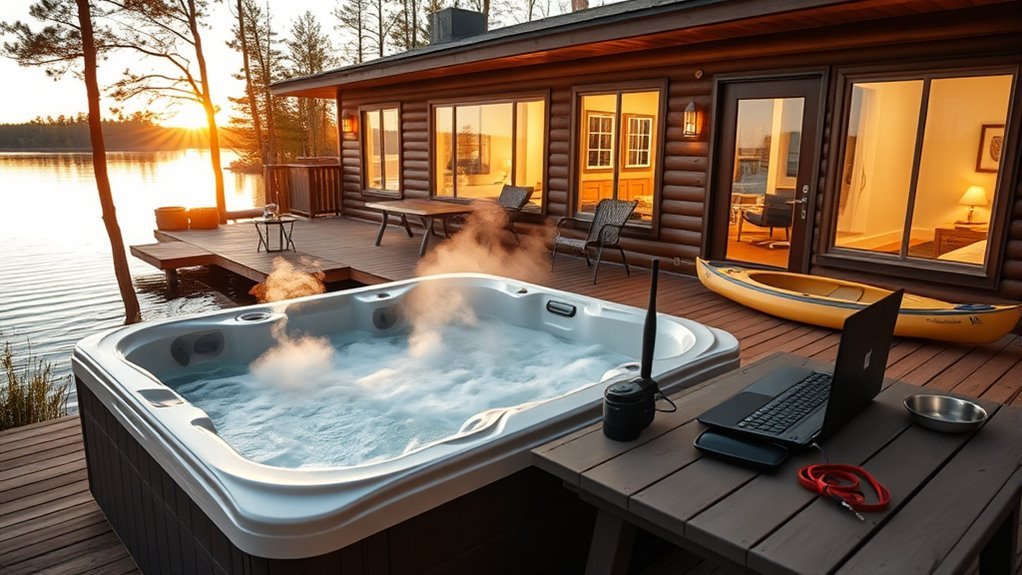
Amenities can change both a property’s appeal and its nightly price, but there is no dependable Indiana-wide formula saying that a hot tub, dock, Wi-Fi connection, or pool adds a fixed percentage.
For leisure travelers, a hot tub, fire pit, game room, private yard, water access, or outdoor entertaining area may justify paying more when those features are part of the trip itself. For remote workers, reliable Wi-Fi and a usable workspace may matter more than recreation features.
Pet-friendly listings can also cost more because hosts may charge a pet fee. Airbnb explains that a reservation’s total price can include the nightly rate plus additional charges such as cleaning, pet, or extra-guest fees.
An amenity is worth paying for only when you will actually use it. A lower-priced property without a hot tub, dock, game room, or oversized yard may be the better value for an activity-focused trip.
Taxes, Airbnb Fees, and the Real Checkout Price
The advertised nightly rate is only one part of the booking cost. Airbnb says a home’s total reservation price can include the host’s nightly price, cleaning or other host-added fees, Airbnb service fees where applicable, and taxes.
For guests in the United States, Airbnb now displays a fee-inclusive total price before taxes in search results. You can still open the price breakdown to see how the amount is calculated. Airbnb’s U.S. pricing guidance explains the current display system.
Taxes matter in Indiana. According to Airbnb’s Indiana occupancy-tax guidance, qualifying reservations of 29 nights or fewer are generally charged a 7% Indiana Gross Retail Tax. A county innkeeper’s tax can also apply and may vary by county. The Indiana Department of Revenue confirms that county innkeeper tax applies to qualifying short-term accommodations in counties that have adopted it.
Warning: Do not calculate your travel budget from ADR alone. Always check the final Airbnb price breakdown for your exact property, dates, number of guests, pets, fees, and applicable taxes before booking.
Seasonality & Events That Push Prices Up Or Down
Indiana pricing is seasonal, but the pattern is not identical in every market. Lake destinations can be stronger during warm-weather travel, Brown County draws fall visitors, and cities with major sporting or university events can see short bursts of intense demand.
That means there is no dependable statewide rule that “May is always the most expensive month” or “February always averages $130.” A quiet Indianapolis weekend and a major Indianapolis event weekend can have very different pricing even within the same month.
Peak Event Weekends
Large events can quickly change local availability. The 110th Indianapolis 500 was held on May 24, 2026, after practice and qualifying events earlier in May. The official INDYCAR schedule confirms the date.
During major event periods, properties near the venue may sell earlier and hosts may adjust prices or minimum-stay requirements. Similar effects can occur around major university weekends, festivals, conventions, and other high-demand dates.
- Search event weekends well before the trip.
- Compare listings farther from the venue when you have a car.
- Check minimum-night requirements before comparing totals.
- Look at the complete stay price rather than one night’s rate.
- Compare cancellation terms if your schedule may change.
Seasonal Weather Swings
Weather influences the type of Indiana destination people choose. Summer can support lake and outdoor trips, while fall foliage can increase demand in scenic areas. Winter may bring quieter periods in some leisure markets, but university, business, and event demand can still make specific weekends expensive.
| Travel Period | Smart Booking Approach |
|---|---|
| Popular spring events | Book early and compare nearby neighborhoods. |
| Summer lake trips | Compare weekdays with Friday/Saturday nights. |
| Fall foliage weekends | Reserve early in scenic destinations and check minimum stays. |
| Quieter dates | Use flexible-date searches to find lower totals. |
Holiday And Festival Demand
Holiday weekends, festivals, university events, and major races can tighten supply in a small area even when the broader market is not especially busy. This is why annual ADR should never be treated as a promise of what you will pay on a specific weekend.
Properties close to an event can be convenient but expensive. If the savings are meaningful, compare homes 15–30 minutes farther away and include parking, fuel, rideshare, or other transportation costs in the decision.
- Major Indianapolis events: compare early before nearby supply becomes limited.
- Fall leisure travel: scenic areas can become more competitive on peak weekends.
- University weekends: Bloomington and South Bend can behave very differently from ordinary weekends.
- Flexible travelers: moving the stay by one or two days can sometimes reveal cheaper options.
- Longer trips: compare the total stay price because minimum-stay rules and cleaning fees affect the nightly average.
How To Book Cheaper: Timing, Minimum-Stay Tactics, And Cancellations
If your goal is to spend less on an Indiana Airbnb, start with flexible dates. Search several nearby date combinations rather than assuming one month is always the cheapest statewide.
Next, compare the full price for the whole stay. A listing with a lower base nightly rate can become more expensive after a large cleaning fee or other charges, especially for one- or two-night stays.
Minimum-stay rules also matter. A property requiring three nights may not be economical for a two-night trip even if its advertised nightly rate looks attractive. On the other hand, a longer trip can spread a one-time cleaning fee over more nights.
Cancellation terms are another part of value. A slightly more expensive reservation with terms that fit your travel uncertainty may be safer than choosing the absolute cheapest option and later losing money because your plans change.
Pro Tip: Search once for your exact dates, then test dates one or two days earlier and later. Also compare the total cost of nearby neighborhoods. Flexible dates and a slightly longer drive can produce larger savings than chasing an unsupported “cheapest month” rule.
If you want to ask a host about a longer-stay discount, keep the request polite and use Airbnb’s messaging system. Do not assume every host negotiates or that a last-minute price reduction will appear.
Sample Budgets: Weekend, Weeklong, And Family Trip Estimates
Instead of using an unsupported statewide average, you can build a rough starting budget from current local ADR benchmarks. The figures below simply multiply each market’s current ADR by two or seven nights. They do not include taxes or guarantee the price of a particular Airbnb.
| Market | ADR Benchmark | 2-Night Benchmark | 7-Night Benchmark |
|---|---|---|---|
| Lawrenceburg | $150 | $300 | $1,050 |
| Indianapolis | $203 | $406 | $1,421 |
| Jeffersonville | $231 | $462 | $1,617 |
| Nashville, Indiana | $290 | $580 | $2,030 |
| Bloomington | $309 | $618 | $2,163 |
| Michigan City | $440 | $880 | $3,080 |
| South Bend | $498 | $996 | $3,486 |
A family should also compare cost per person. A $400-per-night four-bedroom house that sleeps eight people can work out to $50 per person per night before taxes and other charges, while a $200 one-bedroom property for two people works out to $100 per person. The larger house costs more overall but can be better value for a group.
For a weekend trip, cleaning fees can have a larger effect because they are spread over only a few nights. For a weeklong trip, the same one-time fee has a smaller effect on the effective nightly cost.
Cost Tradeoffs: When To Splurge Vs. Save On Indiana Rentals
A more expensive Airbnb can be worth it when the property itself is part of the experience. Lake access, a private outdoor area, enough bedrooms for a group, a high-quality kitchen, or a walkable location may save money or improve the trip in ways that a cheaper property does not.
Splurge when the extra cost buys something your group will actually use—such as enough bedrooms, direct water access, a convenient event location, or amenities that replace other paid activities.
Save when most of your time will be spent sightseeing, visiting family, attending an event, or exploring outdoors. In those cases, paying extra for a luxury kitchen, game room, pool, dock, or oversized yard may add little value.
For groups, compare the full property price against booking multiple hotel rooms. For couples or solo travelers, also compare smaller guesthouses, private rooms, hotels, and motels instead of assuming an entire Airbnb is automatically cheaper.
Hosts should make the same distinction between revenue and profit. Market-data pages report gross rental revenue estimates, not the money an owner keeps after mortgage or rent, utilities, cleaning, maintenance, supplies, insurance, taxes, platform fees, repairs, and management costs.
Frequently Asked Questions
How Much Should I Charge per Night for My Airbnb?
Do not use one Indiana-wide number. Compare similar nearby listings and recent local market performance for the same bedroom count, guest capacity, amenities, and dates. Current market ADRs vary widely—for example, Indianapolis is about $203 while Jeffersonville is about $231—but your specific property’s competitive rate can be much higher or lower.
Is Airbnb Profitable in Indiana?
It can be, but gross revenue is not the same as profit. Results depend on acquisition or rent costs, occupancy, ADR, cleaning, maintenance, utilities, insurance, taxes, platform fees, local rules, financing, and management expenses. Evaluate a specific property rather than assuming that a strong local ADR guarantees profit.
What Is the 75-55 Rule for Airbnb?
The “75-55 rule” is not an official Airbnb pricing or occupancy rule. You may see operators use their own occupancy targets, but there is no universal requirement to achieve 75% occupancy in peak months and 55% in off-peak months. Use actual local demand, revenue, and cost data instead.
What Are the Most Popular Airbnb Areas in Indiana?
Large or active short-term-rental markets include Indianapolis, South Bend, Bloomington, Michigan City, Nashville in Brown County, and Jeffersonville. Each attracts different travelers, including event visitors, university travelers, lake vacationers, and outdoor tourists. Listing supply alone does not prove which destination is “most popular,” so choose based on the trip you want.
How Much Tax Do You Pay on an Airbnb in Indiana?
For qualifying Indiana Airbnb reservations of 29 nights or fewer, Airbnb says guests generally pay 7% Indiana Gross Retail Tax. A county innkeeper’s tax can also apply depending on the property’s location. Always check the current price breakdown because the exact tax amount depends on the jurisdiction and reservation.
Is the Airbnb Nightly Rate the Final Price?
Not necessarily. The final reservation can include the nightly price, cleaning or other host-added fees, Airbnb service fees where applicable, and taxes. In the United States, Airbnb displays a fee-inclusive total before taxes in search, and you can review the detailed price breakdown before booking.
Conclusion
Indiana Airbnb costs are best understood market by market rather than through one statewide average. Current 2026 short-term-rental ADR benchmarks range from about $150 in Lawrenceburg and $203 in Indianapolis to $440 in Michigan City and $498 in South Bend. Those numbers are useful starting points, not guaranteed booking prices.
For the most accurate budget, search your exact destination and dates, compare similar properties, review the full stay price, and account for taxes and other charges. If your dates are flexible, test nearby weekdays and alternative neighborhoods before paying a premium for a busy weekend or major event.
Sources
- AirDNA — Indianapolis Short-Term Rental Market Data — current Indianapolis ADR, occupancy, supply, and revenue benchmarks.
- AirDNA — Jeffersonville Short-Term Rental Market Data — current Jeffersonville ADR, occupancy, and listing count.
- Airbnb — Occupancy Tax Collection in Indiana — Indiana Gross Retail Tax and county innkeeper tax guidance.
- Indiana Department of Revenue — County Innkeeper’s Tax — official Indiana accommodation-tax guidance.
- Airbnb — Pricing Display in the United States — explains fee-inclusive total-price display for U.S. guests.
- INDYCAR — 2026 Indianapolis 500 — official 2026 event schedule and May 24 race date.