
You’ll pay $34 for a Tennessee resident annual fishing license if you’re 13 or older, with a $5 discounted annual rate for seniors and a $10 junior license for ages 13–15. Nonresidents typically pay $50 for a full‑year pass; short‑term nonresident options run $16–$40 for limited durations and species. Fees fund conservation, habitat management, and enforcement. Keep going and you’ll find details on lifetime, supplemental, disability, and special‑water permits.
Who Needs a Tennessee Fishing License

If you plan to fish Tennessee’s public waters, you’ll need a valid fishing license once you’re 13 or older, with a few specific exemptions: residents born before March 1, 1926, residents who are legally blind or developmentally disabled, and military personnel on leave.
You’ll follow a clear fishing regulations overview: anyone 13+ must hold a license to fish public waters; children under 13 don’t need one but any adult assisting them must be licensed.
Non-residents always need a license, available in varying durations (annual, three-day, one-day) to match visit length and effort.
You should verify status-related fishing license exemptions before heading out, since proof of age, residency, disability, or military leave may be required.
This framework supports conservation by ensuring anglers contribute to management funding and abide by catch rules.
Plan licenses ahead to avoid violations and to support sustainable fishery practices across Tennessee’s public waters.
Resident Annual Fishing License Prices
Now that you know who must hold a Tennessee fishing license, here’s what residents pay: an annual resident fishing license costs $34 and covers anyone aged 13 and older, while residents 65 and older qualify for a $5 discounted annual license and youths 13–15 can get a junior hunt, fish, and trap license for $10 per year.
You’ll find the annual license runs from purchase until the last day of February the following year, so timing affects duration and pro rata value.
Understand fishing license benefits and fishing license regulations: fees fund conservation, habitat management, and enforcement that sustain fish populations and public access.
- Annual resident license: $34 (ages 13+)
- Senior resident license: $5 (65+)
- Junior hunt/fish/trap license: $10 (ages 13–15)
- Validity: purchase date through Feb 28/29 next year
- Note: special permits for certain areas are extra
Keep records of your license and follow regulations to protect resources and avoid penalties.
Products Worth Considering

TENNESSEE MOUNTAINS GREYSCALE DESIGN - Beautiful "TENNESSEE MOUNTAINS" license plate featuring greyscale TN state flag emblem with mountain design. Perfect car decor for Tennessee residents, TN state pride enthusiasts, and anyone celebrating Tennessee heritage with mountain imagery representing volunteer state spirit and Tennessee pride. Note: Colors may vary slightly from images due to display settings.

TENNESSEE STATE FLAG DESIGN: Features a textured, raised Tennessee flag design for an authentic, high-end look and feel.

Laser cut acrylic inlaid
Nonresident Annual Fishing License Rates
As a nonresident angler you’ll choose between a $50 annual license that covers most public waters or a $16 three-day pass for short trips.
If you plan to target trout year-round, add the $99 annual trout permit to the $50 license.
These options let you balance cost against species access while supporting Tennessee’s fisheries management.
Products Worth Considering

Embossed Camo aluminum license plate in team colors

TENNESSEE ORANGE TRI-STAR - Iconic three-star emblem on vibrant orange background | Perfect for Tennessee fans and Smoky Mountain enthusiasts | Adds state pride & bold personality to any vehicle

Authentic Diamond Etched engraving
Nonresident Annual Options
Because nonresident anglers need clear, cost-effective choices, Tennessee offers an annual nonresident fishing license for $50 that covers all species statewide.
You’ll appreciate the nonresident benefits: streamlined access, clear fishing regulations, and options scaled to trip length and target species. Choose the license that matches your conservation-minded goals and budget.
- $50 annual nonresident — all species statewide, purchase online, at bait shops, or TWRA offices
- $99 annual trout permit — add-on for dedicated trout anglers
- $10 Junior Hunt/Fish (ages 13–15) — one-year junior access
- 3-day $20 — limited (no trout) short-term option
- 3-day $40 — all-species short-term option
These rates support resource management and your responsible angling choices.
Trout Vs No-Trout
When you choose a nonresident annual fishing license in Tennessee, you’ll pick between a trout-inclusive $98 option or a $49 no-trout option, with the $99 annual trout permit available as an add-on if you initially buy the no-trout license but decide to target trout.
You’ll weigh cost versus intended species: pay $98 and cover trout fishing and other species, or save $49 by excluding trout and add the $99 trout permit later if needed.
Shorter terms exist (a 10-day all-species license is $61), so compare expected effort and conservation goals before buying.
Confirm you carry both your fishing license and any trout permit when fishing trout waters to comply with regulations.
Lifetime and Senior License Options
1 clear choice for long-term anglers and hunters is the Lifetime and Senior license program, which offers age-tiered Lifetime Sportsman Licenses from $320 for infants to $1,976 for adults and senior options such as a $329 Senior Sportsman License (valid for fishing and hunting without extra permits) and a $49 Permanent Senior Citizen Hunt/Fish/Trap License available after age 65.
These lifetime credentials stay valid if you move out of state, and an Adopted Child Lifetime License is offered for residents under 13 at $320, supporting both access and stewardship continuity.
You’ll appreciate the lifetime license benefits and senior discounts that simplify budgeting and increase participation in conservation funding. Choose based on age, residency and long-term use:
- Lifetime Sportsman: $320 (infants) to $1,976 (adults)
- Adopted Child Lifetime: $320 (under 13)
- Senior Sportsman: $329 (65+, covers fishing and hunting)
- Permanent Senior Citizen: $49 (post-65 acquisition)
- Portability: valid after relocation
These options lock in support for habitat programs while reducing recurring license transactions.
Supplemental Permits and Their Costs

You’ll need to factor supplemental permits into total costs: a Waterfowl License is $37 and other migratory permits may apply depending on species and season.
Big game hunters must buy $33 supplemental licenses for Gun, Archery, or Muzzleloader tags in addition to any base license.
Trout access requires an Annual Trout Supplemental at $21 (purchased alongside another fishing license) while residents can opt for a $10 county-of-residence (no trout) fishing license for local waters.
Waterfowl & Migratory Permits
Although you’re primarily focused on hunting, plan ahead for permits: you’ll need specific credentials for waterfowl hunting and other migratory bird pursuits in Tennessee.
A Waterfowl License costs $37. The Federal Duck Stamp is $30.50 and required for hunters 16+ for the season. A Migratory Bird Permit is also required and expires June 30 annually; Lifetime and Sportsman license holders are exempt.
Special permits may apply in designated areas to meet local regulations and conservation goals.
- Waterfowl License: $37 required statewide
- Federal Duck Stamp: $30.50, valid for the season (16+)
- Migratory Bird Permit: annual, expires June 30
- Exemptions: Lifetime and Sportsman license holders
- Area-specific permits: check local rules before hunting
Big Game Supplemental Fees
For big game hunting in Tennessee, you’ll need both a general hunting license and a supplemental Big Game License specific to your method—gun, archery, or muzzleloader—each costing $33 and valid for that season.
You must carry the method-specific Big Game License in addition to the general license to meet state big game regulations; fees are separate and nonredundant.
Each supplemental permit authorizes participation in all designated hunting periods for that season, so confirm season dates before purchase.
Track license expiration carefully: these permits expire at season end and won’t cover subsequent seasons.
Purchasing the correct supplemental promotes regulatory compliance and supports conservation programs funded by fees.
Verify method, season, and expiration to avoid penalties and protect wildlife populations.
Trout and Reservoir Add‑ons
When fishing for trout or in special reservoir areas in Tennessee, you’ll need specific supplemental permits in addition to a general fishing license: You’ll pay targeted fees to support management, stocking, and access.
For trout fishing and reservoir fishing, plan purchases accordingly.
- Annual trout supplemental license: $21, must accompany another fishing license.
- South Holston (VA portion) supplemental: $20 required for reservoir fishing there.
- Tellico-Citico permit: $6 daily for specific areas.
- Gatlinburg Trout Fishing one-day permit: $11.50 for ages 13+, residents and non-residents.
- County of residence (no trout): $10, valid only within your home county.
Buy the correct permit before fishing; fees fund conservation, habitat work, and sustainable angling access.
Special Permits for Trout and Specific Waters
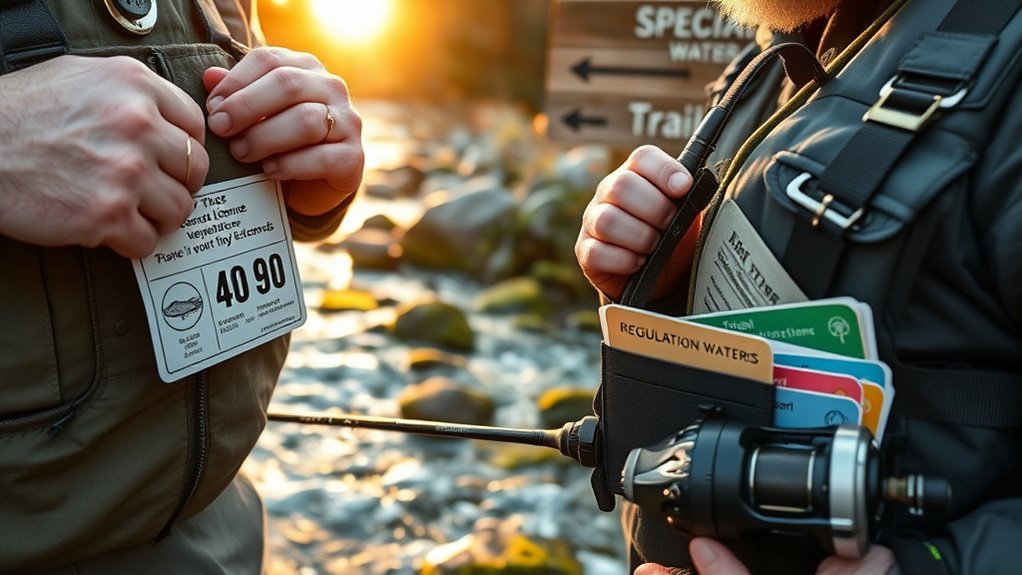
Because certain trout streams and lakes are managed separately, you’ll need specific permits in addition to a standard fishing license to fish those waters.
Trout fishing regulations require an Annual Trout Supplemental License ($21) when you target trout in designated waters; you must buy it alongside another fishing license. For short visits, the Gatlinburg Trout Fishing Permit lets residents and non-residents age 13+ fish for $3 daily or $9 for three days.
An Annual Trout Supplemental License ($21) is required for designated waters; Gatlinburg permits: $3/day or $9/3-day.
Seasonal access in Tellico-Citico areas requires a permit for trout fishing at $6 per day. Agency Lake has its own permit structure: $6 daily or $48 annually for that lake. Bedford Lake enforces a $6 daily fishing permit for access.
These specific water permits fund habitat management, stocking, and monitoring; purchasing the correct permit guarantees you comply with trout fishing regulations and supports conservation measures that sustain those fisheries.
Always check current season dates and area boundaries before you fish.
Reduced-Fee and Disability License Programs
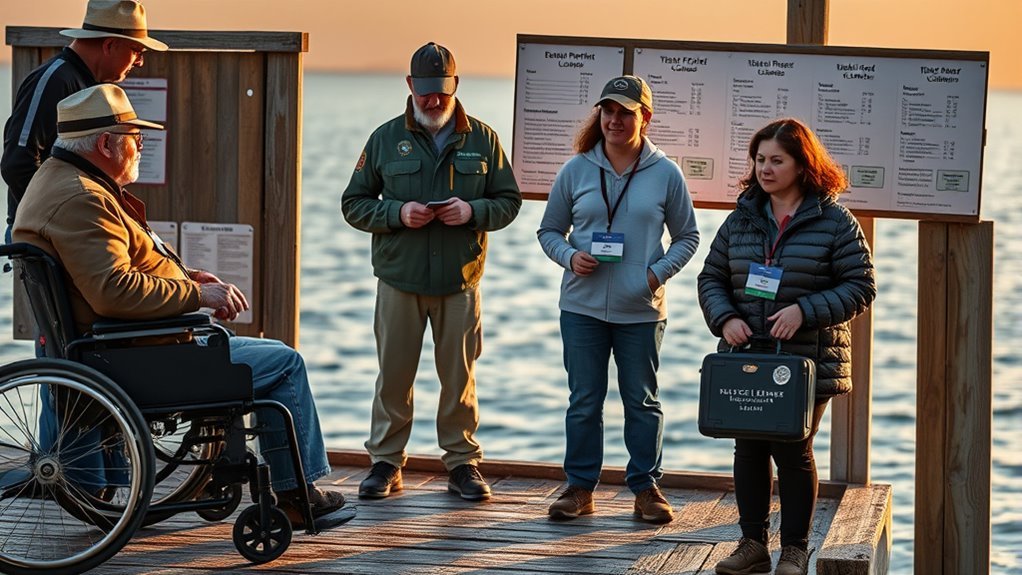
Alongside permits that fund trout habitat and stocking, the agency offers reduced-fee and disability licenses to guarantee broader access to hunting and fishing while supporting conservation goals.
You’ll find targeted, low-cost options tied to documentation that maintain equitable participation and steady revenue for management programs. Seniors discounts reduce annual cost to $5 or allow a $52 lifetime license, preserving participation among older anglers.
Disability certifications or physician/VA proof grant specialized licenses at nominal fees so you can fish or hunt with needed accommodations.
- Sport Fishing Certified Blind License: $10 for certified blind residents.
- Wheelchair Hunt/Fish Resident License: $10 with a doctor’s statement.
- Resident Disability License (under 18): requires physician certification.
- Resident Disabled Veteran License: $10 with VA disability certification.
- Seniors Discount options: $5 annual or $52 lifetime.
These fees balance access and data-driven conservation funding; you’ll contribute to habitat work while receiving clear, documented accommodations that promote safe, responsible outdoors access.
Where and How to Purchase a License
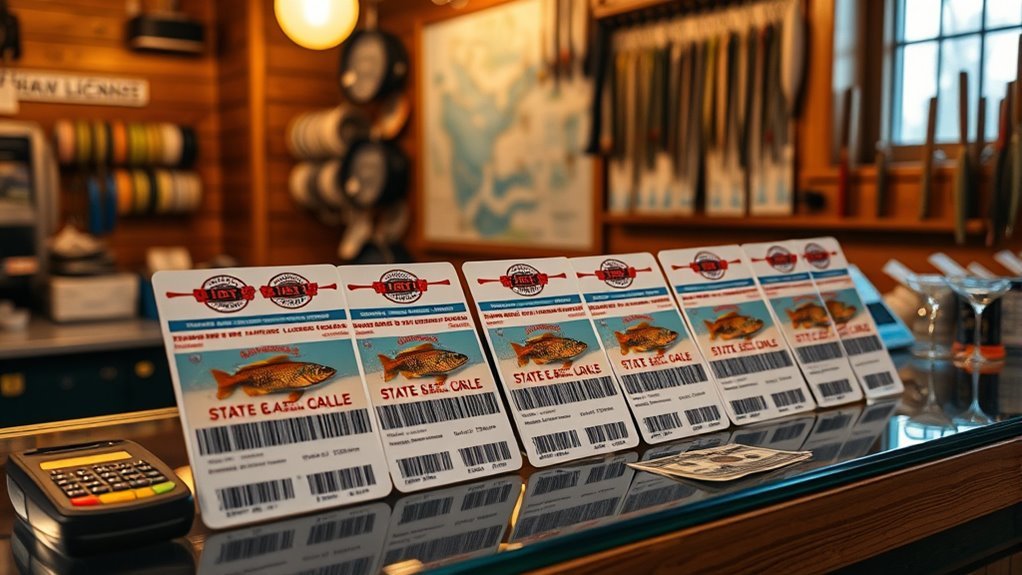
If you prefer the fastest option, buy your annual fishing license online through the Tennessee Wildlife Resources Agency (TWRA) website, where you can enter your name, address, and date of birth, select the license type, pay the required fee (resident licenses start at $10; non-resident at $50), and print a replacement license for free from your account.
For in-person purchase, most bait and tackle shops and TWRA regional offices sell licenses, maintaining statewide license accessibility and supporting local business networks that contribute to conservation funding. When you buy, provide basic ID details and choose resident or non-resident classification to guarantee compliance with regulations and accurate fee allocation.
Online purchasing reduces transaction time, lowers administrative overhead, and lets you immediately access a printable copy, minimizing disruption to field time.
Buying online cuts wait time, lowers admin hassle, and gives an immediate printable license to keep you fishing.
Whether online or in-person, your purchase directly funds habitat restoration, stocking, and enforcement efforts, so select the correct license type and keep documentation with you while fishing to demonstrate legal take and support sustainable fisheries management.
Products Worth Considering


License Management, Reprints, and Renewals

When you manage your Tennessee fishing license online, you can print a new copy anytime at no charge, update your address and auto‑renew payment methods 24/7, and access year‑long licenses tied to your purchase date; paper replacements are available for $8 at any TWRA office if you prefer a hard copy.
You’ll use online management for license tracking, renewal scheduling, and secure payment updates so your access stays uninterrupted. Reprints are unlimited, so a lost license won’t stop your trip. Annual licenses run one year from purchase and appear in your account for immediate verification.
- Print unlimited reprints from your account at no cost.
- Obtain an $8 hard copy replacement at any TWRA office.
- Update address and auto‑renew payment info 24/7/365.
- Track active license dates and expiration with license tracking tools.
- Renew online before expiration to maintain continuous coverage.
This system supports enforcement, reduces paper waste, and guarantees anglers comply with conservation regulations efficiently.
Frequently Asked Questions
Can I Transfer My Tennessee Fishing License to Another Person?
No, you generally can’t transfer your Tennessee fishing license to another person; license transfer policies prohibit reassignment. You should follow fishing license regulations, contact TWRA for specific exceptions, and document any conservation-related permits needed.
Are There Discounts for Military Personnel Stationed Out-Of-State?
Yes — you may qualify for military discounts on out of state licenses if stationed elsewhere; check your state’s regulations and provide active duty ID, residency documentation, and deployment orders to confirm discounted rates and support conservation funding decisions.
Does a Fishing License Cover Saltwater Fishing Elsewhere?
No — your freshwater license won’t cover saltwater fishing elsewhere; you need to follow local saltwater regulations and confirm license reciprocity or purchase a saltwater permit. Check state-specific rules to verify legal, conservation-minded compliance.
What Penalties Exist for Fishing Without a Valid License?
You’ll face immediate fines and possible seizure of gear; juxtaposed with conservation goals, fishing fines and license violations deter harm. You’ll also risk court appearances, higher civil penalties, and suspension or revocation of licensing privileges.
Is Catch-And-Release Mandatory for Any Species in Tennessee?
No, catch-and-release isn’t mandatory statewide; you’ll follow species-specific catch limits and fishing regulations, including seasonal or trophy-specific rules that may require release in certain waters to protect populations and conservation objectives.
Conclusion
You’ll likely need a Tennessee fishing license whether you’re a resident, visitor, senior, or someone with a disability — and coincidentally, buying the correct permit often supports the same fisheries you enjoy. Check resident, nonresident, lifetime, and supplemental fees, plus trout or special-water stamps; reprints and renewals are straightforward online or at agents. By choosing the right, data-backed license, you’ll contribute to conservation funding and guarantee compliance for healthier fish populations and better future angling.
