

If you’re 16 or older fishing in Illinois, you’ll need a full‑year license — $15.00 for residents and $31.50 for non‑residents, both valid through March 31 of the following year. Seniors pay reduced rates ($7.75 for 65+, $1.50 for 75+), and certain disabled anglers or qualifying property occupants are exempt. Buy online or at licensed vendors; carry a photo ID and proof of residency for resident rates. Continue for details on exemptions, purchases, and renewals.
Who Needs a Full Year Fishing License in Illinois
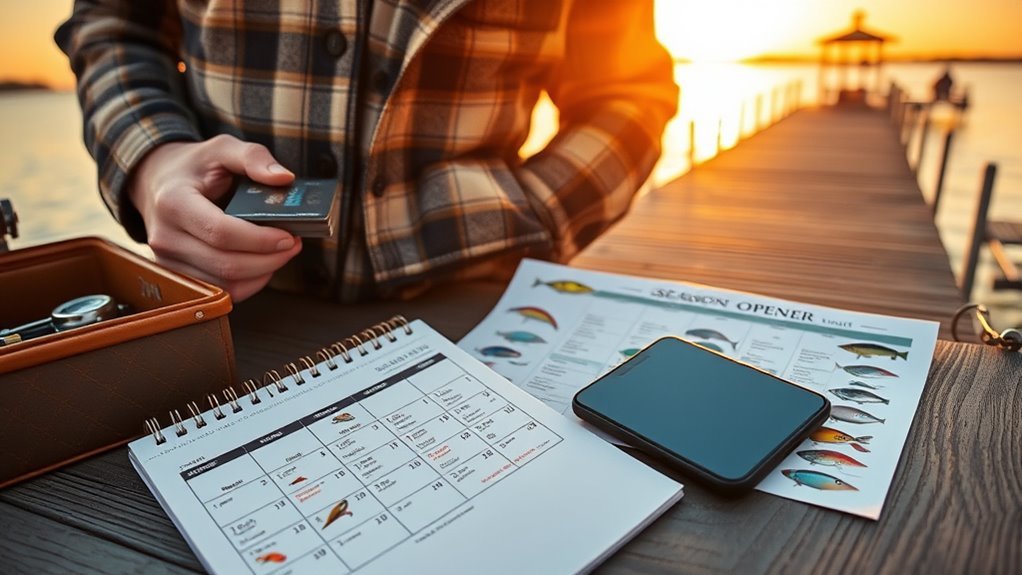
If you’re 16 or older and planning to fish in Illinois, you must hold a valid full‑year fishing license. You’ll need one whether you’re a resident (after 30 days’ residency with proof) or a non‑resident, except where specific license exemptions apply.
Age requirements: anglers under 16 fish without a license; disabled veterans are also exempt.
Residents establish eligibility by documenting at least 30 days’ continuous state residence before applying for the full‑year credential. Non‑residents must purchase a full‑year license to fish in Illinois unless they meet an exemption category.
Note a narrow property‑based exemption: property owners or tenants where waters flow may be exempt, but subdivision residents with private lakes don’t qualify under that provision.
You should verify your status and present required proof when obtaining a license to guarantee compliance with state regulations and avoid citations. This governs who must carry the full‑year license and who may claim exemptions under Illinois law.
Products Worth Considering

Made of chrome metal with a durable finish that resists the elements


Premium Quality - Premium quality license plate frame made of zinc alloy metal with a unique colorful design on the top and bottom of the frame, covered with epoxy to last longer in the outdoor elements
Resident Annual License Costs and Eligibility
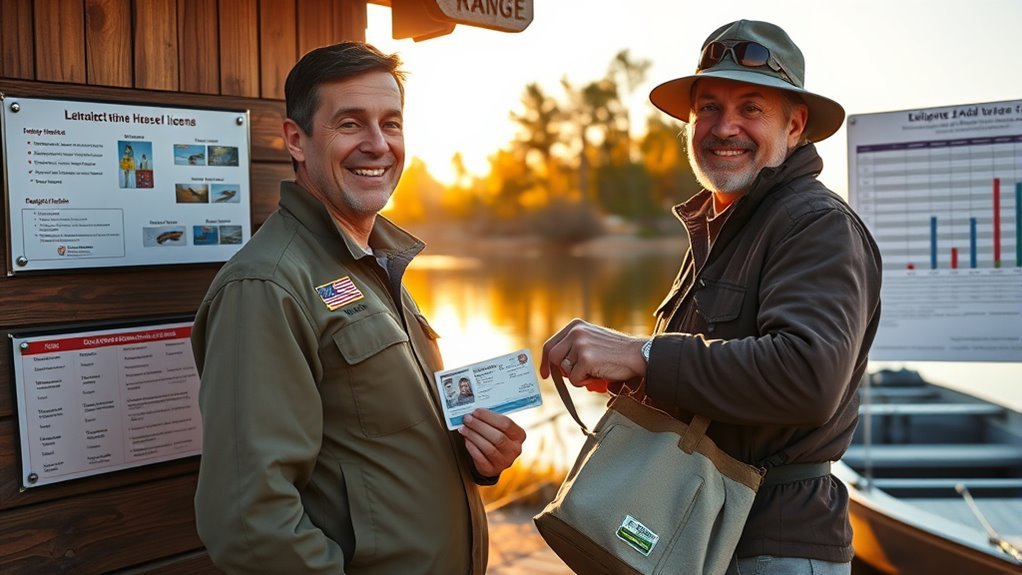
Having established who must carry a full‑year license, let’s look at resident costs and eligibility:
You’ll pay $15.00 for the standard annual resident fishing license, valid through March 31 of the following year. License types include standard adult, senior (65+), super senior (75+), and specialty or exempt categories.
Seniors pay $7.75 annually; super seniors pay $1.50. You must be 16 or older to be required to hold a license; anglers under 16 fish license‑free.
Residency eligibility criteria require living in Illinois at least 30 days and providing proof such as a driver’s license or state ID when applying.
Individuals qualifying for Class 2 or 2A disabilities are exempt from licensing, and active military members on leave may fish license‑free.
Apply through the state portal or authorized vendors; carry proof of purchase when fishing.
This section focuses solely on resident license types and eligibility criteria, not on non‑resident rules or restrictions.
Products Worth Considering

Collectible Tag

Showcase your passion for fishing with intricately etched designs
Non‑Resident Annual License Costs and Restrictions
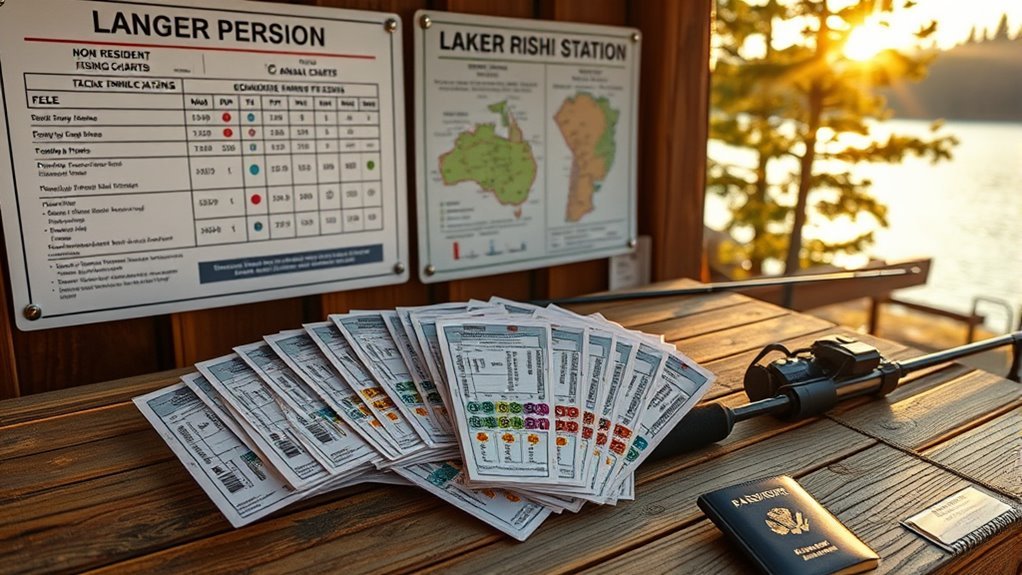
Non‑residents pay $31.50 for an annual Illinois fishing license, which lets you fish statewide for a full year and expires March 31 like resident licenses.
You must purchase this license unless you qualify under specific license exemptions; minors under 16 and disabled veterans are exempt.
You won’t be eligible for lifetime licenses or combination hunting-and-fishing options as a non-resident. You must renew annually and follow all Illinois fishing regulations; some rules may differ from those for residents.
- Cost: $31.50 for a full-year non-resident license, expires March 31.
- Exemptions: under-16 and disabled veterans only; otherwise purchase required.
- Restrictions: no lifetime or combo hunting/fishing licenses for non-residents.
- Compliance: subject to statewide fishing regulations; potential differing rules vs. residents.
Follow posted size, bag limits, season, and gear rules.
Maintain proof of license while fishing and review regulation updates before each outing.
Products Worth Considering

Comes with pre-drilled holes for easy installation

Magnet measures 3.50 inches wide by 1.75 tall
How and Where to Buy Your Annual Fishing License
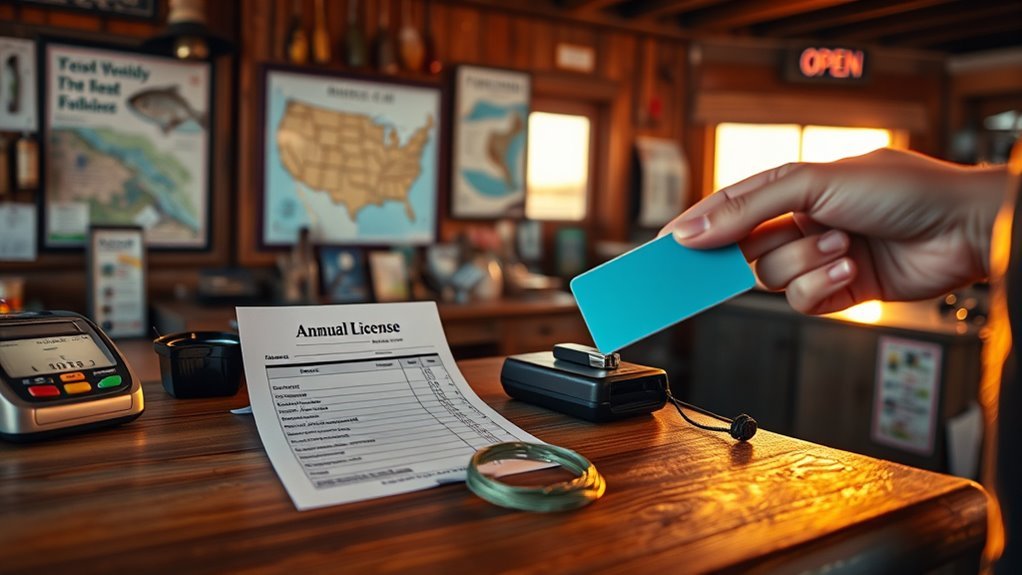
Now that you know who must buy a license and the cost differences, you can purchase an annual Illinois fishing license online through the Illinois DNR website or in person at licensed vendors like Walmart and local bait shops.
Purchase your annual Illinois fishing license online via the DNR website or in person at licensed vendors like Walmart.
For an online purchase, use the DNR portal to select resident ($15) or non‑resident ($31.50) options, complete required fields, and receive electronic confirmation.
For in person locations, carry proof of residency (driver’s license or state ID) if you’re applying as a resident; you must have lived in Illinois at least 30 days prior.
If you prefer a lifetime license, download and print the lifetime application form and mail it to the Illinois DNR Lifetime License office—processing can take up to 90 days.
Track transactions and retain receipts for compliance.
Choose online purchase for speed and electronic records; select in person locations when you need assistance or must present physical documentation at the point of sale.
Products Worth Considering

Team colored license plate measures a standard 6-inches by 11.5-inches

Team colored license plate measures 6-inches by 11.5-inches
Renewal, Validity Period, and Identification Requirements
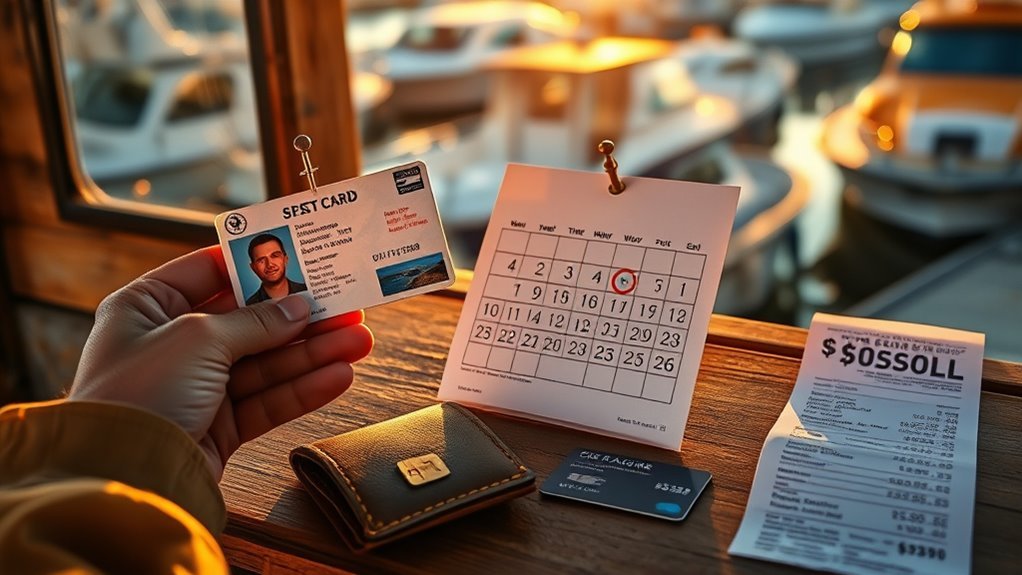
Because Illinois fishing licenses run on a uniform season, your annual license is valid from the purchase date until March 31 of the following year, and renewals open March 1 with all licenses expiring March 31.
You’ll use the renewal process starting March 1 to secure the next season; if you buy on or after March 1, the license still runs until March 31 of the following year, effectively extending coverage.
Carry a valid Illinois photo ID while fishing because licenses lack a photo.
- Renewal process opens March 1 annually; all licenses expire March 31.
- Any purchase date yields validity through the following March 31.
- Bring an Illinois photo ID for on-water checks; licenses aren’t photographic.
- Provide residency proof (driver’s license or state ID) when applying for resident rates.
This information is procedural and data-driven: follow dates precisely, present required identification types at application and inspection, and plan renewals to avoid gaps in legal fishing authorization.
Frequently Asked Questions
Are There Discounts for Purchasing Multiple Licenses at Once?
Yes — you can get savings: agencies often offer bulk purchase and family discounts when you buy multiple licenses, reducing per-license costs by set percentages or tiered rates; check state fee schedules for exact rates and eligibility.
Does the License Cover Ice Fishing Tournaments and Events?
Like a cold compass guiding you, yes — your license typically covers ice fishing tournaments and events if you meet tournament eligibility; you’ll still follow ice fishing regulations, event rules, and any organizer or local permit requirements.
Are Any Fishing Areas or Lakes Excluded From the License?
Yes — some waters are exempt lakes or have access limits; you’ll need to check regional regulations and official maps for specific exclusions, seasonal closures, and special-use areas before planning trips or events to those sites.
Is the License Refundable if I Lose Interest or Move Away?
Birds of a feather flock together — no, you won’t get a refund simply for losing interest or moving; review the license transfer process and refund policies, since exceptions (medical, military) or pro-rated returns may apply per agency rules.
Do I Need a Separate Permit for Fishing From a Kayak or Boat?
Yes — you generally need the same fishing license for kayak fishing and boat fishing, though some regions require additional permits or registrations for motorized boats; check local fish and wildlife agency regulations before you go.
Conclusion
Picture yourself at dawn, rod in hand, license tucked in your wallet — that annual tag (residents: check current fee, usually modest; non‑residents: higher, some restrictions apply) is your pass to Illinois waters. Buy online, at agents, or DNR offices; renew annually and carry ID. Knowing who’s eligible, exact costs, where to purchase, and validity periods keeps you legal and focused on the catch, not paperwork — efficient, precise, field-ready.
