
If you’re 16 or older in California, you’ll need a sportfishing license: an annual resident license costs $62.90 (365 days) and a nonresident annual runs $169.82, both plus small handling and application fees. Short-term options include one- and two-day passes and a ten-day nonresident pass; reduced or free licenses exist for eligible veterans, seniors, and disabled anglers. You must carry the license while fishing and follow reporting rules — continue for full purchase, validation, and compliance details.
Who Needs a Sportfishing License in California
If you’re 16 or older and plan to take fish or other aquatic life in California, you must carry a valid sportfishing license: residents pay $62.90 annually and non‑residents pay $169.82. You’re legally required to have that license on your person while fishing to comply with state fishing regulations and enable license enforcement.
Policy-wise, the rule applies universally to residents and non‑residents, though operational exemptions reduce administrative burden: public pier anglers are exempt, and designated free fishing days waive the fee system temporarily.
Kids under 16 don’t need a license, but if they target certain species they must obtain specific report cards, maintaining species-level monitoring without broad licensing.
From a cost-conscious perspective, the fee structure funds enforcement and conservation; carrying the license reduces citation risk and supports data collection.
Practically, you should verify exemptions and carry documentation to demonstrate compliance during routine patrols or inspections tied to license enforcement.
Products Worth Considering
All Real & Authentic used expired license plates, no replica, no reproduction, no customization, no souvenir and no fake license plate.


Resident Annual License Pricing and Details
One annual Resident Sport Fishing License costs $62.90 and covers unlimited personal angling for 365 days from purchase, though you should budget for an additional 5% handling fee and a 3% nonrefundable application fee that may raise the effective out‑of‑pocket cost.
An annual Resident Sport Fishing License is $62.90 for 365 days, plus a 5% handling and 3% application fee.
You’ll get clear license benefits: unrestricted daily take within legal limits and simplified compliance for year-round fishing.
If you qualify, reduced-fee options cut costs to $9.79 (CDFW) or $10.29 (agents) for disabled veterans and recovering service members; free licenses exist for low-income Native Americans and mobility-impaired applicants subject to eligibility.
You must follow fishing regulations at all times—bag limits, seasons, and gear rules remain enforceable regardless of license status.
Purchase through official CDFW channels or authorized agents to avoid surcharges and guarantee the 365-day validity is recorded correctly.
Track renewal dates and documentation requirements; staying informed minimizes fines and maximizes the cost-effectiveness of your annual pass.
Products Worth Considering

Showcase your passion for fishing with intricately etched designs Built tough to withstand the elements of your fishing adventures Sleek design seamlessly complements your...
Nonresident Annual License Pricing and Details
Although you’re not a California resident, you can buy an annual Nonresident Sport Fishing License for $169.82, which covers fishing for 365 days from purchase and must be carried when you’re taking fish, mollusks, crustaceans, or any aquatic life; that total includes a 3% nonrefundable application fee and may include an additional 5% handling fee if purchased through an agent.
You should evaluate license benefits against trip frequency and comply with fishing regulations to avoid fines.
- You can purchase online, at CDFW sales offices, or authorized agents — factor in possible agent handling fees.
- The $169.82 rate applies to individuals 16 and older — it’s a predictable annual cost for budgeting.
- Carrying the license while taking aquatic life is mandatory; enforcement aligns with state conservation policy.
- The fee structure (base price + 3% application fee ± 5% agent fee) informs cost comparisons and purchasing choices.
Products Worth Considering

CUSTOMIZE NOW – Select te finish, choose the size and add your personalized text. NOT embossed

Durable Material, Built to Last: Crafted from high-purity aluminum with a UV-protective film, it resists sun exposure, rain, fading, and rust. The tough material stays rigid and undamaged through daily use, maintaining a sleek appearance for years.

EASY & FUN TO CUSTOMIZE: Click "Customize Now" to add your personalization to your mini Calfironia state plate!
Short-Term and Seasonal License Options
If you only need short-term access, a one-day sport fishing license costs $20.52 and a two-day consecutive license is $31.58, giving precise per-day costs to assess.
Non-residents can opt for a ten-day license at $62.90, and all short-term licenses are valid only for their specified durations and exempt from the Ocean Enhancement Validation, which reduces short-trip costs.
Products Worth Considering


Lobo Lures Big Game Sport Fishing Vanity Front Plate Tag | Made in the USA. Our plates feature famous marine artists sublimated on premium metal plates! to last years in front of your vehicle

【MATERIAL】: oFloral License plate frame is made from premium quality aluminum, which can provide long-lasting protection from corroding, rusting and aging, durability for long lasting usage.Personalized Car Frame Can Perfect to Put on Your Front of Car or for Decorative Purposes Around the House Like in Your Bedroom, Garage, Basement, Ect.
One- and Two-Day Licenses
For short-term anglers who don’t want an annual permit, the one- and two-day sport fishing licenses offer cost-effective, time-limited access: a one-day license costs $20.52 for a specified day and the consecutive two-day option is $31.58, both available to residents and non-residents and exempt from the Ocean Enhancement Validation requirement.
You’ll appreciate clear fishing regulations and tangible license benefits when weighing short-term options. Consider:
- One-day: $20.52 — valid for one specified day; ideal for single outings.
- Two-day: $31.58 — covers two consecutive days; lower per-day cost.
- Residency: both options sold to residents and non-residents equally.
- Validation: exempt from Ocean Enhancement Validation, simplifying purchase.
These short-term licenses suit cost-conscious anglers needing temporary access without annual commitment.
Ten-Day Nonresident Option
After short-term one- and two-day options, non-resident anglers who need more than a weekend can choose the Ten-Day Nonresident Sport Fishing License, which costs $62.90 and covers ten consecutive days of fishing for individuals 16 and older.
You’ll find this ten-day benefits package is tailored for visitors and seasonal anglers who want limited-duration access without annual fees.
It’s policy-driven: non-residents 16+ qualify, no Ocean Enhancement Validation is required, and you must purchase and carry the license while fishing.
From a cost-conscious standpoint, $62.90 yields predictable access for short trips compared with full-year rates.
You should still comply with all local fishing regulations—bag limits, seasons, and gear rules apply—and check updates before each trip.
Reduced-Fee and Free License Programs
One clear path to lowering barriers to recreational fishing is the state’s reduced-fee and free license programs, which let eligible veterans, low-income seniors, and people with qualifying disabilities obtain licenses at sharply reduced or no cost.
You’ll find the policy framed around clear eligibility criteria and an application process designed for verification and access.
- Disabled veterans/recovering service members: reduced-fee license $9.79 through CDFW, $10.29 via agents.
- Low-income seniors (65+) on SSI or CAPI: reduced-fee license $9.79.
- Specific disabilities (e.g., blindness, severe physical impairments): free sport fishing license with documentation.
- Submission and review: apply at CDFW license agents or online; processing can take up to 15 business days and requires forms and verification.
You’ll want to budget processing time and collect supporting documents to guarantee compliance with program rules and preserve cost savings for eligible anglers.
Required Validations and Report Cards
While securing a base sport fishing license covers most outings, you’ll need several specific validations and report cards for particular waters, gear, or species—and each carries an additional fee that should be budgeted into your trip cost.
A base sport fishing license covers most trips, but extra validations and report cards add required, budgeted fees.
You’ll face clear validation requirements: an Ocean Enhancement Validation ($7.05) is required for ocean fishing south of Point Arguello; a Second Rod Validation ($19.70) lets you legally fish with two rods in inland waters; and a Recreational Crab Trap Validation ($2.98) is mandatory to use crab traps.
For species-specific tracking, report card fees apply: a Sturgeon Fishing Report Card costs $11.06 and is required when taking sturgeon, while Steelhead Report Cards cost $9.98 and are mandatory for anglers targeting steelhead in inland waters.
Plan purchases around these line-item costs to remain compliant and avoid citations. Treat these fees as recurring trip-line items when calculating annual fishing expenses and permit budgeting decisions.
Where and How to Purchase Your License
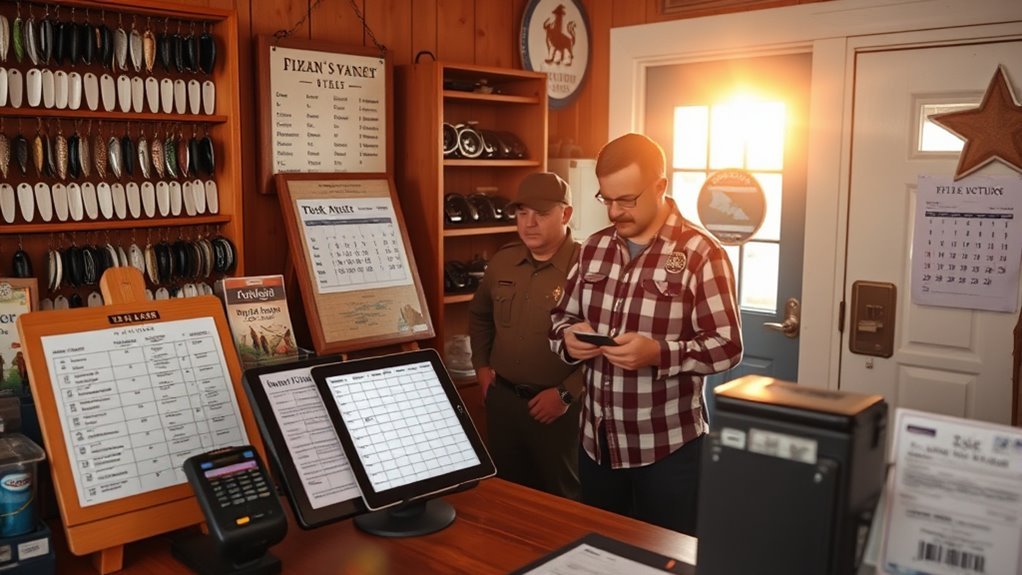
Where can you buy your California annual sport fishing license and what should you budget for? You can complete online purchases via the California Department of Fish and Wildlife (CDFW) site or visit authorized agents and CDFW license sales offices.
Budget $62.90 if you’re a resident and $169.82 if you’re a non-resident.
- Use CDFW online purchases for fastest processing and to print or display your license immediately.
- Visit authorized agents (sport shops, marinas) to buy in person; CDFW offices handle transactions too.
- Pay attention to payment policies: CDFW offices accept checks, money orders, debit/credit cards—cash isn’t accepted.
- Keep your license on you while fishing; residents 16+ must have one to legally take aquatic life.
This approach emphasizes compliance, minimizes downtime, and lets you compare costs and convenience between online purchases and in-person options with authorized agents.
Products Worth Considering

PREMIUM QUALITY: Crafted from high-grade materials, our License Plate is built to withstand the elements and maintain its vibrant appearance over time. It is resistant to fading, cracking, and peeling, ensuring long-lasting performance.

LPG Apparel Co. A Lobo Lures Company . Big Game Sport Fishing Vanity Front License Plate Tag | Made in the USA. Our plates feature famous marine artists sublimated on premium metal plates! to last years in front of your vehicle

USA, License, plate, Vintage, tag, lot, set, plates, number, wall, decor, art, bar, restaurant, design, gift, cool, nice, american, america, hawaii, alaska, california, texas
License Replacement, Duplicate Copies, and Renewals
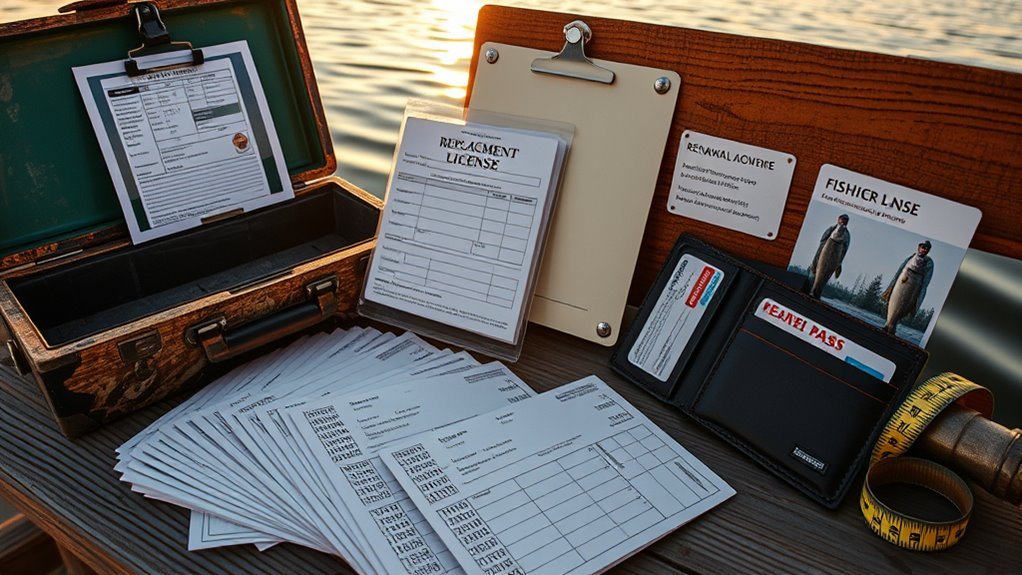
After you’ve bought your annual sport fishing license, plan for losses, expirations, and occasional validation replacements so you stay compliant and avoid fines.
For effective license management, know the fee structure: a duplicate sport fishing license costs $14.04 if your original is lost or stolen. Specific validation replacements are cheaper: $3.81 for lost or stolen second-rod and ocean enhancement validations, and $2.98 for recreational crab trap validations. If you need a sturgeon report card duplicate, obtain it only at CDFW sales offices for $18.28.
Annual licenses run from purchase date through December 31, so schedule renewals accordingly to avoid lapses; you can renew online or at CDFW license agents. Don’t heat-laminate licenses—extreme heat can discolor them, though discolored cards remain valid if text and signature are legible.
Track expiration dates, keep digital copies when allowed, and factor replacement fees into your annual budgeting to minimize compliance risk and out-of-pocket surprises.
Reporting Harvests and Important Deadlines
Because timely harvest reporting ties directly to compliance and potential fees, you should log into the Online License Service and use the HARVEST REPORTING option to submit species-specific reports by their deadlines.
You’ll reduce risk of penalties and help maintain accurate management data. Policy requires different schedules: sturgeon report cards need annual reporting; spiny lobster cardholders must return cards by April 30 or face late fees. Children under 16 also need required report cards and must comply.
- Log in and complete harvest submission for each species before its deadline to avoid fines.
- Note deadline importance: spiny lobster (April 30 card return) and annual sturgeon reports carry strict penalties.
- Track species-specific schedules—missed deadlines increase enforcement costs and individual fees.
- Keep records of submissions and confirmations to substantiate compliance if questioned.
You’ll save money and support regulatory accuracy by prioritizing timely, complete reports.
Frequently Asked Questions
Can I Get a Refund if I Don’t Use My Annual License?
You generally won’t get a refund if you didn’t use your annual license; refund policies vary by agency, so you’ll need to check specific terms, deadlines, prorate rules, and documentation requirements to confirm eligibility for unused licenses.
Does the License Cover Fishing From Private Boats?
Yes — you can often fish from private boats, but check local rules: data shows most jurisdictions require a valid license for boat fishing. Review license requirements, exemptions, and cost implications to avoid fines and wasted fees.
Are There Discounts for Military Personnel or Veterans?
Yes — you can often get military discounts and veteran benefits on licenses; state agencies publish eligibility, reduced fees, and required ID, so you should check your state’s policy, documentation, and cost-savings tables before applying.
Does the License Allow Shellfishing or Only Finfish?
Yes — the license covers both shellfishing and finfish when permitted; you’ll follow shellfishing regulations, seasonal closures, and size limits, plus finfish limits and bag limits, ensuring compliance to avoid fines and reduce resource impact.
Is Night Fishing Permitted With the Same License?
Yes — you can fish at night with the same license in most areas, but you should check local night fishing regulations and fishing license requirements; compliance avoids fines and keeps costs predictable for permitted nighttime angling.
Conclusion
Think of the fishing license as a city permit: it’s your ticket to lawful, monitored use of a shared resource. You’ll weigh resident vs. nonresident annual rates, short-term options, and reduced or free programs against your expected trips and reporting obligations. Buy and validate on time, replace lost copies promptly, and submit harvest info by deadlines. Staying cost-conscious and policy-compliant protects fisheries, avoids fines, and keeps your angling privileges intact.
