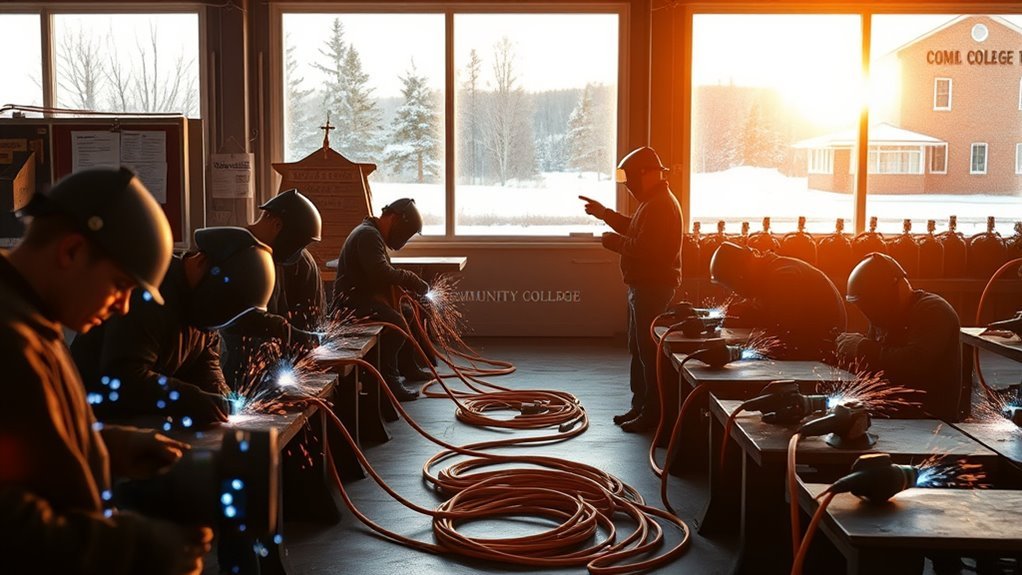
Maine welding school costs vary widely because the state offers private intensive programs, college certificates, short specialty classes, and employer-connected training. One of the clearest published examples is the New England School of Metalwork’s 13-week program in Auburn, but its $9,900 tuition should not be treated as a statewide average. Prices and schedules below were checked on July 28, 2026.
Quick Answer
Maine welding training can cost $0 for qualified employer-connected short-term academies or $9,900 plus a $30 fee for NESM’s 13-week programs. At NESM, PPE and textbooks are included, but 13-week students need roughly $225–$475 in hand tools. Optional student D1.1 tests cost another $350–$400.
Key Takeaways
- NESM publishes tuition of $9,900 plus a $30 nonrefundable registration fee for its 13-week comprehensive and pipe programs.
- The first NESM payment is $4,980, which already includes the registration fee; the remaining $4,950 is due at the program midpoint.
- Required PPE and course texts are included, but 13-week students supply approximately $225–$475 in hand tools.
- NESM’s MIG Master is a three-week, $2,900 course—not a three-day course—and includes one AWS test.
- WIOA, scholarships, veteran benefits, and employer-sponsored options may reduce costs, but eligibility must be confirmed before enrollment.
At a Glance
| Full Program | 13 weeks, Monday–Friday, 9:00 AM–3:30 PM at NESM |
| Published Tuition | $9,900 plus a $30 registration fee |
| Required Extras | Approximately $225–$475 in hand tools, plus suitable work clothes, boots, travel, and living costs |
| Estimated NESM Total | About $10,505–$10,805 with tools and one optional $350–$400 test, before transportation or living expenses |
Program Options and Lengths Available in Maine
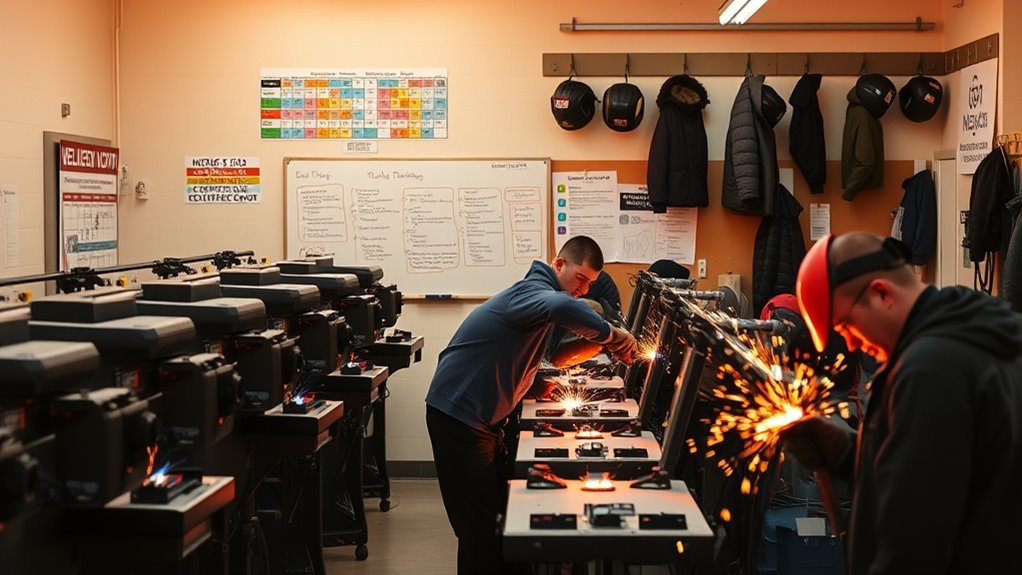
Maine does not have one standard welding-school price or course length. Your options range from employer-connected short-term academies to private full-time programs and college certificates.
The New England School of Metalwork 13-week comprehensive program meets Monday through Friday from 9:00 AM to 3:30 PM. It covers GMAW, FCAW, GTAW, and SMAW, along with oxy-fuel cutting, plasma cutting, carbon-arc gouging, print reading, weld symbols, inspection, rigging safety, fabrication, fitting, and employability skills.
NESM also offers a 13-week pipe welding program. That course focuses on GTAW and SMAW pipe work in positions such as 2G, 5G, and 6G. Applicants must already have passed an SMAW D1.1 test before they can be considered for the pipe program.
The school’s MIG Master is a three-week weekday course priced at $2,900 for 2026. It covers steel GMAW and FCAW, test preparation, and one AWS test. It does not cover stainless steel or aluminum.
For students who need a smaller time commitment, NESM advertises Monday-and-Wednesday evening courses totaling eight sessions and 24 instructional hours. It also offers eight-hour Saturday clinics in MIG/GMAW, TIG/GTAW, and Stick/SMAW.
Another option is the Southern Maine Community College Welding Academy in Brunswick. SMCC describes this as a three-week program offered at no cost to qualified trainees, with a $500-per-week attendance incentive. Applicants must meet its eligibility rules, and the page directs prospective students to inquire about upcoming sessions.
The $9,900 figure is the published cost of one private Maine program—not the price of every welding course in the state.
Choose a program based on the welding processes you need, the amount of hands-on booth time, your current skill level, employer requirements, testing opportunities, and the full cost after tools and travel.
Detailed Tuition and Fee Breakdown

NESM publishes the following payment structure for its 13-week comprehensive and pipe welding programs:
| Payment or Expense | Amount | When Due |
|---|---|---|
| Half of tuition | $4,950 | At enrollment |
| Nonrefundable registration fee | $30 | At enrollment |
| Total initial payment | $4,980 | Required to secure a place |
| Remaining half of tuition | $4,950 | At the program midpoint |
| Total tuition and registration | $9,930 | Before tools and optional testing |
The $4,980 initial payment already includes the $30 registration fee. Adding another $30 to that payment would count the fee twice.
A realistic 13-week budget should also include:
- Required hand tools: Approximately $225–$475 based on NESM’s published tool list.
- Optional D1.1 test: $350 for a listed limited test or $400 for a listed unlimited test.
- Work clothing and boots: Long pants and appropriate work boots are required; replaceable clothing and footwear are not listed as included.
- Transportation: The full-time course meets five days per week for 13 weeks.
- Housing and meals: These may be substantial for students who cannot commute to Auburn.
- Lost income: Daytime attendance may limit the hours you can work during training.
Pro Tip: Compare programs by total out-of-pocket cost—not tuition alone. Ask for a written estimate covering registration, tools, PPE, consumables, tests, retests, housing, and refund terms.
What’s Included: Materials, PPE, and Textbooks
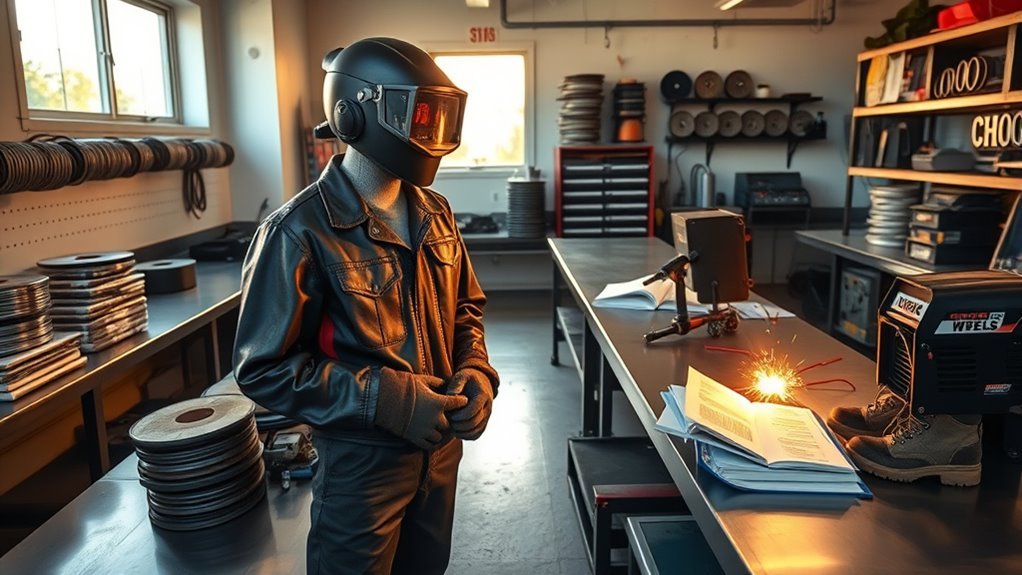
NESM’s 13-week program page says tuition includes instruction, all text and study materials, and the personal protective equipment required for the program. The listed PPE consists of a welding helmet, welding jacket, welding gloves, safety glasses, and a beanie.
That inclusion is useful because it reduces the number of large equipment purchases required before class. It does not mean every personal expense is covered.
PPE and Safety Gear
Students in the 13-week program receive the school’s listed PPE as part of tuition. Night-course students follow a different policy: NESM says they must supply their own basic protective equipment or purchase a safety package during enrollment. One-day clinic participants can use school-provided safety equipment or bring suitable PPE.
Students still need appropriate long pants, work clothing, and closed-toe work boots. The three-week MIG Master specifically requires a long-sleeve cotton or flame-resistant shirt, cotton or flame-resistant pants, and above-ankle leather boots.
Warning: Welding can expose students to metal fumes, ultraviolet radiation, burns, electrical shock, eye injuries, cuts, and falling or crushing hazards. Train only under qualified supervision, follow shop ventilation and hot-work rules, and wear the assigned PPE. Review OSHA’s welding hazard guidance before beginning hands-on work.
Hand Tools, Consumables, and Materials
Students in the 13-week programs must furnish their own hand tools. NESM’s published tool list includes an angle grinder, chipping hammer, wire brush, adjustable wrench, locking pliers, MIG pliers, a file, a file handle, and a metal bucket.
The school estimates three approximate tool budgets:
- Good: $225
- Better: $350
- Best: $475
The 13-week page does not list a separate routine charge for electrodes, filler wire, shielding gas, or practice metal. However, prospective students should still ask whether special projects, retests, damaged equipment, or unusually high material use can create additional charges.
Textbooks and Manuals
Required text and study materials are included in the published $9,900 tuition. The three-week MIG Master price also includes one GMAW book and one FCAW book.
Before enrolling, ask whether books are yours to keep, whether codebooks are current editions, whether digital access expires, and whether future certification testing requires a separate codebook purchase.
Certification and Testing Costs
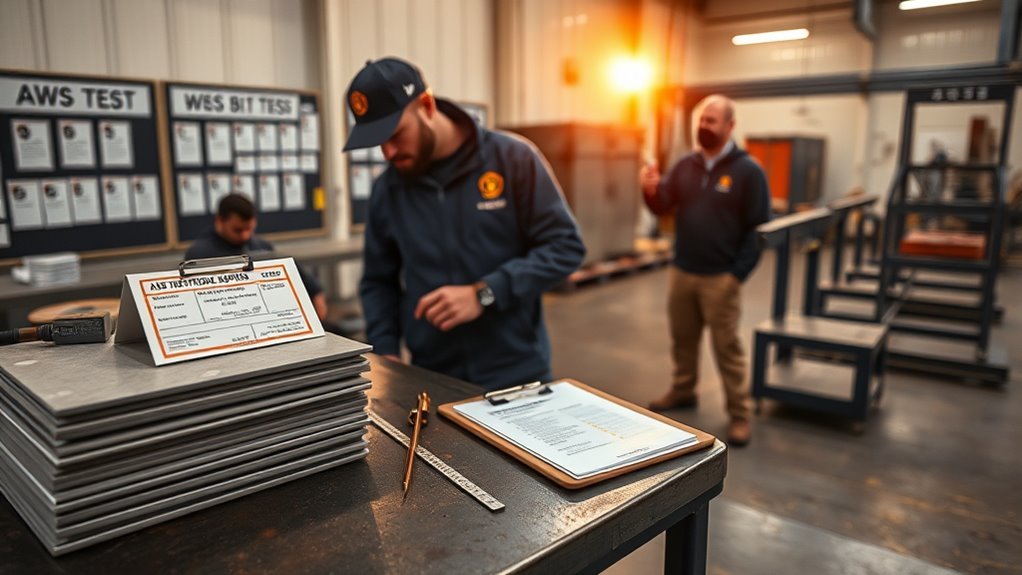
Finishing welding school and becoming certified are not the same event. Course completion shows that you completed the school’s curriculum. An AWS Certified Welder credential requires you to pass the applicable performance test for a particular process, material, position, and code.
The American Welding Society describes the Certified Welder program as performance-based. Online lessons and classroom theory can help you prepare, but they do not replace the required welding performance test.
NESM lists the following optional student prices for its 13-week comprehensive course:
| Listed Test | Published Student Price |
|---|---|
| AWS D1.1 FCAW or SMAW limited test on 3/8-inch plate | $350 |
| AWS D1.1 FCAW or SMAW unlimited test on 1-inch plate | $400 |
| Other processes, pipe tests, retests, or employer tests | Confirm current price and code with the testing facility |
NESM states that it has operated as an AWS satellite testing facility since 2009 and uses an in-house Certified Welding Inspector to administer tests. Ask which organization issues the resulting credential, which code edition applies, whether destructive testing and paperwork are included, and what a retest costs.
Note: A qualification may apply only to the process, position, base metal, filler metal, thickness range, and code tested. Ask employers which exact test they require before paying for an optional credential.
Financing, Scholarships, and Funding Sources

Funding can lower the amount you pay up front, but grants, benefits, scholarships, employer sponsorship, and loans are not interchangeable. Confirm approval in writing before assuming that any source will cover your course.
Financing Options Overview
NESM’s current comprehensive-program page lists a Career Advancement Loan through Community Credit Union. It also refers to Five County Credit Union, which officially changed its name to Ancorum Credit Union in 2025.
Credit-union financing is debt, not financial aid. Approval may depend on credit, income, a co-borrower, and lender underwriting. Compare the annual percentage rate, total interest, origination fees, repayment start date, late-payment rules, and whether the loan includes tools or testing.
WIOA, Workforce, and Veteran Benefits
The Workforce Innovation and Opportunity Act can provide training services to eligible adults, dislocated workers, and youth through the Maine CareerCenter system. Eligibility for a person does not automatically make every welding course payable.
Use the Maine JobLink training-program search and speak with a Maine CareerCenter adviser. Confirm the exact provider, course title, start date, tuition, tools, testing, and required authorization before paying a nonrefundable fee.
NESM also says that many of its courses are approved for VA benefits, but coverage varies by course and student. Veterans should confirm the exact program through the U.S. Department of Veterans Affairs and the school’s certifying official.
Note: Do not enroll based only on a verbal statement that WIOA, VA benefits, or another program “should” pay. Obtain written authorization showing the approved amount and any costs that remain your responsibility.
Scholarships and Grants
NESM’s published 2026 comprehensive-welding scholarship was valued at more than $10,000, but its application deadline was June 1, 2026. That deadline has passed. Review the school’s current scholarship page for future cycles rather than relying on an expired 2025 early-bird discount.
Other possible sources include AWS Foundation scholarships, trade organizations, unions, community colleges, employers, and Maine workforce programs. Awards have different deadlines and may cover only tuition, tools, testing, transportation, or another defined expense.
| Funding Source | What to Verify |
|---|---|
| Scholarship or grant | Deadline, eligible school, covered expenses, award date, and whether funds are paid to you or the school |
| WIOA or workforce funding | Personal eligibility, program approval, case-manager authorization, and remaining balance |
| Veteran education benefit | Approved course, benefit percentage, housing eligibility, and required certification |
| Employer sponsorship | Work commitment, repayment agreement, hiring conditions, schedule, and required test |
| Loan | APR, total finance charge, fees, repayment date, and consequences of withdrawal |
Schedule Options: Day, Night, and Short Courses
The right schedule depends on how quickly you need training and whether you can stop or reduce work during school.
Full-Time Day Programs
NESM’s 13-week comprehensive and pipe programs meet Monday through Friday from 9:00 AM to 3:30 PM. Its published 2026 schedule includes January 5–April 3, April 6–July 2, July 6–October 2, and October 5–December 31.
As of July 28, 2026, the July session has begun and the next listed 13-week session starts October 5. Published dates do not guarantee that seats remain, so confirm availability before submitting payment.
Three-Week MIG Master
The 2026 MIG Master dates listed by NESM are February 9–27, May 4–22, August 3–21, and November 9–27. The course meets weekdays from 9:00 AM to 3:30 PM and costs $2,900.
Its price includes GMAW and FCAW books, a welding hood, jacket, beanie, safety glasses, gloves, and one AWS test. Students supply required clothing and leather boots.
Night and One-Day Classes
NESM night courses meet Monday and Wednesday from 6:00 PM to 9:00 PM for eight sessions, totaling 24 hours. Available subjects include introductory and intermediate Stick/SMAW, FCAW, GMAW, GTAW, and selected plate-test preparation courses.
One-day Saturday clinics provide an eight-hour introduction or refresher in MIG/GMAW, TIG/GTAW, or Stick/SMAW. These clinics should not be confused with the three-week MIG Master or a complete entry-level career program.
Prerequisites and Physical Demands
The 13-week programs do not have merely “minimal” prerequisites. NESM’s published qualifications state that applicants must be at least 18, have a high school diploma or GED, understand and communicate in English, commit to the full weekday schedule, have reliable transportation, follow the dress code, and complete an interview.
Applicants may be directed to complete a one-day clinic or night course first if their current skill level is not sufficient for direct entry.
The school also lists physical and environmental demands. Students must be able to:
- Kneel, stoop, and bend while welding in multiple positions.
- Stand for periods of up to three hours.
- Tolerate heat, smoke, hot slag, spatter, and repetitive practice.
- Wear required PPE throughout training.
- Lift up to 50 pounds.
Anyone who needs an accommodation should discuss the essential course tasks, available support, and emergency procedures with the school before paying a nonrefundable fee.
Job Placement, Wages, and Return on Investment
NESM states that graduates of its comprehensive program find employment at a 75% placement rate and that the school helps connect students with employers. Treat this as a school-reported figure rather than an independently verified statewide outcome.
Before comparing placement rates, ask each school:
- Which graduating classes are included?
- How soon after completion is employment measured?
- Does “placed” mean any job or a welding-related job?
- Are students already employed when they enroll counted?
- Are nonresponding graduates excluded?
- Has the result been reviewed by an accreditor or state agency?
The current CareerOneStop wage table lists a Maine median of about $29.92 per hour, or $62,220 per year, for welders, cutters, solderers, and brazers. This is an occupation-wide median—not a promised starting wage for a new graduate.
Actual pay depends on region, employer, shift, overtime, union coverage, process, code qualification, travel, experience, and industry. Shipyard, pipe, structural, manufacturing, and repair work can have different requirements and compensation.
A practical ROI calculation is:
Total training cost ÷ monthly increase in take-home pay = estimated break-even months.
Include tuition, fees, tools, tests, interest, travel, living expenses, and lost earnings in the cost. Use your likely starting pay—not the statewide median—and account for taxes and benefits. No school or certification can guarantee employment or a specific wage.
How to Enroll, Refunds, and Important Deadlines
Applicants to NESM’s 13-week programs must complete an in-person or telephone interview. The course is not available through the school’s standard online enrollment process.
- Review the course page, prerequisites, physical demands, and current dates.
- Complete the required interview or enrollment discussion.
- Confirm your place and all funding in writing.
- Pay the $4,980 initial amount, which includes $4,950 in tuition and the $30 registration fee.
- Acquire the required hand tools and suitable work clothing.
- Pay the remaining $4,950 at the program midpoint.
- Choose optional testing only after confirming the code and process required by prospective employers.
NESM’s published enrollment policy requires written cancellation notice. Its general refund rules state:
- After class begins: Tuition is generally not refunded, except for verifiable extreme circumstances accepted by the school.
- Fewer than 21 business days before class: No refund of money paid.
- Between 21 and 42 business days: A refund depends on whether the place can be filled; otherwise, a same-year course credit may be offered under the policy.
- At least 42 days before class: Full payment is refunded less the $30 registration fee.
- Registration fee: The $30 fee is nonrefundable.
Read the complete current policy before paying because transfers, school cancellations, travel losses, and course credits have additional conditions.
Pro Tip: Save the course page, written quote, refund policy, funding approval, and payment receipt as PDFs on the day you enroll. Web prices and session availability can change.
Questions to Ask Before Enrolling
A lower tuition price is not automatically the better value. Ask every school for written answers to these questions:
- How many hours are spent welding in a booth rather than in lectures?
- Which processes, materials, positions, and code standards are taught?
- What PPE, books, tools, consumables, and tests are included?
- What will I pay for retesting or additional qualifications?
- What credentials do I receive at completion?
- Is the certification issued by AWS, an employer, or the school?
- How large are the classes, and how much instructor time is available?
- What are the attendance, academic, safety, and physical requirements?
- What is the complete cancellation and refund policy?
- What placement data can the school document?
- Which employers hired recent graduates, and for which positions?
- Can I tour the lab and inspect the booths, ventilation, and equipment?
- Is secure tool storage available, and who is responsible for theft or damage?
- Does the program qualify for my specific WIOA, VA, scholarship, or employer benefit?
Frequently Asked Questions
Are part-time apprenticeships available alongside school programs?
They may be, but placement is not automatic. Maine Registered Apprenticeships combine paid on-the-job learning with related instruction, and schedules depend on the sponsor. Search the Maine Apprenticeship Program and ask the employer whether the work schedule can be combined with your classes. A weekday 13-week program may conflict with regular job hours.
Do online welding theory classes count toward certification?
Online courses can teach theory and help you prepare, but they do not by themselves earn an AWS Certified Welder credential. AWS welder certification is performance-based, so you must complete and pass the required hands-on welding test for the applicable process, material, position, and code.
Can out-of-state students get in-state tuition exceptions?
NESM is a private school and publishes one tuition figure for its 13-week course rather than separate in-state and out-of-state prices. Public colleges establish their own residency rules, so ask the institution for its current residency policy, required proof, and appeal process.
Is equipment storage available between classes?
Do not assume that lockers or insured storage are included. NESM’s public program pages do not clearly confirm a storage policy. Ask whether tools may remain on-site, whether storage is locked, what identification is required, and whether the school accepts responsibility for loss or damage.
Are refresher courses offered for lapsed welders?
NESM offers one-day clinics, night courses, test preparation, and process-specific instruction that may work as refresher training. A refresher class does not automatically renew or replace an expired qualification, so verify the maintenance or retesting rules for your exact credential.
What is the likely total cost of NESM’s 13-week program?
Tuition and registration total $9,930. Adding the school’s estimated $225–$475 hand-tool budget and one optional $350–$400 D1.1 test produces an estimated total of $10,505–$10,805. Transportation, housing, meals, work clothing, loan interest, and lost income are additional.
Is PPE included in the 13-week tuition?
Yes. NESM says the 13-week tuition includes a helmet, jacket, gloves, safety glasses, and beanie. Students still supply required hand tools, suitable long pants or work clothing, and work boots. Night-course PPE rules differ.
Is free welding training available in Maine?
SMCC advertises a three-week Welding Academy at no cost to qualified trainees, with a $500 weekly attendance incentive. Applicants must meet its age, education, work-authorization, and selection requirements. Availability and future session dates must be confirmed with SMCC.
Conclusion
Maine welding training can range from a no-cost program for qualified employer-connected trainees to more than $10,000 for a private 13-week course after required tools and optional testing. At NESM, the verified starting point is $9,900 in tuition plus a $30 fee, with PPE and texts included and hand tools supplied by the student.
Compare the complete cost, hands-on hours, processes taught, test code, refund policy, prerequisites, placement methodology, and employer connections before enrolling. Confirm every grant, benefit, scholarship, or loan in writing, and choose certification tests based on the requirements of employers you plan to approach.
Sources
- New England School of Metalwork — 13-Week Comprehensive Welding Program — tuition, payment schedule, included PPE and texts, tools, testing fees, dates, and provider-reported placement.
- New England School of Metalwork — MIG Master — three-week length, $2,900 tuition, included equipment, AWS test, curriculum, and 2026 dates.
- Southern Maine Community College — Welding Academy — qualified-trainee cost, attendance incentive, prerequisites, location, and duration.
- American Welding Society — Professional Welding Certifications — performance-based Certified Welder requirements and the role of hands-on testing.
- U.S. Department of Labor CareerOneStop — Maine Welding Wages — current statewide wage percentiles and median pay.
- Occupational Safety and Health Administration — Welding Hazards and Solutions — welding fumes, UV exposure, burns, electrical hazards, injuries, and PPE controls.