
Welding cost per square foot is not a dependable price for most repairs or custom fabrication. A welder usually needs to know the total joint length, metal grade and thickness, weld size, access, finish, and required process before quoting the work. Square-foot pricing is most useful for repetitive panels, mesh, cladding, or other jobs where every square foot requires nearly the same fabrication steps.
Quick Answer
Welding usually is not priced by square foot. Most shops quote by the project, hour, or linear foot because joint length, metal thickness, access, process, and finish drive the work. Consumer cost guides currently place many small residential welding projects around $123 to $900 total, with common labor rates near $60 to $125 per hour.
Key Takeaways
- A single national welding cost per square foot does not apply to most repair or fabrication work.
- Most welders charge by the project, labor hour, service call, or linear foot of weld.
- Material grade, thickness, joint design, fit-up, access, finish, travel, and inspection can matter more than the finished surface area.
- Get an itemized written quote and confirm what is included before comparing prices.
Understanding Welding Costs
Published welding averages can help you set a rough starting budget, but they are not substitutes for a project-specific quote. As of July 2026, HomeAdvisor reports a typical consumer welding-project range of $123 to $483, with an average near $300. A separate Angi cost guide places many home welding projects between $250 and $900, averaging about $500.
Those figures differ because the services, locations, and project sizes represented in each dataset are not identical. A short shop repair, a mobile gate repair, and a custom structural frame should not be expected to share the same average.
For most custom welding, the best pricing unit is the completed scope of work—not the number of square feet in the finished object.

These Stanley MaxSteel straight aviation snips are built for clean, controlled cutting through sheet metal and other tough materials. Serrated cutting edges help prevent slippage for more accurate results, while the double pivot action delivers increased cutting power with less effort. Designed for dependable performance, they are a practical choice for metalworking, HVAC tasks, and general workshop use.

This versatile cookware set equips home cooks with essential pots, pans, and a steamer insert for everyday meals and larger gatherings. The aluminum-encapsulated base promotes quick, even heating, while Cool Grip handles and tight-fitting glass lids support comfortable, controlled cooking. Designed for stovetop, oven, broiler, and dishwasher use, it offers reliable performance across a wide range of recipes.

This daily devotional helps parents pray purposefully for their children through a full year of Scripture readings, reflections, and guided prayer prompts. Written to encourage faithful family discipleship, it offers practical, biblically grounded support for parents who want to shape their prayers around God's Word. A foreword by Sinclair B. Ferguson adds trusted theological insight and encouragement.
Common Ways Welders Charge
| Pricing Method | When It Is Common | What to Confirm |
|---|---|---|
| Flat project quote | Repairs, gates, furniture, brackets, railings, and defined custom builds | Materials, preparation, finishing, installation, and change-order terms |
| Hourly rate | Troubleshooting, uncertain repairs, prototypes, and open-ended fabrication | Minimum hours, setup time, travel, consumables, and cleanup |
| Linear foot | Long, repeatable seams, railings, fencing, pipe, and production welds | Weld type, leg or throat size, number of passes, position, and preparation |
| Service call or minimum | Small mobile repairs and jobs that take less than a normal billing block | Travel radius, minimum charge, emergency premium, and equipment fee |
| Square foot | Repetitive sheet assemblies, mesh, panels, cladding, or standardized surface work | Exactly how many seams, attachments, cuts, and finishing steps each square foot includes |
Note: The wage earned by a welder is not the same as the rate charged to a customer. The U.S. Bureau of Labor Statistics reports a median employee wage of $24.52 per hour for May 2024. A customer-facing shop rate must also cover equipment, insurance, administration, nonbillable setup, consumables, utilities, and other overhead.
When Square-Foot Pricing Makes Sense
A square-foot price may be useful when the work is genuinely repetitive. Examples include welded wire panels, standardized sheet assemblies, metal screens, or production parts with the same number of seams and attachments per unit of area.
Even then, the quote should define the metal grade, thickness, joint spacing, weld size, finish, quantity, tolerances, and whether installation is included. Without those details, two square-foot prices may describe very different amounts of work.
Factors Influencing Cost per Square Foot
When a fabricator does use square-foot pricing, the rate must account for more than surface area. The same factors also shape hourly, linear-foot, and flat-project quotes.
Material Type and Thickness
Mild steel is often the most economical common choice because it is widely available and can be welded efficiently with several processes. Stainless steel, aluminum, cast iron, copper alloys, and specialty metals may require different filler materials, shielding gases, preparation, heat control, or welder qualifications.
Thickness matters as much as the metal name. Thicker joints may need beveling, preheating, several weld passes, larger equipment, and more filler metal. Very thin sheet can also be labor-intensive because the welder must control distortion and avoid burning through the material.
Project Complexity and Fit-Up
A straight weld on clean, accurately cut parts is usually faster than an ornate assembly with curves, tight corners, uneven gaps, or many small components. Before welding starts, the fabricator may need to measure, cut, drill, bend, clamp, tack, square, and recheck the parts.
Poor fit-up increases labor because gaps must be corrected and alignment must be controlled. Tight cosmetic tolerances also add grinding, blending, polishing, or rework after the weld is complete.
Weld Length, Size, and Position
The actual length and cross-section of the weld are stronger cost indicators than the finished surface area. A larger fillet weld uses more filler and takes longer to deposit than a smaller one. Full-penetration joints, multi-pass welds, and joints that require backing or root preparation also increase labor.
Position matters, too. Work performed flat on a bench is generally easier to control than overhead, vertical, cramped, or elevated welding. Difficult positions can slow travel speed and require scaffolding, lifts, fall protection, or extra personnel.
Shop Versus Mobile Welding
Bringing a portable item to a welding shop can reduce travel and setup charges. Mobile welding may be necessary for installed gates, equipment, trailers, railings, or structural components, but the quote may include travel time, fuel, a service minimum, generator use, site protection, and weather delays.
Remote locations, restricted work hours, limited parking, stairs, occupied buildings, and difficult equipment access can all raise the final cost.
Types of Metal and Their Impact on Pricing
There is no dependable national per-pound price for “steel,” “aluminum,” or “stainless steel.” Actual prices depend on the alloy, product form, dimensions, quantity, supplier, location, cutting fees, freight, and current market conditions. A sheet, tube, plate, casting, and precision-machined part made from the same broad metal family can have very different delivered costs.
Metal prices also move over time. The BLS metals producer-price data show continued changes during 2026, so a dated supplier quote is more useful than a permanent per-pound table.
| Metal | Typical Cost Effect | Why the Quote May Change |
|---|---|---|
| Mild steel | Often the lower-cost common option | Widely available, generally weldable, and compatible with efficient shop processes |
| Stainless steel | Often higher than mild steel | Alloy-specific filler, contamination control, heat tint removal, passivation, or polishing may be required |
| Aluminum | Frequently carries a material and labor premium | Oxide removal, cleanliness, heat control, suitable equipment, and alloy identification matter |
| Cast iron | Highly variable for repairs | Crack extent, contamination, casting composition, preheat, cooling control, and repair risk affect feasibility |
| Titanium and specialty alloys | Usually specialty-priced | Material traceability, shielding, cleanliness, procedures, inspection, and qualified labor can be critical |
Material Quality, Grade, and Weldability
A more expensive metal is not automatically stronger or better for a project. The correct material must suit the load, corrosion exposure, temperature, appearance, weight, fabrication method, and maintenance requirements.
Unknown or mismatched alloys can create cracking, porosity, weak joints, or corrosion problems. For an important repair, the welder may need material identification, drawings, engineering information, or a specified welding procedure before accepting the work.
Filler Metal, Shielding Gas, and Finishing
The base metal is only one material cost. A quote may also include wire or electrodes, shielding gas, contact tips, tungsten, grinding discs, cutting wheels, anti-spatter products, abrasives, fasteners, primer, paint, powder coating, or polishing supplies.
A visible architectural weld that must be blended and polished can require more finishing time than the welding itself. Ask whether the price includes a raw weld, basic cleanup, paint-ready preparation, or a finished cosmetic surface.
Overview of Welding Techniques
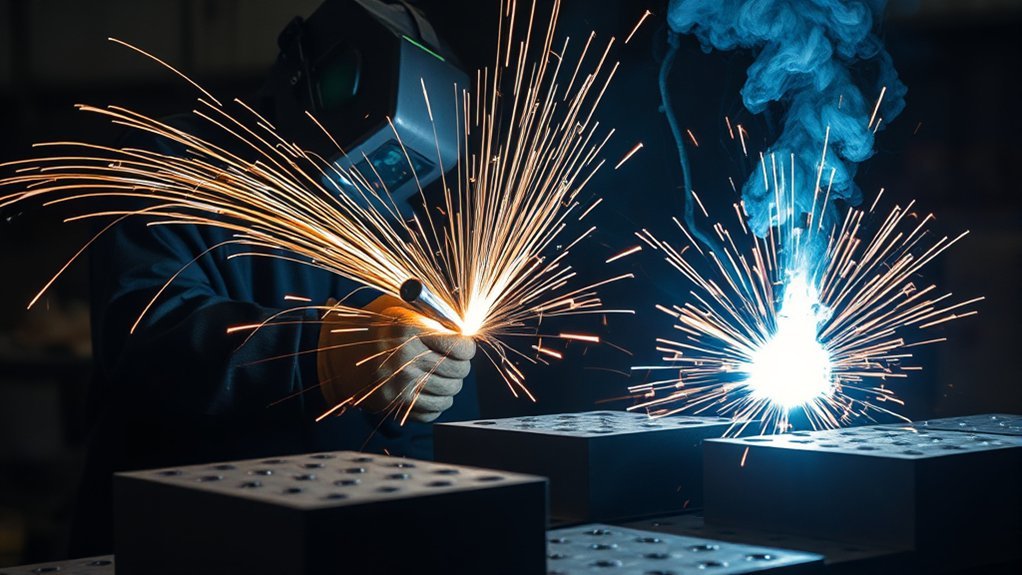
The welding process affects productivity and equipment needs, but the process name alone does not determine the final price. The material, joint, position, required quality, and amount of preparation still matter.
| Process | Common Strengths | Possible Cost Effect |
|---|---|---|
| MIG/GMAW | Fast wire feeding, good productivity, and common shop use | Efficient on suitable clean materials, although shielding gas and equipment setup are required |
| TIG/GTAW | Fine heat control, clean appearance, and precise work on thin or sensitive materials | Often slower and more skill-intensive, especially when filler is added manually |
| Stick/SMAW | Portable equipment and good outdoor usefulness without external shielding gas | May require slag removal, electrode changes, and additional cleanup |
| Flux-cored/FCAW | High deposition rates and options suited to field or structural work | Can improve production speed but may add fumes, slag, consumable cost, and cleanup |
| Oxy-fuel welding | Portable flame process used for certain welding, heating, and repair applications | Fuel gases, cylinder handling, fire controls, and slower heat input may affect the job |
The American Welding Society describes TIG, formally gas tungsten arc welding, as a process that uses a nonconsumable tungsten electrode and inert shielding gas. It offers fine control and clean welds, but its lower deposition rate and higher skill requirement can raise labor time on larger projects.
Brazing and soldering should not be treated as types of gas welding. They are separate joining processes in which a filler metal melts without melting the base pieces in the same way fusion welding does. A contractor may offer all three services, but the process and pricing should be identified correctly.
How to Budget for a Welding Project
A practical welding estimate separates the work into components instead of multiplying surface area by a generic rate.
Estimated total = service minimum or setup + labor + base metal + filler and consumables + cutting and preparation + travel or installation + finishing + permits, engineering, or inspection.

The ANCEL AD310 is a compact OBD II scanner designed to quickly diagnose check engine light issues by reading and clearing emission-related trouble codes. It also provides live data, freeze frame, I/M readiness, and vehicle information, making it a practical tool for drivers and home mechanics. With broad compatibility across many 1996 and newer OBD2 vehicles, it is a simple, fast, and portable way to check engine problems.

The Veepeak OBDCheck BLE is a Bluetooth OBD-II scanner designed for iOS and Android users who want an easy way to read and clear check engine light codes. It supports generic diagnostics such as freeze frame data, I/M readiness, and live sensor readings through compatible third-party apps. Built for most 1996+ vehicles in the US, it connects over Bluetooth LE and works with popular apps for everyday vehicle troubleshooting and monitoring.

This DEWALT 20V MAX combo kit delivers reliable drilling and fastening power in a compact, jobsite-ready package. The lightweight drill/driver and impact driver are built to fit into tight spaces, while integrated LED work lights help improve visibility in dim areas. With two batteries, a charger, and a storage bag included, it is a convenient solution for professionals and DIY users alike.
Information a Welder Needs for an Accurate Quote
- Project type: Repair, new fabrication, modification, reinforcement, or installation.
- Dimensions: Overall size, metal thickness, tube or pipe size, and approximate weld length.
- Material: Known metal grade or alloy, including whether the material is galvanized, painted, plated, or contaminated.
- Joint details: Butt, lap, corner, fillet, pipe, full-penetration, intermittent, or continuous welds.
- Location: Shop drop-off or mobile work, access restrictions, height, weather exposure, and available power.
- Finish: Weld left as deposited, ground smooth, polished, painted, powder coated, or corrosion protected.
- Performance requirements: Decorative, nonstructural, load-bearing, pressure-containing, vehicle-safety, or code-regulated use.
- Schedule: Normal lead time, fixed deadline, after-hours work, or emergency service.
Simple Estimate Examples
Small shop repair: A repair that takes less than an hour may still be billed at a one- or two-hour minimum. Using a broad consumer labor range of $60 to $125 per hour, the labor minimum alone could be about $60 to $250 before material, preparation, or finishing.
Mobile gate repair: The quote may include a service minimum, travel, removal of the damaged hinge, alignment, welding, grinding, primer, and adjustment. The visible weld may take only a few minutes, while setup and alignment account for most of the visit.
Custom sheet-metal panel: Do not multiply the panel’s area by a generic welding rate. The fabricator must price the sheet, cutting, bends, number and length of seams, fixtures, distortion control, attachments, finish, and quantity.
Pro Tip: Send each welder the same photos, dimensions, material information, finish requirements, and deadline. Quotes are much easier to compare when every bidder receives the same scope.
Possible Extra Costs
- Minimum service or diagnostic charge
- Mobile travel, mileage, tolls, or remote-site fees
- Emergency, weekend, or after-hours premiums
- Removal of failed welds, rust, or damaged material
- Cutting, drilling, bending, machining, or new fasteners
- Fixtures, templates, or temporary supports
- Scaffolding, lifts, fall protection, or confined-space controls
- Primer, paint, powder coating, passivation, or polishing
- Engineering drawings, permits, testing, or inspection
- Delivery, installation, and disposal of old material
- Sales tax and material markup
Safe Ways to Reduce the Cost
You may save money by providing clear measurements, removing nearby clutter, making the work accessible, choosing a practical finish, bringing portable items to the shop, and avoiding last-minute changes. Ask the welder before purchasing metal; the shop may need a particular grade, thickness, condition, or supplier documentation.
You can also ask whether a simpler design, standard stock size, intermittent weld pattern, bolted connection, or different finish would meet the project requirements. Changes to structural or safety-critical work should be approved by the responsible designer or engineer.
Warning: Do not grind, cut, heat, or weld unknown coatings, sealed tanks, fuel containers, pressurized parts, or contaminated metal as a money-saving preparation step. Welding can create toxic fumes, fire, explosion, eye, burn, and electrical hazards. Follow OSHA welding and hot-work requirements, and leave hazardous preparation to a qualified professional.
Tips for Hiring a Professional Welder
The lowest quote is not automatically the best value. A repair that fails, distorts the assembly, damages a heat-treated part, or violates a project requirement can cost far more to correct.
- Provide a written scope. Include photos, measurements, metal information, use, location, finish, and deadline.
- Request an itemized quote. Ask whether labor, metal, consumables, travel, preparation, finishing, installation, tax, and cleanup are included.
- Confirm the pricing method. Determine whether the price is fixed, hourly, per linear foot, or subject to change after inspection.
- Ask about similar work. A welder experienced with ornamental steel may not be the right choice for aluminum castings, sanitary stainless, pressure pipe, or vehicle structure.
- Check qualifications when required. Ask which process, material, position, procedure, and code the welder is qualified for. AWS credentials can be checked through the AWS certification verification system.
- Verify insurance and approvals. Structural, commercial, pressure-containing, or public-facing work may require insurance, drawings, permits, inspections, or engineer approval.
- Discuss changes in advance. Ask how hidden damage, additional material, design revisions, and extra visits will be authorized and billed.
- Get the warranty in writing. Confirm what workmanship is covered and what exclusions apply to old, corroded, contaminated, or fatigued material.
Note: Certification is not universal approval for every welding job. A qualification normally applies to defined processes, materials, positions, procedures, and code requirements. Ask whether the welder’s documented qualification matches your project.
Frequently Asked Questions
What is the average cost of welding aluminum per square foot?
There is no dependable national aluminum-welding price per square foot. Aluminum work is more often quoted by the project or labor hour because alloy, thickness, joint length, access, cleaning, equipment, shielding gas, and finish determine the cost. Request a written quote based on drawings, measurements, or an inspection.
Is $80 to $150 per square foot a reasonable welding price?
It may be reasonable for a narrowly defined type of repetitive panel or custom fabrication, but it is not a reliable general welding range. Ask exactly which metal, thickness, seams, cuts, attachments, finishing, installation, and quantity the square-foot price includes. For most repairs, hourly, linear-foot, or flat-project pricing is more meaningful.
How do local regulations affect welding costs?
Requirements vary by location and project. Load-bearing structures, commercial installations, pressure systems, public railings, and other regulated work may require permits, approved drawings, qualified procedures, inspections, or documentation. Those requirements can add engineering, testing, administrative, and inspection costs.
Are there hidden fees in welding projects?
Possible extras include service minimums, travel, emergency scheduling, material markup, removal of old welds, cutting, grinding, fixtures, installation, finishing, permits, testing, delivery, disposal, and tax. Request an itemized written quote and ask how unforeseen damage or scope changes will be approved.
Can I save money by doing the preparation myself?
You may be able to clear access, provide measurements, move loose objects, or perform simple cleaning approved by the welder. Do not grind or heat unknown paint, galvanized coatings, contaminated metal, tanks, or pressure-containing parts. Unsafe preparation can expose you to toxic fumes, fire, explosion, and damaged material.
Is there a minimum charge for small welding jobs?
Yes. Many welders use a minimum equal to one or two labor hours because they must inspect the part, prepare equipment, set up the process, complete the weld, and clean the work area. Bringing a portable item to the shop may cost less than scheduling a mobile visit.
How many welding quotes should I compare?
Two or three written quotes are usually enough for a defined consumer project. Give every welder the same scope and compare the proposed material, process, preparation, finish, schedule, qualifications, warranty, and exclusions—not only the total price.
Conclusion
Welding cost per square foot is useful only when each square foot represents a consistent amount of fabrication. For most repairs and custom builds, the total joint length, metal, thickness, fit-up, position, access, process, finish, travel, and required approvals provide a much better basis for pricing.
Use published averages only to set an initial budget. For the amount you are likely to pay, provide a clear scope and compare two or three itemized quotes from welders whose experience and qualifications match the job. Safety-critical, structural, pressure-containing, and unknown-material repairs deserve professional evaluation rather than a price chosen from a generic square-foot table.
Sources
- HomeAdvisor Welding Cost Guide — current consumer project ranges, hourly rates, minimum charges, and common cost components.
- Angi Welding Cost Guide — project pricing, material factors, preparation, travel, and common quote methods.
- Airgas Fillet Weld Cost Calculator — cost-per-foot methodology using labor, gas, wire, equipment, electricity, safety, and maintenance inputs.
- OSHA 29 CFR 1910.252 — welding, cutting, fire prevention, eye protection, ventilation, and hot-work requirements.
- American Welding Society GTAW Guide — TIG process operation, advantages, limitations, and common applications.
- AWS Certified Welder Program — performance qualification, process-specific credentials, and certification requirements.

This versatile Cuisinart cookware set provides essential pots and pans for everyday cooking, from sauces and soups to sautéing, simmering, and frying. The aluminum-encapsulated base promotes fast, even heating, while cool-grip handles and tight-fitting glass lids support comfortable, efficient cooking. Designed for broad compatibility, it is dishwasher safe and oven safe for flexible use across many recipes.

Make straight, accurate cuts with your handheld circular saw using this all-metal rip fence from DEWALT. It attaches easily to compatible saws and helps you set a consistent distance from the blade for smooth, precise rip cuts. Built for durability, it is a practical accessory for improving control and consistency on a variety of cutting jobs.

OGX Extra Strength Damage Remedy + Coconut Miracle Hair Oil helps hydrate dry, coarse hair while smoothing frizz and flyaways for a silky finish. This nourishing leave-in treatment blends coconut oil, vanilla bean extract, and tiare essence to add softness, shine, and a pleasant scent. It is paraben-free and designed to support a restorative hair care routine for medium to coarse hair types.
