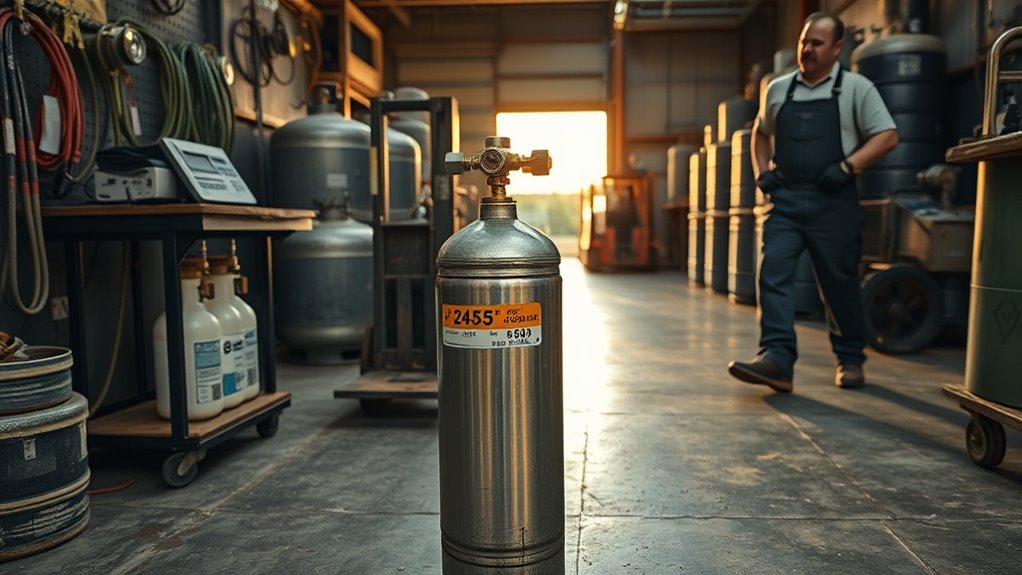
Welding gas refill cost depends on the gas, the cylinder size, and the supplier. A small bottle is the cheapest to refill, while a large cylinder of a specialty mix costs the most. Refilling your own cylinder is usually cheaper than a straight exchange, and your annual spend depends mostly on how many hours you weld.
Quick Answer
As a planning estimate (not a quote), a refill runs from about $40 for a small 20 cu ft bottle to about $180 for a 300 cu ft cylinder of C25 (75% argon / 25% CO2). Common 80 to 125 cu ft refills often land near $75 to $120. Prices vary by region and supplier, so call two or three local gas suppliers before you budget.
Welding Gas Refill Cost by Gas Type and Tank Size
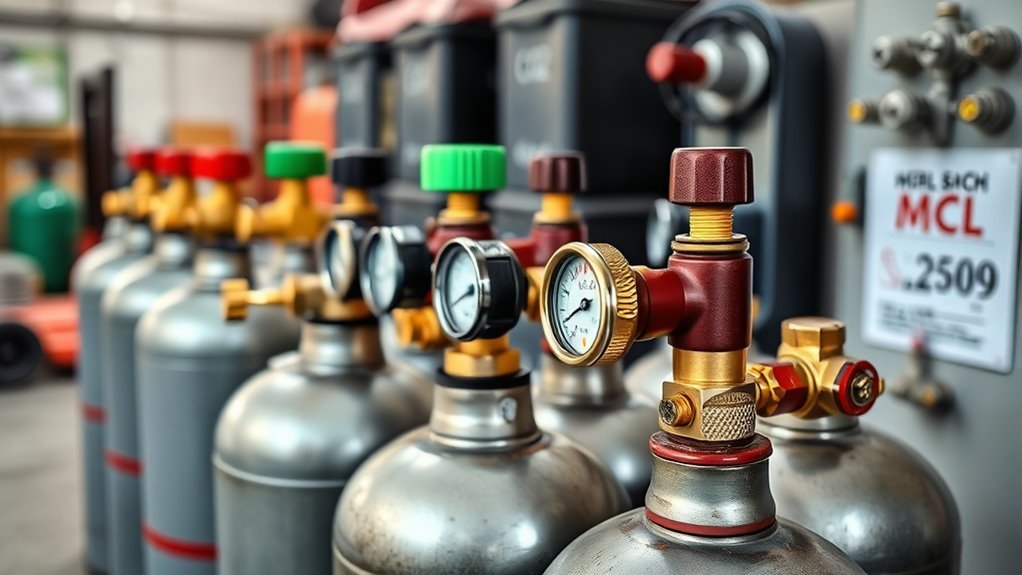
Refill prices vary by gas type, tank size, and supplier. The figures below are rough planning estimates, not current quotes. Your local supplier sets the real price, and HAZMAT or delivery fees can add to it.
| Gas and tank size | Rough refill estimate |
|---|---|
| Small 20 cu ft bottle | About $40 |
| CO2, 40 cu ft | About $65 |
| CO2, 80 cu ft | About $75 |
| Pure argon, 125 cu ft | About $100 |
| C25 (75% Ar / 25% CO2), 300 cu ft | About $180 |
CO2 is usually the cheapest gas per refill and suits flux-free MIG on mild steel. Argon costs more and is needed for TIG and aluminum. C25 mixes cost more again for large volumes. The American Welding Society has a shielding gas guide if you are unsure which gas your process needs.
Tank size also drives the price. See our guides to small welding tank costs and welding gas cylinder costs for purchase prices by size, and our 75/25 gas cost guide for the most common MIG mix.
Buy, Lease, or Exchange: How It Changes the Refill Price
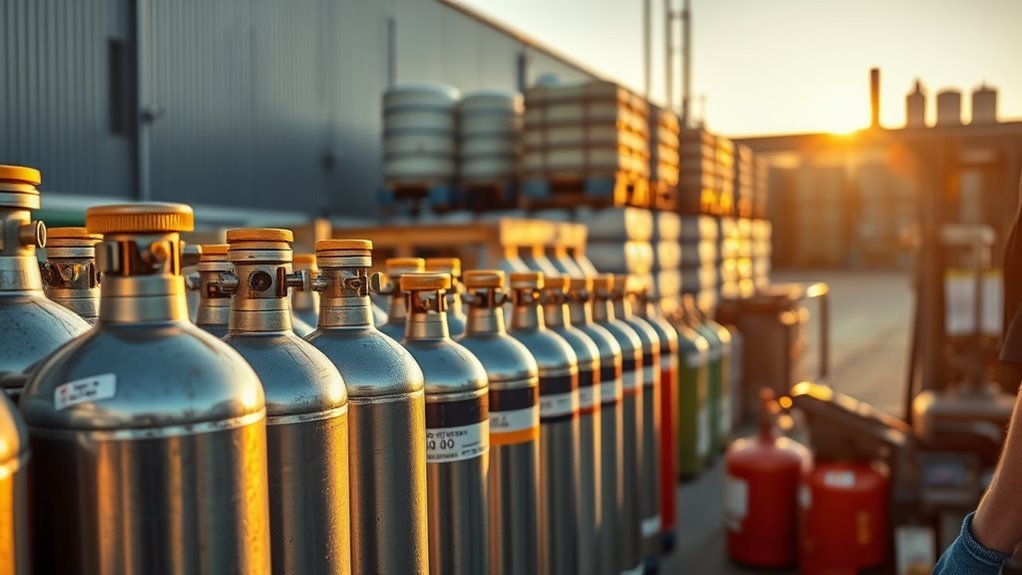
Buying a cylinder costs more up front but usually lowers your per-refill price over time. Leasing keeps the upfront cost low, but you pay rental fees and sometimes higher refill rates.
- Buy: An owned 80 cu ft cylinder is often quoted around $310 to $350 and a 125 cu ft cylinder around $370 to $420, with refills near $100. These are rough estimates.
- Lease: Some suppliers charge an annual rental fee (an example is about $75 a year for a 150 cu ft cylinder) plus a refill near $120. Terms differ by supplier.
- Exchange: You swap an empty cylinder for a full one. It is fast, but some suppliers charge more for exchange than for refilling a cylinder you own.
Independent suppliers can undercut national chains, and some small bottles are refilled for as little as $25. Ask whether a supplier only refills cylinders it sold, since some do.
If you weld steady volumes, owning is usually cheaper over time. If you weld a few times a month, leasing or exchanging keeps cash free.
How to Calculate Your Gas Cost per Hour
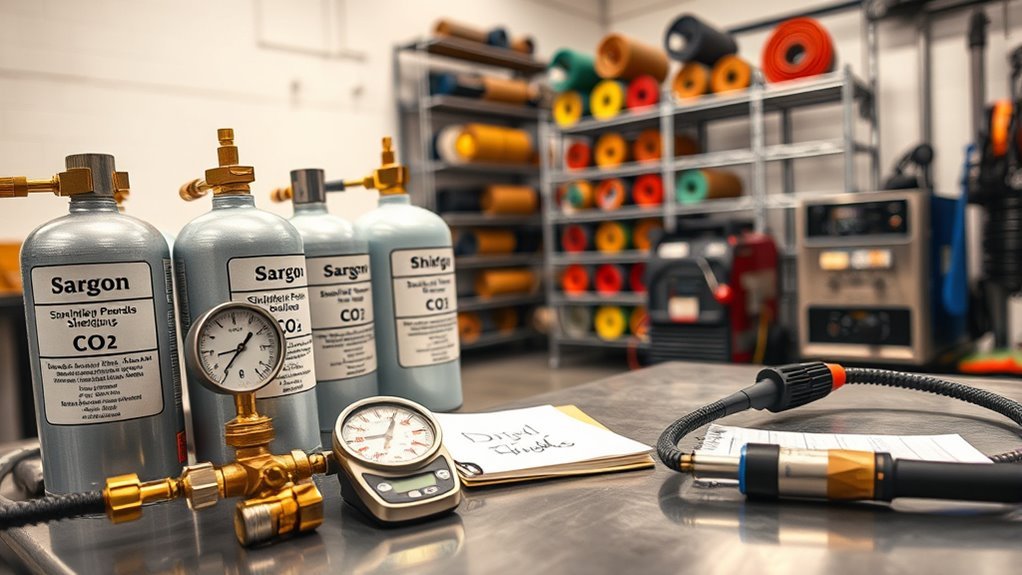
Divide the refill price by the hours the cylinder lasts at your flow rate. The examples below use round numbers to show the method, so plug in your own refill price and flow rate.
| Example | Refill price | Run time | Cost per hour |
|---|---|---|---|
| 80 cu ft argon at 10 CFH | $100 | 8 hours | $12.50 |
| 80 cu ft argon at 20 CFH | $100 | 4 hours | $25.00 |
| 125 cu ft mix at 10 CFH | $100 | 12.5 hours | $8.00 |
The same cylinder costs twice as much per hour at double the flow rate. A shielding gas flow of 10 to 20 CFH is common for MIG, but check your welder and wire manufacturer for the setting that suits your job. For wire, gas, and labor together, see our MIG welding cost breakdown and MIG welding gas cost guide.
How Long a Gas Cylinder Lasts
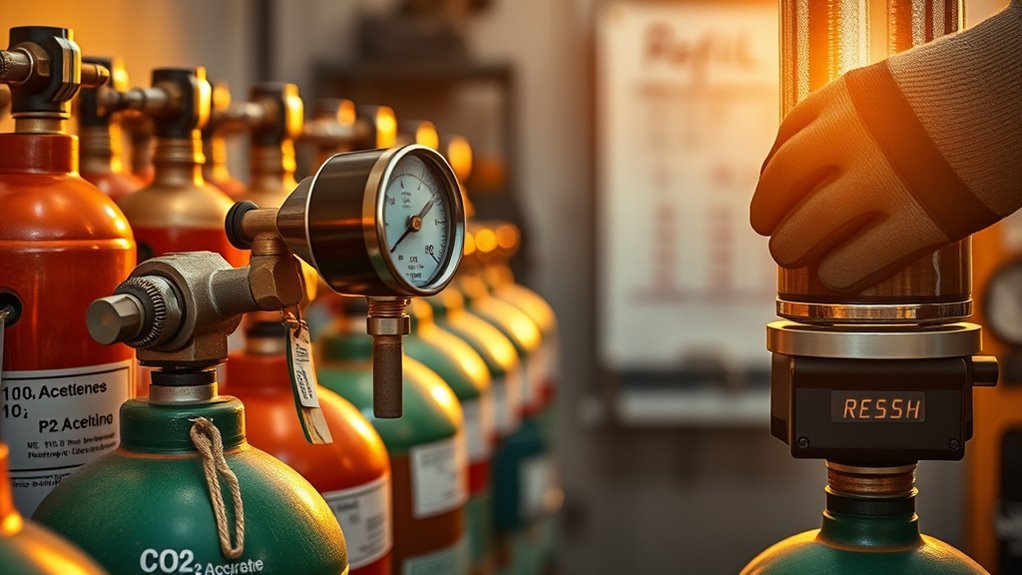
Run time equals the cubic feet in the cylinder divided by your flow rate in cubic feet per hour (CFH). An 80 cu ft cylinder at 10 CFH lasts about 8 hours of arc-on gas flow.
You can also watch the regulator. A full cylinder typically reads roughly 2,000 psi or more, and about half that pressure means about half the gas is left. Check the service pressure stamped on your cylinder.
Two habits stop wasted gas:
- Close the cylinder valve when you finish, so slow leaks do not drain it overnight.
- Check hose and fittings for leaks with soapy water.
Secure cylinders upright and follow OSHA compressed gas rules. Do not roll or drag a cylinder to mix the gas.
Where to Buy or Refill Welding Gas
Start with local welding suppliers and independent gas dealers, then compare at least three quotes. Ask about:
- Refill price versus exchange price for your cylinder size
- Lease or rental fees, deposits, and return rules
- HAZMAT, delivery, and fuel surcharges
- Whether they refill cylinders bought elsewhere
- The test date stamped on any cylinder you buy or swap
Tips to Save on Welding Gas Costs
- Set the flow rate to the lowest value that still shields the weld well.
- Choose a cylinder size that matches your workload, so you refill less often.
- Ask about volume discounts and recurring refill contracts.
- Fix leaks quickly and shut the valve between jobs.
- Compare an exchange price with a refill price before you commit.
- Compare options in our argon welding gas cost guide before you pick a gas.
Frequently Asked Questions
How much does a welding gas refill cost?
It depends on the gas and cylinder size. As a rough planning estimate, small bottles cost about $40 to refill and large 300 cu ft mixes cost about $180, with many common refills near $75 to $120. Ask local suppliers for current prices.
Can I refill welding gas myself at home?
No. Filling cylinders needs professional equipment, training, and compliant cylinder testing. Home refilling risks explosion, injury, and legal liability, so use a licensed welding gas supplier.
Do welding gas cylinders have expiration dates?
The gas does not spoil, but cylinders carry stamped hydrostatic test dates and must be retested before they can be refilled once the test interval has passed. Check the stamped date on any cylinder you buy.
Are there discounts for bulk or recurring refills?
Often yes. Many suppliers offer volume pricing, loyalty programs, or contract rates for regular customers. Ask what you qualify for.
Can I mix different gases in one cylinder?
No. Do not mix gases yourself or transfer gas between cylinders. Wrong mixes cause weld defects and safety problems, so buy pre-mixed gas from a supplier.
Conclusion
Welding gas refill cost comes down to gas type, cylinder size, and whether you own, lease, or exchange. Treat the prices here as planning estimates, get local quotes, and work out your cost per hour so you can pick the cylinder size and supplier that fit your welding schedule.