
You might not know that refill prices can swing two or three times depending on tank size and gas mix, not just the supplier. You’ll want specific numbers: an 80 CF argon refill often runs $60–$70, a 300 CF C25 mix can be about $125, and smaller CO2 tanks sit near $60. Knowing how size, gas type, lease versus purchase, and local rates affect your per-hour cost will help you pick the cheapest option. Here’s how.
Quick Answer
Refill costs vary a lot by tank size, gas, and where you shop, but here are the typical numbers most welders see right now.
- 80 CF argon: $60–$70
- 300 CF C25 mix: about $125
- 40 CF CO2: near $60
- Larger tanks cut your cost per cubic foot and mean fewer trips to the supplier.
- Hourly cost is simple: refill price divided by (tank CF ÷ your flow rate in CFH).
- Shop local independents, compare buy versus lease, and consider flux-cored wire to skip gas on some jobs.
The Cost Breakdown for Filling Welding Gas Cylinders
Price is the biggest variable when you refill a welding gas cylinder. Costs change sharply by tank size, gas mix, and supplier. You will usually see 80 CF argon at $60–$70, 125 CF near $70, and 40 CF around $60. Buying a larger tank reduces how often you refill and lowers the cost per cubic foot.
A 300 CF C25 mix (75% Ar/25% CO2) runs about $125 to refill. That reflects the blend and bigger volume. Local independents sometimes charge as little as $23 for small-tank refills, while national chains often cost more and add HAZMAT fees that push the total higher.
Always figure your effective cost per CF, add any recurring HAZMAT surcharges, and compare annual refill frequency against the upfront tank choice. That helps you find the most economical way to handle gas for your welding work.
Common Types of Welding Gas and Their Prices
You will compare the main gases—argon for TIG, C25 for MIG, and acetylene for oxy-fuel—along with their typical uses and costs.
Expect refills like $60 for a 40 CF argon, about $70 for 80–125 CF sizes, $125 for a 300 CF C25, and $85–$225 for acetylene depending on cylinder size.
Balance tank capacity against the per-fill price and shop around. Local independents often beat chain rates and help you keep recurring refill costs down.
Products Worth Considering

All HP cylinders come with a 10 year hydrotest date stamped.

Welding Gas to Your Door - Get PrimeWeld's industrial grade Argon welding gas delivered right to your door. We offer different mixtures for any application, and you can purchase a tank without worrying about costly rental fees or wasted trips out to your local welding supply shop.

All HP cylinders come with a 10 year hydrotest date stamped.
Gas Types and Uses
When you pick shielding or fuel gases, you weigh performance against refill cost so your process stays efficient and affordable.
You choose based on the job: argon for TIG gives clean arc control and costs about $70 for an 80 CF refill. Miller Welding’s guide to MIG gases has more detail on matching mixes to your work.
C25 (75% argon/25% CO2) balances weld pool stability for MIG and costs roughly $125 for a 300 CF refill.
CO2 is the low-cost option for MIG at about $60 for a 40 CF refill, but it creates more spatter than inert mixes.
Helium gives deeper penetration for TIG and is the most expensive refill—price varies by supplier—but it helps you move faster on thick sections.
Acetylene fuels oxyacetylene systems, averages near $150 per standard tank refill, and stays essential for cutting and brazing.
Tank Sizes and Prices
Pick the right tank size to control your per-cubic-foot cost. Common options run from 40 to 300 CF. Full-tank purchase prices usually start around $230 for 40 CF and reach $400 for 125 CF. Refill costs run roughly $60 for 40 CF, $70 for 80–125 CF, and about $125 for a 300 CF fill. The 300 CF size works best for high-volume use.
Gas-specific prices differ too: 100% argon fills run roughly $90 for 125 CF, while C25 in 300 CF stays about $125. Shop local suppliers—independent shops often undercut chain rates.
Remember tank maintenance and safety rules in your lifecycle cost. Hydrostatic testing, valve upkeep, and proper storage add predictable expenses that affect total cost-per-CF over the tank’s life.
Refill Costs and Options
Compare per-fill and per-cubic-foot rates across gases and sizes to keep operating costs under control. You will see about $60 for a 40 CF refill, roughly $70 for 80–125 CF bottles (those sizes give better value per CF), and around $125 for a 300 CF C25 fill.
Full 125 CF argon tanks now cost several hundred dollars to buy, so local supplier quotes (sometimes as low as $23 for small refills) and the exact gas type make a real difference in your cost-per-CF and yearly budget.
Choose your refill plan based on how much you weld each day, the mixture you need, and how easy it is to transport the tank. Call local suppliers for current quotes, volume discounts, and cylinder exchange programs.
Tank Sizes, Purchase Vs Lease, and Upfront Costs
Tank sizes range from about 20 CF to 300 CF, and the way you get the tank drives both upfront cost and long-term economics.
An 80 CF tank usually retails for $290–$320 and a 125 CF for $350–$400. Used tanks can drop the initial price to about $100.
Leasing costs about $75 per year for a 150 CF tank and lowers your immediate cash outlay while the supplier handles maintenance and liability. Owning skips the yearly lease fee and lets you shop around for refills at multiple places.
Leasing (≈$75/yr for 150 CF) reduces upfront cost and supplier liability; buying avoids lease fees and allows refill shopping.
Compare total upfront plus expected refill spend. A larger tank costs more at first but gives better per-CF value at refill time (80 CF refill ≈ $70; 125 CF refill ≈ $70). Factor in regional price differences and local competition when you set your budget.
Products Worth Considering

Welding Gas to Your Door - Get PrimeWeld's industrial grade 75 %Argon 25% CO2 gas cylinder delivered right to your door. We offer different mixtures for any application, and you can purchase a tank without worrying about costly rental fees or wasted trips out to your local welding supply shop.
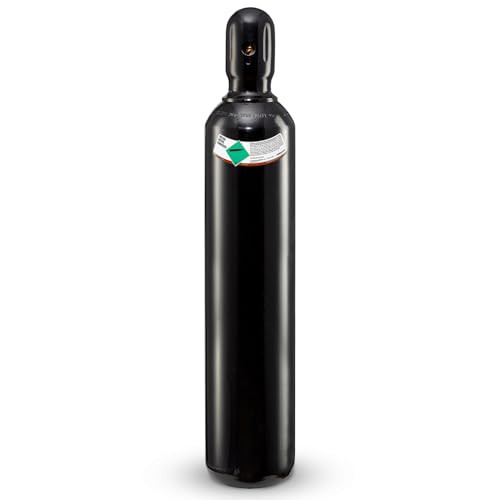
Welding Gas to Your Door - Get PrimeWeld's industrial grade Argon welding gas delivered right to your door. We offer different mixtures for any application, and you can purchase a tank without worrying about costly rental fees or wasted trips out to your local welding supply shop.

All HP cylinders come with a 10 year hydrotest date stamped.
Typical Refill Frequencies and Ongoing Expenses
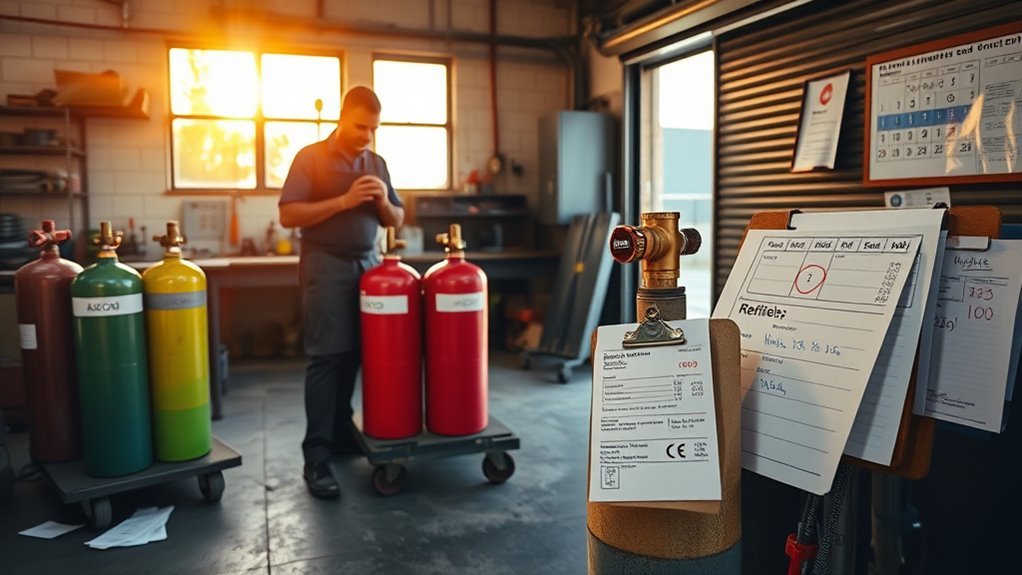
Refill frequency drives your operating budget, so plan around tank size, flow rate, and supplier fees.
Smaller 40 CF tanks cost about $60 per refill but need more frequent stops, which adds up with extra trips and HAZMAT charges. An 80 CF refill runs roughly $70; at 10 CFH it lasts about eight hours, so your daily welding decides how often you go back.
A 125 CF tank also costs near $70 and can last a quarter for light use, cutting down on labor and transport costs.
For the first year, figure an 80 CF setup at about $660 (purchase plus initial refills), then expect ongoing annual refill costs near $360 for regular use. Add supplier fees and the occasional emergency fill. Track your actual consumption and ask for volume discounts or bundled service to keep expenses lower.
How to Calculate Cost Per Hour of Welding Gas Use

To get exact gas costs, divide the refill price by the usable hours from your tank volume and flow rate. Turn that hourly number into cost-per-weld by multiplying by average weld time, then scale up for yearly expense.
Comparing 40, 80, and 125 CF examples shows how tank size and flow rate change the numbers.
Tank Volume vs. Flow
Divide tank cubic feet by your flow rate in CFH to find usable hours, then divide refill price by those hours. For example, an 80 CF tank at 10 CFH lasts about 8 hours, so a $70 refill equals $8.75 per hour.
Higher flow rates (typical TIG or MIG 10–40 CFH) shorten the hours and raise hourly cost. Usable cubic feet is a bit less than the labeled capacity—watch the gauge (full ≈ 2015 psi, half ≈ 1000 psi) to estimate what remains.
Larger tanks reduce refill trips and per-hour cost because the labor to swap them stays the same. Keep an eye on your actual flow rate for accurate tracking.
Total Yearly Expense
Add your tank purchase to the year’s refill bills, then divide by the total welding hours those refills provide. List the initial tank cost plus planned refills for the year to build your gas budget. Convert refills to hours using tank CF and your CFH (80 CF at 10 CFH ≈ 8 hours).
Example: a $300 80 CF tank plus $360 in refills gives $660 first-year expense. Divide by the hours supplied to find cost per hour. After year one you only track refill costs. Review expenses monthly and adjust as needed.
Cost per Weld Hour
Divide each refill price by the hours the tank actually lasts at your flow rate. Tank CF ÷ CFH = usable hours; then refill cost ÷ usable hours = cost per weld hour.
Example: 80 CF at 10 CFH lasts 8 hours with a $70 refill = $8.75 per hour. At 20 CFH it lasts 4 hours = $17.50 per hour. A 125 CF tank at 10 CFH lasts 12 hours with the same refill = about $5.83 per hour.
Include a share of the tank purchase and ongoing refills for true cost of ownership. Improve efficiency and conserve gas to bring hourly costs down further.
Signs Your Tank Is Running Low and How to Check Pressure
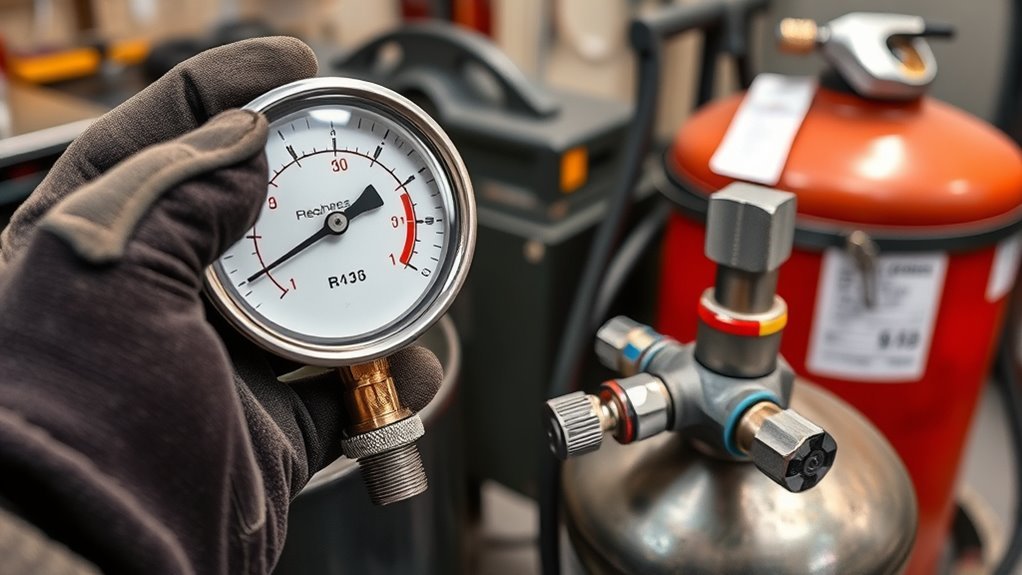
Checking tank pressure is the fastest way to know when you are getting low. Look at the gauge (full ≈ 2015 psi, half ≈ 1000 psi), feel the tank weight for a quick check, and track run time with your flow rate (80 CF at 10 CFH lasts ~8 hours).
Use a calibrated gauge during routine maintenance to catch big drops. Visually inspect valves and fittings for leaks—a steady pressure loss without welding means wasted gas.
For mixed gases, roll the tank gently before use to keep contents blended. Store tanks upright to protect valves and get accurate readings. Log your hours and flow rates so you can predict the next refill and avoid surprise downtime.
Where to Buy or Refill Welding Gas: Local Suppliers and Online Options
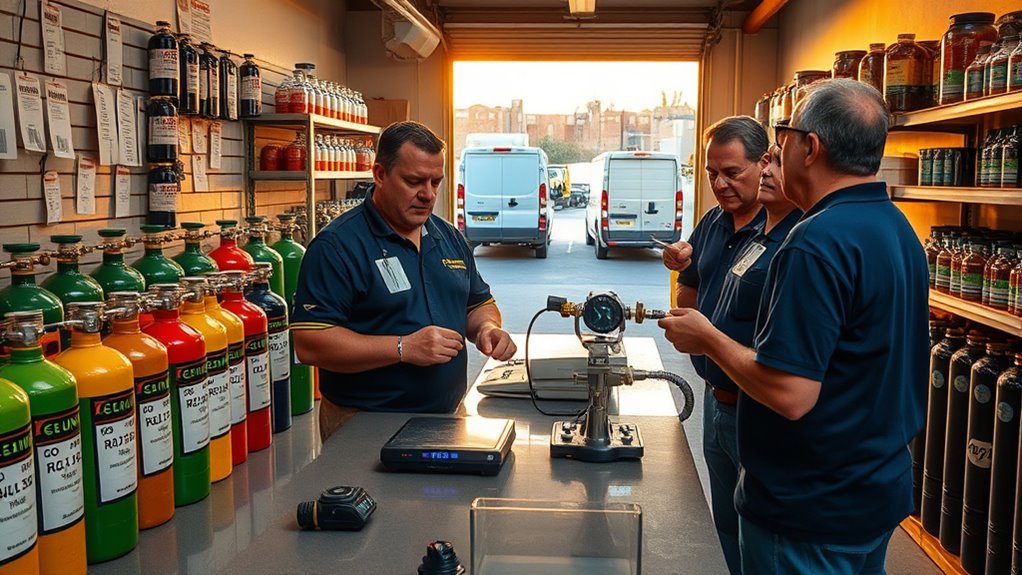
Local suppliers usually give the best refill rates (80 CF runs $47–$70) and faster service than big chains. Build a relationship with one because many now only refill cylinders you bought from them. That keeps access easy and long-term costs lower.
Visit several nearby vendors to see regional differences and any demand-driven markups. For new cylinders and delivery, online sellers like Primeweld list good prices (example: 125 CF C25 at $369 with free delivery). Used tanks around $100 save money upfront, but check the hydrostatic test date and valve condition first.
Balance refill frequency, travel time, and supplier rules to keep total ownership and operating costs as low as possible.
Products Worth Considering

Welding Gas to Your Door - Get PrimeWeld's industrial grade 75 %Argon 25% CO2 gas cylinder delivered right to your door. We offer different mixtures for any application, and you can purchase a tank without worrying about costly rental fees or wasted trips out to your local welding supply shop.

ITEMS INCLUDED – (2) Refillable EMPTY 1LB Propane Tanks, (2) Caps, and (2) Allen Keys - 2mm (5/64") in size

ITEMS INCLUDED – (2) Refillable Empty 1LB Propane Tanks, (2) Caps, and (2) Allen Keys - 2mm (5/64") in size
Alternatives to Shielding Gas and Cost-Saving Techniques
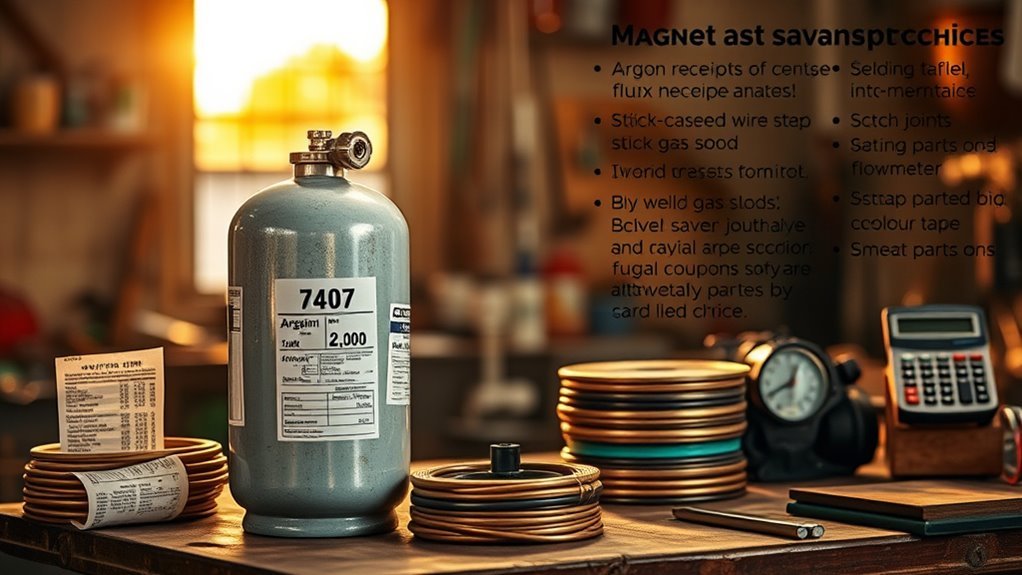
If gas costs or logistics feel too high, you have solid options that still deliver good welds.
Switch to self-shielded flux-cored wire or stick electrodes. Both remove the need for external gas and cut operating costs on many projects. Miller’s solid wire versus flux-cored wire guide explains when each works best.
Flux-cored handles dirty or outdoor jobs well with MIG setups. Stick welding manages thick sections and rough conditions where finish matters less.
- Use self-shielded flux-cored wire to remove gas needs and reduce per-job consumable cost.
- Employ stick (SMAW) for heavy sections where filler cost and portability matter more than finish.
- Reduce gas dependency via larger tank purchases or sourcing used tanks to lower per-CF and upfront spend.
Pair the right process with smart workflow—batch similar welds, limit purge waste, and match the method to the material—to save money while keeping strength and code compliance.
Regional Price Variations and Tips for Getting the Best Deal
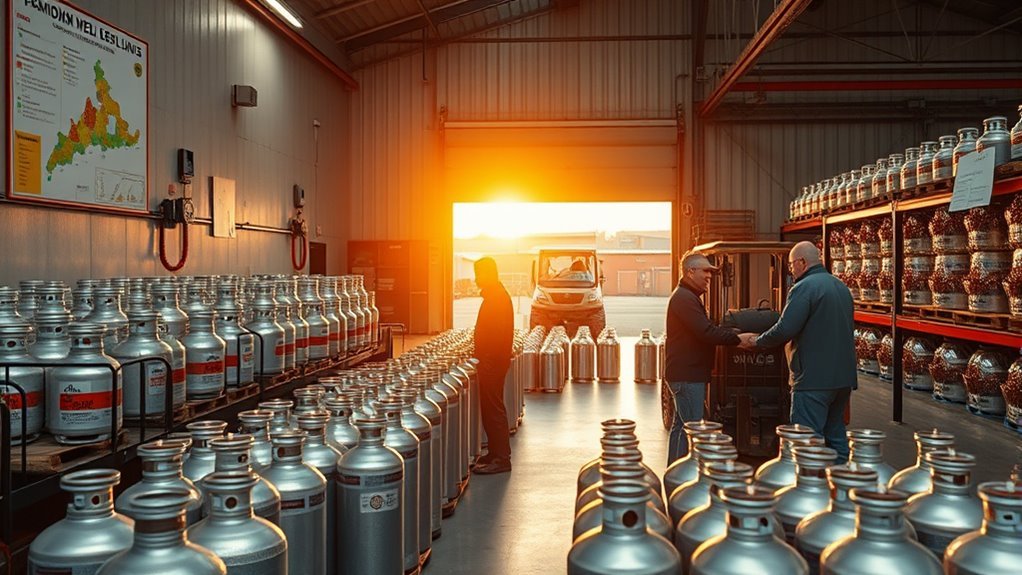
Prices swing widely by region. Small tanks can refill for about $23 in competitive areas, while 80 CF or 125 CF fills may top $70 where options are limited. HAZMAT fees add more—expect roughly $38 for a 20 lb CO2 refill and up to $265 for two large Argon or C25 fills in some spots.
Compare local independents against national chains. Independents often have lower overhead and better rates. Ask for written quotes and check on bundled discounts or HAZMAT waivers for regular customers.
Set up an account with your favorite local supplier for volume pricing, faster service, and clearer bills. Watch regional trends and switch suppliers if you spot better offers. This approach keeps per-fill costs low while you stay supplied.
Frequently Asked Questions
Can Welding Gas Tanks Be Shipped Internationally and What Are the Regulations?
Yes—you can ship welding gas cylinders internationally, but you must follow strict packaging, labeling, documentation, carrier rules, and hazardous materials fees. Noncompliance can bring fines, delays, or refused shipments.
Can I Exchange an Empty Tank at a Scrap Metal Yard for Credit?
Yes—you can often exchange an empty tank at a scrap metal yard for credit. The amount depends on tank condition, steel weight, removed fittings, and current metal prices. Expect modest credit plus paperwork and safety checks.
How Do Impurities or Moisture Affect Welding Gas Performance?
Impurities and moisture hurt weld quality by reducing arc stability and strength. You end up with more scrap and rework. Keep purity high with proper filtration, dryers, and sealed storage to avoid extra costs and defects.
Are There Insurance Requirements for Storing Multiple Gas Cylinders?
Yes—you need insurance that covers gas cylinder storage, liability, and fire risks. Policies usually require ventilated and secured storage, separation of incompatible gases, capacity limits, and inspection records. Missing these steps can raise premiums or void coverage.
Can Household Propane Regulators Be Used With Welding Tanks?
No—you should not use household propane regulators with welding tanks. Compatibility and pressure ratings differ. Welding regulators must meet safety standards for oxy-fuel mixes. Wrong regulators can cause leaks, damage equipment, or lead to fines.
Conclusion
When it comes to welding gas costs, remember “penny wise, pound foolish.” Shop smart by comparing local suppliers versus chains, weighing purchase versus lease, and matching tank size and gas type to your actual workload. Track refill frequency and calculate cost per welding hour so your budget stays accurate. Use alternatives like flux-cored wire when gas is not needed, bundle refills, and negotiate rates to lower ongoing expenses without losing productivity.
