

As of August 10, 2026, published U.S. retail examples put a new customer-owned welding oxygen tank at $259.99 for 20 cu. ft. up to $589.99 for 125 cu. ft., before oxygen. A separate 80-cu.-ft. empty-cylinder sale listing was $225 but sold out when checked. In one national retail exchange program, oxygen contents for 20- to 125-cu.-ft. cylinders were about $44.99 to $59.99. Your local total can still change with supplier rules, rental or lease charges, testing status, taxes, delivery, and service fees.
Last updated: August 10, 2026. The retail examples linked below were checked on that date; they are price snapshots, not national averages.
Quick Answer
Current published examples put active 20- to 125-cu.-ft. customer-owned cylinders at about $260 to $590 before gas. A separate 80-cu.-ft. empty-cylinder sale listing was $225 but sold out when checked. Contents-only examples for 20 to 125 cu. ft. run about $45 to $60. Compare the cylinder price, oxygen contents, supplier program, testing status, taxes, delivery, and service fees before choosing.
Key Takeaways
- Separate the cylinder price from the cost of the oxygen inside it; a new cylinder does not always include gas contents.
- A larger tank costs more upfront but normally requires fewer trips for exchanges.
- Call a local gas supplier before buying a cylinder online because not every branch accepts every owner bottle.
- Tank life depends on capacity and torch flow, not a fixed number of hours.
- Never use a leaking, badly corroded, fire-damaged, dented, or defective oxygen cylinder.
How Much Does a Welding Oxygen Tank Cost in 2026?

There is no single nationwide welding oxygen tank price. A low online price may cover only an empty cylinder, while a higher local price may include access to an exchange program. Filled-cylinder delivery, branch inventory, hazardous-material charges, and sales tax can also affect the total.
The examples below were checked on August 10, 2026. They are retail examples, not guaranteed national averages. The lowest $225 example was sold out when checked, so do not treat it as a currently available floor price.
| Example | Cylinder Price | Gas or Exchange Example | Important Detail |
| 20 cu. ft. customer-owned steel cylinder | $259.99 retail example | $44.99 contents-only example | Illustrative first purchase: about $304.98 before tax if cylinder and gas are separate. |
| 40 cu. ft. customer-owned steel cylinder | $399.99 retail example | $49.99 contents-only example | Illustrative first purchase: about $449.98 before tax if cylinder and gas are separate. |
| 80 cu. ft. customer-owned steel cylinder | $489.99 retail example | $54.99 contents-only example | Illustrative first purchase: about $544.98 before tax. |
| 125 cu. ft. customer-owned steel cylinder | $589.99 retail example | $59.99 contents-only example | Illustrative first purchase: about $649.98 before tax. |
| 80 cu. ft. empty cylinder from a welding retailer | $225 sale example | Ships empty; filling is separate | The listing was sold out when checked, and local supplier acceptance should be confirmed before purchase. |
Price-check method: These figures come from the linked retailer pages checked on August 10, 2026. Tractor Supply examples were available as published listings when checked; the $225 80-cu.-ft. Welding Supplies from IOC listing was sold out. Obtain a local written quote that separates the cylinder, first fill, future exchange, rental or lease charge, tax, delivery, and hazardous-material or service fees.
Initial Costs: Buying a New Oxygen Tank

Buying a cylinder usually has the highest initial cost, but it can eliminate recurring cylinder rent. Ownership does not always mean that you keep the exact same physical bottle. Many customer-owned programs exchange your empty qualified cylinder for another full cylinder of the same program size.
Products Worth Considering

20 CU FT OXYGEN CYLINDER - Compact steel oxygen tank for oxy-acetylene welding, cutting, torch work, medical use, and small industrial applications. 2015 PSI service pressure. Ultra-portable with 5.25" diameter x 18" height, 13.67 lb tare weight. Ideal for mobile welders, small shops, home workshops, and portable medical oxygen needs

COMPLETE OXY-ACETYLENE WELDING SET - Includes MC 10 cu ft steel acetylene cylinder with CGA200 valve and 20 cu ft steel oxygen cylinder with CGA540 valve. Ready-to-fill portable set for oxy-acetylene welding, cutting, brazing, soldering, and heating. Convenient bundle for hobbyists, small shops, mobile repair, and light-duty torch work.

80 CU FT OXYGEN CAPACITY - Mid-size cylinder delivers extended run time for oxy-acetylene welding and cutting operations, medical oxygen use, and industrial applications. Balances generous capacity with manageable portability for professional welders, shops, and healthcare facilities.
Cylinder Size Options
The best cylinder size depends on portability, available storage space, torch consumption, and how far you live from an exchange location.
| Cylinder Capacity | Best Fit | Main Trade-Off |
| 20 cu. ft. | Very light repairs, emergency portability, or occasional brazing | Lowest capacity and most frequent exchange trips |
| 40 cu. ft. | Occasional home-shop welding, heating, or light cutting | Portable, but still limited for long cutting sessions |
| 80 cu. ft. | Regular hobby or maintenance work | Heavier and more expensive, but requires fewer exchanges |
| 125 cu. ft. | Frequent fabrication, farm repair, and longer cutting jobs | Higher upfront cost, more weight, and possible supplier restrictions |
Price Variability Factors
Two cylinders with the same stated capacity can have very different prices. Before comparing them, check the following:
- Empty or filled: A low online price may not include oxygen.
- Owner cylinder or supplier cylinder: A leased cylinder remains the supplier’s property.
- Exchange eligibility: Some suppliers accept only cylinders from their own program.
- Specification and valve: A welding oxygen cylinder commonly uses an oxygen-service connection such as CGA-540, but the supplier must confirm compatibility.
- Requalification status: An expired or questionable cylinder may require testing or may be refused.
- Condition: Paint wear is not the same as structural damage, but deep corrosion, dents, gouges, heat exposure, or valve damage require professional evaluation.
- Availability: An inexpensive cylinder is not useful if no nearby supplier will fill or exchange it.
Checklist Before Buying a Used Oxygen Cylinder
- Ask the seller for proof that the cylinder is customer-owned and legally transferable.
- Photograph the shoulder markings, serial number, DOT specification, and most recent test mark.
- Call the gas supplier you plan to use and ask whether it will accept that exact size and specification.
- Confirm whether the supplier will refill the same bottle or exchange it.
- Reject cylinders with severe corrosion, bulges, deep dents, gouges, damaged threads, fire exposure, altered markings, or a questionable valve.
- Include possible inspection, requalification, valve, and exchange charges in the purchase decision.
Pro Tip: Call your intended gas supplier before paying for a used or online cylinder. Give the supplier the size, DOT specification, valve type, test date, and ownership details. A cheaper cylinder can become an expensive decoration if no local branch will accept it.
Ongoing Expenses: Refilling or Exchanging Your Oxygen Tank

Many shops use the word “refill” when the transaction is actually an exchange. You bring in an empty qualified cylinder and leave with a full cylinder. This is faster than waiting for your exact bottle to be filled and tested, but you may receive a different cylinder with different paint and markings.
If you are comparing only recurring gas costs, see our welding oxygen refill and exchange cost guide. This page focuses on the broader total cost of buying, renting, leasing, and using a welding oxygen cylinder.
Ownership, Rental, and Exchange Options
| Program | Upfront Cost | Ongoing Cost | Best For |
| Customer-owned cylinder | Highest | Gas contents, exchange, testing, and possible service fees | Long-term users who have a reliable exchange location |
| Monthly or annual rental | Lower | Rent plus gas and exchange charges | Short projects or users who do not want to manage cylinder ownership |
| Long-term lease | Moderate lump sum | Gas, exchange, and renewal costs | Regular users who want a supplier-managed cylinder |
When Does Buying Beat Renting or Leasing?
There is no universal break-even point because suppliers set different rental, lease, exchange, account, and service charges. Compare the two programs with the same expected annual oxygen use:
Annual ownership cost = allocated cylinder purchase cost + gas/exchange charges + testing or service + travel
Annual rental or lease cost = rent or lease charges + gas/exchange charges + account or service fees + travel
If the gas charge is similar under both programs, the deciding difference is often the cylinder-specific ownership versus rental cost. Ask the same supplier for a written first-year total and a typical later-year total for each option rather than guessing from the advertised cylinder price.
What an Exchange Quote May Include
- The oxygen contents
- A cylinder exchange or handling charge
- Hazardous-material or environmental fees
- Delivery or route charges
- Testing or out-of-date-cylinder fees
- Tax
- Rental or lease renewal charges
Ask for the out-the-door amount rather than comparing only the advertised gas price. A supplier with a slightly higher contents charge may still be cheaper after delivery, testing, and account fees are included.
Calculate the Cost per Cubic Foot
To compare cylinder sizes, divide the exchange price by the cylinder’s rated capacity:
Exchange price ÷ cylinder capacity = cost per cubic foot
Using the dated retail examples above:
- A $44.99 contents-only example for 20 cu. ft. is about $2.25 per cu. ft.
- A $49.99 contents-only example for 40 cu. ft. is about $1.25 per cu. ft.
- A $54.99 contents-only example for 80 cu. ft. is about $0.69 per cu. ft.
- A $59.99 contents-only example for 125 cu. ft. is about $0.48 per cu. ft.
This simple comparison suggests why a larger cylinder can reduce gas cost per cubic foot. However, the larger option is only a good value when you can transport, store, and exchange it safely.
Factors Influencing the Cost of Oxygen Tanks

The cylinder’s rated capacity is important, but it is only one part of the final cost. The following factors can change the amount you pay:
- Supplier program: Customer-owned, leased, and rented cylinders have different fee structures.
- New or used condition: A used bottle may save money only if its ownership and acceptance are clear.
- Cylinder material: Steel cylinders are common and durable, while aluminum cylinders can reduce weight in applications where compatible sizes are available.
- Test status: An expired cylinder can require requalification before it is filled or transported in commerce.
- Regional competition: Areas with several welding-gas suppliers may offer better pricing than areas with one branch.
- Distance and delivery: Route charges and repeated exchange trips can outweigh a small difference in gas price.
- Availability: Some suppliers limit the sizes available to noncommercial customers.
- Fees: Hazardous-material, environmental, account, handling, and tax charges may be added.
Additional Equipment Costs
A cylinder alone is not a complete oxy-fuel setup. Depending on what you already own, budget for:
- An oxygen regulator rated for the cylinder connection and required pressure
- A compatible fuel-gas cylinder and regulator
- Approved twin hose
- A torch handle, welding tips, heating tips, or cutting attachment
- Check valves or flashback protection recommended for the equipment
- A cylinder cart, chain, strap, or other securing device
- Valve caps where the cylinder is designed to use them
- Eye protection, gloves, flame-resistant clothing, and other task-specific personal protective equipment
Warning: Oxygen is not a fuel, but it strongly supports combustion. Keep oxygen cylinders, valves, regulators, hoses, and fittings free of oil and grease. Use only approved oxygen-service equipment, and do not use improvised adapters.
Where to Purchase Welding Oxygen Tanks

You can purchase, rent, or exchange welding oxygen cylinders through several types of suppliers:
- Local welding-gas distributors: These businesses can explain owner-cylinder, lease, and rental options and confirm which sizes they accept.
- National industrial-gas chains: Branch pricing and cylinder availability may require an account or local quote.
- Farm, hardware, and tool retailers: Some participate in customer-owned cylinder exchange programs.
- Online welding suppliers: These may ship an empty cylinder, but you must arrange filling or exchange locally.
- Used-equipment sellers: Prices may be attractive, but ownership, condition, markings, and supplier acceptance require extra care.
Products Worth Considering

All HP cylinders come with a 10 year hydrotest date stamped.

CERTIFIED: DOT Approved and DOT Stamped

All HP cylinders come with a 10 year hydrotest date stamped.
Questions to Ask Before Buying
- Is this price for the cylinder, the oxygen, or both?
- If I buy a new cylinder, are oxygen contents included or purchased separately?
- Will I own the cylinder, rent it, or lease it?
- Can I exchange it at other branches?
- Do you accept owner cylinders bought elsewhere?
- Which sizes are available to noncommercial customers?
- What is the total exchange price after all fees and tax?
- What happens if the cylinder’s requalification date has passed?
- Do you refill my exact bottle or exchange it for another one?
- What documents prove ownership?
- Is pickup required, or is filled-cylinder delivery available?
Comparing written answers to these questions is more useful than comparing cylinder prices alone.
Comparing Different Types of Oxygen Cylinders

Products Worth Considering
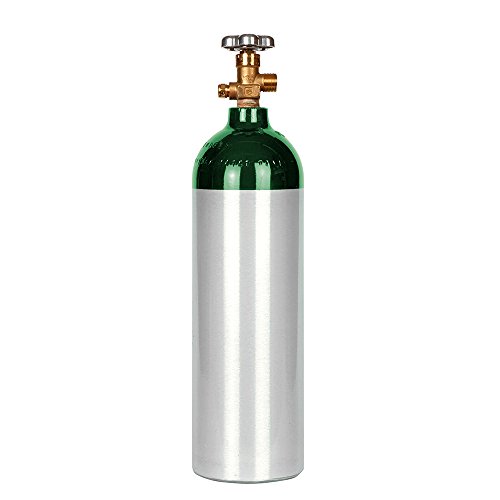
New high-quality 22 cu ft aluminum oxygen cylinder with CGA540 valve

The product is 1 4 OZ, Pre-Filled Oxygen Gas Torch Style Cylinder

Includes: 3 Pack Bernzomatic Oxygen 1.4 oz Cylinders
Aluminum vs. Steel Cylinders
Steel and aluminum cylinders can both be safe when they are approved for oxygen service, maintained correctly, and accepted by the supplier. The best choice is usually determined by weight, size availability, purchase program, condition, and local exchange support.
| Feature | Steel Cylinder | Aluminum Cylinder |
| Weight | Usually heavier for a comparable portable capacity | Often lighter and easier to handle |
| Availability | Common in welding-gas owner and exchange programs | Availability varies by size and supplier |
| Corrosion behavior | Requires protection from damaging external rust and moisture | Does not rust like steel but can still be damaged or corroded |
| Purchase decision | Often the easiest choice when local exchange support is strong | Useful when lower cylinder weight matters and the supplier supports it |
How Cylinder Size Affects Cost and Practicality
Smaller cylinders cost less to fill in one transaction and are easier to move, but the gas often costs more per cubic foot. Larger cylinders reduce exchange frequency and may lower the gas cost per cubic foot, but they are heavier and more expensive to buy.
Choose the smallest cylinder that can complete your normal work with a reasonable reserve. A cylinder that is too small creates delays and travel costs. A cylinder that is too large can be difficult to secure, transport, or exchange.
How Long Does a Welding Oxygen Tank Last?
Use this formula:
Estimated continuous run time = usable cylinder capacity ÷ oxygen consumption in cubic feet per hour
For example, ESAB’s Type 101 acetylene cutting-tip data lists total oxygen consumption of approximately 30–35 cubic feet per hour for one small cutting setup and 55–60 cubic feet per hour for the next size.
- An 80-cu.-ft. cylinder at 30–35 CFH provides roughly 2.3 to 2.7 hours of continuous flow.
- An 80-cu.-ft. cylinder at 55–60 CFH provides roughly 1.3 to 1.5 hours of continuous flow.
- A 125-cu.-ft. cylinder at 30–35 CFH provides roughly 3.6 to 4.2 hours of continuous flow.
These are mathematical estimates, not guarantees. Purging, preheating, tip condition, pressure settings, pauses, leaks, and the specific welding, heating, brazing, or cutting tip all affect actual use.
Note: Use the oxygen-consumption chart supplied by your torch or tip manufacturer. Do not choose regulator settings or tip pressures from a general cost article.
Tips for Budgeting for Welding Supplies

A realistic welding oxygen budget should include the first purchase, recurring gas use, equipment, and the cost of obtaining exchanges.
- Get three local quotes: Ask for the total first-purchase cost and the total future exchange cost.
- Estimate annual oxygen use: Record your expected torch flow and operating hours.
- Compare cost per cubic foot: A larger cylinder may reduce gas cost and exchange trips.
- Add transportation: Include fuel, travel time, and the distance to an exchange location.
- Budget for equipment: Include regulators, hose, torch components, securing equipment, and protective gear.
- Plan for testing and service: A privately owned cylinder can eventually require inspection or requalification.
- Keep a reserve: Do not schedule an important job with barely enough oxygen to finish it.
The cheapest cylinder is not always the lowest-cost option. Supplier acceptance, exchange distance, gas cost per cubic foot, and refill frequency can matter more than the advertised bottle price.
Oxygen Cylinder Safety, Storage, and Testing
High-pressure oxygen equipment requires trained, careful handling. Workplace requirements may be stricter than the basic guidance below, and local fire codes can add further rules.
Safe Storage
- Keep cylinders secured so they cannot fall or be knocked over.
- Store them in a dry, protected, well-ventilated location away from heat.
- Keep oxygen equipment free from oil, grease, and other hydrocarbons.
- Keep valve protection caps in place when the cylinder is designed for one and is not connected for use.
- Close valves on empty cylinders as well as full cylinders.
- Under OSHA’s oxygen-fuel gas standard, stored oxygen cylinders must be separated from fuel-gas cylinders or combustible materials by at least 20 feet, or by a qualifying noncombustible barrier.
Moving and Using Cylinders
- Close the cylinder valve before moving it.
- Remove the regulator and install the valve cap before movement unless the cylinder is secured on equipment specifically designed for that purpose.
- Use a suitable cylinder cart, chain, strap, or steadying device.
- Do not lift a cylinder by its valve cap.
- Do not drop, roll roughly, strike, or use a cylinder as a support.
- Use an approved oxygen regulator and stand to the side when opening the valve.
- Do not repair a cylinder valve yourself. Contact the supplier.
DOT Markings and Requalification
Portable industrial oxygen cylinders used in U.S. commerce must have required specification and requalification markings. The interval is not the same for every cylinder. Under 49 CFR 180.209, the requalification table lists DOT 3A and 3AA cylinders at 5-, 10-, or 12-year intervals under different conditions, while DOT 3AL cylinders can have 5- or 12-year intervals under applicable provisions. Certain qualifying 3A or 3AA cylinders used for oxygen service may receive a five-point star after the test date and qualify for a 10-year interval.
Do not calculate the next test date from cylinder age alone. Ask a qualified gas supplier or authorized requalifier to interpret the DOT specification, test date, symbols, and service conditions before deciding whether the cylinder can be filled, exchanged, or transported.
Warning: Hissing, uncontrolled pressure loss, valve damage, severe corrosion, bulging, deep dents, gouges, altered markings, or fire exposure are not routine refill signals. Stop using the cylinder, keep people away, eliminate ignition sources when it is safe to do so, and contact the gas supplier or emergency services as appropriate.
Frequently Asked Questions
How long does a full welding oxygen tank typically last?
Divide the cylinder’s usable capacity by the torch tip’s oxygen consumption in cubic feet per hour. An 80-cu.-ft. cylinder running at 30–35 CFH may provide about 2.3–2.7 hours of continuous flow, while the same cylinder at 55–60 CFH may provide only about 1.3–1.5 hours.
Can I rent a welding oxygen tank instead of buying one?
Yes. Many industrial-gas suppliers offer monthly rental, annual rental, or long-term lease programs. Compare the rental or lease charge, exchange price, account fees, deposit, contract period, and return terms with the cost of a customer-owned cylinder.
Are there safety regulations for storing oxygen tanks?
Yes. Cylinders must be protected from damage, kept away from heat, secured, and handled with approved equipment. OSHA also requires stored oxygen cylinders to be separated from fuel-gas cylinders or combustibles by 20 feet or by a qualifying fire-resistant barrier. Local fire codes may add further requirements.
Can I use a medical oxygen tank for welding?
Do not repurpose medical oxygen equipment for welding. Use industrial oxygen supplied and labeled for welding or cutting, together with the correct oxygen-service regulator and fittings. Cylinder contents and equipment should be used only for the service intended by the supplier.
What are the signs that my oxygen tank needs refilling?
The normal indicator is a low cylinder-pressure gauge reading, confirmed with the cylinder valve open and the equipment checked according to its manual. A weak flame can also result from regulator, hose, tip, or valve problems. Hissing, severe rust, dents, or valve trouble indicate a possible safety problem, not merely an empty tank.
What oxygen cylinder size is best for a home workshop?
A 40-cu.-ft. cylinder can suit occasional portable work, while an 80- or 125-cu.-ft. cylinder often provides better value and fewer exchange trips for regular use. Confirm the physical size, weight, exchange availability, and supplier rules before choosing.
Can a gas supplier refuse to fill or exchange my cylinder?
Yes. A supplier may reject a cylinder because of unclear ownership, an unsupported size, expired testing, incompatible markings or valves, physical damage, or company policy. Confirm acceptance before buying a privately owned or used cylinder.
Does a new welding oxygen cylinder include oxygen?
Not always. In the Tractor Supply customer-owned program used for the price examples on this page, the cylinder and oxygen contents are separate purchases. Other suppliers may package the first fill differently, so ask whether the quoted price is for the empty cylinder, the oxygen contents, or both.
How often does a welding oxygen cylinder need requalification?
It depends on the DOT cylinder specification, test method, service conditions, and stamped symbols. Under 49 CFR 180.209, DOT 3A and 3AA cylinders can have 5-, 10-, or 12-year intervals under different conditions, while DOT 3AL cylinders can have 5- or 12-year intervals under applicable provisions. Have a qualified supplier or requalifier read the actual markings on your cylinder.
Conclusion
A welding oxygen tank can cost a few hundred dollars to buy, with gas contents, exchange charges, rental fees, and equipment added separately. The best value is not automatically the smallest or cheapest cylinder. Compare total first-purchase cost, future exchange cost, capacity, supplier acceptance, travel distance, and safe handling requirements before making a decision.
For occasional portable work, a small customer-owned or rented cylinder may be practical. For regular shop use, an 80- or 125-cu.-ft. cylinder can reduce exchange frequency and gas cost per cubic foot. Before paying, call the supplier you expect to use and ask for two written totals: the first-purchase cost and the next exchange cost for the exact cylinder size. Whichever option you choose, use an industrial oxygen cylinder intended for welding, keep it secured and oil-free, and let qualified suppliers handle filling, valve service, and requalification.
Sources
- OSHA 1910.253: Oxygen-Fuel Gas Welding and Cutting — cylinder storage, handling, separation, valve, and oil/grease requirements.
- OSHA 1926.350: Gas Welding and Cutting — securing cylinders, damaged-cylinder rules, and intended use.
- 49 CFR 180.209 — compressed-gas cylinder requalification periods and requirements.
- Compressed Gas Association: Oxygen Safety — combustion, oil and grease, ignition, and leak precautions.
- ESAB Type 101 Cutting-Tip Data — example oxygen-consumption rates used in run-time calculations.
- Tractor Supply 80-Cu.-Ft. Oxygen Cylinder — dated customer-owned cylinder and exchange-program pricing example.
