
Zimbabwe costs less than the United States in many categories, but low local wages make affordability more complicated than the price tags suggest. Current 2026 estimates put one person’s monthly costs at about $646 before rent and a family of four at about $2,258 before rent. Average countrywide rent is roughly $247–$337 for a one-bedroom apartment, while the reported average net salary is about $342 per month. All figures below are in U.S. dollars unless noted otherwise.
Quick Answer
A practical 2026 starting budget is about $890–$980 per month for one person renting a one-bedroom home at country-average rates. Harare is closer to $1,125, while Bulawayo can be around $760. A family of four may need roughly $2,800–$3,040 before private-school fees, major healthcare, and move-in costs.
Key Takeaways
- Zimbabwe’s 2026 cost-of-living index is about 48% below the U.S. index, but the reported average net salary is about 92% lower.
- Harare is normally the most expensive major-city option; current estimates place a one-person monthly budget near $1,124, compared with about $760 in Bulawayo.
- Countrywide one-bedroom rents average about $247 outside central areas and $337 in city centers, but neighborhood, furnishing, water, power backup, and security can change the real price.
- Zimbabwe uses a multicurrency system. Foreign currencies may be used alongside Zimbabwe Gold (ZiG), so exchange-rate and payment-method planning matters.
- Private healthcare, medical evacuation, and international schooling can add far more than basic food or public-transport costs.
Life in Zimbabwe: Affordability and Lifestyle
Zimbabwe is cheaper than the United States on broad price indexes. Numbeo’s 2026 country indexes place Zimbabwe at 35.9 for living costs and 24.2 for living costs plus rent, compared with 68.8 and 56.3 for the United States. That works out to roughly 48% lower costs before rent and 57% lower costs including rent. The rent index is about 76% lower.
Those percentages do not mean every product is cheaper. Imported goods, internet service, gasoline, backup electricity, private healthcare, and international education can be expensive. For example, countrywide data show gasoline around $1.65 per liter and broadband around $65 per month, both high relative to the reported average net salary.
Lower prices do not automatically create strong purchasing power: the reported average net salary is about $342 per month, while one person’s estimated costs are about $646 before rent.
The most useful way to judge affordability is to compare your own income with the exact housing, transport, healthcare, schooling, and utility choices you expect to use.

These MathLink Cubes make early math hands-on and engaging for children ages 5 and up, helping turn counting, addition, subtraction, patterns, and comparison into interactive learning. The colorful linking cubes connect on all sides and feature geometric cutouts for shape recognition and more advanced patterning, while also building fine motor skills, spatial reasoning, and problem-solving through play.

This hardcover edition by Eric Metaxas offers a compelling look at the origins of the United States during the Colonial Period. It blends historical narrative with engaging storytelling, making it appealing for readers interested in American history, early nation-building, and the ideas that shaped the country. A strong choice for history enthusiasts, students, and anyone exploring the foundations of the nation.

Q-tips Original Cotton Swabs are a versatile everyday essential for home, beauty, and first aid tasks. Made with 100% cotton and soft tips at both ends, they provide gentle care for sensitive skin while helping with makeup touch-ups, small cleaning jobs, and hard-to-reach spaces. Their trusted quality and recyclable packaging guidance make them a practical choice for daily use.
How to Read These Cost Estimates
Cost-of-living databases are useful planning tools, not official household budgets. Numbeo’s Zimbabwe page was last updated on May 19, 2026 and was based on 800 entries from 39 contributors. Wise combines similar market data into monthly estimates. Small samples and fast price changes mean a real quote from a landlord, school, clinic, or internet provider may differ.
- Country averages hide city differences: Harare is generally more expensive than Bulawayo.
- “Excluding rent” still covers a broad basket: food, transport, utilities, personal spending, and other routine expenses are estimated together.
- Housing ranges are wide: secure, furnished homes with boreholes, solar systems, generators, or guarded access can cost much more than the average apartment.
- Prices should be refreshed: check local quotes again before signing a lease or moving money.
Currency, Payments, and Price Volatility
Zimbabwe operates a multicurrency system. The Reserve Bank of Zimbabwe’s March 2026 foreign-exchange guidelines state that foreign currencies may be used as legal tender alongside the local currency, Zimbabwe Gold (ZiG). Individuals and organizations may transact in either foreign or local currency under the applicable rules.
Note: Confirm which currency a price is quoted in, which exchange rate will be used, and whether the seller accepts cash, bank transfer, local card, or an international card. Keep receipts and avoid carrying more cash than necessary.
The International Monetary Fund reported in July 2026 that inflation had remained low under tight monetary conditions and relative exchange-rate stability, with average 2026 inflation projected around 5.1%. Even so, imported-item prices and exchange rates can move quickly. A sensible budget keeps a buffer for currency conversion, price changes, and payment fees.
Monthly Budget Estimates for Singles and Families
The original $1,871 single-person and $3,863 family estimates are not supported by current 2026 cost estimates. Updated estimates are much lower, although private schooling, premium housing, imported groceries, frequent driving, and international-standard healthcare can push an expatriate budget well above the averages.
| Location and household | Before rent | Outside-center rent | Rough monthly total |
|---|---|---|---|
| One person, Zimbabwe average | $646 | $247 for one bedroom | About $893 |
| One person, Harare | $708 | $318 for one bedroom | About $1,026 |
| One person, Bulawayo | $585 | $108 for one bedroom | About $693 |
| Family of four, Zimbabwe average | $2,258 | $556 for three bedrooms | About $2,814 |
| Family of four, Harare | $2,544 | $698 for three bedrooms | About $3,242 |
| Family of four, Bulawayo | $1,971 | $320 for three bedrooms | About $2,291 |
City-center housing raises these totals. At current averages, a single renter’s rough total is about $983 countrywide, $1,125 in Harare, and $760 in Bulawayo. A family using a central three-bedroom home reaches roughly $3,039 countrywide, $3,513 in Harare, and $2,384 in Bulawayo.
Warning: These totals do not include a rental deposit, furniture, a vehicle purchase, private or international school tuition, major medical treatment, evacuation insurance, immigration costs, or a large emergency fund.
Building a Personal Budget
- Start with housing quotes: compare at least three properties in the exact neighborhood you are considering.
- Add utilities and resilience costs: include internet, mobile service, water storage, generator fuel, solar maintenance, or borehole charges where relevant.
- Choose your transport pattern: public transport is inexpensive, but regular taxi use or driving changes the budget quickly.
- Price private services directly: ask schools, clinics, insurers, and security companies for written quotations.
- Add a buffer: keep room for exchange-rate movement, price changes, repairs, and emergencies.
Housing Costs: Rent, Utilities, and Home Prices
Housing is one of the clearest areas where Zimbabwe costs less than the United States. Current country averages put a one-bedroom apartment at about $337 in a city center and $247 outside the center. A three-bedroom apartment averages about $781 centrally and $556 outside central areas.
| Location | 1 bedroom, center | 1 bedroom, outside | 3 bedrooms, center | 3 bedrooms, outside |
|---|---|---|---|---|
| Zimbabwe average | $337 | $247 | $781 | $556 |
| Harare | $417 | $318 | $969 | $698 |
| Bulawayo | $175 | $108 | $413 | $320 |
Basic utilities for an 85 m² apartment average about $54–$57 countrywide, while broadband averages about $65–$72. Harare’s reported basic utilities are near $59 and internet near $71. These figures can understate the true cost of reliable service if the property needs water storage, a borehole, solar equipment, a generator, or private waste arrangements.
What to Check Before Renting
- Whether the price is in U.S. dollars or ZiG and how conversion will be handled.
- The deposit, advance-rent requirement, lease length, and renewal terms.
- Whether electricity, water, internet, security, gardening, and refuse collection are included.
- Whether the property has a borehole, water tank, solar system, inverter, or generator.
- Who pays for repairs and how quickly essential faults must be fixed.
- Whether the building and neighborhood remain accessible during outages or heavy rain.
Pro Tip: Compare the total “reliable housing” cost, not rent alone. A cheaper home without dependable water, power backup, internet, or security may cost more after separate services are added.
Buying a Home
A single national “house price” is not available from the current cost-of-living data. Numbeo instead reports average apartment prices of about $850 per square meter in city centers and $390 per square meter outside central areas. The reported 20-year fixed mortgage rate is about 13.35%, so financing can be expensive. Obtain a professional valuation, legal title search, survey, tax estimate, and lender quote before treating these figures as a purchase budget.
Grocery Prices and Typical Food Expenses
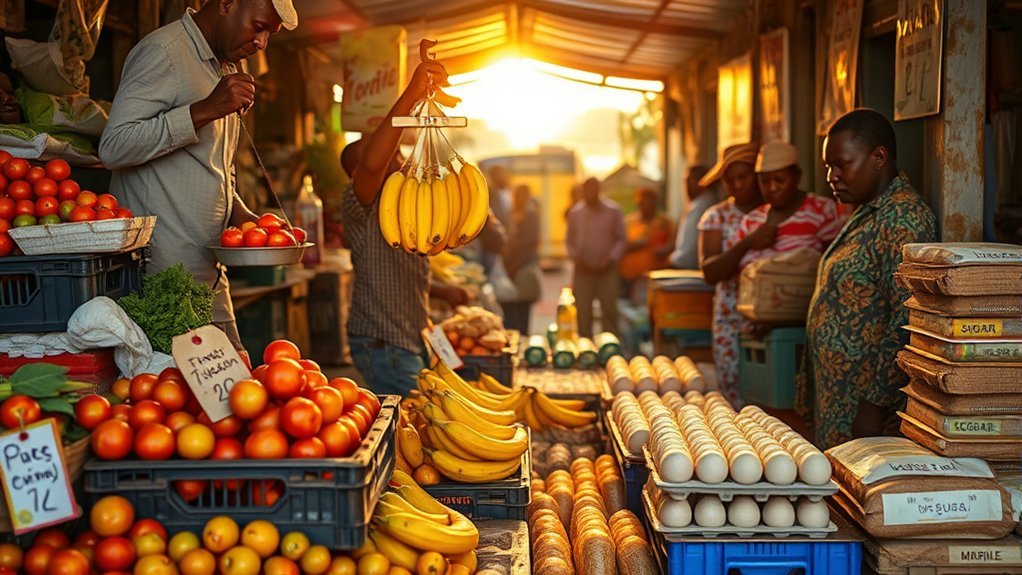
Many locally available staples cost less than their U.S. equivalents, but not every item is cheaper. Current country averages are about $1.55 for a liter of milk, $1 for a 500 g loaf of bread, $1.58 for a kilogram of rice, $1.95 for 12 eggs, $4.88 for a kilogram of chicken fillets, and $5.56 for a kilogram of beef.
| Item | 2026 average |
|---|---|
| Milk, 1 liter | $1.55 |
| White bread, 500 g | $1.00 |
| White rice, 1 kg | $1.58 |
| Eggs, 12 | $1.95 |
| Chicken fillets, 1 kg | $4.88 |
| Beef, 1 kg | $5.56 |
| Apples, 1 kg | $2.80 |
| Tomatoes, 1 kg | $1.35 |
Numbeo’s minimum-food model estimates about $146 per month for a 2,400-calorie basket based on Asian food patterns and about $205 for a Western-style basket. These are nutrition-model estimates, not complete grocery budgets. They exclude cleaning products, personal care, dining out, special diets, delivery fees, and food waste.
- Buy seasonal local produce: imported fruit, cheese, packaged foods, and specialty items can raise the total.
- Compare supermarkets and open markets: the best price depends on the item and location.
- Track protein and imported items: they often create the largest swings in a household food budget.
Eating Out and Entertainment Costs
An inexpensive restaurant meal averages about $5.54 countrywide, while a three-course meal for two at a mid-range restaurant is around $50. A 0.5-liter domestic draft beer is about $1.50, and a cinema ticket for an international release is about $10.
Fitness is an exception to the general “much cheaper than the U.S.” pattern. A countrywide gym membership averages about $46.32 per month, only about 2% above the reported U.S. average. In Harare, the city average is higher at about $56.54.
Entertainment costs depend heavily on venue and neighborhood. Keep dining, alcohol, subscriptions, events, and fitness in a separate discretionary category so they do not crowd out rent, food, healthcare, or savings.
Transportation: Public Transit, Taxis, and Fuel
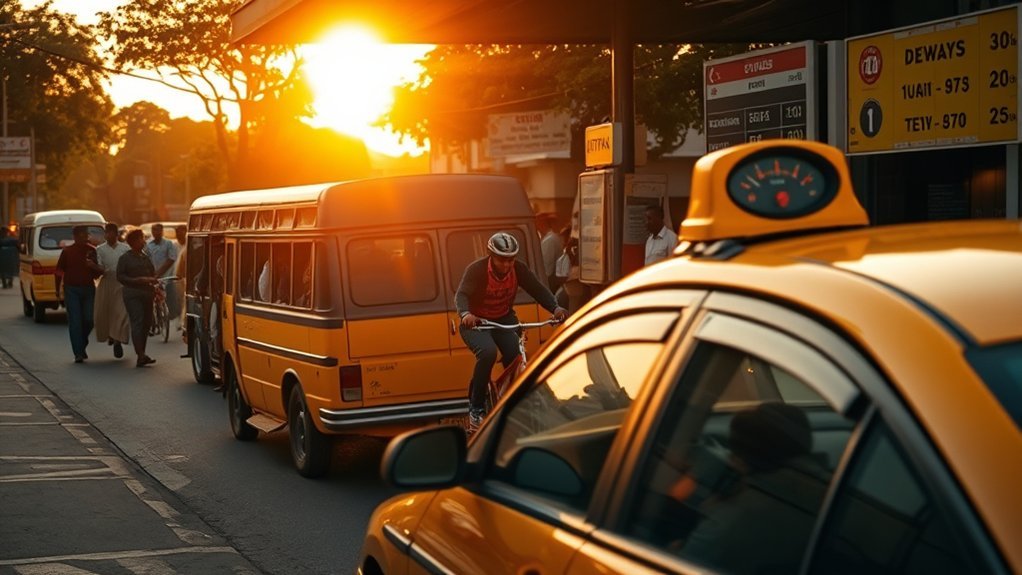
Public transport is inexpensive at about $1 for a one-way local trip and $45 for a monthly pass. A taxi starts around $4 and averages about $2 per kilometer. Gasoline is comparatively costly at about $1.65 per liter.
- Public transport: the lowest direct cost, although routes, crowding, hours, and reliability vary.
- Taxis and ride arrangements: useful for occasional trips but expensive as a daily habit.
- Private vehicle: budget for fuel, insurance, licensing, maintenance, tires, parking, and repairs, not fuel alone.
Road condition also affects vehicle costs. Official travel guidance warns about potholes, broken traffic lights, poor lighting, and limited emergency response on some routes. Avoid assuming that a shorter commute always creates the lowest total cost if the route is hard on the vehicle or unsafe after dark.
Electricity, Water, Internet, and Backup Costs
Basic utility averages look low, but reliability is a separate issue. Current UK travel guidance reports frequent and sometimes long power cuts, as well as water rationing in parts of Zimbabwe. Mobile and landline networks may also be unreliable.
Before choosing a home, ask how many hours of water and grid power were available during the previous month. Then check the cost and condition of any borehole, tank, pump, inverter, batteries, solar panels, or generator. Internet may add around $65–$72 per month countrywide, and backup mobile data can add another bill.
Note: A utility quote does not measure service reliability. Ask current tenants or neighbors about outages and water supply before signing a lease.

These colorful answer buzzers turn lessons, review games, and family activities into lively game-show style challenges that boost participation and make learning more interactive. Each buzzer has a distinct sound to clearly identify who buzzed in first, while the durable, palm-sized design makes them easy for kids and adults to use in classrooms, homeschools, and group settings.

This heartfelt memoir blends laugh-out-loud honesty with tender reflections on love, loneliness, and the unexpected healing power of rescue dogs. Isabel Klee shares her journey fostering pups in the city while navigating dating and self-discovery, offering an intimate, relatable story for readers who enjoy emotional, character-driven narratives. It is a warm, engaging read about opening your heart and finding connection in surprising places.

Velveeta Shells and Cheese Original Cup delivers a creamy, comforting mac and cheese experience in convenient single-serve cups. Made with real cheese and shelf-stable for easy storage, it’s a quick microwave meal or side that works for busy nights, kids’ meals, and snack cravings. Each cup includes shell pasta and cheese sauce for rich flavor with minimal prep.
Healthcare and Medical Expenses for Residents and Expats
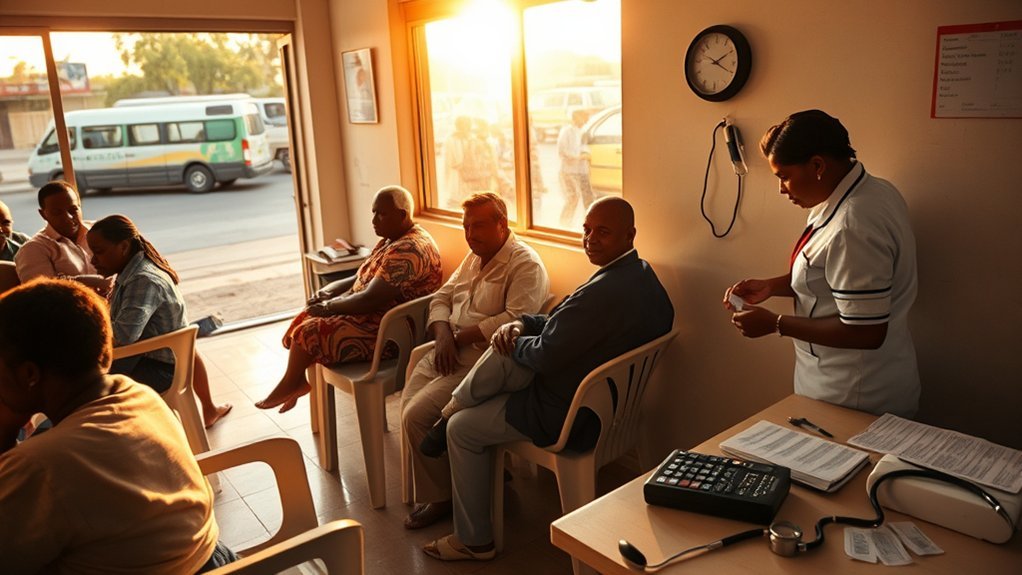
Zimbabwe has public facilities, mission hospitals, nonprofit providers, and private clinics. It should not be described as having a UK-style “National Health Service.” Official travel guidance says healthcare quality varies and can be very poor outside major cities, with shortages of medicines and trained staff.
Private facilities may require payment before treatment or admission, including during emergencies. Serious illness or injury may require transfer or medical evacuation to South Africa. There is no dependable national price for a doctor visit, hospital stay, medicine course, or evacuation, so obtain current quotes from the specific provider and insurer you plan to use.
Warning: Do not rely on a small routine-care allowance as your full medical plan. Confirm that insurance covers private treatment, ambulance arrangements, medical evacuation, repatriation, pre-existing conditions, and the cash-payment rules of local facilities.
Keep accessible emergency funds, carry enough prescribed medicine in original packaging, and identify suitable clinics before you need them. Medical and insurance decisions should be based on professional advice and current policy terms.
Education and Childcare Costs in Zimbabwe
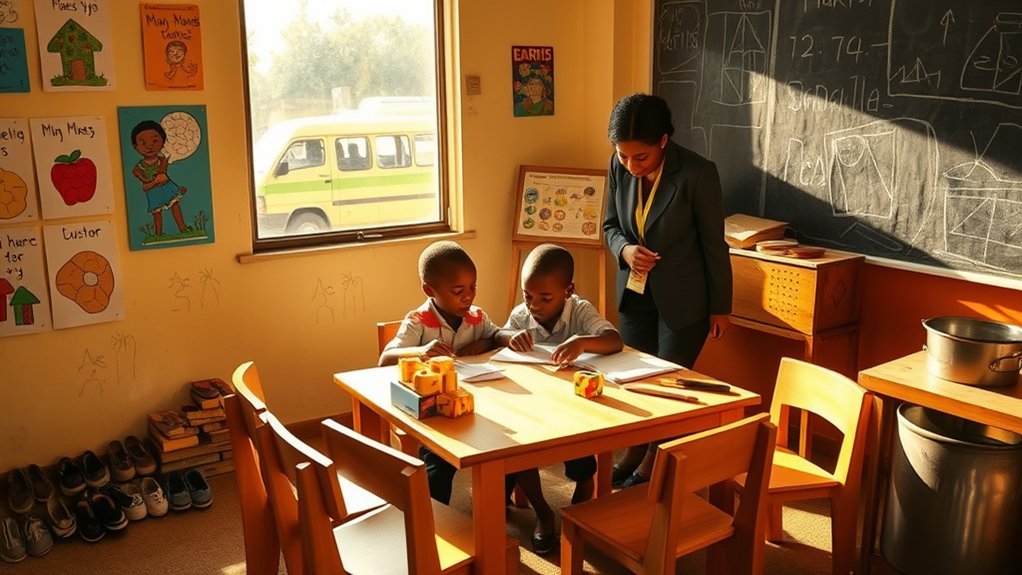
Education can be a small or very large part of a family budget depending on school type. Current country averages place private full-day preschool or kindergarten at about $305 per month, with reported prices ranging from $150 to $829. International primary-school tuition averages about $8,231 per year, with a broad range of roughly $4,000–$15,000.
UNESCO describes Zimbabwe’s system as a 2-7-4-2-3+ structure: two years of early childhood development, seven years of primary education, four years of lower secondary, two years of upper secondary, and tertiary study that commonly begins with a three-year program. UNICEF reports that school costs remain a burden for many families, even where state-funded education is the policy goal.
School Types and Fees
Government, council, church-run, trust, employer-linked, and private schools can have different fee structures, admission rules, resources, and exam results. International schools are usually the highest-cost option and may charge separately for registration, uniforms, transport, technology, meals, activities, and examinations.
- Government and council schools: usually lower-cost, but local fees and resource levels vary.
- Mission or church-run schools: may have moderate fees, boarding charges, or community-based admissions.
- Trust and private schools: often provide more facilities but can cost much more.
- International schools: commonly follow an international curriculum and require a substantial annual budget.
Compare the full annual cost, not tuition alone. Ask for the fee schedule, payment calendar, refund policy, transport cost, class size, curriculum, accreditation, examination fees, and recent academic results.
Preschool and Daycare Costs
The current national average for private full-day preschool is about $305 per month, but the reported range is wide. Location, operating hours, meals, transport, staff qualifications, security, and curriculum all affect the price.
| Provider type | Typical cost position | What to verify |
|---|---|---|
| Government or council | Usually lower | Hours, staffing, meals, supplies, and local fees |
| Church-run or community | Often moderate | Admission rules, curriculum, transport, and extra charges |
| Private or international | Usually higher | Registration, meals, activities, security, and refund terms |
Scholarships and Financial Aid
Ask each school about bursaries, sibling discounts, employer support, payment plans, and merit- or need-based awards. Eligibility, deadlines, award amounts, and renewal rules vary. Apply early and calculate the remaining fees after aid rather than assuming a scholarship covers every cost.
Salaries, Purchasing Power, and Financial Planning

Numbeo reports an average monthly net salary of about $341.67 in Zimbabwe, compared with about $4,319.38 in the United States. That is a gap of roughly 92%. Because one person’s estimated non-rent costs are about $646, the reported average salary does not cover the full market basket used for an internationally comparable lifestyle.
This mismatch helps explain why household circumstances vary so widely. Some residents own their homes, share housing, use family networks, grow food, receive remittances, earn foreign currency, or consume a different basket from the one used by global cost databases. An expatriate using private housing, healthcare, schooling, and a vehicle may spend far more than a local household.
Financial Planning Priorities
- Match income and expenses by currency: avoid an unplanned mismatch between ZiG income and U.S.-dollar obligations.
- Protect essentials first: housing, food, utilities, transport, healthcare, and school costs come before discretionary spending.
- Keep emergency liquidity: plan for medical deposits, repairs, outages, and transport disruptions.
- Review the budget monthly: update rent, fuel, food, school, and exchange-rate assumptions.
- Use written quotes: do not build a relocation plan from country averages alone.
Safety, Community Life, and Security Costs
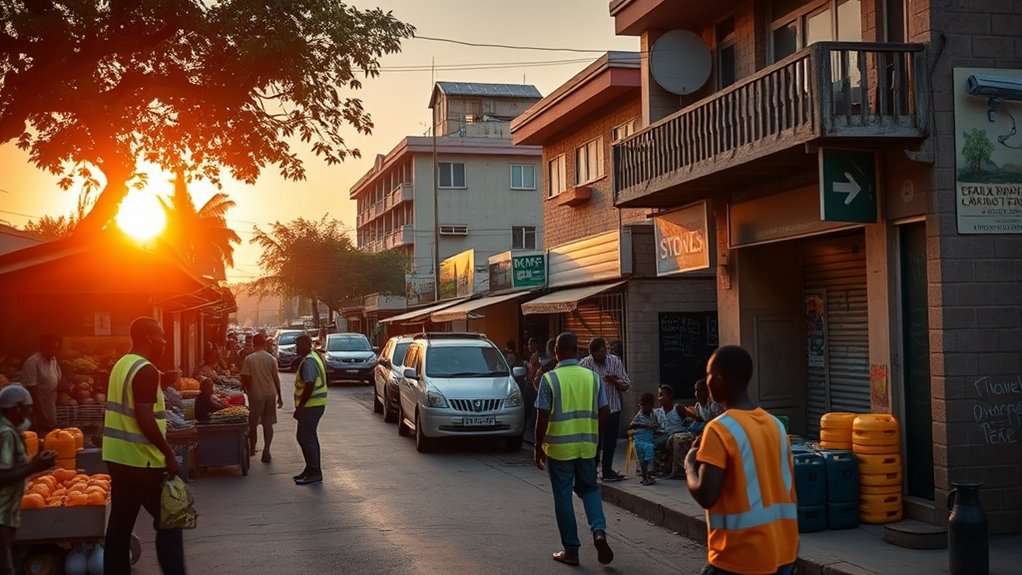
The article’s 2012 robbery statistic is too old to guide a 2026 decision. Current UK guidance describes a moderate level of crime and warns that mugging, pickpocketing, bag-snatching, occasional armed robbery, and vehicle smash-and-grab theft occur. U.S. guidance also advises increased caution because of crime and official harassment.
Personal Safety Practices
- Keep doors locked and windows closed in vehicles, especially at intersections.
- Avoid displaying cash, phones, jewelry, or other valuables.
- Use well-lit routes and avoid walking alone in city centers after dark.
- Secure accommodation and ask about recent incidents in the immediate area.
- Avoid demonstrations and political gatherings, which may become unpredictable.
- Save current local emergency, insurer, clinic, landlord, and trusted transport contacts.
Community Events and Networks
Neighborhood groups, colleagues, school communities, and established resident networks can provide practical information about landlords, transport, clinics, utility outages, local prices, and safer travel patterns. Treat informal advice as a lead, then confirm important details with the relevant authority or service provider.
Budgeting for Security
There is no reliable rule that every household should spend a fixed percentage of income on security. Build the line item from actual needs and written prices instead.
- Door and window locks, exterior lighting, and secure parking.
- Guarded housing, alarm monitoring, or neighborhood security where needed.
- Safe transport after dark.
- Replacement-document, phone, and emergency-cash planning.
- Insurance deductibles and short-notice accommodation if a home becomes unsafe.
Practical Ways to Lower Living Costs
- Compare Harare with Bulawayo: current city estimates show a large difference in rent and total monthly spending.
- Live outside central areas: countrywide one-bedroom rent is about $90 lower outside the center.
- Choose a home with reliable systems: included solar, water storage, or security may reduce separate monthly bills.
- Use public transport selectively: it is much cheaper than regular taxi use or maintaining a private vehicle.
- Buy more local and seasonal food: imported goods can erase part of the cost advantage.
- Get school and medical quotes early: these are among the largest and least predictable private-service costs.
- Keep spending in the same currency as income where possible: this reduces exchange-rate risk.
- Recheck prices before committing: averages can change and may not represent your neighborhood or service level.
Frequently Asked Questions
How much do you need to live comfortably in Zimbabwe?
A current starting point is about $893–$983 per month for one person using country-average one-bedroom rent, or roughly $2,814–$3,039 for a family of four using a three-bedroom home. “Comfortable” can cost much more with premium housing, a car, private healthcare, international school, or frequent imported purchases.
Is Zimbabwe a good place to live?
It can suit people who value lower housing and service prices, family or community ties, and access to foreign-currency income. The decision should also account for utility reliability, healthcare limits, school choice, road conditions, safety, employment, and currency risk.
Is Zimbabwe cheap or expensive?
Zimbabwe is cheaper than the United States on broad 2026 cost and rent indexes. However, it can feel expensive on a local salary, and gasoline, internet, imported goods, private healthcare, backup utilities, and international education may be costly.
How much does a house cost in Zimbabwe?
There is no dependable national average for a complete house. Current apartment purchase data average about $850 per square meter in city centers and $390 outside central areas. For renters, countrywide three-bedroom apartments average about $781 in city centers and $556 outside them.
Can you use U.S. dollars in Zimbabwe?
Yes. Reserve Bank rules allow foreign currencies to be used as legal tender alongside Zimbabwe Gold under the multicurrency system. Confirm the accepted currency, payment method, and conversion rate before each large transaction.
Is Harare more expensive than Bulawayo?
Current 2026 estimates say yes. One person’s monthly cost is about $1,124 in Harare and $760 in Bulawayo. A city-center one-bedroom averages about $417 in Harare and $175 in Bulawayo, although individual properties vary widely.
Conclusion
Zimbabwe can offer lower rent, food, dining, and public-transport costs than the United States, especially for people with stable foreign-currency income. A realistic 2026 plan starts near $890–$980 per month for one renter at country-average prices, with Harare usually higher and Bulawayo lower. Families should treat private education, healthcare, utility backup, transport, and security as separate major decisions. Verify local quotes, check the accepted currency, and update the budget before signing a lease or relocating.
Sources
- Wise: Cost of Living in Zimbabwe 2026 — monthly household, rent, city, utility, and salary estimates.
- Numbeo: United States–Zimbabwe Cost Comparison — current price and index comparisons.
- Reserve Bank of Zimbabwe: 2026 Foreign Exchange Transactions Guidelines — multicurrency rules and legal-tender information.
- International Monetary Fund: July 2026 Zimbabwe Program Review — inflation and macroeconomic update.
- UK Foreign, Commonwealth & Development Office: Zimbabwe Travel Advice — current healthcare, safety, utility, and emergency-planning guidance.
- UNESCO: Zimbabwe Education Country Brief — structure of the national education system.

This daily devotional helps parents pray purposefully for their children through a full year of Scripture readings, reflections, and guided prayer prompts. Written to encourage faithful family discipleship, it offers practical, biblically grounded support for parents who want to shape their prayers around God's Word. A foreword by Sinclair B. Ferguson adds trusted theological insight and encouragement.

This hardcover cookbook offers fast, approachable recipes designed for busy days and low-energy nights. Caroline Chambers focuses on simple, flavorful meals that help you get dinner on the table without overthinking it. It's a practical pick for home cooks who want quick weeknight inspiration and minimal-fuss cooking.

This hands-on sorting toy helps toddlers build color recognition, counting, sorting, and food identification through imaginative pretend play. It includes realistic fruit and vegetable pieces along with color-coded baskets, supporting early math skills, vocabulary development, and healthy food awareness. Designed for little hands, this versatile set grows with children from simple matching activities to preschool learning and farmers market role play.
