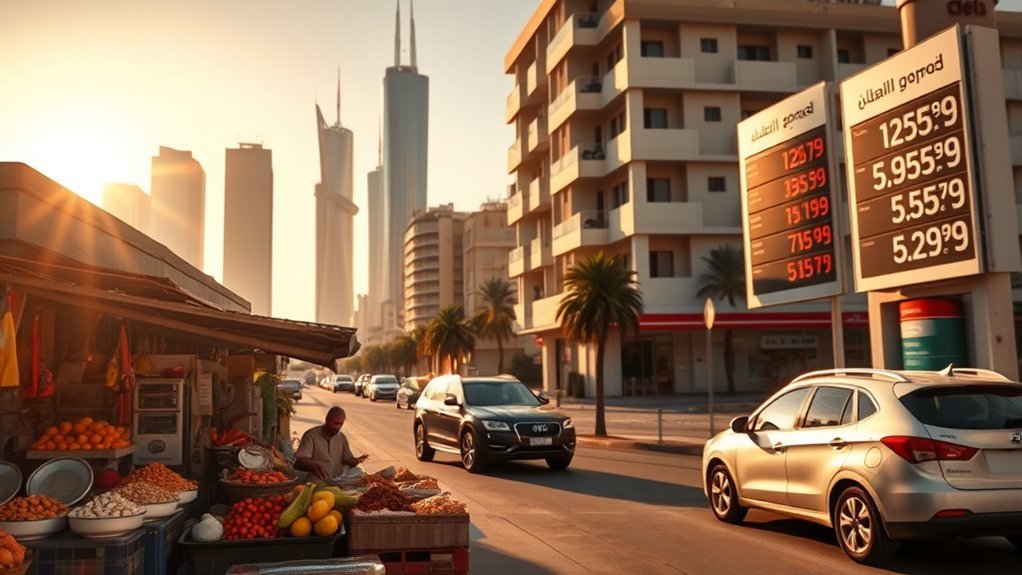
The cost of living in Kuwait in 2026 runs about KD 400–450 (~$1,300–$1,460) a month for a single person living simply, and about KD 625–775 (~$2,025–$2,520) for a comfortable single life in or near Kuwait City. A couple should plan on roughly KD 845–1,020 (~$2,750–$3,320). These figures use the Central Bank of Kuwait rate of 308.05 fils per US dollar (October 4, 2026), which means 1 KD is worth about $3.25. Rent is the biggest variable. A one-bedroom outside the center averages about KD 190–200 (~$620–$640), while central Kuwait City and Salmiya run about KD 285–330 (~$930–$1,060). There is no income tax and no VAT, and fuel and electricity are heavily subsidized. Private schooling and healthcare are where expat budgets climb. Below you’ll find rents by area, utilities, food prices, taxes, visa rules, sample budgets, and the 2026 security situation that every newcomer should read first.
Quick Answer
- Single person: KD 400–450 (~$1,300–$1,460) on a lean budget; KD 625–775 (~$2,025–$2,520) for a comfortable one.
- Couple: KD 845–1,020 (~$2,750–$3,320) a month in a one-bedroom.
- Family of four: about KD 1,310–1,560 (~$4,245–$5,075) before school fees; about KD 1,670–2,050 (~$5,425–$6,655) with two children in international school.
- Rent, one-bedroom: KD 175–200 (~$570–$650) outside the center; KD 255–330 (~$820–$1,060) in central Kuwait City or Salmiya.
- Utilities: about KD 16–20 (~$52–$66) a month for an 85 m² apartment; home internet adds about KD 9–11 (~$30–$34).
- Gasoline: about KD 0.10–0.11 per liter (~$0.33–$0.36).
- Taxes: no personal income tax, no VAT, no excise tax.
- Minimum wage: KD 75 (~$245) a month for private-sector and domestic workers.
Security Situation in 2026: Read This First
Kuwait’s day-to-day costs are stable, but the regional situation changed sharply this year. The US State Department rates Kuwait at Level 3: Reconsider Travel in its advisory of August 28, 2026. It cites an ongoing threat of drone and missile attacks from Iran since hostilities between the United States and Iran began on February 28, 2026, along with leftover landmines in desert and northern beach areas.
The UK Foreign Office’s Kuwait travel advice (updated August 20, 2026) says Iran has carried out strikes and retaliatory attacks in several locations across the region since July 8, including Kuwait. It warns of more attacks, flight cancellations, and airspace closures, and notes that Kuwait International Airport is running from Terminals 4 and 5 only with reduced schedules. On October 3, 2026, the civil aviation authority told Kuwait Times that transit flights remain suspended until further notice.
What this means for your budget:
- Flights home may cost more and route through fewer options. Keep a travel buffer.
- Check your insurance. Many travel and health policies exclude war or conflict events. Ask your employer what its medical and evacuation cover includes.
- Keep an emergency fund of at least one or two months of expenses in an account you can reach from abroad.
Prices in this guide reflect normal daily life in Kuwait. They do not account for disruption costs such as rebooked flights, evacuation, or temporary relocation. Check official advisories before you move.
Exchange Rate, Inflation, and Wages in 2026
The exchange rate. The Kuwaiti dinar is pegged to an undisclosed basket of currencies, so it moves only a little against the dollar. The Central Bank of Kuwait set the rate at 308.05 fils per dollar on October 4, 2026. Over 2026 the rate has stayed between about 306 and 311 fils, so dollar budgets have been steady. One dinar equals 1,000 fils, and you will see prices like “KD 0.250” (250 fils) on bus tickets and groceries.
Inflation. Annual inflation was 2.19% in June 2026, down from 2.49% in May, according to Trading Economics data from the Central Statistical Bureau. Food prices rose faster, at 5.55% year on year. Housing makes up about a third of the price index. The IMF projects consumer prices to rise about 2.8% in 2026 and real GDP to shrink about 0.6%.
Minimum wage. According to WageIndicator, Kuwait’s minimum wage is KD 75 (~$245) a month. It applies to foreign workers in the private sector (since 2017) and to domestic workers (since 2022). Many low-wage workers also receive employer-provided housing, which is why the figure is so far below typical living costs.
Typical salaries. Crowd-sourced averages put the average monthly net salary at about KD 640 (~$2,075) in Kuwait City and about KD 995 (~$3,235) for the country as a whole. Pay varies hugely by nationality, profession, and contract. Many professional packages include a housing allowance, transport allowance, annual flights, and school fees, so compare the full package, not the base salary.
Cost of Living by Area
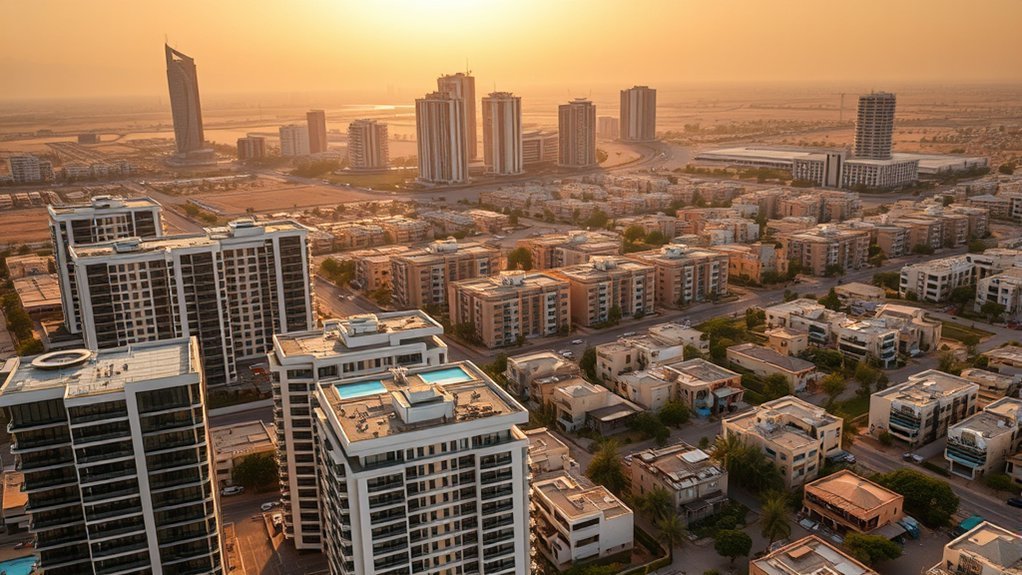
Most of Kuwait’s population lives in a continuous urban strip along the coast, from Jahra in the west through Kuwait City, Hawalli, and Salmiya to Fahaheel and Mangaf in the south. The table uses crowd-sourced averages updated between June and October 2026. Kuwait City has dozens of price reports; the other areas have far fewer, so treat them as rough guides.
| Area | 1-Bed, Center | 1-Bed, Outside Center | 3-Bed, Center | 3-Bed, Outside Center |
|---|---|---|---|---|
| Kuwait City | KD 287 (~$930) | KD 197 (~$640) | KD 617 (~$2,005) | KD 415 (~$1,345) |
| Salmiya | KD 327 (~$1,060) | KD 257 (~$835) | KD 750 (~$2,435) | KD 410 (~$1,330) |
| Hawalli | KD 180 (~$585) | KD 150 (~$485) | too few reports | too few reports |
| Farwaniya | KD 175 (~$570) | KD 180 (~$585) | KD 550 (~$1,785) | KD 450 (~$1,460) |
| Kuwait average | KD 253 (~$820) | KD 192 (~$625) | KD 570 (~$1,850) | KD 413 (~$1,340) |
A few patterns stand out:
- Salmiya is the priciest area in the table. It is a seaside district popular with Western and Arab expats, with malls, cafés, and a long waterfront.
- Kuwait City proper has the offices, ministries, and banks. Central rents are high, but outer districts close by are much cheaper.
- Hawalli and Farwaniya are dense, older areas with many South Asian and Arab expat families. Rents are the lowest in the table, but buildings vary a lot in quality.
- Fahaheel, Mangaf, and Abu Halifa in the south are popular with oil-sector workers. There are too few recent price reports to give firm averages.
Housing: Renting as an Expat
Foreigners generally cannot buy property in Kuwait, so almost all expats rent. Most rentals are in apartment buildings in “investment” areas, while villas in Kuwaiti residential areas are often reserved for families.
Things to know before you sign:
- Check what the rent includes. Some buildings bundle electricity, water, or a parking space into the rent; others bill them separately.
- Ask about the deposit and any agent fee up front. Get receipts for every payment.
- Compounds with pools, gyms, and security cost far more than the averages above. Many Western families live in them, often with a housing allowance from the employer.
- Check air conditioning before summer. Summer heat regularly passes 45°C, and a weak or broken unit makes a flat unlivable. Ask who pays for AC maintenance.
- Visit at different times of day to check traffic, parking, and noise. A cheaper flat far from work can cost more once you add fuel or taxis.
Unpaid rent or a financial dispute with a landlord can lead to a travel ban that stops you from leaving Kuwait. Keep every payment receipt and settle disputes in writing.
Utilities, Internet, and Phone

Utilities are one of the few things in Kuwait that cost less than in most countries. The state heavily subsidizes power and water. Basic utilities (electricity, cooling, water, and garbage) for an 85 m² apartment average about KD 16 (~$52) nationwide and about KD 20 (~$66) in Kuwait City. Summer bills can run higher in a large flat with several AC units running day and night.
The residential electricity rate was about KD 0.014 per kWh (about 5 US cents) in mid-2025, according to GlobalPetrolPrices. That is less than a third of the world average.
Other monthly connections:
- Home internet (60+ Mbps): about KD 9–11 (~$30–$34). Many homes use 5G home routers instead of fixed lines.
- Mobile plan with 10 GB+ data: about KD 6.5–7 (~$21–$23).
Food: Groceries and Dining Out

Kuwait imports most of its food, so prices depend on where items come from. Local and regional basics are cheap, and food from the US, UK, or Europe costs more. A single person who cooks most meals spends about KD 100–140 (~$325–$455) a month on groceries. A couple should plan on about KD 220–250 (~$715–$810).
Average national prices in September 2026:
| Item | Typical Cost (KD) | Approx. USD |
|---|---|---|
| Milk (1 liter) | 0.51 | $1.66 |
| Bread (1 lb loaf) | 0.33 | $1.07 |
| Rice (1 lb) | 0.30 | $0.97 |
| Eggs (12) | 0.71 | $2.30 |
| Chicken fillets (1 lb) | 0.92 | $2.99 |
| Beef (1 lb) | 1.55 | $5.03 |
| Local cheese (1 lb) | 0.80 | $2.60 |
| Apples (1 lb) | 0.37 | $1.20 |
| Bananas (1 lb) | 0.29 | $0.94 |
| Potatoes (1 lb) | 0.19 | $0.62 |
Cooperative societies (co-ops) in each residential area and large hypermarkets usually beat small groceries on price. Alcohol is illegal in Kuwait, so there is no beer or wine line in a Kuwaiti grocery budget.
Eating out is affordable at casual places and costly at hotel restaurants. Common prices:
- Meal at an inexpensive restaurant: about KD 2.5–4 (~$8–$13)
- Three-course dinner for two at a mid-range restaurant: about KD 16–20 (~$52–$65)
- Fast-food combo meal: about KD 2.5–2.75 (~$8–$9)
- Cappuccino: about KD 1.57 (~$5.10)
- Cinema ticket: about KD 3.5 (~$11)
Coffee is one of the few everyday items that costs about the same as in the US. Shawarma, Indian, and Arabic cafeterias are where cheap meals are found.
Transportation and Getting Around
Kuwait is built around the car. Fuel is among the cheapest in the world, and there is no metro yet, so most residents who can drive do.
| Item | Typical Cost (KD) | Approx. USD |
|---|---|---|
| Bus ticket (one way) | 0.25 | $0.81 |
| Monthly bus pass | 15 | $49 |
| Taxi start fare | 1.00–1.50 | $3.25–$4.85 |
| Taxi per mile | about 1.61 | $5.25 |
| Gasoline (1 liter) | 0.10–0.11 | $0.33–$0.36 |
| New Toyota Corolla | about 6,060 | about $19,685 |
Buses are cheap but slow, hot in summer, and used mostly by lower-income workers. Ride-hailing apps and taxis fill the gap, but a daily taxi commute can cost more than a car payment. A driver who fills a 50-liter tank every week spends only about KD 20–22 (~$65–$70) a month on fuel.
Before buying a car, check whether your job and salary make you eligible for a Kuwaiti driving license. Foreign residents face eligibility rules, and these change from time to time. Third-party car insurance is mandatory. The GOV.UK advice notes that speeding, using a phone while driving, and running red lights can now bring heavy fines, prison, or deportation.
Healthcare and Insurance Costs

Kuwaiti citizens get public healthcare at little or no cost. Expats are treated differently:
- Public health insurance for residents: foreign residents pay an annual health insurance fee as part of residency, which gives access to government clinics and hospitals. Expats also pay set fees per visit and for some services, and the government has raised fees for foreign residents in recent years.
- Private care: private clinics and hospitals offer faster access and English-speaking staff, but GOV.UK calls private medical fees “expensive.” Medical care usually requires payment up front.
- Employer insurance: many professional contracts include private medical cover. Check whether it covers your spouse and children, dental care, maternity, and medical evacuation.
The US State Department warns that unpaid medical bills can lead to a travel ban, and it recommends supplemental insurance that covers medical evacuation. With airspace disruptions in 2026, evacuation cover matters more than usual.
Schools and Childcare
School fees are the single biggest cost for most expat families. Expat children usually attend private schools, since public schools are mainly for Kuwaiti citizens.
- International primary school: about KD 2,175 (~$7,060) a year per child on average nationwide, and about KD 2,915 (~$9,460) in Kuwait City. Top British and American schools charge more, plus registration, books, bus, and uniform fees.
- Private preschool or kindergarten: about KD 93–100 (~$300–$325) a month, full day.
- Lower-cost community schools (Indian, Pakistani, Filipino, and Arabic curricula) charge far less than international schools.
For a family with two children in international school, tuition alone adds roughly KD 365–485 (~$1,180–$1,580) a month.
Taxes: No Income Tax and No VAT
Kuwait is one of the few places where your gross pay is close to your take-home pay.
- Personal income tax: none. PwC’s Kuwait tax summary (reviewed July 22, 2026) confirms there is no personal income tax on residents or non-residents.
- VAT: none yet. Kuwait signed the GCC VAT agreement in 2017, but according to PwC’s summary of other taxes, the draft law is still being prepared. There are also no excise taxes.
- Social security: only Kuwaiti nationals contribute. Employees pay 8% plus an extra 2.5%, and employers pay 11.5%, on salary up to KD 2,750 a month. Expats do not pay social security.
- End-of-service gratuity: instead of a pension, private-sector expats receive an end-of-service indemnity from the employer based on years of service.
Your home country may still tax you. US citizens, for example, must file US returns on worldwide income.
Visas and Residency
- Visitors: the US State Department says US citizens can get a visa on arrival for KD 10, valid for up to 90 days, or apply online for an e-visa. UK citizens can also get a visa on arrival or online, with some exceptions based on place of birth. Your passport must be valid for at least six months.
- Work residence (Article 18): must be arranged before you arrive. Your employer sponsors you under the kafala system, which gives employers significant control over your status.
- Family residence (Article 22): lets a working resident sponsor a spouse and children. The Interior Ministry sets a minimum salary for sponsors and has changed it several times, so confirm the current figure with your employer or the ministry before you plan a family move.
- Exit permits: residents on Article 17 and 18 visas need an exit permit through the Sahel app before leaving the country.
Exit bans can be imposed for unpaid debts, employment disputes, or overstay fines, and the State Department says they can take months or years to resolve. Pay bills, loans, and fines before you plan to leave.
One-Time Setup Costs
Budget for these before your first month:
- First month’s rent plus deposit: about KD 380–660 (~$1,235–$2,140) for a one-bedroom, depending on area and the deposit asked.
- Visa and residency paperwork: usually paid by the employer for work residence. Family residence and health insurance fees are often paid by the employee.
- Furniture and appliances: many flats come unfurnished, sometimes without a stove or fridge. Ask before you sign.
- A car or rental car: a used car is often cheaper over a year than daily taxis.
- SIM card and home internet: about KD 15–20 (~$50–$65) for the first month.
- Health cover gap: private or travel insurance until your residency and health card are in place.
Sample Monthly Budgets

These budgets combine the averages above. Rent uses unfurnished averages for Kuwait City and the national figures. Compound housing or a Salmiya sea-view flat will cost more.
| Expense (KD) | Single, Lean | Single, Comfortable | Couple |
|---|---|---|---|
| Rent (1-bed) | 192–197 | 253–327 | 253–327 |
| Utilities | 16–20 | 20–25 | 20–25 |
| Internet + mobile | 17 | 17 | 24 |
| Groceries | 100–120 | 120–140 | 220–250 |
| Eating out + leisure | 30–40 | 80–100 | 120–150 |
| Transport | 15 (bus pass) | 50–70 (fuel, taxis) | 70–90 |
| Gym | — | 34–38 | 70–76 |
| Personal + other | 30–40 | 50–60 | 70–80 |
| Total (KD) | 400–450 | 625–775 | 845–1,020 |
| Total (USD) | $1,300–$1,460 | $2,025–$2,520 | $2,750–$3,320 |
Family of four: crowd-sourced data puts a family of four at about KD 895–945 (~$2,905–$3,070) a month before rent. Add a three-bedroom outside the center (KD 413–415) or in the center (KD 570–617) and the total is about KD 1,310–1,560 (~$4,245–$5,075). International school for two children pushes that to roughly KD 1,670–2,050 (~$5,425–$6,655).
These budgets do not include private health insurance, which many employers provide. If yours does not, add it before you compare offers.
Salary vs. Cost of Living
Because there is no income tax, the main question is whether your package covers rent and school fees.
- A single professional on KD 1,000 (~$3,245) a month net can live comfortably and save, even without a housing allowance.
- A couple on one salary of KD 1,000 can cover a one-bedroom and a comfortable lifestyle, but savings shrink fast with children.
- A family of four paying international school fees needs roughly KD 1,700–2,000 or more a month, or a package that covers school and housing.
- Workers near the KD 75 minimum wage depend on employer-provided housing and food. Living independently on that income is not realistic.
Money-Saving Tips

- Negotiate the package, not just the salary. Housing, school, flights, and medical cover are worth more than a small raise.
- Rent outside the center. Areas like Hawalli and Farwaniya cost a fraction of Salmiya, though building quality varies.
- Shop at co-ops and hypermarkets and choose regional brands over imported ones.
- Drive if you can. With fuel at about 10 fils a liter, owning a car is often cheaper than daily taxis.
- Look at community schools if an international school is not essential for your child’s curriculum.
- Keep an emergency fund abroad. In 2026 that matters for both safety and flexibility.
How Kuwait Compares With Nearby Countries
Kuwait has the strongest currency in the world by face value, but day-to-day prices are moderate for the Gulf. On crowd-sourced mid-2026 indexes, Kuwait’s consumer prices excluding rent are a little lower than Saudi Arabia, Bahrain, and Oman, and clearly lower than Qatar and the UAE. Its rents sit about level with Bahrain, above Saudi Arabia and Oman, and well below Qatar and the UAE. Local purchasing power is the highest in the region thanks to tax-free salaries.
If you are weighing other Gulf moves, see our guides to the cost of living in Saudi Arabia, the cost of living in Bahrain, our Qatar living costs breakdown, and the UAE expat cost guide. Oman, covered in our guide to living costs in Oman, has some of the lowest rents in the Gulf.
Frequently Asked Questions
How much money do you need to live in Kuwait per month?
A single person needs about KD 400–450 (~$1,300–$1,460) a month for a simple life, and about KD 625–775 (~$2,025–$2,520) for a comfortable one in or near Kuwait City. A couple should budget about KD 845–1,020 (~$2,750–$3,320).
Is Kuwait expensive for expats?
Daily costs are moderate. Fuel and utilities are very cheap, and there is no income tax or VAT. Rent in central areas, private schools, and private healthcare are the big expenses, so a package with housing and school allowances makes a large difference.
How much is rent in Kuwait City in 2026?
A one-bedroom averages about KD 287 (~$930) in the center and about KD 197 (~$640) outside it. A three-bedroom averages about KD 617 (~$2,005) in the center and KD 415 (~$1,345) outside. Salmiya runs higher, while Hawalli and Farwaniya are cheaper.
What is a good salary to live in Kuwait?
A single expat can live comfortably and save on about KD 1,000 (~$3,245) a month net. A family with two children in international school needs roughly KD 1,700–2,000 or more, or an employer package that covers housing and school fees.
Does Kuwait have income tax or VAT?
No. Kuwait has no personal income tax and has not introduced VAT. Kuwaiti nationals pay social security contributions, but expat workers do not.
What is the minimum wage in Kuwait?
The minimum wage is KD 75 (~$245) a month for private-sector and domestic workers. Many workers on low wages also receive housing and food from their employer.
Is it safe to move to Kuwait in 2026?
The US State Department rates Kuwait at Level 3, Reconsider Travel, because of the threat of drone and missile attacks from Iran since February 2026. Flights are reduced and transit flights are suspended. Check the latest official advisories and your insurance cover before moving.
Conclusion
Kuwait remains one of the best places in the region to save money if your package is right. With no income tax, cheap fuel, and subsidized utilities, a single person can live well on about KD 625–775 (~$2,025–$2,520) a month, or on closer to KD 400 by renting outside the center and taking the bus. Families should focus on school fees and housing allowances, which decide whether Kuwait is affordable or expensive. In 2026, also weigh the security situation and make sure your insurance and emergency savings are in place before you move.
Sources
- Central Bank of Kuwait – USD exchange rate, October 2026
- Trading Economics – Kuwait inflation and food inflation, June 2026
- IMF – Kuwait country page
- World Bank – Kuwait data
- WageIndicator – Kuwait minimum wage
- PwC – Kuwait taxes on personal income
- PwC – Kuwait other taxes (VAT, excise, social security)
- US State Department – Kuwait travel advisory
- US State Department – Kuwait country information
- GOV.UK – Kuwait travel advice
- Kuwait Times – Transit flights remain suspended (October 2026)
- GlobalPetrolPrices – Kuwait gasoline and electricity prices
- Numbeo – Kuwait, Kuwait City, Salmiya, Hawalli, Farwaniya (crowd-sourced averages)