Quick Comparison Summary: Switzerland vs. United States Cost of Living
Living in Switzerland costs approximately 25% to 32% more overall than living in the United States. A practical budgeting rule of thumb is the $100 to $127 ratio: goods and services costing $100 in the U.S. average roughly $127 in Switzerland.
The primary cost drivers in Switzerland are groceries (+43% to +50%), dining out (+60%), and public transportation base fares (+47% to +84%). In contrast, high-speed home internet (-14%) and select fresh produce can be comparable or cheaper. Crucially, Swiss after-tax salaries average roughly 50% to 65% higher (averaging ~$7,360/month vs. $4,539/month in the U.S.), meaning local purchasing power often offsets higher baseline living expenses for full-time workers.
Overall Cost of Living Index and Key Differences
While the broad cost index shows a 25–32% premium for Switzerland, day-to-day budget impact varies significantly by spending category and household structure.
Housing represents the largest nominal expense in both nations, but Swiss urban purchase prices exceed U.S. national averages by over 300% per square meter. Dining out and routine personal services (such as gym memberships and haircuts) command substantial premiums due to higher Swiss minimum wages and labor costs. Groceries are heavily influenced by domestic agricultural protections, particularly on meat and dairy products.
For a deeper interactive breakdown across specific cities, consult the Expatistan Switzerland vs. US comparison.
| Category | Switzerland Premium | Typical Budget Impact |
|---|---|---|
| Overall Baseline Index | +25% to +32% | Higher everyday expenditure floor |
| City Center Rents | +14% to +18% | High urban demand; tight vacancy rates |
| Groceries & Markets | +43% to +50% | Substantial premiums on meat, poultry, and dairy |
| Dining Out & Services | +55% to +65% | Higher service labor costs; tipping is discretionary |
| Public Transit & Fuel | +45% to +155% | Pricier fuel and single tickets; mitigated by travelcards |
| High-Speed Internet | -14% | Competitive fiber infrastructure saves monthly costs |
Housing, Property Prices, and Rent Comparisons
Renting and purchasing real estate present distinct financial dynamics in both countries:
- Apartment Purchases: City-center purchase prices in Switzerland average approximately $18,825 per m², compared to $4,491 per m² in the U.S.—a premium of roughly 319%. Switzerland remains predominantly a nation of renters (~60% of residents rent).
- Rental Rates: A 1-bedroom city-center apartment averages ~$1,889/month in Switzerland vs. $1,659/month in the U.S. (+13.9%). A 3-bedroom city-center home averages ~$3,598/month in Switzerland vs. $3,048/month in the U.S. (+18.0%).
- Rental Deposits: Swiss tenancies generally require a security deposit of up to three months’ rent placed into a blocked bank account (Mietkautionskonto), requiring higher upfront cash liquidity.
- Mortgage Rates & Utilities: Swiss fixed-rate mortgages remain structurally lower (around 1.75% for 10-year fixed terms as of 2026, compared to ~6.0% in the U.S.). Basic apartment utilities average $162/month in Switzerland versus $125 in the U.S., while broadband internet is cheaper at $58.10 versus $67.50.
Restaurants, Groceries, and Market Prices
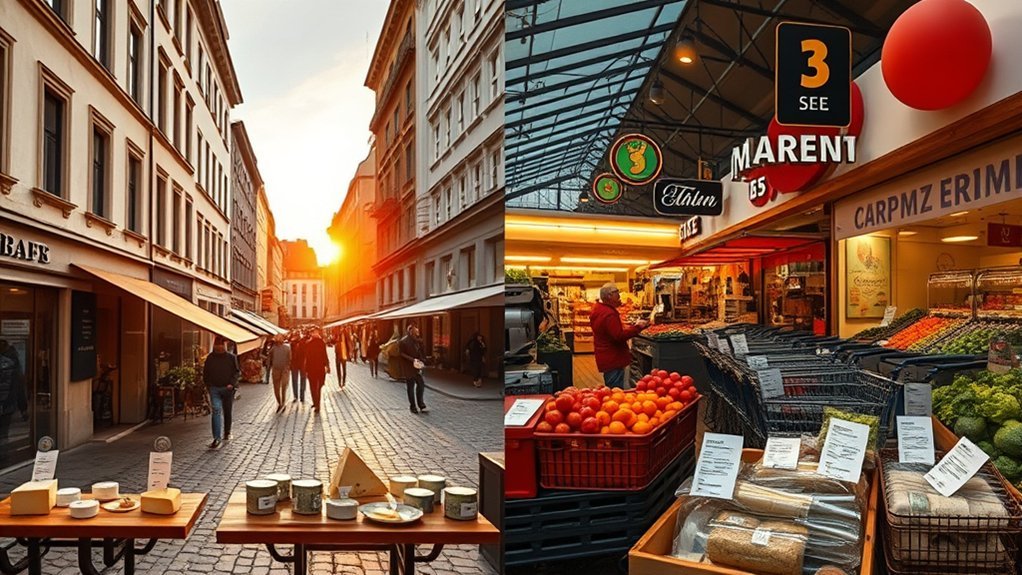
Food is one of the clearest areas where newcomers feel the cost difference between the two nations:
- Dining Out: An inexpensive restaurant meal averages $32.36 in Switzerland versus $20.00 in the U.S. A three-course dinner for two at a mid-range restaurant costs around $114.00 compared to $76.50. A standard combo meal at a fast-food chain runs ~$19.00 versus $11.50. Note that Swiss menu prices include service charges and VAT by law; tipping 15–20% is not customary as it is in the U.S.
- Meat & Dairy Premiums: Strict Swiss agricultural quality standards and tariffs increase meat costs significantly. Boneless chicken breast averages $26.80 per kg (~$12.15/lb) in Switzerland compared to $12.30 per kg (~$5.58/lb) in the U.S. Fresh milk runs ~$2.25 per liter versus $1.11 per liter.
- Cost-Competitive Produce: Items such as local apples, oranges, potatoes, onions, and bottled water frequently retail at price points comparable to or lower than major U.S. supermarkets. Shopping at discount grocers (Aldi Suisse, Lidl, Denner) rather than premium chains (Coop, Migros) significantly reduces weekly grocery bills.
Transportation, Fuel, and Taxi Costs
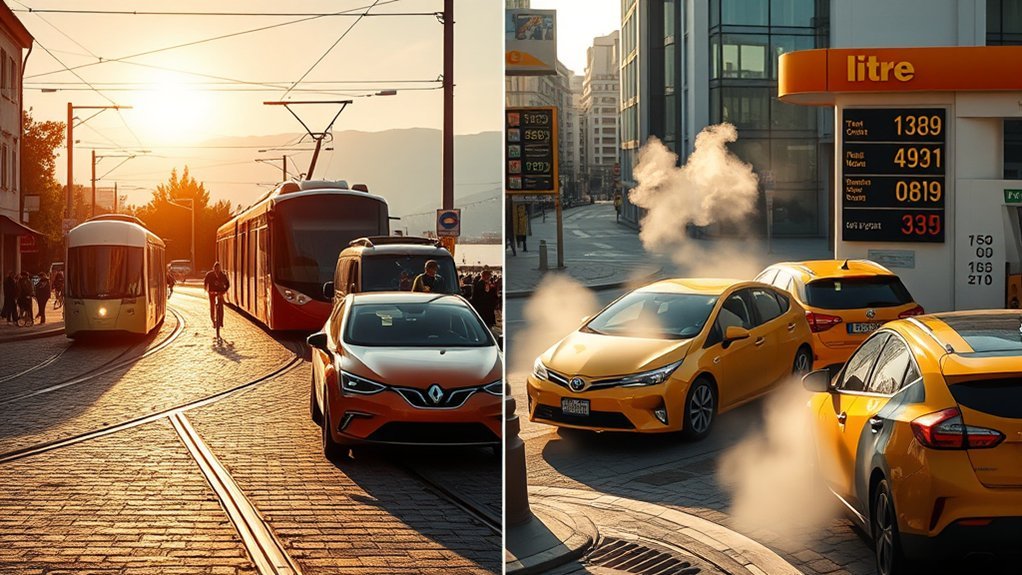
Switzerland’s integrated public transit network (SBB/CFF/FFS) is world-renowned for punctuality and coverage, but base fares are considerably higher than in the United States.
| Transit Metric | Switzerland | United States | Difference |
|---|---|---|---|
| Gasoline (per Liter) | $2.22 | $0.87 | +155.2% |
| Single Transit Ticket (Standard) | $4.33 | $2.35 | +84.3% |
| Monthly Transit Pass (Urban) | $102.00 | $69.50 | +46.8% |
| Taxi Fare (8 km / ~5 mi ride) | $40.80 | $18.40 | +121.7% |
For verified international fuel benchmarks, consult historical energy figures at GlobalPetrolPrices Switzerland and GlobalPetrolPrices USA.
The Swiss Travelcard Advantage: While single tickets are expensive, resident costs decrease dramatically with national subscription models. Most Swiss residents purchase an annual Halbtax (Half-Fare Travelcard, ~CHF 190/year), which discounts all train, bus, boat, and tram fares nationwide by 50%.
Utilities, Internet, Health Care, and Services
Service fees, healthcare systems, and personal amenities differ fundamentally between the two countries:
- Mandatory Health Insurance (LAMal / KVG): Unlike the U.S. employer-sponsored model, every resident in Switzerland must independently purchase basic health insurance. Monthly premiums typically range from CHF 350 to CHF 450+ ($400–$520 USD) per adult. Policyholders select an annual deductible (Franchise) between CHF 300 and CHF 2,500, followed by a 10% co-pay up to CHF 700 annually. Routine doctor visits average $144 in Switzerland versus $124 out-of-pocket in the U.S.
- Telecommunications & Connectivity: High-speed home fiber internet averages $58.10/month in Switzerland versus $67.50 in the U.S. (-14%), offering higher average bandwidth speeds.
- Lifestyle & Fitness Services: Monthly gym memberships average $90.90 in Switzerland vs. $52.30 in the U.S. Standard cinema tickets average $23.90 vs. $14.50, and a standard haircut runs $46.70 vs. $21.60.
Salaries, Taxes, and Purchasing Power for Expats
To evaluate real living standards, nominal expenses must be paired with net take-home pay and tax structures:
- Net Income Comparison: The average net monthly salary (after tax and mandatory deductions) is approximately $7,360 (CHF ~6,400–7,300) in Switzerland, compared to $4,539 in the United States.
- Tax Structure & Cantonal Variance: Swiss income taxes are levied at three levels (federal, cantonal, and municipal). Low-tax cantons (such as Zug and Schwyz) feature effective individual income tax rates below 15–20%, whereas Geneva and Zurich have higher progressive scales. U.S. federal plus state tax burdens in high-tax states (such as New York or California) often exceed Swiss cantonal rates.
- Real Purchasing Power: Because Swiss net earnings average 50–65% higher while overall costs are 25–32% higher, full-time professionals in Switzerland generally enjoy higher domestic purchasing power and higher discretionary savings in absolute dollar terms.
| Metric | Switzerland | United States |
|---|---|---|
| Average Monthly Net Salary (After Tax) | ~$7,360 | ~$4,539 |
| Effective Income Tax Range | 12%–35% (Varies by Canton) | 15%–37% (Federal + State) |
| 13th Month Salary Custom | Standard across most contracts | Rare (Discretionary bonuses) |
| Local Purchasing Power Index | ~115–125 (High) | 100 (Baseline) |
Cultural, Regional, and Seasonal Cost Nuances
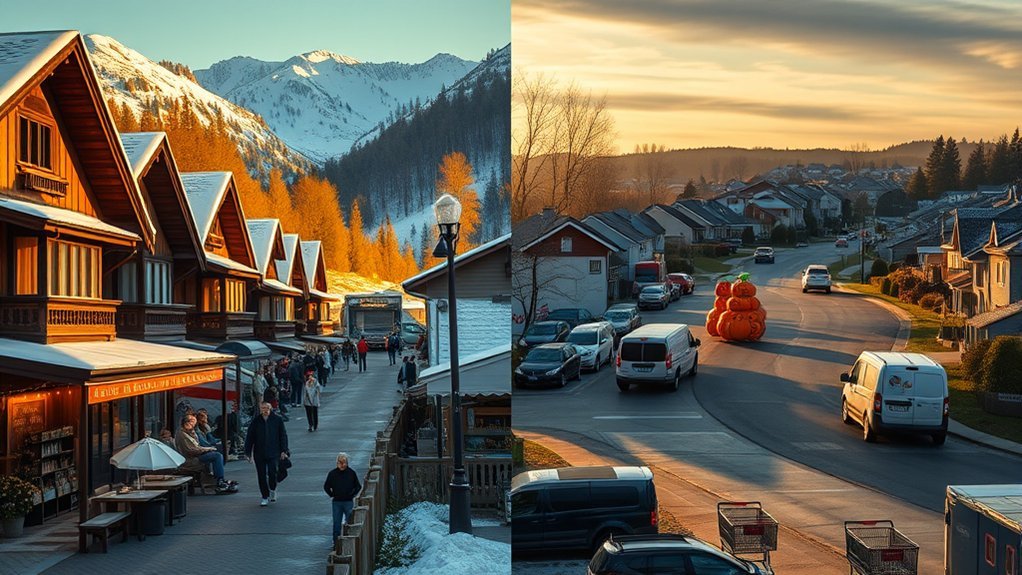
Cost realities in Switzerland also shift based on regional geography and seasonal calendar cycles:
- Tourism Peaks: Mountain resorts and urban centers experience accommodation and hospitality price surges during peak winter ski season (December–February) and peak summer (July–August).
- Cross-Border Shopping: Residents living in border cantons (such as Geneva near France, or Basel near Germany) frequently perform weekly grocery shopping in neighboring EU countries to benefit from lower food costs and tax refunds.
- Childcare Considerations: Full-time private daycare (Krippe / Kita) in Switzerland ranges from CHF 2,000 to CHF 3,000+ per month per child, representing one of the highest childcare cost structures globally and a key budget consideration for relocating families.
Frequently Asked Questions
Is It Cheaper to Live in Switzerland or the USA?
It is generally 25% to 32% cheaper to live in the United States than in Switzerland. Housing, groceries, restaurant dining, and public transportation carry significant premiums in Switzerland. However, higher Swiss average salaries and lower tax rates in many cantons frequently offset these costs for full-time workers.
What Is the Most Expensive Country in the World?
According to comparative cost of living indexes compiled by Numbeo and Mercer, Switzerland consistently ranks among the top four most expensive nations in the world, alongside jurisdictions such as Bermuda, the Cayman Islands, and Singapore.
What Salary Is Needed to Live Comfortably in Switzerland?
A single individual typically requires a gross annual salary of CHF 80,000 to CHF 100,000 (~$92,000–$115,000 USD) to live comfortably in most Swiss cities. For a family of four in Zurich or Geneva, an annual income of CHF 130,000 to CHF 160,000 is recommended to comfortably cover rent, mandatory health insurance premiums, taxes, and childcare.
Are Salaries Higher in Switzerland or the USA?
Nominal and net average salaries are substantially higher in Switzerland. The average after-tax monthly income in Switzerland is approximately $7,360 compared to $4,539 in the United States. Even when accounting for higher local prices, real purchasing power remains strong in Switzerland for most specialized professions.
Conclusion
Relocating from the United States to Switzerland involves adjusting to a higher baseline expenditure environment—particularly for groceries, dining, and mandatory monthly health insurance. However, this cost structure is supported by strong public infrastructure, low crime rates, high-quality public transit, and significantly higher net wages. When evaluating a move or compensation offer, prioritize calculating your specific cantonal tax rate, mandatory healthcare premiums, and housing deposits to understand your true net financial picture.