

Last updated: August 10, 2026
As an Amazon Associate we may earn from qualifying purchases. This article may contain affiliate links at no extra cost to you.
Installing a reliable Level 2 home charger changes how you use an electric vehicle by turning overnight charging into a predictable part of your routine. Faster 240V charging can reduce the need for extra public-charging stops and make it easier to start each day with the range you need.
This guide compares three actual Level 2 home EV charging stations so you can match the charger to your vehicle connector, electrical setup, parking location, and preferred smart features.
Quick Verdict
Choose ChargePoint HomeFlex if installation flexibility and adjustable output matter most. Choose the Autel EV Charger if you want a powerful hardwired J1772 charger with extensive connectivity. Choose the Tesla Wall Connector if your vehicle uses a NACS/SAE J3400 inlet and you want a compact charger with strong Tesla integration.
Top Picks
|
Category |
Product |
Best For |
|---|---|---|
|
🏆 Best Flexibility |
Flexible installation and adjustable charging output |
|
|
📱 Best Smart J1772 Pick |
Hardwired J1772 charging with strong app connectivity |
|
|
⚡ Best for NACS/Tesla |
NACS-equipped vehicles and Tesla-focused home charging |
Selection Criteria
You want a charger that fits your vehicle, your home electrical capacity, and your daily driving habits, so the most important factors are charging output, connector compatibility, installation requirements, cable reach, and smart controls.
For connector compatibility, check whether your vehicle uses J1772 or NACS/SAE J3400 for AC charging before buying. We also considered whether each charger is plug-in or hardwired, how much output it can provide when properly installed, whether it can be configured for lower-capacity electrical systems, and whether features such as Wi-Fi scheduling and monitoring make everyday charging easier.
Before You Buy: Do not choose a charger only by its maximum amperage. Your EV’s onboard charger sets its own AC charging limit, and your home’s panel, wiring, breaker, installation method, and local electrical requirements determine how much power the EVSE can safely provide. Have a qualified electrician evaluate high-output or hardwired installations.
ChargePoint HomeFlex

The ChargePoint HomeFlex is the most flexible choice here if you want a charger that can adapt to different electrical setups. The linked J1772 model can use a compatible 240V outlet or be converted to a hardwired installation, and its configured charging output can be matched to the available electrical capacity.
The important distinction is that a plug-in NEMA 14-50 installation does not provide the unit’s full 50A charging output. Higher 48A or 50A settings require an appropriate hardwired installation. That makes HomeFlex especially useful if you want one charger that can work with your current panel while leaving room for a higher-output setup later.
Wi-Fi connectivity supports scheduling, reminders, and charging management through the ChargePoint app, while the 23-foot cable provides useful reach in garages and driveways.
Best For: Buyers who value adjustable output, J1772 compatibility, app scheduling, and the choice between compatible plug-in and hardwired installation.
Buyer Feedback Snapshot
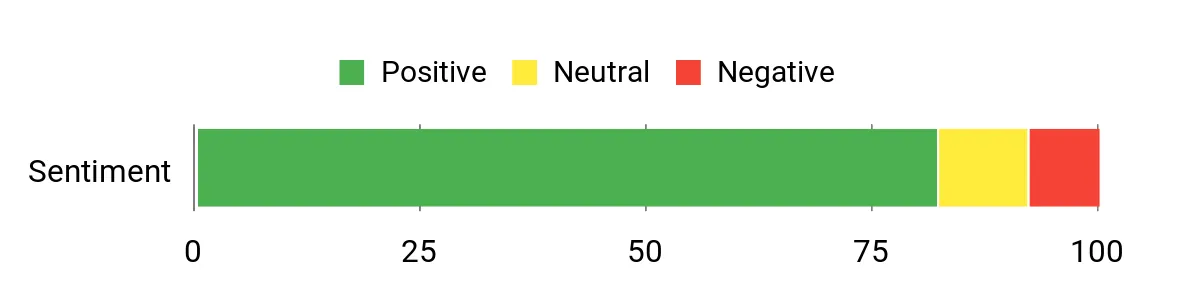
The original article included a sentiment-analysis graphic for this product. The underlying sample size, collection date, and analysis method were not supplied, so the visual should be treated as general reference material rather than a current Amazon review score.
Ease of Use
|
Feature |
Ease Level |
|---|---|
|
Initial Setup |
Moderate |
|
App Control & Scheduling |
Easy |
|
Configuring Amperage |
Moderate |
|
Cable Handling |
Easy |
Energy Efficiency
HomeFlex is ENERGY STAR certified, and its scheduling tools can help you move charging to preferred or lower-cost utility periods when your electricity plan supports time-of-use rates. Actual charging efficiency and electricity cost still depend on the vehicle, power level, utility rate, and charging conditions.
Key Benefits
- Adjustable output for different home electrical setups
- Wi-Fi app for scheduling, monitoring, and reminders
- 23-foot cable for flexible parking arrangements
- Plug-in or hardwired installation options for the linked HomeFlex configuration
- UL Listed, ENERGY STAR certified, and backed by a three-year manufacturer warranty
Who Should Buy This
Choose HomeFlex if you own a J1772-equipped EV or have an appropriate vehicle adapter and want a charger that can adapt as your electrical setup changes.
Who Should Avoid This
Skip it if you specifically want a native NACS/SAE J3400 charging handle and do not want to use an adapter, or if you want the simplest permanently hardwired setup with fewer configuration decisions.
Check Product Details on Amazon
Autel EV Charger

If you want a powerful hardwired Level 2 charger with a J1772 connector, this Autel unit is a strong alternative. The linked model supports output up to 50A at 240V when installed on a suitable electrical circuit, giving it enough capacity for EVs that can accept higher AC charging rates.
The 25-foot charging cable gives you more parking flexibility, while Wi-Fi and Bluetooth connectivity support charging management and scheduling through the Autel app. Because this linked 50A version is designed for hardwired installation, buyers should include professional installation and electrical-capacity checks in the purchase decision.
Best For: Buyers who want a high-output hardwired J1772 charger, a long cable, and extensive smart-charging controls.
Buyer Feedback Snapshot
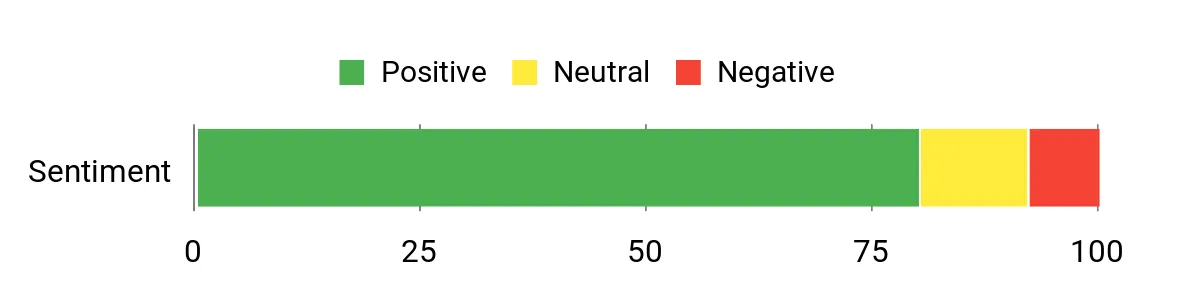
The source article included the sentiment-analysis image below, but it did not provide the underlying dataset or collection methodology. Treat the graphic as a general historical reference rather than a current rating or review-count measurement.
Ease of Use
|
Feature |
Ease Level |
|---|---|
|
Hardwired Installation |
Moderate |
|
App Setup |
Easy |
|
Daily Plugging |
Easy |
|
Configuring Amperage |
Moderate |
|
Cable Handling |
Easy |
Energy Efficiency
Scheduling lets you choose when charging sessions run, which may help reduce charging costs when your utility offers lower off-peak rates. The charger’s maximum output does not mean your vehicle will always draw 50A; the EV and configured installation determine the actual charging rate.
Key Benefits
- Up to 50A and 12 kW output with a suitable hardwired installation
- J1772 connector for compatible EVs and plug-in hybrids
- Wi-Fi and Bluetooth connectivity with app-based scheduling and monitoring
- 25-foot charging cable for extended reach
- Designed for indoor or outdoor wall-mounted installation
- Three-year manufacturer warranty
Who Should Buy This
Choose the Autel if your vehicle uses J1772 and you want a permanently installed charger with high output, a long cable, and extensive connected features.
Who Should Avoid This
Look elsewhere if you specifically need a plug-in NEMA 14-50 charger that can be unplugged and moved easily, or if your vehicle has a NACS/SAE J3400 inlet and you do not want to use an appropriate adapter.
Check Product Details on Amazon
Tesla Wall Connector

The Tesla Wall Connector is a natural fit if your vehicle uses a NACS/SAE J3400 charging inlet. It provides up to 48A and 11.5 kW when installed on an appropriate circuit, while lower output settings can be configured when the available electrical capacity is more limited.
The 24-foot cable gives you useful reach, and Wi-Fi connectivity supports firmware updates and connected charging features. Tesla owners also benefit from an integrated charging experience, including Tesla app support and a handle designed around Tesla vehicles.
Maximum range added per hour varies by vehicle. Tesla advertises up to 44 miles of range added per hour for supported models at maximum output, but some Tesla models and other EVs accept lower AC charging rates.
Best For: Tesla owners and other drivers whose vehicles use a compatible NACS/SAE J3400 inlet.
Buyer Feedback Snapshot
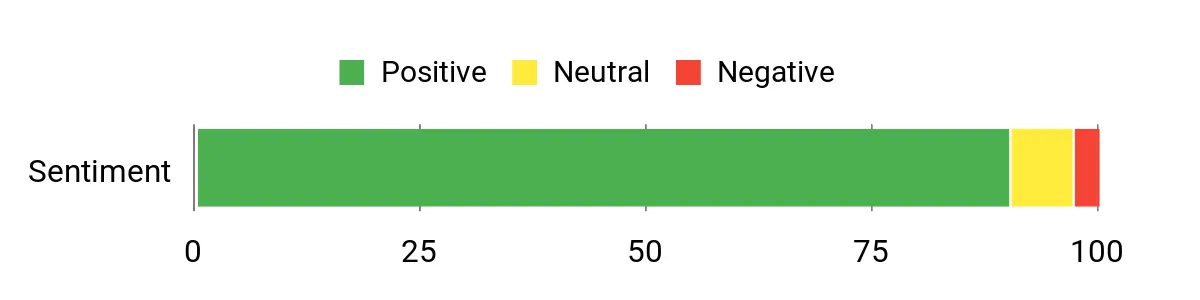
The original article included the sentiment-analysis graphic below. Because its source sample, date, and methodology were not provided, it should not be interpreted as a current Amazon rating or independently verified customer-satisfaction measurement.
Ease of Use
|
Feature |
Ease Level |
|---|---|
|
Hardwired Installation |
Moderate |
|
Daily Plugging |
Easy |
|
Cable Management |
Easy |
|
Connected Setup |
Easy |
Energy Efficiency
Higher Level 2 output shortens the time needed to deliver a given amount of energy compared with low-power charging, but actual energy use and charging efficiency depend on the vehicle and charging conditions. Scheduling through your vehicle or supported charging controls can also help you take advantage of preferred utility charging periods.
Key Benefits
- Up to 48A and 11.5 kW output with an appropriate installation
- 24-foot charging cable
- NACS charging handle suited to compatible vehicles
- Wi-Fi connectivity for updates and connected functionality
- Indoor or outdoor installation design
- Four-year residential-use warranty from Tesla
Who Should Buy This
Choose the Wall Connector if your EV has a compatible NACS/SAE J3400 inlet, especially if you drive a Tesla and want a charger designed around the Tesla home-charging ecosystem.
Who Should Avoid This
Skip this version if your vehicle requires a native J1772 connection and you do not want to use a compatible adapter. Also remember that buying a 48A charger will not make a vehicle charge faster than its own onboard AC charger allows.
Check Product Details on Amazon
FAQ
Which Level 2 Charger Is Right for Me?
Start with your vehicle’s AC charging connector and maximum onboard charging rate. Check whether the vehicle uses J1772 or NACS/SAE J3400, then choose a charger or approved adapter arrangement that matches it.
Next, compare your home’s available electrical capacity, installation type, cable length, weather exposure, and whether you want smart features such as scheduling and remote monitoring. A charger with a higher maximum amperage is useful only when both the home electrical system and the vehicle can support it.
Do I Need Professional Installation?
A qualified electrician is strongly recommended for hardwired Level 2 chargers, new 240V circuits, panel work, and high-output installations. The electrician can confirm breaker sizing, conductor requirements, panel capacity, grounding, installation location, and applicable electrical codes before the charger is configured.
A plug-in charger may be simpler when a suitable 240V receptacle and correctly sized circuit already exist, but the receptacle, circuit, breaker, wiring, and EVSE configuration still need to be compatible.
How Fast Will My Car Charge?
Charging speed depends on the EVSE output, supply voltage, and your vehicle’s onboard AC charger. A charger capable of 48A or 50A will not force a vehicle to accept that much current if the vehicle has a lower AC charging limit.
For that reason, compare charging power in amps or kilowatts with your specific vehicle’s AC limit rather than relying only on advertised miles of range added per hour.
Is a 50A Charger Better Than a 48A Charger?
Not automatically. The practical difference can be small, and many vehicles cannot use the full output of either charger. Connector compatibility, installation cost, smart controls, cable reach, reliability, and your vehicle’s maximum AC input are usually more important than a two-amp difference.
Should I Choose J1772 or NACS/SAE J3400?
Choose the connector that matches your vehicle’s AC charging inlet and your long-term vehicle plans. J1772 remains common on many EVs and plug-in hybrids, while NACS is standardized as SAE J3400 and is used by Tesla and a growing range of North American charging equipment. If an adapter is required, confirm that it is appropriate for your specific vehicle, charger, and AC charging use.
Customer Preferences
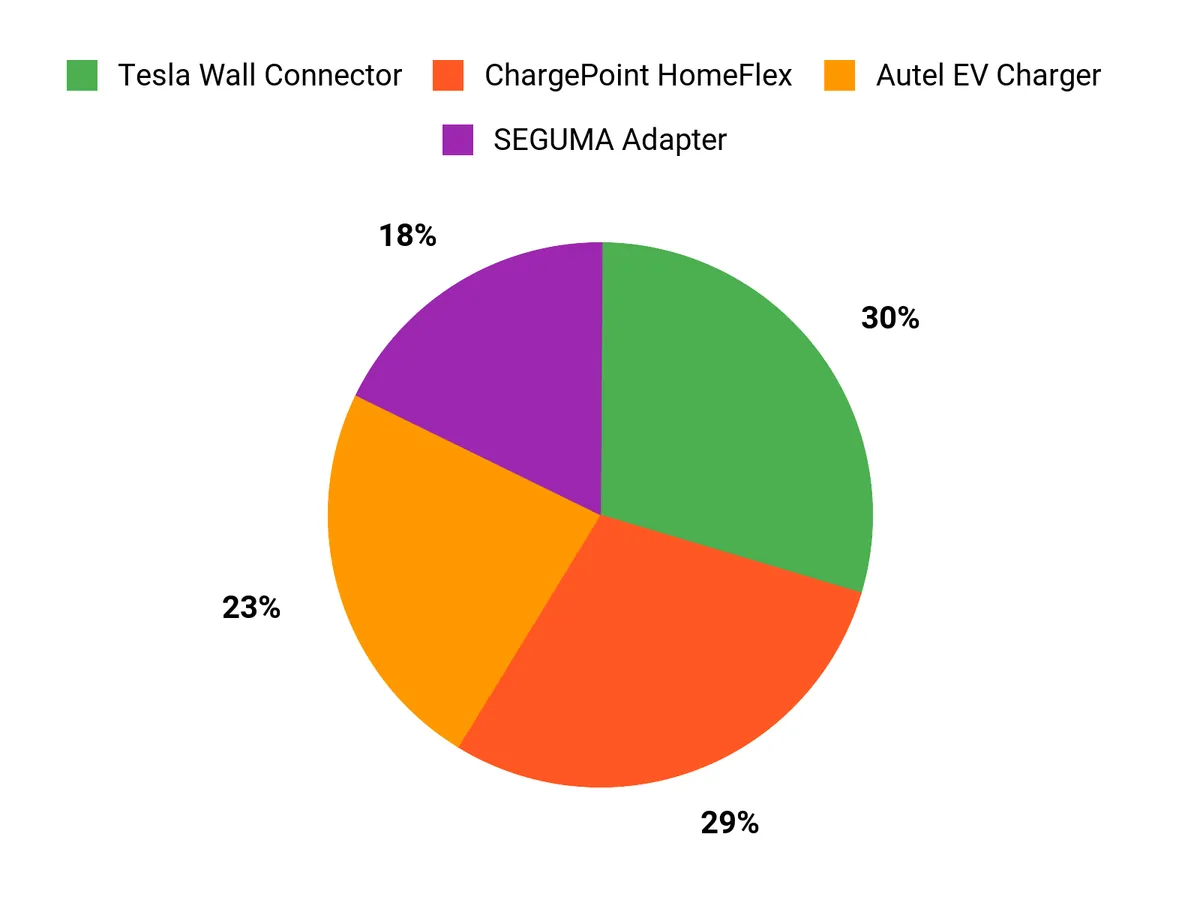
Among these three chargers, the buying decision mainly comes down to connector type, installation flexibility, and smart features. ChargePoint HomeFlex stands out when you want adjustable output and the option of compatible plug-in or hardwired installation. Autel is a strong fit for buyers who want a hardwired J1772 charger with up to 50A output and extensive connectivity. Tesla Wall Connector makes the most sense when a NACS/SAE J3400 connector and Tesla-focused integration are the priorities.
The customer-preferences chart below is retained from the original article. Its underlying survey or analysis methodology was not supplied, so use it as a general visual reference rather than current market data.
Wrapping Up
The best Level 2 home EV charger is the one that matches both your car and your electrical system. ChargePoint HomeFlex is the most adaptable option if you value configurable output, J1772 charging, and installation flexibility. The Autel EV Charger is well suited to buyers who want a powerful hardwired J1772 charger with a long cable and extensive app connectivity.
If your vehicle uses NACS/SAE J3400—especially if you drive a Tesla—the Tesla Wall Connector offers a clean, integrated home-charging solution with up to 48A output. Whichever model you choose, confirm your vehicle’s AC charging limit and have the electrical installation sized correctly before configuring the charger at maximum power.
Final Recommendation: Pick by connector compatibility first, electrical capacity second, and smart features third. Paying for a higher-amperage charger provides little benefit when your vehicle or home installation cannot use the extra output.
| Product Name | Image | Best For | Output Voltage | Maximum Amperage | Cable Length |
|---|---|---|---|---|---|
| ChargePoint HomeFlex Level 2 EV Charger |
|
Flexible J1772 home charging | 240 Volts | Up to 50A hardwired; up to 40A plug-in | 23 feet |
| Autel Level 2 EV Charger |
|
Smart hardwired J1772 charging | 240 Volts | Up to 50A | 25 feet |
| Tesla Wall Connector |
|
NACS/SAE J3400 and Tesla charging | 240 Volts | Up to 48A | 24 feet |
This roundup is reader-supported. When you click through qualifying affiliate links, we may earn a referral commission at no extra cost to you.
