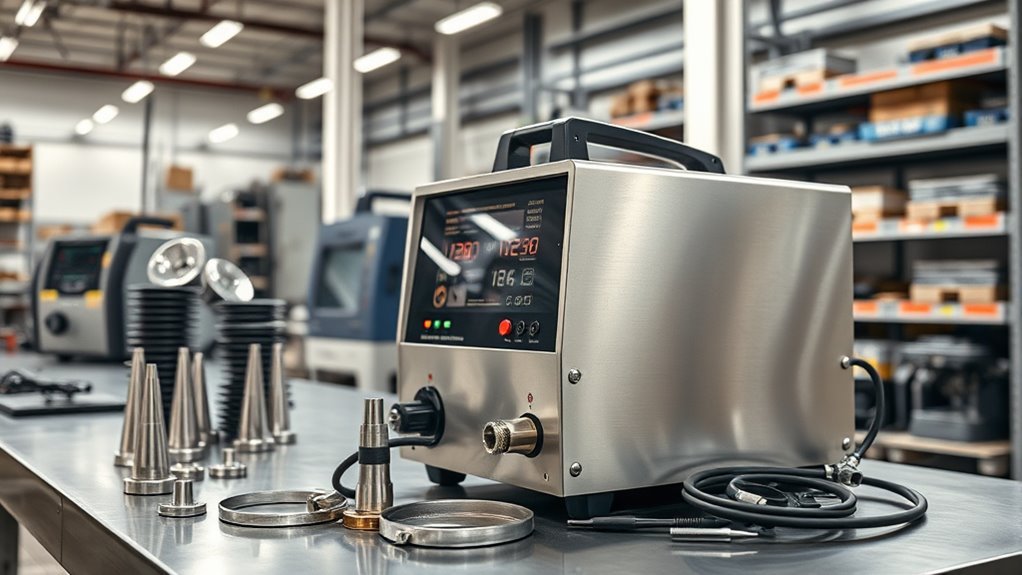
Ultrasonic welder prices usually start around $800 for low-power units and can exceed $6,000 for industrial systems. You’ll pay more as power rises, with 200–600 watt models often costing $800 to $2,000 and 2,000+ watt systems reaching higher quotes. Frequency, horn design, material type, part thickness, and custom tooling all affect cost. If you need a precise estimate, send part details and sample requirements, and you’ll see how the right setup tightens the budget.
What Drives Ultrasonic Welder Prices?
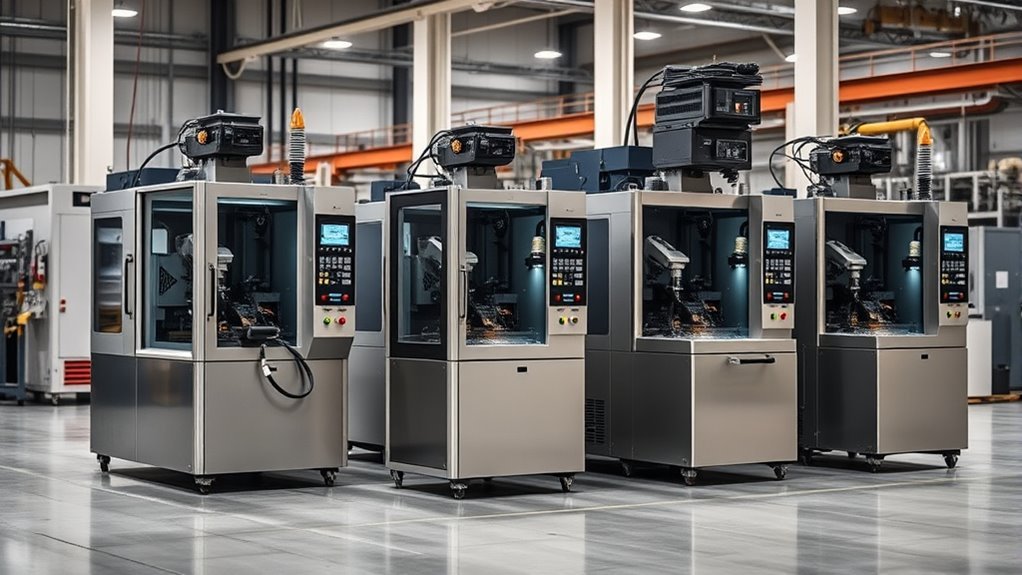
Ultrasonic welder prices vary mainly with power rating, frequency, tooling, and application support, so the first quote you see is rarely the full cost picture. You’ll see ultrasonic welder prices start near $800 for low-power units and climb beyond $6,000 for industrial ultrasonic systems that handle tougher joins.
Power alone doesn’t set value; your material type, part thickness, and required performance also shape the quote. Custom horns and tooling can lower upfront spend, but if they don’t match your application, you’ll pay more later in scrap, rework, or replacement.
Frequency choices like 28kHz or 35kHz change design complexity and joint capability, which shifts price as well. Supplier support, setup help, and ongoing service add to total ownership cost.
To get a reliable number, give suppliers exact specifications and demand a quote tied to your real process.
How Do Power and Frequency Affect Cost?
You’ll see price rise quickly as power increases, because units above 2000 watts need heavier components, stronger cooling, and better duty-cycle reliability.
Your frequency choice also changes cost, since 28 kHz, 35 kHz, and other bands drive different transducer, horn, and tooling designs for specific joint sizes and geometries.
Higher-frequency systems often cost more when they need tighter precision and more advanced tooling, so matching frequency to the application can limit unnecessary expense.
Power Rating Cost Impact
Power rating is one of the biggest drivers of ultrasonic welder price, because more wattage means more capable power delivery, heavier-duty components, and better cooling.
When you compare power ratings in ultrasonic welders, low-power models around 200 to 600 watts often cost $800 to $2,000, while machines above 2,000 watts can exceed $6,000.
You pay for the ability to push energy into larger weld footprints without strain, so higher-output units deliver steadier results in demanding work.
They also use stronger power electronics and cooling hardware, which improves reliability and duty cycle.
If you need consistent throughput and fewer interruptions, higher power can be worth the premium.
You’re buying capacity, durability, and operational freedom, not just a number.
Frequency Design Tradeoffs
While power rating sets how much energy the welder can deliver, frequency determines how that energy is shaped and applied, which is why 28 kHz and 35 kHz systems can differ sharply in cost.
You should match frequency to joint size, geometry, and material stiffness, because higher frequency can demand more complex transducers, horns, and tooling. That design burden raises cost, especially when you need cosmetic control and strength.
Lower-frequency machines often handle larger weld areas, while higher-frequency units excel on smaller, delicate parts. If you buy a single-frequency model, you may face extra trial and error.
Suppliers with multiple frequencies help you choose faster and reduce waste. Pair power and frequency correctly, and you’ll pay for capability, not compromise.
How Do Tooling and Horns Change the Quote?
Tooling and horn design can shift an ultrasonic welder quote markedly because the horn’s geometry directly affects energy transfer efficiency and weld performance.
In ultrasonic welding machines, you’ll see costs rise when the horn needs complex contours, tighter tolerances, or custom tooling for specific part geometry. That precision boosts weld quality and consistency, so you may pay more up front but spend less later on rejects, rework, and downtime.
Complex horn contours and tight tolerances raise costs, but improve weld quality, consistency, and reduce rework.
Material choice matters too: aluminum, titanium, and steel each drive different machining and performance requirements, which changes the quote.
Horn length also affects fabrication effort and pricing. If your application needs multiple horns, expect the initial investment and maintenance load to climb.
When your parts have curved surfaces or unusual shapes, the supplier may need a purpose-built horn, making estimates less fixed and more project-specific.
Which Materials and Welds Need a Bigger Budget?
You’ll need a bigger budget when you weld advanced materials like metals or high-grade plastics, since they often demand more power and tighter frequency control.
Thicker parts also raise your costs because they need higher energy input and more capable equipment to achieve consistent fusion.
If your welds must meet strict strength or cosmetic standards, especially in automotive or medical work, expect to pay more for higher-end machines and specialized tooling.
Material Type Matters
Material type can have a major impact on ultrasonic welder pricing because different materials need different power and frequency settings to weld effectively.
Your material type shapes the ultrasonic welding solution you need, and that drives cost. High-grade plastics and metals often need advanced transducers, generators, and tighter process control.
If your part uses unique geometry, expect custom tooling, which raises budget and lead time. You’ll also pay more when you need strong, clean welds for visible assemblies or structural joints.
- Material-specific tuning
- Advanced transducers
- Custom tooling
- Cosmetic weld control
- Higher-strength output
Thick Parts Need Power
Thick parts usually push you into a higher-power ultrasonic welder, often above 2000W, because the machine has to deliver enough energy through more material for a reliable bond.
When you’re running an Ultrasonic Welding Machine at high frequency, thicker sections need stronger output to maintain consistent amplitude and heat generation.
Dense plastics and composites can demand advanced tooling, so you should budget past entry-level pricing.
If you need high strength or a clean cosmetic finish, custom horn geometry can raise upfront cost further.
Bigger weld footprints and tighter cycle-time targets also favor higher-capacity systems.
For production freedom, match power to part thickness early, or you’ll pay later in rework, slow cycles, and underperforming bonds.
Complex Welds Raise Costs
Beyond part thickness, the weld itself can push your ultrasonic welding budget higher. When you handle complex welds in stiff or thick materials, you’ll often need over 2000W, and that drives equipment costs up through stronger generators, cooling, and controls.
Custom tooling for unique joint geometry also adds expense, especially when you need titanium horns or special alloys.
- Seam welds usually cost more than spot welds.
- Larger geometries may call for 28kHz systems.
- Higher volumes demand more robust machines.
- Multi-frequency options can cut trial-and-error costs.
- Precision tooling improves fit, but raises upfront spend.
If you want efficient output and less rework, budget for the weld, not just the part.
What Should You Send for an Accurate Quote?
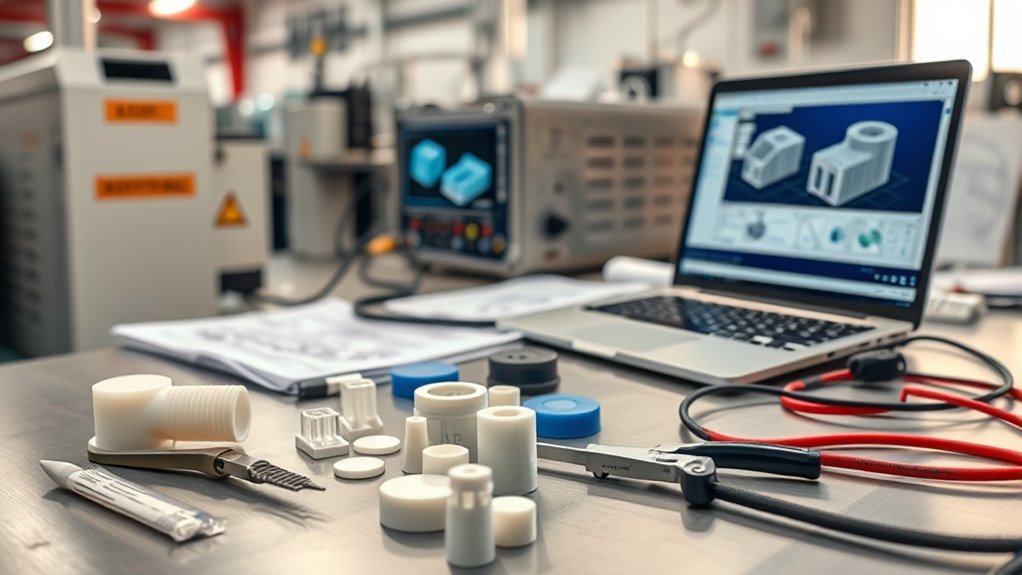
To get an accurate ultrasonic welder quote, you should send a clear package of part and process information. Start with drawings, CAD files, and joint details so the supplier can verify dimensions and avoid spec errors.
Send drawings, CAD files, and joint details so suppliers can verify dimensions and avoid spec errors.
Add photos of the welded area, plus material type, wall thickness, and any inserts or stack-up limits. If you can, include physical samples; they let the vendor check feasibility and suggest the right tooling.
Describe your production target, cycle time, and quality standard so the quote matches your output needs, not a generic setup. Ultrasonic welders are used when you need fast, clean joining, so the quote should reflect the exact part geometry and performance target.
State whether you need handheld or automated equipment, and note any special fixtures or access constraints. The more precise your package, the faster you’ll get a quote that supports confident, independent decision-making.
How Can Sample Testing Cut Trial-and-Error Costs?
How can sample testing reduce trial-and-error costs? By letting you prove feasibility before you commit to production, sample testing exposes material compatibility issues and weld inconsistency early.
In ultrasonic welding, that means you can define a process window, lock in workable settings, and stop burning time on blind adjustments. You also get clear acceptance standards, which sharpen quotes and align machine specs with your real output needs.
- Verify joint strength on physical samples
- Confirm stable amplitude, pressure, and time
- Reduce engineering troubleshooting
- Improve yield rates from the start
- Support smarter equipment purchasing
When you test samples, you gain evidence, not guesses. That freedom matters: you can move faster, avoid scrap, and choose ultrasonic welding equipment with confidence.
Sample testing turns uncertainty into controlled parameters, so your line starts with discipline instead of costly improvisation, and your team stays focused on production, not recovery.
Frequently Asked Questions
How Much Does Ultrasonic Welding Cost?
You’ll pay about $2,000 to over $10,000 for ultrasonic welding, depending on power and customization. Medium units cost less, while high-power systems serve more ultrasonic welding applications and maximize ultrasonic welding advantages for production freedom.
What Is a Big Disadvantage of Ultrasonic Welders?
A big disadvantage is high upfront cost, plus welding limitations and equipment maintenance can slow you down—what’s freedom without reliability? You’ll face custom tooling, downtime, and trial-and-error setup that can hurt throughput and quality.
How Much Does a Branson Ultrasonic Welder Cost?
You’ll pay about $706 to $17,500 for a Branson ultrasonic welder, depending on model, configuration, and Branson features. Used 2000X units can start near $3,000, while newer ultrasonic applications push prices higher.
What Is the Price of Supersonic Welding Machine?
You’ll usually pay $800 to over $10,000 for a supersonic welding machine, depending on machine specifications and application industries. Basic units cost less; high-power, customized systems with digital controls can climb fast.
Conclusion
In practice, you’ll see ultrasonic welder prices swing far more than you might expect, and one useful benchmark is that frequency changes alone can shift equipment cost by roughly 20% to 30%. If you want a tighter quote, send your part drawings, material details, weld requirements, and cycle-time targets up front. When you test samples early, you’ll reduce guesswork, avoid costly tooling changes, and get to a production-ready setup faster.