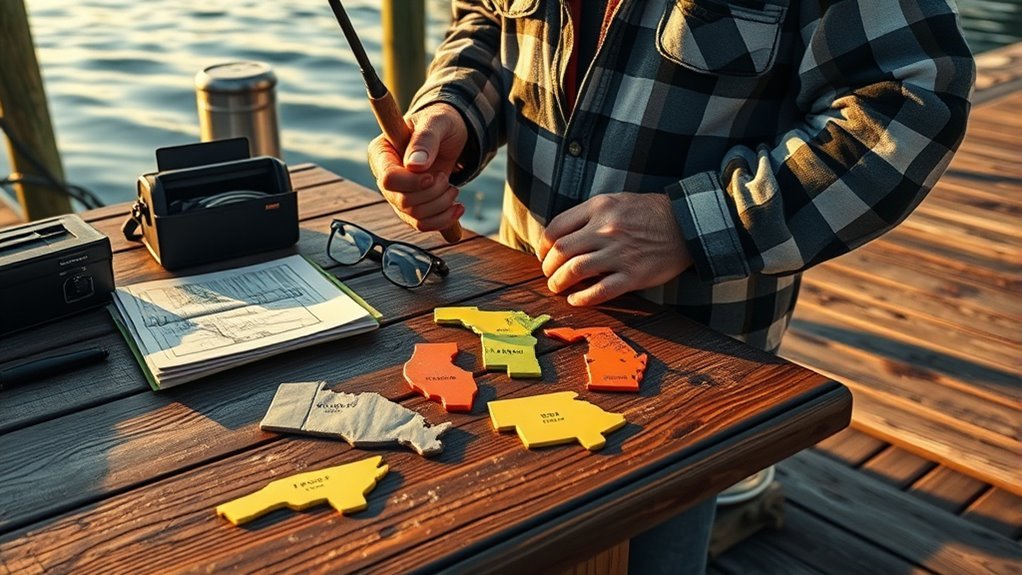
Senior fishing license costs vary by state, but you’ll often see discounts starting at age 65, with some states offering free or near-free licenses for seniors. Florida residents 65+ fish free, Hawaii charges $1, Georgia $7, and Arkansas $10.50. You’ll usually need proof of age, and sometimes residency or disability documents. You can buy or renew many licenses online, and extra permits may still apply. State rules differ, and the details can save you money.
Senior Fishing Discounts by State
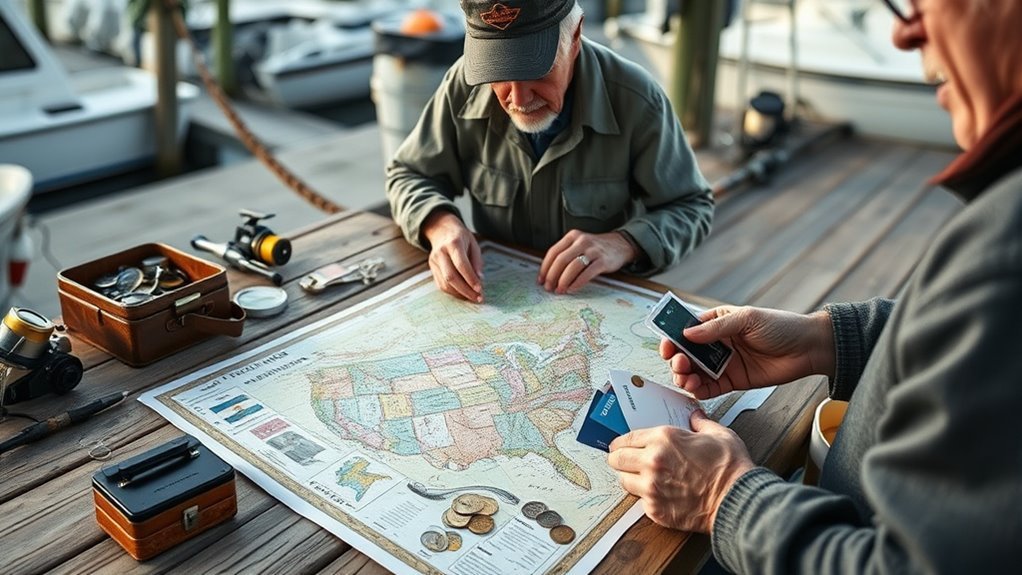
Senior fishing discounts vary widely by state, but many programs begin at age 65 and can greatly cut costs for older anglers.
Senior fishing discounts often start at 65, helping older anglers save significantly on license costs.
You can see a clear policy pattern: states extend discounted licenses to senior citizens to widen access to public waters. Alabama goes further with free licenses for this group.
California offers low-income seniors 65 and older a $9.01 option, while Kentucky sets a senior rate at $12.00. Virginia keeps its reduced fee at $9.00 for anglers 65 and above.
New Jersey uses a higher threshold, offering a $12.50 license to fish for residents 70 and older.
These discounted licenses usually apply to a resident fishing license, so you should check residency rules before you buy. Some permits are valid until December, which can simplify renewal planning.
If you’re comparing states, focus on eligibility, local enforcement, and whether the fee really expands your freedom to fish without unnecessary cost.
How Age Affects License Fees
Age is one of the biggest drivers of fishing license pricing, because many states reduce fees once you reach 65 and some waive them entirely at 70 or older. For you, age changes what Fishing Licenses cost, but your resident status still shapes the rules. States usually require proof of age, and some extend free licenses to qualified seniors, disabled anglers, or veterans. That policy lowers barriers and keeps access from being priced out of reach.
| Age | Typical Fee Effect | Policy Result |
|---|---|---|
| 65+ | Discounted | Lower annual cost |
| 70+ | Often waived | Free licenses in some states |
| Resident | Usually eligible | State-specific rates |
| Lifetime option | One-time fee | No annual payment |
| Other exemptions | Disability, military | Further reductions |
You should check your state’s statute before you apply, since eligibility and documentation vary.
Which States Offer the Cheapest Senior Licenses?
If you’re comparing what fishing licenses cost as you get older, the cheapest senior options stand out because some states cut fees to almost nothing.
For a Fishing License, Florida leads with free access for residents aged 65 and older, which delivers the strongest Senior Discounts policy. Hawaii follows closely, setting a $1.00 rate for anglers 60 and over.
If you want a valid license at a low cost, Georgia charges $7.00 for residents aged 65 and older, while California asks $9.01 for low-income seniors 65 and above. Arkansas keeps its reduced fee at $10.50 for seniors 65 and older.
These prices show how state policy can widen or limit outdoor freedom. When you compare programs, focus on the lowest barriers, not just age thresholds.
In practice, the cheapest states let you keep more money in your pocket and more control over how you fish.
What Proof You Need for a Senior Fishing License

You’ll usually need age verification for a senior fishing license, such as a government-issued ID or birth certificate. Some states set the qualifying age at 65 while others use 60.
If your state ties the discount to residency, you may also have to show proof of address or residency duration, especially where reduced fees depend on local eligibility rules.
In some cases, you’ll need disability or veteran documentation too, so you should check your state’s current requirements before you apply.
Age Verification
To qualify for a senior fishing license, most states require proof of age, usually a driver’s license or state-issued ID showing you’re at least 65.
This age verification step lets agencies confirm you meet the cutoff for senior fishing licenses without guesswork. In some places, you can use a birth certificate or similar document if your ID doesn’t show your date of birth clearly.
Whether you apply as a resident or nonresident, check the state rule first, because documentation standards differ. Some states extend free fishing to seniors, while others charge a nominal fee, often about $10.00.
If you’re applying for a lifetime permit, expect proof of age at submission. Confirm the current policy before you pay, so you can claim your benefit.
Residency Documents
Residency proof is usually the next step for a senior fishing license, and states often want more than just your name and date of birth. You may need a government-issued identification card, utility bill, or lease agreement that matches your address.
Some states ask for a birth certificate or driver’s license to verify your age, especially if you’re 65 or older. Virginia, for example, may require a residency certificate you sign to confirm domicile for at least two months.
If you’re stationed there with family, military orders can work as proof of residency. For discounted or free fishing licenses, rules can tighten, so check your state’s policy before you apply.
Bring exact documents, because missing paperwork can delay access and limit your freedom to fish.
Disability Proof
If you’re applying for a senior fishing license with a disability discount, expect to show more than proof of age: many states require a government-issued ID or birth certificate, plus documentation that confirms the disability itself.
For your Fishing License, agencies usually ask for:
- proof of age
- a doctor’s note or healthcare provider letter
- VA records for a service-connected disability
- state-specific forms for reduced-fee licenses
You should verify rules before you apply, because seniors with disabilities face different standards by state. Some jurisdictions grant free or reduced-fee licenses, while others narrow eligibility to specific conditions or veteran ratings.
How Much Do Senior Fishing Licenses Cost?
Senior fishing license prices usually start at free and can run to about $12.50, depending on your state’s policy.
You’ll usually qualify at age 65 or older, though some states set different eligibility rules or offer lifetime options instead of annual licenses.
If you’re comparing costs, look for discounted senior rates, since many states cap fees well below standard resident license prices.
Senior License Pricing
Senior fishing license prices vary widely by state, but many jurisdictions keep them low to make angling accessible for older adults. You’ll see policy choices that favor access over revenue, and that matters if you want freedom on the water.
A fishing license with senior discounts can cost little or nothing, depending on whether you’re a resident or nonresident.
- Free licenses: Alabama and Alaska.
- Low fees: Hawaii at $1.00; Virginia at $9.00.
- Midrange pricing: Kentucky at $12.00; New Jersey at $12.50.
- Lifetime fishing licenses: Iowa and Oklahoma use one-time fees to support long-term participation.
Across states, the average discounted annual fishing license is about $9.50, showing a broad commitment to affordable access for seniors.
Eligibility And Age Limits
Eligibility rules and age thresholds shape what you’ll pay for a senior fishing license, and most states start discounts at age 60 or 65, with some extending free access to age 70 and beyond. You’ll see policy differences that affect your access to Fishing rights.
| Age | Typical valid cost |
|---|---|
| 60-64 | Discounted licenses, often around $9.50 |
| 65-69 | Free or low-fee options in many states |
| 70+ | Expanded senior discounts, sometimes free |
You should verify residency and income rules before you buy, because states like Alabama, Virginia, and California set distinct senior discounts. Minnesota and Massachusetts can waive fees at 70+, while Hawaii and New Jersey show wide price gaps. These licenses stay valid only under state terms, so check the law before you cast.
Discounted License Options
Discounted fishing licenses for seniors usually start at age 65, and many states price them from free to about $14.50 depending on residency and income rules.
You can use these senior discounts to lower the license burden and keep access open. As a resident, check your age-based eligibility first, then compare state rules.
- Alabama: free resident license at 65+.
- Virginia: $9.00 for seniors.
- California: $10.04 low-income senior option.
- Kentucky and New Jersey: $12.00 and $12.50; Hawaii can be $1.00.
These policies vary, but the pattern is clear: age facilitates cheaper access, and some states widen freedom through low-cost or free license paths.
Compare your state’s discount to claim the best deal.
Where Can Seniors Buy a Fishing License?
A fishing license is required before you fish, and licenses are available in formats that fit your access needs. Online systems often show your resident sport options, date of purchase, and any age-based pricing in one place, so you can verify the rules quickly.
A fishing license is required before you fish, and online systems help you verify your options quickly.
Some states also take phone orders during business hours, which helps if you don’t use digital tools. Senior licenses often come at discounted prices, like Virginia’s $9.00 option for anglers 65 and older.
Check your state’s eligibility rules before you pay, because discount standards vary and your freedom to fish depends on compliance.
What Extra Permits Do Seniors Need?
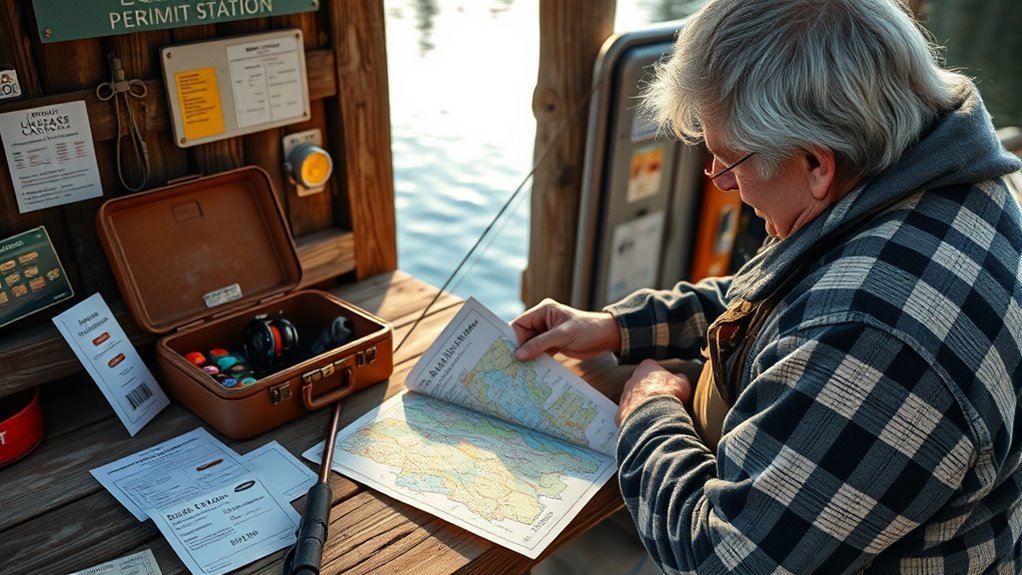
Even with a senior fishing license, you may still need extra permits based on where and how you fish. For seniors, the rule is simple: the base license doesn’t always cover special waters, species, or gear.
Check these common add-ons before you head out:
- A Trout License for designated inland waters, including some Virginia streams.
- A Saltwater Fishing License or Tidal Boat License if you fish coastal or tidal areas.
- Validations like California’s Ocean Enhancement Validation for ocean waters south of Point Arguello.
- Species-specific permits, such as snook or lobster permits in Florida.
These permits can be required even when your fishing license is discounted for age.
Some states also offer free or discounted permits in special areas or on free fishing days, which can expand access without extra cost.
You gain more freedom when you verify the local permit rules first; that’s how you avoid fines and keep your time on the water lawful, simple, and yours.
How to Renew or Replace a Senior License
Renewing or replacing a senior fishing license is usually straightforward, but the process depends on your state’s rules. You can often renew online through your wildlife agency, and you’ll usually need proof of eligibility, like age verification.
Some states also auto-renew senior licenses, so you keep fishing without reapplying every year. If you’ve lost your license, you can request a replacement online, by mail, or at a license agent, usually for a small fee.
Be ready to show ID or proof of residency if your state requires it. Check deadlines carefully, because late action can suspend your privileges.
The policy goal is simple: remove avoidable barriers while keeping records accurate. If you’re a resident, confirm local rules before you renew or replace your senior license.
Frequently Asked Questions
At What Age Do You No Longer Need a Fishing License in FL?
You no longer need a Florida fishing license at 65 if you’re a resident. You can use Fishing License Exemptions and Senior Fishing Programs, but you should carry ID; Florida Fishing Regulations still support Conservation Efforts and renewal-free access.
How Much Is a PA Fishing License for Seniors?
You’ll pay $14.47 for a Pennsylvania senior fishing license. Pennsylvania regulations set license fees for residents 65+, valid one year. Senior fishing supports fishing benefits and outdoor activities while keeping access affordable.
At What Age Do You No Longer Need a Fishing License in Texas?
You no longer need a fishing license in Texas when you’re under 17, or if you were born before January 1, 1931; you’ll also find fishing license exemptions, senior citizen benefits, and fishing age limits under state regulations comparison.
How Much Is a Texas Fishing License for a Senior Citizen?
You’ll pay $10 for a Texas fishing license as a senior citizen. Senior benefits include lifetime License types at $1,000 and a $5 disability option; Discount eligibility depends on residency, while Fishing regulations still apply.
Conclusion
You can see senior fishing discounts as a small policy net that catches real savings. In many states, you pay less once you reach 65, and some licenses drop to just a few dollars or even free. That matters when fixed incomes are tight. Like a seasoned angler choosing the right lure, you save more when you know the rules, bring the right proof, and renew on time so your trip stays simple.