
No—tipping is usually not included in resort fees. Resort fees are generally mandatory property charges for listed amenities or services, while gratuities are separate and tied to staff service. Some resorts also charge a separate mandatory gratuity or include gratuities in an all-inclusive package, so check the rate terms and your bill before adding a tip. In the United States, mandatory resort fees must be included in the displayed total price under the FTC’s Rule on Unfair or Deceptive Fees.
Last updated: September 7, 2026. Resort-fee disclosure rules and U.S. hotel tipping guidance were rechecked.
Quick Answer
No. A resort fee usually does not include tips for housekeeping, bell staff, valet, concierge, or room service. Check for a separate line labeled gratuity, mandatory gratuity, or service charge before tipping again, because some properties bundle or separately charge gratuities.
Key Takeaways
- Resort fees usually cover listed property amenities or services, not personal gratuities for hotel staff.
- In the United States, mandatory resort fees must be included in the displayed total price for short-term lodging.
- A compulsory service charge is not a tip under federal wage law, even if the property later distributes some of it to employees.
- U.S. hotel tipping ranges vary by source and hotel level, so use them as etiquette guidance rather than fixed charges.
- All-inclusive packages may include gratuities, allow extra tips, or follow a no-tipping policy; check the property’s written terms.
Resort Fee vs. Gratuity vs. Service Charge
The label on a hotel bill matters. These charges can appear together, but they do not mean the same thing.
| Charge | What it usually means | Does it replace a tip? |
|---|---|---|
| Resort fee | A mandatory property charge for listed amenities or services. | Usually no. Check the property’s written policy. |
| Gratuity | A line item the property says is intended to cover staff gratuity for a service or package. | Often for the covered service, but confirm what the policy includes. |
| Service charge | A compulsory business charge. Under the FLSA, a compulsory service charge is not a tip. | Not automatically. Ask whether staff receive it and whether an extra tip is expected. |
| Delivery fee | A fee tied to room-service or item-delivery logistics. | Do not assume it is a gratuity unless the bill or hotel policy says so. |
How Should You Budget for Resort Fees and Tips?

When you plan a resort stay, compare the displayed total price with the room rate breakdown instead of budgeting from the base rate alone. Since May 12, 2025, the FTC’s fee rule requires mandatory resort fees for short-term lodging to be included in the upfront total price. Taxes and genuinely optional add-ons can be disclosed separately, but the final amount must be shown before payment.
The resort fee itself still usually does not cover staff gratuities. Budget a separate tip amount only for services you expect to use, then check each bill for an automatic gratuity or service charge before adding more.
Does a Resort Fee Include Gratuity or Service Charges?
Resort fees, tips, and service charges are not interchangeable. A resort fee is a property charge tied to the stay, while a voluntary tip is an amount you choose to leave for service.
A resort fee usually does not replace a gratuity, and a mandatory service charge is not automatically the same as a tip.
The U.S. Department of Labor says a compulsory service charge is not a tip under the Fair Labor Standards Act, even if the employer later distributes some or all of that charge to employees. That means you should not assume every line labeled “service charge” goes directly to the person who served you.
For room service, look for separate lines such as gratuity, service charge, or delivery fee. If the bill does not explain how a charge is used, ask the front desk or restaurant before adding another tip.
Note: A charge labeled “gratuity” may cover the listed service, while a “service charge” may be handled differently. Read the property’s wording before you tip twice.
What Should You Tip If Resort Fees Do Not Include Gratuity?
U.S. tipping ranges vary by source and hotel level. Treat them as etiquette guidance, not mandatory prices.
- Housekeeping: Emily Post lists $2 to $5 per day. AAA’s July 2026 hotel guide recommends at least $5 per night and notes that $10 to $20 can be more common at luxury hotels.
- Bell staff: AAA lists about $1 to $5 per bag, with more for oversized luggage or a full cart.
- Valet: AAA lists about $2 to $5 when your car is returned.
- Concierge: Emily Post lists about $5 to $10 for tickets or restaurant reservations and more for hard-to-get arrangements.
- Room service: A 15% to 20% tip is common when no gratuity has already been added. If the bill shows only a service charge, ask whether an extra tip is expected.
Leave housekeeping tips daily when service is provided because staff assignments can change. If you decline daily cleaning, the property may still have a checkout cleaning routine, so follow the hotel’s guidance and your own judgment.
Are There Times When You Don’t Need to Tip?

You do not need to tip every time you interact with hotel staff. Basic directions, a package that already includes gratuities, a written no-tipping policy, or service that falls well below reasonable expectations can all change what you choose to give.
Match any voluntary tip to the service you actually receive, the local custom, and the property’s policy.
When Service Is Subpar
When service falls short, you can lower the tip or skip it. Tipping should reflect the quality of the service, not just the existence of a bill.
Use judgment before you decide. A staff member may deal with a rush, a staffing issue, or a problem outside their control.
If the issue affects your stay, tell hotel management. Clear feedback gives the hotel a chance to fix the problem.
All-Inclusive Resort Policies
All-inclusive does not automatically mean no tipping. Some packages include gratuities, some allow extra tips, and some properties discourage or restrict additional tipping.
Check the written policy before you arrive. For example, Atlantis Bahamas currently lists resort fees and mandatory gratuities as separate charges, which shows why the labels on your booking confirmation matter.
If gratuities are already included for a covered service, you generally do not need to add another tip unless the property allows it and you choose to reward exceptional service.
How Do Different Cultures View Tipping?
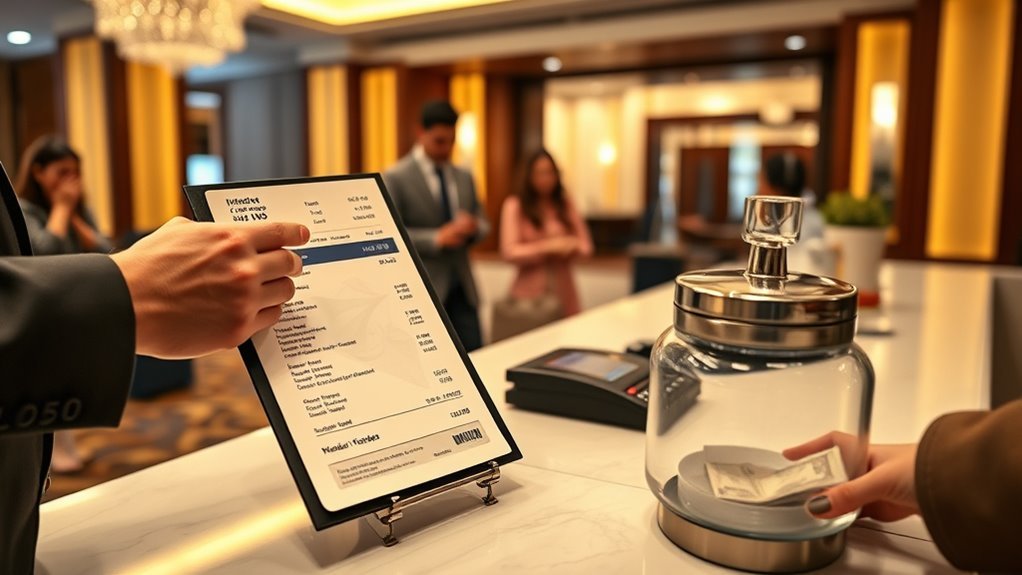
Tipping norms change from one country to another, so do not carry U.S. hotel tipping amounts into another destination automatically.
Before you travel, check guidance from your hotel, a local tourism office, or another destination-specific source. This helps you avoid both undertipping and overtipping.
Tipping Norms Worldwide
AAA’s 2026 hotel guidance notes that in parts of Europe a service charge may already be included, while tipping is not part of the culture in Japan or Iceland. These are examples rather than universal rules, so check the specific destination and property before deciding.
Local customs should guide your decision more than habits from home.
Cultural Attitudes Toward Gratuity
The practical question is whether a tip is expected, optional, already included, or discouraged. Tourist hotels can also follow a different pattern from local everyday businesses.
When you feel unsure, ask the front desk whether gratuities are already included and whether additional tipping is customary at that property.
Smart Budgeting Tips for Your Hotel Stay
Hotel costs can still rise after the displayed lodging price because taxes and optional items such as parking, spa services, meals, or room service may be separate. Build your budget from the displayed total lodging price, then add expected tips only for services you plan to use.
Cash in small bills is convenient, but many hotels now offer cashless tipping through QR codes, mobile wallets, or hotel apps. Ask the front desk if you prefer a digital option.
- Save a screenshot of the displayed total price and the resort-fee breakdown before you book.
- Read the property’s written tipping or gratuity policy, especially at all-inclusive resorts.
- Check each bill for gratuity, service charge, and delivery-fee lines before adding more.
- Keep small bills ready or ask whether the hotel supports digital tipping.
Pro tip: Compare the booking screenshot with your final bill. A resort fee can be itemized, but in the U.S. a mandatory resort fee should already be included in the displayed total price.
Frequently Asked Questions
Is a Resort Service Charge the Same as a Tip?
No. Under U.S. federal wage law, a compulsory service charge is not considered a tip. A hotel may distribute some or all of a service charge to employees, but you should not assume it works like a voluntary gratuity. Check the property’s policy when the bill is unclear.
Do resort fees cover housekeeping tips?
Usually no. Resort fees generally pay for listed property amenities or services, not a personal housekeeping gratuity. In U.S. etiquette guidance, housekeeping tips are normally separate unless the hotel or package says gratuities are included.
Should you tip if room service adds a service charge?
Check the bill before you add more. If it lists an automatic gratuity, another tip is usually optional. If it lists only a service charge or delivery fee, ask whether that charge goes to staff and whether an extra tip is expected.
How can you tell if gratuities are included at an all-inclusive resort?
Read the resort’s written rate terms before arrival and check the confirmation for words such as gratuity, mandatory gratuity, or service charge. Some all-inclusive packages include gratuities, while others allow or expect additional tips.
Is it better to tip hotel staff in cash?
Cash is convenient because you can give it at the time of service, but it is not the only option. Many hotels now offer digital tipping through QR codes, mobile wallets, or hotel apps, so ask the front desk what the property supports.
Are mandatory resort fees included in the advertised hotel price?
In the United States, yes: since May 12, 2025, the FTC’s Rule on Unfair or Deceptive Fees requires mandatory resort fees for short-term lodging to be included in the displayed total price. Taxes and genuinely optional add-ons may be disclosed separately, but the final amount must be shown before payment.
Conclusion
A resort fee usually does not replace hotel staff tips. In the U.S., the mandatory resort fee should already be included in the displayed total lodging price, but gratuities, service charges, and optional add-ons can still require a separate check. Read the property’s policy, review each bill before tipping again, and budget only for the staff services you expect to use. That approach keeps your hotel budget clear and helps you avoid accidental double-tipping.