
Miami hotel prices in 2026 vary sharply by date, neighborhood, room type, major events, and booking terms. The most useful current market benchmark is the Greater Miami Convention & Visitors Bureau’s STR data: Miami-Dade hotels averaged $283.32 per occupied room year to date through June 2026, while June alone averaged $218.37. These figures are average daily rates, or ADRs, rather than guaranteed all-in prices for an individual booking.
Quick Answer
Through June 2026, Miami-Dade hotels averaged $283.32 per night in year-to-date ADR, while June alone averaged $218.37. Treat ADR as a market benchmark, not your checkout price. Taxes, mandatory hotel fees, parking, room type, neighborhood, and major events can move your actual nightly cost substantially.
Key Takeaways
- Miami-Dade’s January-June 2026 ADR was $283.32, according to GMCVB data sourced from STR.
- June 2026 alone averaged $218.37, showing how strongly monthly rates can move.
- Location matters: Jan-June ADR ranged from $166.55 near Miami International Airport to $369.98 in Miami Beach, with some luxury districts much higher.
- Major events can create sharp spikes. Miami ADR reached $335.90 during the week ending May 2 as Miami Grand Prix demand built.
- Most mainland Miami-Dade stays outside special municipalities face roughly 12% in combined state and local lodging taxes; Miami Beach commonly totals about 13%.
- Mandatory resort, destination, and similar fees generally must be included in the prominently displayed lodging total under federal pricing rules.
- Compare the final lodging payment, parking, transportation, cancellation rules, and included benefits before choosing a hotel.
Average Hotel Prices in Miami for 2026

The latest published Greater Miami Convention & Visitors Bureau hotel report, using STR data, puts the Miami-Dade year-to-date ADR at $283.32 through June 2026. ADR means room revenue divided by occupied rooms. It is a hotel-market performance measure, not a guaranteed consumer price for a particular room.
The same report shows why one annual-looking figure cannot predict your stay. Miami-Dade’s ADR was $218.37 in June 2026, compared with the much higher $283.32 January-June average. According to CoStar’s June 2026 hotel report, Miami’s June ADR increased 23.2% from June 2025, with World Cup activity affecting the market.
For 2026 planning, $283.32 is the stronger year-to-date Miami-Dade market benchmark through June, but your actual quote can be far lower or higher depending on the neighborhood, date, room, and event calendar.
Later weekly results continued to move. CoStar reported Miami ADR of $232.47 for July 5-11 and $212.74 for July 12-18. Those shifts reinforce an important point: use citywide ADR to understand the market, then use live hotel prices for the actual dates you plan to stay.
Note: ADR, the displayed lodging total, and your final payment are different figures. ADR measures market room revenue. A displayed total should include mandatory hotel fees covered by federal pricing rules. Your final payment may also include government taxes and optional services you select.
2026 Miami Hotel Rates by Area
Neighborhood choice makes a large difference. The table below uses GMCVB/STR year-to-date ADR data through June 2026. These figures are averages for occupied hotel rooms within each reporting region, not guaranteed booking prices.
| Miami-Dade Region | Jan-June 2026 ADR | June 2026 ADR |
|---|---|---|
| South Dade | $128.25 | $96.72 |
| North Dade | $161.16 | $133.71 |
| Central Dade | $165.30 | $140.55 |
| Miami International Airport | $166.55 | $139.50 |
| Doral | $188.03 | $154.33 |
| Coral Gables | $263.75 | $214.53 |
| Downtown Miami | $300.35 | $241.35 |
| Aventura / Sunny Isles | $325.60 | $278.59 |
| Miami Beach | $369.98 | $267.87 |
| Coconut Grove / Key Biscayne | $428.21 | $301.56 |
| Surfside / Bal Harbour | $860.88 | $715.72 |
| Miami-Dade overall | $283.32 | $218.37 |
The spread is large enough that your neighborhood can matter more than a generic citywide average. A traveler focused on the airport or Doral may see a very different market from someone searching Miami Beach, Key Biscayne, or Bal Harbour.
How to Calculate Your Total Miami Hotel Cost
Do not multiply the first nightly number you see by the number of nights and assume that is your complete budget. Check the booking summary, taxes, parking, and optional services first.
True nightly trip cost = (final lodging payment + parking + selected hotel services + other stay-related transportation costs) ÷ number of nights.
Under the FTC’s Rule on Unfair or Deceptive Fees, which took effect May 12, 2025, businesses advertising short-term lodging prices generally must include mandatory resort, destination, facility, cleaning, or similar charges that can be calculated upfront in the prominently displayed total. Government taxes and genuinely optional additions may initially appear separately, but the final amount must be disclosed before payment.
Worked Cost Example
Suppose a three-night stay in a mainland Miami-Dade location subject to the standard county transient-rental taxes has a displayed lodging total of $675. That equals $225 per night after any mandatory hotel fees but before government taxes. Most such mainland locations face 6% Florida sales tax plus 6% Miami-Dade transient-rental taxes.
- Displayed lodging total: $675
- Estimated 12% lodging taxes: $81
- Optional parking at $45 per night: $135
- Estimated trip total: $891
- True cost per night: $297
Miami Beach follows a different local structure. Its common lodging-tax total is about 13%: 6% Florida sales tax, 3% Miami-Dade Convention Development Tax, and 4% City of Miami Beach resort tax. Surfside and Bal Harbour also have special municipal rules, so do not assume the mainland or Miami Beach rate applies everywhere. Miami-Dade County explains the structure on its Tourist and Restaurant Taxes page.
Pro Tip: Save a screenshot or PDF of the final booking summary. It gives you a record of the room type, cancellation deadline, included benefits, mandatory fees, government taxes, and total payment shown when you booked.
When to Book for the Best Hotel Rates
Do not assume every Miami hotel becomes cheapest exactly a certain number of days before arrival or on one particular weekday. Hotel pricing is dynamic, and properties can change rates as rooms sell, cancellations arrive, or local demand changes.
For an ordinary trip, starting your comparison about two to four months ahead gives you time to watch prices and room availability. Begin earlier when you need a particular beachfront property, suite, connecting room, holiday date, or major-event weekend. Treat this as a monitoring strategy, not a guaranteed cheapest-booking formula.
When practical, reserve a refundable rate. Record the exact room type, cancellation deadline, taxes, included benefits, and total. Recheck the same stay periodically. If the price falls, you may be able to cancel and rebook as long as the original reservation terms allow it.
Seasonal Price Patterns
Miami’s visitor demand changes through the year, but events can overpower the normal seasonal pattern. The official Greater Miami & Miami Beach visitor guide describes February as peak season, while summer and early fall bring a different mix of weather, promotions, and event demand.
| Period | Typical Pattern | What It Means for Your Budget |
|---|---|---|
| January to April | Generally strong visitor demand | Winter sunshine, spring travel, festivals, and sporting events can support higher rates. February is a peak-season month. |
| May | Highly event-sensitive | Some dates may soften, but the Miami Grand Prix and other large events can push prices sharply higher. |
| June to October | Variable summer and early-fall demand | Promotions may appear, but special events and hurricane-season risk can change both price and flexibility needs. |
| November to December | Event and holiday sensitive | Art Week, festivals, Thanksgiving, Christmas, and New Year’s demand can make certain dates expensive. |
Events That Can Raise Miami Hotel Rates
Always check what is happening during your dates. Sporting events, festivals, conventions, concerts, cruise demand, and holiday weekends can outweigh the normal seasonal pattern. The official Greater Miami & Miami Beach events calendar is a useful starting point.
For example, CoStar reported Miami ADR of $335.90 during the week ending May 2, 2026, as demand built around the Miami Grand Prix. Later, during the week ending June 27, Miami ADR reached $267.87, with three World Cup matches helping lift demand and rates.
Those are event-period market averages, not normal baseline prices. World Cup-related demand also influenced June and early July results, so avoid using one tournament week to estimate an unrelated Miami trip.
Warning: The Atlantic hurricane season officially runs from June 1 through November 30, with climatological activity peaking around September 10. A lower late-summer rate may come with greater disruption risk, so compare cancellation terms and any travel-insurance coverage carefully.
Miami Hotel Prices by Star Rating
Star ratings describe a property’s facilities and service level, but they do not create fixed Miami prices. Date and location can matter so much that a 3-star hotel during a major event may cost more than a 4-star property on a quiet night. Because there is no authoritative citywide 2026 dataset establishing fixed price bands by star level, use star ratings to narrow the type of stay you want and live prices to set the budget.
| Hotel Type | Relative Price Expectation | What Usually Changes the Price |
|---|---|---|
| 2-Star / Budget | Usually among the lower-cost hotel options | Airport or mainland location, parking, room condition, limited amenities, event demand, and cancellation terms. |
| 3-Star / Midrange | Usually midmarket, with a wide spread by neighborhood | Breakfast, pool, room size, parking, beach access, transit access, and weekday versus weekend demand. |
| 4-Star / Upscale | Usually above the market midpoint | Oceanfront access, resort facilities, views, parking, event demand, room category, and mandatory property fees. |
| 5-Star / Luxury | Usually the highest-priced tier with the widest rate spread | Suites, premium views, beach clubs, holidays, special events, high-end services, and last-room availability. |
Compare the same room type, guest count, cancellation policy, mandatory fees, and included benefits across sellers. If price is your main concern, the official 2026 neighborhood data is generally more useful for budgeting than the star label alone.
Popular Neighborhoods and Their Price Ranges
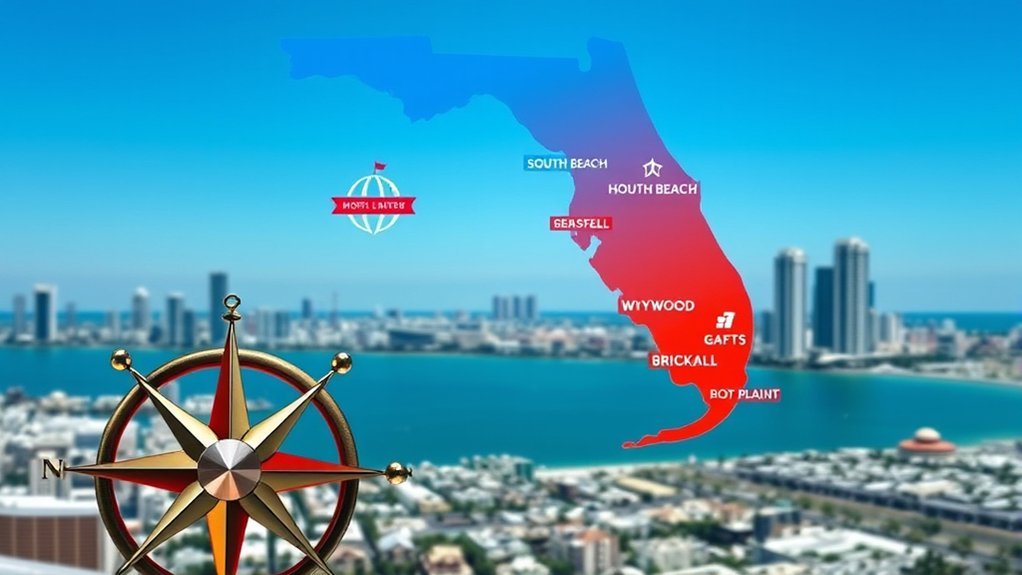
Your neighborhood can affect the total trip cost as much as the hotel’s star rating. A cheaper room may not save money when it requires daily parking, long rideshare trips, bridge traffic, or frequent travel across Biscayne Bay.
| Area | 2026 Price Context | Best For | Main Trade-Off |
|---|---|---|---|
| South Beach and Mid-Beach | Miami Beach overall averaged $369.98 ADR Jan-June 2026 | Beach access, nightlife, Art Deco sights, and a resort-style stay | Parking and resort-style services can raise the final cost. |
| Downtown and Brickell | Downtown Miami averaged $300.35 ADR Jan-June 2026 | Business trips, dining, museums, cruises, Metrorail, and Metromover | Beach trips require additional travel. |
| Wynwood and the Design District | No separate GMCVB ADR is published for these neighborhoods; compare live inventory | Art, restaurants, nightlife, and a creative urban atmosphere | Hotel inventory is smaller than in Miami Beach or Downtown. |
| Coconut Grove | Coconut Grove/Key Biscayne averaged $428.21 ADR Jan-June 2026 | A quieter setting, families, parks, and waterfront dining | Fewer low-cost hotel choices and a market mix that includes premium properties. |
| Little Havana | No separate official neighborhood ADR is published; availability can be limited | Cuban culture, food, and a local neighborhood experience | Limited hotel inventory means a mainland location does not automatically guarantee a lower rate. |
| Miami International Airport and Doral | Airport ADR was $166.55 and Doral $188.03 Jan-June 2026 | Short stays, early flights, business travel, and travelers with a car | Longer travel time to beaches and many tourist attractions. |
The official Greater Miami Convention & Visitors Bureau hotel guide can help you compare accommodation options in Miami Beach, Brickell, Downtown, Coconut Grove, airport districts, and other parts of Miami-Dade.
Pro Tip: Compare the hotel and transportation cost together. A slightly higher Downtown or Brickell room rate may still save money if the fare-free Metromover and nearby Metrorail reduce parking and rideshare expenses.
Extra Costs Beyond the Room Rate
Your final hotel bill can be noticeably higher than an ADR benchmark because ADR is not an all-in consumer price. Review each charge before confirming the reservation.
- Taxes: Most Miami-Dade locations outside Miami Beach, Surfside, and Bal Harbour combine Florida’s 6% sales tax with 6% county transient-rental taxes, for roughly 12%. Miami Beach commonly totals about 13% because its local structure differs.
- Mandatory property fees: Resort, destination, facility, cleaning, and other unavoidable charges covered by the FTC rule generally must be included in the prominently displayed lodging total when they can be calculated upfront.
- Parking: Valet and overnight parking can materially change the cost of a Miami Beach, Downtown, Brickell, or airport-area stay.
- Deposits and incidental holds: A hotel may temporarily authorize additional funds on your card at check-in. The hold is not necessarily a final charge, but it can reduce your available credit or cash until released.
- Food and amenities: Breakfast, beach chairs, umbrellas, premium internet, room service, spa services, and late checkout may cost extra when they are optional.
- Transportation: Include rideshares, tolls, rental-car charges, fuel, parking, public-transit costs where applicable, and the time needed to reach your activities.
For a useful apples-to-apples comparison, divide your expected lodging payment, taxes, parking, and selected stay-related costs by the number of nights. That gives you a much better picture than the first nightly figure in a search result.
How to Snag the Best Hotel Deals in Miami
- Search flexible dates. Moving your stay by one or two nights may help you avoid a busy weekend, convention, concert, festival, or sporting event.
- Check the event calendar. Search your dates on Miami’s official event calendar before booking, especially during major sports, art, music, convention, and holiday periods.
- Compare like with like. Match the room type, bed setup, guest count, cancellation policy, mandatory fees, taxes, and included benefits.
- Check the hotel’s direct rate. Member prices, breakfast packages, parking offers, property credits, or loyalty benefits may create a better overall deal even when the base room price looks similar.
- Use refundable reservations strategically. Secure an acceptable rate and recheck it periodically. Rebook only when the new total and terms are equal or better.
- Price the whole trip. Include parking, rideshares, rental-car costs, tolls, transit, and travel time between your hotel and planned activities.
- Read recent reviews. Focus on cleanliness, noise, elevators, air conditioning, current construction, fee complaints, and whether advertised facilities were operating.
- Check the incidental-hold policy. Contact the hotel before arrival when a large temporary card authorization could affect your travel budget.
- Be careful with nonrefundable deals. A small discount may not justify losing the payment if your plans, flights, or weather conditions change.
No single weekday or fixed advance-booking period always produces Miami’s lowest hotel price. The best deal is the lowest complete cost for the room, location, flexibility, and benefits your trip actually requires.
Frequently Asked Questions
What is the average price of a hotel in Miami in 2026?
The strongest current market benchmark is Miami-Dade’s $283.32 year-to-date ADR through June 2026. June alone averaged $218.37. ADR is a market average for occupied hotel rooms, so your actual rate may be much lower or higher depending on the neighborhood, dates, room type, and events.
Why can my Miami hotel price be different from the citywide ADR?
ADR is room revenue divided by occupied rooms across a hotel market. It is not a retail quote for your exact stay. Your price can change with neighborhood, hotel class, room type, weekend demand, events, cancellation terms, occupancy, taxes, parking, and optional services.
How much is a Miami hotel room for one night?
There is no dependable single-night price for all of Miami. Official Jan-June 2026 ADR ranged from $128.25 in South Dade and $166.55 around the airport to $369.98 in Miami Beach and $860.88 in Surfside/Bal Harbour. Check live rates for your exact dates before setting the final budget.
How much should I budget for Miami hotel taxes?
Most mainland Miami-Dade locations outside special municipalities combine 6% Florida sales tax with 6% county transient-rental taxes, for roughly 12%. Miami Beach commonly totals about 13%. Surfside, Bal Harbour, exemptions, and individual circumstances can differ, so use the exact tax amount shown at checkout.
What is the cheapest time to book a Miami hotel?
There is no fixed cheapest month or booking day. Summer and early fall may produce attractive promotions outside major events, but those months also overlap hurricane season. Compare flexible dates, check the event calendar, and consider a refundable rate when the added flexibility is worth the cost.
Are Miami hotel taxes and resort fees included in the advertised price?
Mandatory resort, destination, facility, and similar unavoidable hotel fees generally must be included in the prominently displayed total under the FTC’s federal fee rule. Government taxes and genuinely optional services may initially appear separately, but the complete final payment must be disclosed before you pay.
Is it cheaper to stay in Miami or Miami Beach?
Official 2026 data shows a clear difference in many areas. Through June, Miami Beach ADR averaged $369.98, compared with $166.55 around Miami International Airport, $188.03 in Doral, and $300.35 in Downtown Miami. However, transportation and parking can reduce the savings from a cheaper distant hotel.
How far in advance should I book a Miami hotel?
Starting your search about two to four months before an ordinary trip gives you time to monitor rates and availability. Begin earlier for holidays, major events, suites, connecting rooms, or a specific beachfront hotel. This is a planning strategy rather than a guarantee that one exact booking window will be cheapest.
Conclusion
For a 2026 Miami trip, use the $283.32 Miami-Dade year-to-date ADR through June as a current market benchmark rather than treating it as a guaranteed room quote. June alone averaged $218.37, and official regional data shows much larger differences by location. Compare your exact dates, taxes, mandatory fees, parking, transportation, cancellation terms, and event calendar before booking.
Sources
- Greater Miami Convention & Visitors Bureau: June 2026 Occupancy, ADR and RevPAR Report — supports Miami-Dade’s June and year-to-date 2026 ADR figures and regional hotel-rate comparisons.
- CoStar: U.S. Hotel Performance for June 2026 — supports Miami’s June 2026 ADR and World Cup-related year-over-year increase.
- CoStar: U.S. Hotel Results for Week Ending May 2, 2026 — supports the Miami Grand Prix-period ADR increase.
- Federal Trade Commission: Rule on Unfair or Deceptive Fees FAQs — explains total-price requirements for mandatory short-term lodging fees.
- Miami-Dade County: Tourist and Restaurant Taxes — supports Miami-Dade and Miami Beach transient-rental tax calculations and municipal exceptions.
- National Hurricane Center: Tropical Cyclone Climatology — supports Atlantic hurricane-season dates and peak climatological activity.