

Senior fishing license discounts can lower the cost of fishing, but there is no single nationwide age or benefit. Each state sets its own rules for age, residency, income, proof, license length, and added permits. Use this guide to understand the common options, compare verified state examples, and avoid buying the wrong license.
Last updated: August 11, 2026. Selected fees and eligibility examples in this guide were checked against official state wildlife-agency pages.
Quick Answer
Senior fishing-license rules are set by each state, not by a national age standard. Resident benefits may begin at 60, 64, 65, or 70 and may be free, discounted, income-based, or offered as a lifetime license. Confirm residency, age, required documents, endorsements, and current fees on the official state wildlife-agency website before fishing.
Key Takeaways
- Senior eligibility is usually limited to residents and may begin anywhere from age 60 to 70 or older.
- Age alone does not always qualify you; some programs also require low-income, disability, or long-term residency proof.
- A free or reduced license may not include trout permits, species report cards, harvest cards, endorsements, or special-area permits.
- Check the official agency page every license year because fees, purchase rules, and valid dates can change.
At a Glance
| Time Required | Standard online licenses may be issued immediately; special senior credentials can require agency review, prequalification, or in-person processing |
| Difficulty | Easy once you confirm the correct license and eligibility rules |
| Tools Needed | Agency-accepted identification, residency proof, eligibility documents if required, and a payment method when a fee applies |
| Cost | Varies by state; benefits range from no-fee exemptions to reduced annual or lifetime licenses, plus possible add-on permits |
Who Qualifies for a Senior Fishing License?
Senior fishing-license eligibility depends on the state where you will fish. Many programs start at age 65, but that is not a national rule. Alaska offers a free permanent identification card to qualifying residents at age 60, Colorado lists a senior annual license for residents age 64 and older, and New York gives residents age 70 and older a reduced annual freshwater rate.
Your age may open the door to a senior benefit, but residency and program-specific proof usually decide whether you qualify.
Most senior benefits are for state residents. A driver’s license or state identification card may prove both age and residency, but an agency can require more. Low-income programs may ask for current benefit verification, and permanent-license programs may use stricter residency tests.
For example, California’s reduced-fee senior license is not available based on age alone. A California resident must be at least 65 and receive Supplemental Security Income (SSI) or Cash Assistance Program for Aged, Blind, and Disabled Legal Immigrants (CAPI). Alaska requires qualifying senior applicants to meet its residency definition and be physically present in the state when applying.
Note: Owning property, spending part of the year in a state, or having a mailing address there does not automatically make you a resident for license purposes. Read the agency’s residency definition before choosing a resident license.
Documents You May Need
- A current driver’s license, state ID, passport, or other identification accepted by the issuing agency
- Proof of your date of birth
- Proof of residency, such as an agency-accepted ID or supporting records
- Benefit award or eligibility documentation for an income-based program
- A disability or veteran certification when applying under a separate reduced-fee program
- Your existing customer, conservation, or license number, if you already have one
Senior Fishing License Discounts: Verified State Examples
States use several models: a complete license exemption, a low-cost annual license, an income-based reduced fee, or a discounted lifetime option. The selected examples below show why you should not assume every state uses age 65 or gives the same benefit. This is not a complete 50-state fee chart.
| State | Eligibility Example | Current Benefit Example |
|---|---|---|
| Alaska | Resident age 60+ who meets the state residency definition | Free permanent identification card for sport fishing, hunting, and trapping; some permits or harvest cards still apply |
| Colorado | Resident age 64+ | Senior annual fishing license listed at $12.96 |
| Texas | Resident age 65+ and born on or after January 1, 1931; residents born before that date are exempt | $12 senior freshwater, $17 senior saltwater, or $22 senior all-water package |
| Florida | Resident age 65+ with required proof of age and residency | Exempt from listed recreational fishing licenses and many state permits; an optional no-cost certificate is available |
| California | Resident age 65+ who receives SSI or CAPI | $10.04 reduced-fee sport fishing license; annual eligibility verification is required |
| New York | Resident age 70+ | $5 annual freshwater fishing license |
| Pennsylvania | Resident age 65+ | $14.47 annual senior license or $86.97 senior lifetime license |
Warning: These examples are not a 50-state fee chart and should not be used as proof of eligibility. Prices and rules can change during a license year. Confirm the current rule on the issuing agency’s official page before purchase.
Why Age Thresholds Differ
State lawmakers and wildlife agencies set their own license systems, so senior ages do not follow Social Security, Medicare, or another federal standard. A state may choose age 60, 64, 65, 70, a birthdate rule, or an age-plus-income test. Some programs also have different ages for annual and lifetime licenses.
Discount Types Available
- Exemption: You do not buy the standard license, but you must carry the proof named by the state.
- Reduced annual license: You buy a lower-cost license each year or for a stated validity period.
- Income-based senior license: Age and qualifying benefit or income documentation are both required.
- Lifetime license: A one-time purchase provides an annual or renewable privilege for the holder’s lifetime, subject to the state’s rules.
- Combination package: Fishing may be bundled with hunting, freshwater and saltwater privileges, or selected endorsements.
Which Senior Fishing License Type Fits Your Situation?
| Your Situation | First Thing to Check | Why |
|---|---|---|
| Your state exempts qualifying seniors | Required proof and add-on permits | You may not need a base license, but species, area, reporting, or identification requirements can remain |
| Your state sells a reduced annual senior license | Comparable standard price and included privileges | The advertised senior price matters only when both products cover the fishing you plan to do |
| Eligibility depends on age plus income or benefits | Current verification documents | Age alone will not qualify you for programs such as California’s low-income senior license |
| You are considering a lifetime license | Break-even period, residency rules, and included permits | A low annual senior fee can make an expensive lifetime option a poor value |
| You are visiting another state | The nonresident fee and exception page | Most age-based senior benefits are resident-only, with limited reciprocity exceptions |
Cost Comparison: Senior vs. Standard Licenses
The real savings depend on what each license includes. Compare the same water type, duration, residency class, and endorsements. A low senior price is not a fair comparison with an adult package that includes both freshwater and saltwater privileges.
Products Worth Considering

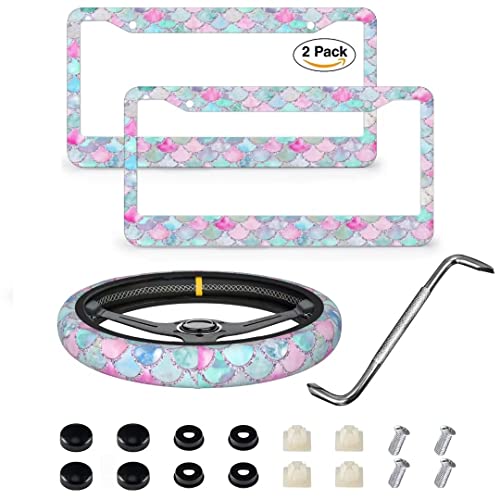
🚙【License Plate Frame Size & Install】🚙 Fish Scale License Plate Frame Size: 12.3" X 6.3".You Can See The Detailed Drawing,Precision Two Pre-Drilled,Apply To The United States, Canada Any Vehicle.The Frame Is Very Easy To Install With Comes With Screw Cover, Screw Cover, Stainless Steel Screw, Anti-Theft Caps Are Also Included,You Don’T Need To Buy Any Other Hardware Or Fasteners.Can Be Installed In Minutes Without Special Tool Required.
Senior vs. Standard Pricing
Texas provides a clear like-for-like example. Its resident freshwater package is $30, while the senior resident freshwater package is $12. That is an $18 annual difference for the same package category. Florida uses a different model: qualifying residents age 65 and older are exempt instead of buying a discounted annual license.
How to Calculate Your Savings
Use this simple comparison:
Annual savings = comparable standard license cost − senior license cost − any extra senior-only application fees
Then add any permits you still need. For example, a species report card, trout permit, second-rod validation, or special-area permit may cost the same for senior and standard license holders. California states that required validations and report cards are sold at regular fees even when the base license is reduced.
Pro Tip: Compare the final checkout total, not only the advertised base price. Put the standard and senior options in separate notes and list every endorsement, stamp, report card, handling fee, and online transaction fee.
How to Apply for a Senior Fishing License
- Find the official agency. Use the U.S. Fish and Wildlife Service state license finder or go directly to your state fish and wildlife agency.
- Check the exact eligibility rule. Confirm the age, residency period, birthdate rule, income test, disability status, or other condition tied to the benefit.
- Choose the correct privilege. Decide whether you need freshwater, saltwater, all-water, combination, annual, short-term, or lifetime coverage.
- List required add-ons. Check for trout permits, marine registrations, species tags, report cards, second-rod privileges, or special-area permits.
- Gather documents. Have your accepted ID, residency proof, and program-verification documents ready.
- Apply through an approved channel. Depending on the program, that may be online, by mail, at an agency office, or through an authorized license agent.
- Review the license before fishing. Check your name, birth date, resident status, privileges, valid dates, and any required signatures or harvest-record instructions.
- Carry accepted proof. Keep the physical or digital license and identification required by the state while fishing.
Warning: Do not buy from an unofficial website that imitates a state licensing portal. Start from a .gov agency page or the federal state-license finder, and confirm that any retailer is authorized.
Note: Effective August 3, 2026, Texas requires buyers age 17 and older to meet the state’s current identification-validation rules. In-person buyers must be physically present and show accepted identification, while online buyers must complete independent identity validation. Review TPWD’s current requirements before applying.
Products Worth Considering

Enough to Use: you will receive 6 pieces of fishing license holders, and 6 pieces of safety pins, abundant in quantity, enough for you to choose and replace, can meet your different needs; You can also share them with your friends

Enough to Use: you will receive 6 pieces of fishing license holders, and 6 pieces of safety pins, abundant in quantity, enough for you to choose and replace, can meet your different needs; You can also share them with your friends

FISHING LICENSE HOLDER W/ZIP CLOSURE
Special Senior Packages and Lifetime Options
A lifetime license can be useful, but it is not automatically the cheapest senior choice. First compare the one-time price with the annual senior rate, expected years of use, included endorsements, renewal steps, and what happens if you move.
Current examples show how different these offers can be:
- Texas: A resident lifetime fishing package is $1,000. The lifetime combination hunting and fishing package is $1,800.
- California: The 2026 lifetime fishing fee for residents age 62 and older is $709.
- Pennsylvania: A resident age 65 or older can buy an $86.97 senior lifetime fishing license, though separate fishing permits may still be required for some activities.
- New York: Residents age 70 and older can buy a $5 annual freshwater license or a $65 lifetime freshwater fishing license.
Products Worth Considering

TEXAS STATE FLAG DESIGN: Features a textured, raised Texas lone star flag design for an authentic, high-end look and feel.

Us & Canada Standard Sizes: The license plate frame measures 12.2 x 6.3 inches and fits standard US and Canadian license plate frames.

Texas License Plate Magnet, perfectly sized at 1.75 by 3.5 inches, ideal for adding a touch of Texas charm to any fridge or office space.
Estimate the Break-Even Point
Break-even years = lifetime license price ÷ comparable annual senior license price
Treat this as a static first-pass calculation, not a guarantee of future savings. Compare equivalent privileges and then account for permits that remain separate, residency rules, expected fishing frequency, and the possibility that annual fees will change. Some states also require annual reissuance, current tags, report cards, or separate permits even when the base privilege is lifetime.
Note: A lifetime license belongs to the named holder. Do not assume it can be transferred, refunded, or exchanged. Texas, for example, states that license fees are not transferable.
Ways Seniors Can Save More on Fishing Costs
- Use license-free fishing days. Many states waive the license requirement on selected days, although seasons, size limits, bag limits, and gear rules still apply.
- Compare annual and short-term options. An annual senior license may be best for frequent use, while a one-day license can be cheaper for a single trip when no senior short-term rate exists.
- Check combination packages. A freshwater-and-saltwater or hunting-and-fishing package can cost less than buying each privilege separately.
- Avoid duplicate purchases. Review what the base package already includes before adding endorsements.
- Ask about accessibility programs. Separate free or reduced licenses may exist for qualifying disabled anglers or disabled veterans.
- Look for local classes and events. Community centers, clubs, guides, and retailers may offer senior or event discounts, but these are provider promotions—not automatic state-license benefits.
- Borrow or rent rarely used gear. This can reduce the cost of specialty equipment for a single trip.
Pro Tip: Save the official license page and your purchase receipt. Recheck both before renewal because a fee, age rule, or document requirement may change even when the program name stays the same.
State-Specific Exceptions and Important Rules
A senior discount changes the license cost or requirement; it does not remove the fishing regulations that apply to everyone. Before your trip, check these common exceptions and add-ons.
| Issue | What to Confirm |
|---|---|
| Resident versus nonresident | Most senior benefits are resident-only. Nonresident reciprocity exists in limited cases and must be confirmed. |
| Freshwater versus saltwater | One privilege may not cover the other, and a marine registry may be separate. |
| Species requirements | Trout, salmon, sturgeon, lobster, or other species may require a permit, tag, or report card. |
| Special waters | Border lakes, tribal waters, federal refuges, private waters, and managed areas may have separate access or permit rules. |
| Free-fishing days | The license may be waived, but season, method, size, and catch limits usually remain in force. |
| Physical or digital proof | Confirm whether a mobile license is accepted and whether you must also carry photo ID, paper tags, or a harvest record. |
Texas illustrates how narrow exceptions can be. Its nonresident license exceptions include certain Louisiana residents age 65 or older who hold a valid Louisiana recreational license and Oklahoma residents age 65 or older. That does not create a general senior nonresident discount for visitors from every state.
What a Senior License May Not Include
Read the “included privileges” and “not included” sections before checkout. Depending on the state and fishery, you may still need:
- A freshwater or saltwater endorsement
- A trout, salmon, or special-species permit
- A harvest record card or catch report
- A second-rod or additional-line validation
- A marine recreational registration
- A special-area, refuge, park, or tribal permit
- A boat launch, access, or parking permit
Ice fishing is normally regulated under the state’s general fishing-license system rather than a nationwide “ice fishing permit,” but local waters may have special seasons, shelter rules, bait restrictions, or gear limits.
Before You Fish: Final Checklist
- Confirm your license is valid on the date and water you plan to fish.
- Check whether your senior benefit is resident-only.
- Carry the required license, exemption certificate, and identification.
- Obtain all species, gear, or area add-ons.
- Review current season dates, bag limits, size limits, and legal methods.
- Keep paper tags or harvest records when the rules require them.
- Save the agency contact number in case your digital license will not load.
Frequently Asked Questions
Do senior fishing licenses include ice fishing?
Usually, a valid fishing license or senior exemption also applies when fishing through the ice, but there is no nationwide rule. Check the specific water for ice season dates, shelter rules, bait restrictions, legal devices, and catch limits.
Can nonresident seniors get reduced fishing-license rates?
Sometimes, but most senior benefits are limited to residents. A few states have reciprocity or narrow exceptions for residents of neighboring states. Use the nonresident fee table for the state where you will fish unless its official rules clearly say you qualify for an exception.
Are personal fishing-license fees tax-deductible?
A personal recreational fishing license is generally a nondeductible personal expense. A license used in a genuine fishing business may be treated differently when it qualifies as an ordinary and necessary business expense. Review IRS guidance and consult a qualified tax professional about your facts.
Do senior discounts apply to fishing classes or guide fees?
Not automatically. A state senior license benefit normally applies only to the license or named package. A guide, community program, club, or retailer may offer its own senior promotion, so ask the provider and confirm what is included.
Can a senior transfer a lifetime fishing license to a family member?
Generally no. Recreational lifetime licenses are issued to the named holder, and agencies commonly prohibit transfer. A separate gift voucher or contest prize may have different rules, but an already issued personal license should never be shared or reassigned without written agency authority.
Do free senior licenses still require trout stamps or report cards?
They can. A free base license or exemption does not always waive species permits, report cards, harvest records, or special-area requirements. Read the official list of included and excluded privileges for your state and water.
Must seniors carry identification while fishing?
Often yes, especially when the benefit is an age- or residency-based exemption. Carry the license, exemption certificate, and photo identification required by the state. A digital license may not replace paper tags or harvest records.
Related Senior Fishing License Guides
- Alaska senior fishing license requirements and costs
- Texas senior fishing license costs and requirements
- California reduced-fee fishing license for seniors
Conclusion
A senior fishing license can reduce or eliminate the base license cost, but the correct benefit depends on your state, age, residency, and sometimes income or another eligibility factor. Start with the official wildlife agency, identify whether your situation is an exemption, reduced annual license, income-based program, or lifetime option, and then compare equivalent privileges with every required add-on. Carry the required proof and recheck the rules before each renewal or trip.
Sources
- U.S. Fish and Wildlife Service — Purchase a Fishing License — official state-license finder and general purchase guidance
- Texas Parks and Wildlife Department — Fishing Licenses and Packages — senior package eligibility, fees, exemptions, and endorsements
- Texas Parks and Wildlife Department — Purchase Requirements — identification requirements effective August 3, 2026
- Florida Fish and Wildlife Conservation Commission — License Exemptions — resident age-65 exemption and proof requirements
- California Department of Fish and Wildlife — Sport Fishing Licenses — 2026 fees, low-income senior eligibility, and add-on requirements
- California Department of Fish and Wildlife — Lifetime Licenses — 2026 lifetime fishing fees
- Alaska Department of Fish and Game — Senior Licensing — age-60 permanent card, residency rules, and harvest-card requirements
- Colorado Parks and Wildlife — Fishing Licenses and Dates — current senior annual license eligibility and fee
- New York State Department of Environmental Conservation — Fishing Licenses — resident age-70 annual fee and license requirements
- Pennsylvania Fish and Boat Commission — Fishing License Pricing — 2026 annual and lifetime senior fees
