Most anglers age 17 or older need a Texas fishing license with a saltwater endorsement before fishing in public coastal waters. The simplest choice is usually a saltwater package, which includes the license, endorsement, and oversized red drum and spotted seatrout tags. Costs vary by residency, age, and trip length.
Quick Answer
A Texas saltwater fishing package costs $35 for residents, $17 for senior residents age 65+, and $63 for nonresidents. One-day all-water licenses cost $11 for residents and $16 for nonresidents. Anglers under 17 are generally exempt, but all bag, size, gear, and tagging rules still apply.
Key Takeaways
- A saltwater package already includes the fishing license and required saltwater endorsement; you do not pay a separate $7 stamp plus a $3 surcharge.
- The $11 and $16 daily options are One-Day All-Water Fishing Licenses, not saltwater-only permits.
- Texas does not require a general “Marine Recreational Fishing Permit” for ordinary private recreational saltwater fishing.
- Most annual packages expire August 31, while the $47 resident Year-from-Purchase All-Water Package lasts through the end of the purchase month in the next license year.
- Always check current TPWD and federal rules before fishing because seasons, bag limits, identification rules, and federal permit requirements can change.
License Costs at a Glance
| Resident Saltwater Package | $35 |
| Senior Resident Saltwater Package | $17 |
| Nonresident Saltwater Package | $63 |
| Resident One-Day All-Water License | $11 per selected day |
| Nonresident One-Day All-Water License | $16 per selected day |
| Standalone Saltwater Endorsement | $10, added to a valid fishing license |
Note: Fees and rules in this guide were checked against Texas Parks and Wildlife Department information on July 30, 2026. Beginning August 3, 2026, TPWD says adults buying recreational licenses must meet new in-person or online identity-validation requirements.
Who Needs a Saltwater Fishing License in Texas
A valid fishing license with a saltwater endorsement is generally required when a resident or nonresident age 17 or older takes or attempts to take fish or other aquatic life from Texas public salt water. The TPWD fishing license and package page lists the current packages, fees, and exemptions.
The requirement applies whether you fish from shore, a public pier, a private boat, or a charter boat in public coastal water. A guide or charter captain’s commercial credentials do not replace an adult passenger’s recreational fishing license unless that passenger qualifies for an exemption.
Anglers under 17 do not need a Texas fishing license. Other exemptions include qualifying Texas residents born before January 1, 1931, certain people with intellectual disabilities fishing under the supervision and documentation rules set by TPWD, Louisiana residents age 65 or older who carry a valid Louisiana recreational fishing license, and Oklahoma residents age 65 or older.
Warning: A license exemption does not cancel bag limits, length limits, closed seasons, gear restrictions, or oversized-fish tagging requirements. Exempt anglers who want to keep an oversized red drum or spotted seatrout may need a $3 exempt-angler tag.
Shore, Pier, Charter, and Federal-Water Rules
Texas does not provide a broad saltwater-license exemption simply because you fish from shore or a pier. The main location-based exceptions are fishing within qualifying Texas state park boundaries and fishing in water completely enclosed by private property.
Texas state waters extend 9 nautical miles into the Gulf. Beyond that line, federal rules may differ. Recreational anglers must still have a Texas fishing license and saltwater endorsement to possess fish in Texas waters or land in Texas fish taken from federal waters. Certain activities may also require a federal permit, such as fishing for Atlantic highly migratory species or operating a federally permitted for-hire reef-fish vessel. There is no general Texas “Marine Recreational Fishing Permit” for ordinary private anglers.
Residency Rules and Proof Requirements

To buy a resident-priced license, a person generally must have lived continuously in Texas for more than six months immediately before purchase. TPWD also recognizes documented members of the Kickapoo Traditional Tribe of Texas and qualifying active-duty U.S. Armed Forces members and dependents as residents for licensing purposes.
Residency Duration and Proof
TPWD’s purchase-requirements page explains the identification and residency documents used for resident licenses. For proof of more than six months of Texas residency, TPWD lists an unexpired Texas driver license or personal identification certificate originally issued at least six months before purchase, plus two supporting records when required.
Supporting records may include a current Texas homestead property-tax statement, the latest six months of utility bills or paycheck receipts, the most recent federal tax return, an unexpired Texas license to carry, or an approved parole or probation residency statement.
Identification Rules Starting August 3, 2026
Beginning August 3, 2026, each buyer age 17 or older must be physically present and show valid identification for an in-person recreational license purchase. TPWD says an unexpired REAL ID from a U.S. state or territory satisfies the identity requirement. Online buyers must complete independent ID validation, and foreign residents are not eligible to purchase online.
A temporary or limited-term driver license or ID may require extra documentation. Because identity and residency are separate questions, an out-of-state REAL ID can prove identity but does not make the holder eligible for a Texas resident price.
Special Resident Categories
Texas residents age 65 or older and born on or after January 1, 1931, are not fully exempt; they qualify for reduced-price senior packages. A Texas resident who is legally blind may qualify for the $7 Special Resident All-Water Fishing License. TPWD also offers free all-water packages to qualifying Texas resident active-duty military members and qualifying disabled veterans.
Saltwater License Types and Prices
Most anglers should compare a saltwater package, an all-water package, and a one-day all-water license. A package is usually simpler than buying a base fishing license and endorsement separately because the required components and standard oversized-fish tags are bundled together.
Resident Saltwater Fees
- Resident Saltwater Package: $35. Includes the resident fishing license, saltwater endorsement, red drum tag, and spotted seatrout tag. It is normally valid from purchase through August 31 of the same license year.
- Senior Resident Saltwater Package: $17 for Texas residents age 65 or older who were born on or after January 1, 1931.
- Resident All-Water Package: $40. Covers freshwater and saltwater fishing through August 31.
- Year-from-Purchase All-Water Package: $47 for residents. It runs through the end of the purchase month in the next license year, which can provide better value when bought well before August.
- Senior Resident All-Water Package: $22.
Pro Tip: If you are a Texas resident buying several months before August 31, compare the $47 Year-from-Purchase All-Water Package with the $40 annual all-water package. The longer validity may be worth the $7 difference.
Nonresident Saltwater Costs
- Nonresident Saltwater Package: $63.
- Nonresident All-Water Package: $68.
- Nonresident One-Day All-Water License: $16 for each selected day.
Nonresidents under 17 are exempt. Louisiana residents age 65 or older are exempt when carrying a valid Louisiana Recreational Fishing License, while Oklahoma residents age 65 or older are exempt under the TPWD reciprocal rule.
One-Day Licenses and Add-Ons
The daily license is officially a One-Day All-Water Fishing License. It costs $11 for a resident and $16 for a nonresident. You may buy consecutive selected days at the time of purchase, and no separate freshwater or saltwater endorsement is required.
A standalone saltwater endorsement costs $10 and is used with a valid fishing license that does not already include saltwater privileges. It includes a red drum tag and a spotted seatrout tag at no extra charge.
A Texas saltwater package is a bundled fishing license, saltwater endorsement, and standard oversized-fish tags—not a separate federal marine permit.
Required Endorsements and Tags
The TPWD endorsement and tag schedule lists the following common recreational items:
- Saltwater fishing endorsement: $10 when purchased separately; already included in saltwater and all-water packages.
- Red drum tag: Included with the saltwater endorsement and used to retain one red drum longer than 28 inches during the license year.
- Bonus red drum tag: $3 for one additional oversized red drum during the license year.
- Spotted seatrout tag: Included with the saltwater endorsement and used to retain one spotted seatrout longer than 28 inches during the license year.
- Bonus spotted seatrout tag: $3 for one additional oversized spotted seatrout, subject to current rules.
- Exempt-angler red drum or spotted seatrout tag: $3 each for a license-exempt angler who wants to retain a qualifying oversized fish.
- Saltwater trotline tag: $5 for each 300 feet, or fraction of 300 feet, of noncommercial trotline or sail line in coastal waters.
- Individual bait-shrimp trawl tag: $37 for a recreational trawl used to take shrimp.
Paper-license holders must complete and attach the correct physical tag immediately when retaining a tagged fish. Digital-license holders use the Texas Hunt & Fish app for electronic tagging and should connect the license before leaving an area with reliable service.
Where and How to Buy Your License
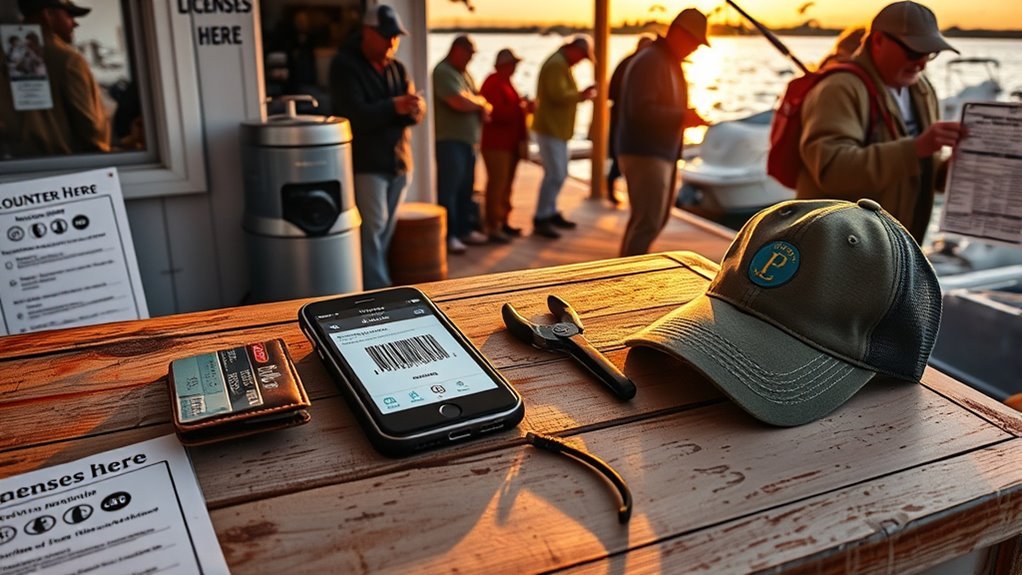
You can buy a license through the official Texas online sales system, at roughly 1,800 license retailers, or at a TPWD law-enforcement office. The TPWD purchasing page links to the official online seller and retailer locator.
- Online: Buy through the official TPWD-linked sales site. A $5 administrative fee applies. A digital license may be used immediately after it is synced with the Texas Hunt & Fish app.
- Retailer: Sporting-goods stores, bait and tackle shops, grocery stores, and other approved agents sell licenses in person.
- TPWD office: Use a law-enforcement sales office for items that are not widely available, such as saltwater trotline and bait-shrimp trawl tags.
License fees are nonrefundable, nonexchangeable, and nontransferable. Lost paper licenses or packages may be replaced at a sales location for a fee that generally ranges from $3 to $10; digital licenses do not need a replacement document.
Paper vs. Digital License
Both formats can show proof of ordinary fishing privileges. However, anglers using paper tags must carry and attach the physical tag when retaining a tagged fish. Fully digital license holders must keep their license available on a charged device and complete required digital tagging in the Texas Hunt & Fish app.
Exemptions and Special Situations
A fishing license and saltwater endorsement are not required in several defined situations:
- Residents and nonresidents under age 17.
- Texas residents born before January 1, 1931.
- Qualifying people with intellectual disabilities fishing under TPWD’s therapy or direct-supervision rules and carrying the required authorization or medical note.
- Louisiana residents age 65 or older with a valid Louisiana recreational fishing license.
- Oklahoma residents age 65 or older.
- Anyone fishing recreationally on the annual statewide Free Fishing Day.
- Anglers fishing within qualifying Texas state park property or water completely enclosed by a state park, subject to park-specific restrictions and entry fees.
- Anglers fishing in water completely enclosed within private property.
The TPWD free-fishing rules explain these location and date-based exceptions. Length limits, bag limits, gear restrictions, and protected-species rules still apply.
Compliance, Limits, and Enforcement
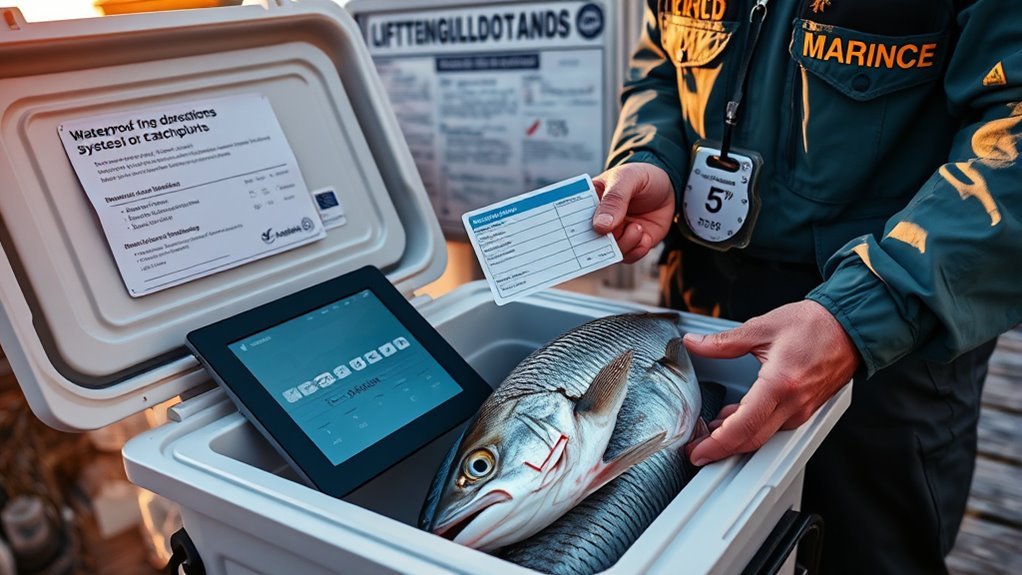
Buying the license is only the first step. Before each trip, check the current TPWD Outdoor Annual for species-specific seasons, daily bag limits, possession limits, minimum and maximum lengths, legal fishing methods, and emergency closures.
- Confirm your credentials: Make sure the license, endorsement, and any needed tags are active and available for inspection.
- Check the water boundary: Rules can change when you cross from Texas state waters into federal waters more than 9 nautical miles offshore.
- Measure correctly: Use the measurement method required for the species and release an illegal-size fish promptly.
- Tag immediately: Complete a paper or digital tag as soon as you retain an oversized red drum or spotted seatrout.
- Follow federal rules: Federal seasons, gear rules, and vessel permits may apply offshore, especially for reef fish, highly migratory species, and for-hire operations.
Warning: It is unlawful to fish without the required license or saltwater endorsement, refuse to show credentials, possess protected species, or keep fish outside current limits. Violations can lead to citations, fines, civil restitution, and loss of licensing privileges.
Protected and Endangered Species
Do not target, retain, kill, or disturb a threatened or endangered fish, sea turtle, or protected marine mammal. If you accidentally hook a sea turtle, follow TPWD instructions and call the Sea Turtle Stranding and Salvage Network at (866) 887-8535. Federal permits do not give an ordinary recreational angler permission to keep an endangered species.
Frequently Asked Questions
Do minors need a separate saltwater license when fishing from shore?
No. Texas residents and nonresidents under 17 are generally exempt from fishing-license requirements, whether fishing from shore, a pier, or a boat. They must still follow bag, size, season, and gear rules. A $3 exempt-angler tag may be needed to keep an oversized red drum or spotted seatrout.
Can nonresidents buy a short-term Texas saltwater license?
Yes. The nonresident One-Day All-Water Fishing License costs $16 for each selected day and does not require a separate saltwater endorsement. Consecutive days may be selected when the license is purchased.
Is a Texas saltwater license required on a charter boat?
Generally, yes for passengers age 17 or older unless an exemption applies. The captain’s guide license or federal vessel permit does not normally replace each passenger’s recreational Texas fishing license and saltwater endorsement.
Do I need a license to fish from a Texas state park pier?
Usually not when the pier is within state park property. Park entry fees and park-specific rules still apply. On man-made structures such as park piers, docks, and jetties, TPWD generally limits fishing to pole-and-line and no more than two poles per person.
Are federal permits required for Texas offshore fishing?
Not for every private recreational trip. A Texas fishing license and saltwater endorsement are generally needed to land fish in Texas. Separate federal permits may apply to Atlantic highly migratory species, federally permitted charter or headboat operations, and certain commercial activities.
Can an angler get a permit to keep an endangered species?
No general recreational permit allows an angler to keep a threatened or endangered species. Targeting, taking, killing, or disturbing protected species is prohibited. Report accidental sea-turtle or marine-mammal interactions through the appropriate state or federal response channel.
Do fishing tournaments require catch-and-release documentation?
Texas does not impose one universal catch-and-release log on every tournament. However, specific transport rules may require participants to carry organizer-issued tournament documentation, and a tournament may set its own photo, measurement, or release records. Fish kept in a livewell or other holding device count as being in possession.
When does a Texas saltwater fishing package expire?
Most annual saltwater and all-water packages are valid from the purchase date through August 31 of the same license year. The resident Year-from-Purchase All-Water Package is different: it expires at the end of the purchase month in the next license year.
Conclusion
For most Texas coastal anglers age 17 or older, the easiest legal option is a saltwater package: $35 for residents, $17 for senior residents, or $63 for nonresidents. Short trips can use the $11 resident or $16 nonresident One-Day All-Water License. Carry valid proof, complete required tags, and check current state and federal rules before every trip.
Sources
- Texas Parks and Wildlife Department: Fishing Licenses and Packages — license requirements, exemptions, package prices, and validity periods.
- Texas Parks and Wildlife Department: Fishing Endorsements, Tags, and Permits — endorsement and tag fees and requirements.
- Texas Parks and Wildlife Department: Purchase Requirements — residency, identification, paper and digital license, and replacement rules.
- Texas Parks and Wildlife Department: Free Fishing Opportunities — Free Fishing Day, state park, and private-property exemptions.
- Texas Parks and Wildlife Department: Fishing in Federal Waters — the 9-nautical-mile boundary and Texas landing requirements.
- NOAA Fisheries: Atlantic Highly Migratory Species Permits — federal permits that may apply to tuna, billfish, swordfish, and sharks.