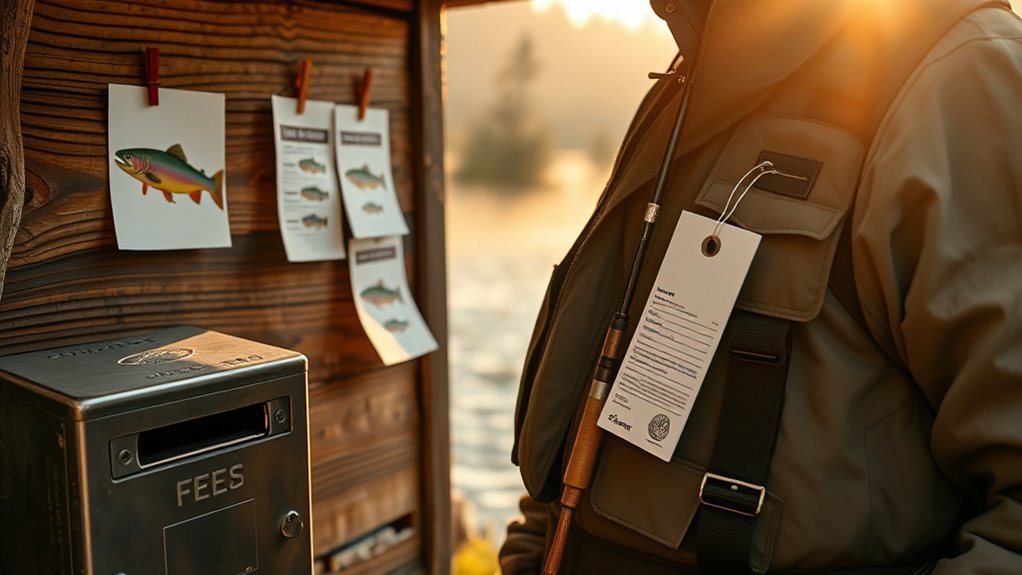
Oklahoma Trout Fishing License: 2026 Quick Answer
Oklahoma does not require a separate trout stamp. Anglers age 18 or older generally need a valid Oklahoma fishing license to take, attempt to take, or possess trout unless an exemption applies. A resident annual fishing license costs $31, a resident 1-day license costs $11, a nonresident annual license costs $81, and a nonresident 1-day license costs $26. Trout waters can also have special harvest, gear, season, stringer, access, and local-permit rules, so check the exact water before you fish.
By Gideon Calloway · Last updated August 11, 2026
Quick Answer
There is no separate Oklahoma trout stamp to buy. If you are 18 or older and not exempt, you generally need a valid Oklahoma fishing license. Annual licenses cost $31 for residents and $81 for nonresidents; 1-day licenses cost $11 and $26 respectively. Always check the rules for the exact trout water because daily limits, size limits, legal methods, and other requirements can differ by area.
Key Takeaways
- Oklahoma does not require a separate trout stamp.
- Anglers age 18 or older generally need an Oklahoma fishing license unless an exemption applies.
- Annual fishing licenses cost $31 for residents and $81 for nonresidents.
- One-day fishing licenses cost $11 for residents and $26 for nonresidents.
- All trout in possession must be kept on the angler’s own stringer marked with that angler’s ODWC customer ID.
- The general daily limit is three trout combined, but special waters can have different limits and size rules.
- Check the latest ODWC rules for your exact trout area before every trip.
Current Oklahoma Fishing License Costs for Trout
| License or Requirement | Current Cost | Key Detail |
|---|---|---|
| Resident annual fishing license | $31 | Residents age 18 or older; valid 365 days |
| Resident 1-day fishing license | $11 | Valid for one day of choice and expires at midnight |
| Nonresident annual fishing license | $81 | Nonresidents age 18 or older unless exempt; valid 365 days |
| Nonresident 1-day fishing license | $26 | Valid for one day of choice and expires at midnight |
| Resident senior lifetime fishing license | $30 | For qualifying Oklahoma residents with six months’ residency who turn 65 or older during the current calendar year |
| Separate trout stamp | Not required | Oklahoma trout rules rely on the applicable fishing license and trout-area regulations |
These prices are listed by the Oklahoma Department of Wildlife Conservation license-fee page. Check that page again before purchasing because license fees can be changed by the state.
Do You Need an Oklahoma Trout Stamp?

No. Oklahoma does not require anglers to buy a separate trout stamp. The ODWC trout regulations require a resident or nonresident fishing license for people who take or attempt to take trout unless an exemption applies.
For most adult anglers, the required credential for Oklahoma trout fishing is the appropriate Oklahoma fishing license, not a separate trout stamp.
If you are an Oklahoma resident age 18 or older and are not exempt, the standard annual fishing license is $31. If you only need one day, the resident 1-day license is $11.
If you are a nonresident age 18 or older and are not exempt, the annual license is $81. A nonresident 1-day fishing license is $26.
Other permits do not automatically replace the fishing-license requirement. For example, Oklahoma separately lists permits for activities such as paddlefish fishing and access to certain managed lands. Make sure you have every credential required for both the activity and the property you plan to use.
How to Buy Your Oklahoma Fishing License for Trout

You can purchase an Oklahoma fishing license online through Go Outdoors Oklahoma or from an authorized license dealer. The online system also lets existing customers view and print licenses and permits.
Oklahoma’s current official regulations guide states that a $3 handling fee is applied to online license purchases. Review your checkout total before paying.
- Open Go Outdoors Oklahoma and sign in to your existing customer account or create an account if you have never purchased an Oklahoma hunting or fishing license.
- Select the fishing license that matches your residency, age, and trip length.
- Complete checkout and save your electronic license or print a copy.
- Check the ODWC rules for the exact trout water you plan to fish.
ODWC allows electronic licenses. You must carry the required license, or written evidence that you are exempt, together with identification while fishing.
Note: If you prefer a paper copy, you can print your license yourself. Go Outdoors Oklahoma also lists dealer locations that can issue or print licenses.
How Oklahoma Fishing-License Revenue Supports Conservation
The Oklahoma Department of Wildlife Conservation says it receives no general state tax revenues and is funded primarily by hunters and anglers. ODWC also explains that license purchases and federal Wildlife and Sport Fish Restoration funding support conservation and public-access work.
Examples described by ODWC include projects such as improving public access and boat ramps and supporting fish and wildlife management. For details on how license-related funding supports conservation, see ODWC’s specialty-license and conservation information.
That does not mean every dollar from an individual fishing license is specifically earmarked for trout stocking. The safer conclusion is that purchasing the required license contributes to the broader funding system that supports Oklahoma’s fisheries and public fishing opportunities.
What Are the Oklahoma Trout Fishing Rules?
Oklahoma’s general trout regulations require the proper fishing license unless you are exempt. During trout season in state-designated trout areas, fish may be taken only with one rod and reel or one pole and line, and snagging is closed.
All trout in possession must be kept on the angler’s own stringer marked with that angler’s ODWC customer ID.
A trout that has been placed on a stringer or otherwise held in possession cannot later be released. This no-culling rule applies even if you later catch a larger fish.
The general daily limit for rainbow and brown trout is three combined, but ODWC lists special exceptions for portions of the Blue River, Lower Illinois River, and Lower Mountain Fork River. In the field, an angler may not possess more than one daily limit of trout. Longer-trip possession rules and special brown-trout restrictions also apply, so check the current regulation before keeping fish.
Examples of How Oklahoma Trout-Area Rules Differ
| Trout Area | Stocking / Current Note | Why You Must Check the Area Rule |
|---|---|---|
| Lower Mountain Fork River | Year-round | Special harvest and size restrictions apply in different sections; barbless hooks are required in the designated trout area. |
| Lower Illinois River | Year-round | Some sections have special size and daily limits, and part of the management unit is restricted to artificial flies/lures and barbless hooks for trout fishing. |
| Blue River | Nov. 1 through March 31 | A designated section is catch-and-release with artificial flies/lures and barbless hooks from Nov. 1 through the end of February. |
| Robbers Cave | Nov. 1 through March 15 | Seasonal trout stocking means trip timing matters. |
| Medicine Creek | Nov. 1 through March 15 | The designated trout area follows its own stocking period and local access conditions. |
| Lake Watonga/Boecher | Normally Nov. 1 through March 31 | ODWC currently warns that trout stocking during the 2026-27 season may be suspended because of ongoing dam renovations. |
Warning: Stocking periods are not a substitute for checking the current fishing rule. Limits, size restrictions, methods, access rules, and local permits can differ by water and section. Review ODWC’s Trout Area Information before fishing.
Use this compliance check before you fish:
- Carry a current fishing license or written proof of exemption and identification.
- Check whether the property requires an additional local permit or Land Access Permit.
- Use only the legal fishing method for that specific trout area.
- Check the daily and size limits for the exact section you plan to fish.
- If you keep trout, use your own stringer marked with your ODWC customer ID.
- Do not release a trout after it has been placed on a stringer or otherwise held in possession.
Who Is Exempt From an Oklahoma Fishing License?
ODWC lists several fishing-license exemptions. Proof of an exemption must be carried while you are in the field when documentation is required.
- Resident youth: Oklahoma residents age 17 or younger are exempt from purchasing a fishing license.
- Nonresident youth: Nonresidents age 17 or younger are also exempt from purchasing a fishing license under the current ODWC exemption rules.
- Qualifying private ponds: Resident owners or tenants and specified family members can fish qualifying private ponds on land owned or leased by the resident owner or tenant without a fishing license.
- Disabled veterans: Resident disabled veterans with a disability rating of 60% or more are exempt from purchasing a fishing license when the ODWC requirements are met.
- Nonambulatory residents: Permanently disabled nonambulatory residents are exempt from hunting and fishing licenses.
- Texas seniors: Nonresidents age 65 or older who are Texas residents are exempt from an Oklahoma fishing license.
- Other special exemptions: ODWC also lists exemptions for certain legally blind or physically impaired anglers and companions, qualifying institutional residents, Job Corps trainees, sanctioned aquatic-education participants, and other situations.
These exemptions can have documentation and eligibility requirements. Confirm your situation on the official ODWC License Exemptions page before relying on an exemption.
An exemption from purchasing a fishing license does not automatically exempt you from trout harvest limits, legal-method rules, stringer requirements, local permits, property restrictions, or other fishing regulations.
What to Check Before You Fish for Trout in Oklahoma
Before leaving home, identify the exact lake, river, pond, tailwater, or management area you plan to fish. Do not rely only on statewide trout rules because special regulations can apply to individual sections of the same river.
Check these items first:
- The current trout stocking period or open-season information for the area
- The daily limit and any special size limit
- The possession rule for your trip
- Whether bait, artificial lures, flies, or barbless hooks are required or restricted
- Whether snagging, wading, boating, or other methods are restricted
- The customer-ID stringer requirement if you keep trout
- Any local city fishing permit or property-specific permit
- Any Land Access Permit requirement for the property
- Temporary stocking, construction, access, or water-condition notices
ODWC’s current trout-area page is the best starting point because it lists the designated water, stocking information, access notes, and special regulations for individual trout areas.
Frequently Asked Questions
Do I Need a Separate Trout Stamp in Oklahoma?
No. Oklahoma does not require a separate trout stamp. Anglers who are required to be licensed use the appropriate Oklahoma fishing license and must follow the regulations for the trout water they fish.
What Is the Oklahoma Trout Daily Limit?
The general daily limit is three rainbow and brown trout combined. Special rules apply in portions of the Blue River, Lower Illinois River, and Lower Mountain Fork River, so check the exact area before keeping trout.
Do Trout Stamps Apply to Ice Fishing for Trout?
There is no separate Oklahoma trout stamp requirement for ice fishing. If fishing is allowed at the specific water, follow the same applicable fishing-license requirement plus that area’s current access, method, season, and harvest rules.
Can Trout Licenses Be Purchased Online for Mobile Use?
Yes. You can buy an Oklahoma fishing license through Go Outdoors Oklahoma and keep an electronic license on your phone. ODWC allows electronic licenses, and you must also carry the required identification while fishing.
Are There Penalties for Fishing Without the Right License?
Fishing without carrying the required Oklahoma fishing license, or written evidence that you are exempt, violates Oklahoma fishing regulations. Penalties can depend on the violation, so anglers should verify their license and required permits before fishing rather than relying on an assumed exemption.
Do License Fees Help Fund Trout Stocking?
Fishing-license purchases support Oklahoma’s broader fish and wildlife funding system and conservation work. ODWC describes license and sport-fish-restoration funding as supporting fish and wildlife management and public access, but the cited license information does not state that every individual fishing-license dollar is specifically earmarked for trout stocking.
Is Proof of Residency Required When Buying a Resident License?
Resident licenses are subject to ODWC residency requirements, and anglers must carry required identification while fishing. Check ODWC’s current residency rules or the Go Outdoors Oklahoma licensing system if you are unsure whether you qualify as a resident.
Conclusion
Oklahoma does not require a separate trout stamp. Most anglers age 18 or older need the appropriate Oklahoma fishing license unless an exemption applies, with current prices of $31 for a resident annual license, $11 for a resident 1-day license, $81 for a nonresident annual license, and $26 for a nonresident 1-day license. After getting the correct license, check the ODWC rules for the exact trout water you plan to fish because harvest limits, size limits, legal methods, stringer rules, local permits, and stocking conditions can vary by area. Buy or access your license through Go Outdoors Oklahoma, then review the current ODWC trout-area information before leaving for your trip.
References
- Oklahoma Department of Wildlife Conservation — License Options & Fees
- Oklahoma Department of Wildlife Conservation — License Exemptions
- Oklahoma Department of Wildlife Conservation — Trout Regulations
- Oklahoma Department of Wildlife Conservation — Trout Area Information
- Oklahoma Department of Wildlife Conservation — Specialty Licenses and Conservation Funding
- Go Outdoors Oklahoma — Official License Purchase Portal
- Oklahoma Official eRegulations — License Fees